

목욕 c1868
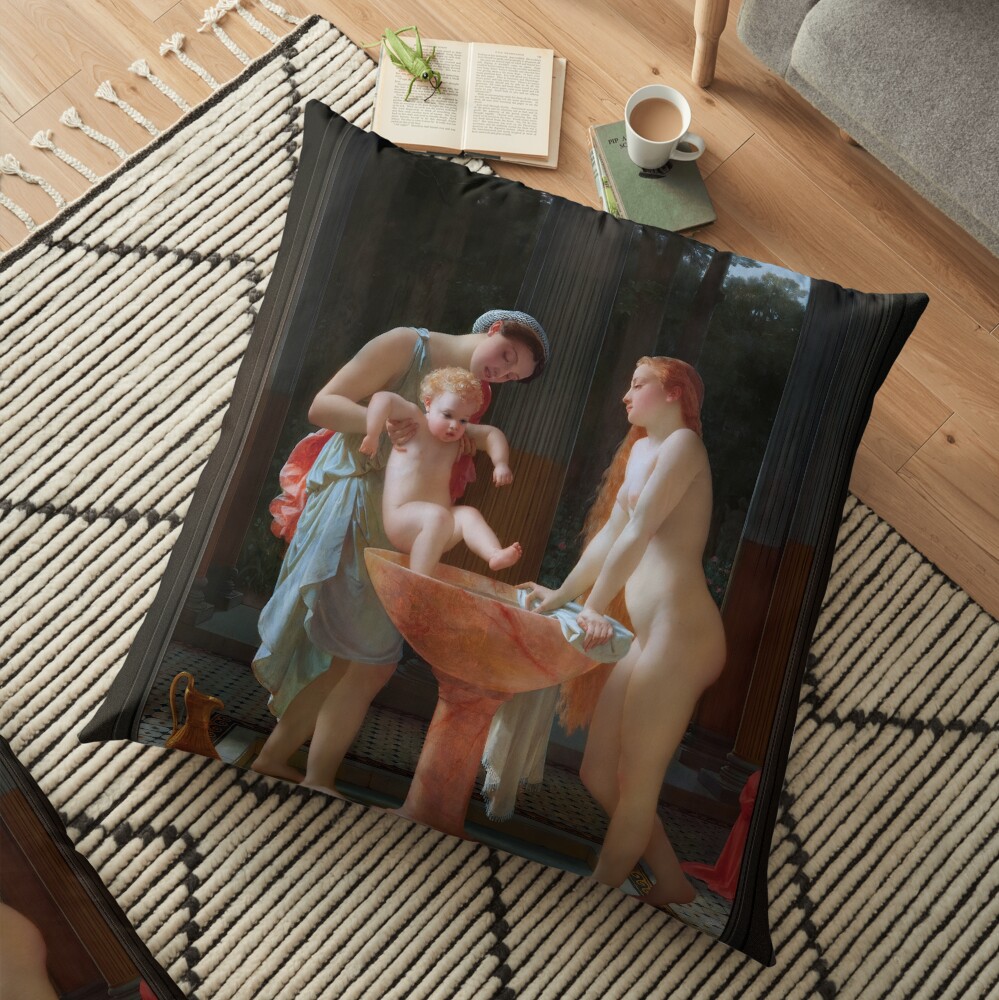
마크-찰스-가브리엘 글레이르 (1806 – 1874), 학문적 훈련과 고전적 주제에 대한 능숙함으로 유명한 스위스 태생의 화가, 만들어진 “목욕” 에 1868. Gleyre의 작품은 그의 섬세한 디테일에 대한 숙달을 보여줍니다., 인간의 형태에 대한 그의 깊은 이해, 종종 신화에서 영감을 받은 주제에 대한 그의 고전적인 접근 방식, 역사, 그리고 인체의 아름다움. “목욕” 사실주의에 대한 Gleyre의 헌신의 예가 됩니다., 목가적인 곳에서 목욕하는 사람들의 순수함과 평온함을 회상하도록 시청자를 초대하는 고요하고 친밀한 장면을 묘사합니다., 거의 꿈같은 환경.
목차
주제
의 핵심 “목욕” 세 인물 사이의 부드럽고 고요한 상호 작용입니다: 두 여자와 어린 아이. The central theme of the painting is the intimate act of bathing, a moment of personal care and repose. The figures are depicted in a naturalistic manner, emphasizing the purity and simplicity of the scene. The woman on the left is assisting the small child in a marble basin, cradling the child as they both seem to enjoy the refreshing experience. Her gentle handling of the child is tender, showcasing maternal affection.
오른쪽으로, another woman stands poised, almost as though in quiet contemplation of the moment. She gazes to the left, perhaps watching the child or lost in her thoughts, embodying a graceful yet subtle mood of tranquillity. 그녀의 부드러운, flowing hair and the natural stance of her body highlight the harmony between the human figure and the surrounding environment. Both women are portrayed in a delicate, classical style that reflects the beauty and the strength of the feminine form, draped in minimal clothing, which accentuates their natural beauty and the softness of the moment.
지형과 배경
The setting for this intimate scene is a well-appointed Roman-style bath, complete with tall marble columns framing the space and creating a sense of grandeur. The background hints at an expansive natural landscape, with lush trees visible through the open space between the columns. The figures are positioned in a sophisticated environment that blends the interior with the outdoors, invoking the idea of ancient Roman bathing rituals. The use of columns suggests a classical influence, as it was common in the ancient world to build bathhouses as a place for both socialization and relaxation.
The ground is covered with a finely detailed tiled floor, perhaps a nod to the mosaics of ancient civilizations. The intricate designs on the floor contribute to the composition’s overall sense of balance and symmetry, reinforcing the classical nature of the painting. The space around the figures is bathed in soft, natural light, which filters through the open columns, creating a serene atmosphere of warmth and calm.
물체와 재료
Key to the scene is the marble basin in which the child is being bathed. The basin itself is a symbol of refinement and the timeless elegance of classical art. The use of marble, a material prized by ancient civilizations, adds a luxurious element to the composition, suggesting not just utility but also a higher cultural status. The soft reflections on the marble surface enhance the realism of the piece, giving the material a life-like quality that is almost tangible.
In addition to the marble basin, the artist has meticulously rendered the fabrics and textures of the figures’ 의류. The drapery is portrayed with fine attention to detail, the fabrics gently clinging to the figures’ bodies or flowing gracefully with the weight of the fabric. The texture of the skin, particularly that of the child, is soft and tender, while the flow of the water adds an element of fluidity to the otherwise static composition.
스타일과 테크닉
Gleyre’s approach in “목욕” is one of realism, with clear influences from the Neoclassical and Romantic traditions. His attention to the human form is evident in the soft, almost ethereal rendering of the figures, using delicate shading and blending to give the figures a lifelike appearance. The light plays an important role in the composition, highlighting the contours of the bodies and the subtle textures of the environment. The use of natural light entering the space through the columns adds depth and dimension to the work, casting soft shadows and illuminating the scene with a calm, 황금빛 색조.
The technique employed by Gleyre is one of careful, deliberate brushwork. His use of soft transitions between light and shadow creates a sense of realism, bringing the figures to life. The blending of tones and the careful modeling of light on the skin emphasize the artist’s deep understanding of the human body and his ability to depict its natural beauty.
분위기와 분위기
분위기 “목욕” is one of calm, 평화, and subtle intimacy. The scene evokes a sense of serenity, where the bath is not only a physical act of cleansing but also a moment of personal reflection and connection with others. The tender interaction between the mother and child, as well as the quiet, contemplative stance of the second woman, imbues the piece with a feeling of nurturing and protection. The classical setting and the figures’ graceful poses enhance the timeless quality of the work, suggesting an idealized version of femininity, 무죄, and maternal care.
There is a sense of tranquility in the composition, as if the viewer has stumbled upon a private moment, one that is suspended in time and untouched by the outside world. The painting offers not just an aesthetic experience but also an emotional one, 시청자가 모성이라는 주제에 대해 생각해 보도록 유도합니다., 아름다움, 그리고 순수함.
결론
마크-찰스-가브리엘 글레이르(Marc-Charles-Gabriel Gleyre) “목욕” 고전 회화의 훌륭한 예이다, 신고전주의 전통의 세련미와 우아함을 모두 반영하는 동시에 낭만주의 시대의 부드러운 현실감을 불어넣었습니다.. 작품은 시대를 초월한 아름다움을 발산합니다, 어머니 사이의 고요한 친밀감의 순간을 포착하다, 어린이, 그리고 환경. 세심한 배려를 통해, 조화로운 구성, 자연광과 질감에 중점을 두고, Gleyre는 시청자를 조용하고 우아하고 완벽한 조화의 세계로 안내하는 시각적 내러티브를 만듭니다..
이것은 공개 도메인 이미지의 리마스터링된 디지털 아트 올드 마스터 복제입니다. Boucher는 Guay의 작품으로 일련의 그림을 그리고 Madame de Pompadour가 조각하여 호의를 받는 궁정에게 잘 묶인 책으로 배포했습니다..
이 디지털 아트 창작, Xzendor7 웹사이트에서 찾을 수 있는 모든 예술 작품과 마찬가지로 캔버스 인쇄를 포함한 다양한 재료 형식으로 온라인에서 구매할 수 있습니다., 아크릴 프린트, 금속 지문, 목판화, 액자 인쇄, 포스터, 그리고 압연 캔버스로 다양한 크기로 인쇄됩니다. 12 인치에 72 실제 작품의 크기와 작품을 구매하기로 선택한 주문형 인쇄소에 따라 인치.
이 작품은 다양한 남성복과 여성복에서도 볼 수 있습니다., 머그, 토트백, 스카프, 노트북, 저널 및 다양한 홈 데코 제품.
아티스트 소개
아래에서 파생된 정보 Wikipedia.org
Marc Gabriel Charles Gleyre는 일반적으로 리옹의 삼촌에 의해 자란 Charles Gleyre라는 이름으로 알려져 있습니다., 프랑스, 그가 어렸을 때 그의 부모님이 돌아가셨을 때 8 또는 9 나이.
His uncle sent Charles to the city’s industrial school and began his artistic education under the French Painter and Lithographer Jean-Claude Bonnefond (1796 – 1860); an artist who was known for his portrayals of peasant life.
He then moved to Paris, France where he enrolled at the École des Beaux-Arts, and studied under the French Painter Louis Hersent (1777 – 1860); and he also studied under British Romantic Landscape Painter Richard Parkes Borington (1802 – 1826) at the Academie Suisse; and from there he traveled to Italy, where he became acquainted with French Painter Horace Vernet (1789 – 1863), and Swiss Painter Louis Léopold Robert (1794 – 1835).