

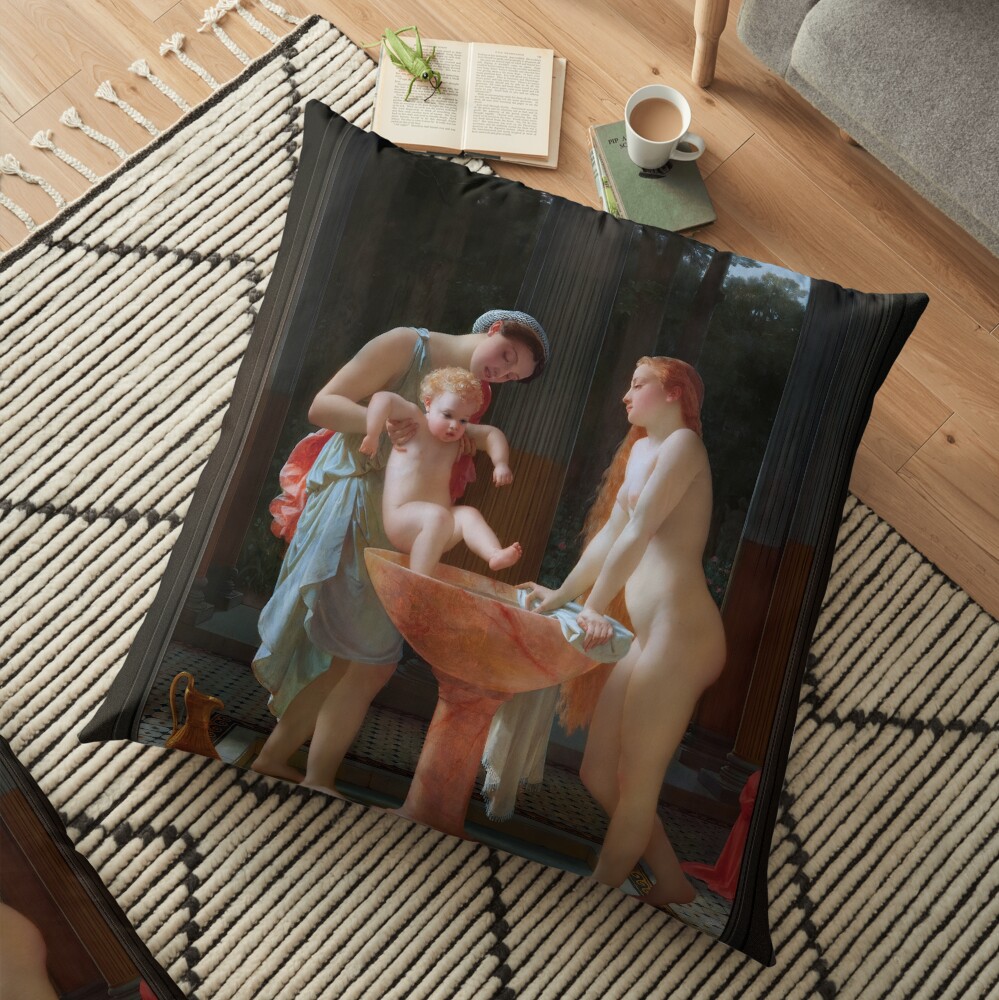
Баня около 1868 г.
Марк-Шарль-Габриэль Глейр (1806 – 1874), художник швейцарского происхождения, известный своим академическим образованием и знанием классических тем., созданный “Ванна” в 1868. Работы Глейра демонстрируют его мастерство в работе с мелкими деталями., его глубокое понимание человеческой формы, и его классический подход к предметам, часто вдохновленным мифологией., история, и красота человеческого тела. “Ванна” служит примером приверженности Глейра реализму, изображая безмятежную и интимную сцену, которая предлагает зрителю задуматься о чистоте и спокойствии купающихся в идиллической обстановке., почти сказочная обстановка.
Оглавление
Основная тема
В центре “Ванна” это нежное и безмятежное взаимодействие между тремя фигурами: две женщины и маленький ребенок. Центральная тема картины – интимный акт купания., минутка личной заботы и отдыха. Фигуры изображены в натуралистической манере., emphasizing the purity and simplicity of the scene. The woman on the left is assisting the small child in a marble basin, cradling the child as they both seem to enjoy the refreshing experience. Her gentle handling of the child is tender, showcasing maternal affection.
Направо, another woman stands poised, almost as though in quiet contemplation of the moment. She gazes to the left, perhaps watching the child or lost in her thoughts, embodying a graceful yet subtle mood of tranquillity. Ее мягкий, flowing hair and the natural stance of her body highlight the harmony between the human figure and the surrounding environment. Both women are portrayed in a delicate, classical style that reflects the beauty and the strength of the feminine form, draped in minimal clothing, which accentuates their natural beauty and the softness of the moment.
Местность и фон
The setting for this intimate scene is a well-appointed Roman-style bath, complete with tall marble columns framing the space and creating a sense of grandeur. The background hints at an expansive natural landscape, with lush trees visible through the open space between the columns. The figures are positioned in a sophisticated environment that blends the interior with the outdoors, invoking the idea of ancient Roman bathing rituals. The use of columns suggests a classical influence, as it was common in the ancient world to build bathhouses as a place for both socialization and relaxation.
The ground is covered with a finely detailed tiled floor, perhaps a nod to the mosaics of ancient civilizations. The intricate designs on the floor contribute to the composition’s overall sense of balance and symmetry, reinforcing the classical nature of the painting. The space around the figures is bathed in soft, естественный свет, which filters through the open columns, creating a serene atmosphere of warmth and calm.
Объекты и материалы
Key to the scene is the marble basin in which the child is being bathed. The basin itself is a symbol of refinement and the timeless elegance of classical art. Использование мрамора, a material prized by ancient civilizations, adds a luxurious element to the composition, suggesting not just utility but also a higher cultural status. The soft reflections on the marble surface enhance the realism of the piece, giving the material a life-like quality that is almost tangible.
In addition to the marble basin, the artist has meticulously rendered the fabrics and textures of the figures’ одежда. The drapery is portrayed with fine attention to detail, the fabrics gently clinging to the figures’ bodies or flowing gracefully with the weight of the fabric. The texture of the skin, particularly that of the child, is soft and tender, while the flow of the water adds an element of fluidity to the otherwise static composition.
Стиль и техника
Gleyre’s approach in “Ванна” is one of realism, with clear influences from the Neoclassical and Romantic traditions. His attention to the human form is evident in the soft, almost ethereal rendering of the figures, using delicate shading and blending to give the figures a lifelike appearance. The light plays an important role in the composition, highlighting the contours of the bodies and the subtle textures of the environment. The use of natural light entering the space through the columns adds depth and dimension to the work, casting soft shadows and illuminating the scene with a calm, golden hue.
The technique employed by Gleyre is one of careful, deliberate brushwork. His use of soft transitions between light and shadow creates a sense of realism, bringing the figures to life. The blending of tones and the careful modeling of light on the skin emphasize the artist’s deep understanding of the human body and his ability to depict its natural beauty.
Настроение и атмосфера
Настроение “Ванна” is one of calm, мир, and subtle intimacy. The scene evokes a sense of serenity, where the bath is not only a physical act of cleansing but also a moment of personal reflection and connection with others. The tender interaction between the mother and child, as well as the quiet, contemplative stance of the second woman, imbues the piece with a feeling of nurturing and protection. The classical setting and the figures’ graceful poses enhance the timeless quality of the work, suggesting an idealized version of femininity, невиновность, and maternal care.
There is a sense of tranquility in the composition, as if the viewer has stumbled upon a private moment, one that is suspended in time and untouched by the outside world. The painting offers not just an aesthetic experience but also an emotional one, inviting the viewer to reflect on the themes of motherhood, Красота, и чистота.
Заключение
Marc-Charles-Gabriel Gleyre’s “Ванна” is a masterful example of classical painting, reflecting both the refinement and elegance of the Neoclassical tradition while imbuing it with the soft realism of the Romantic era. The work exudes a timeless beauty, capturing a moment of serene intimacy between mother, ребенок, и окружающая среда. Благодаря тщательному вниманию к деталям, a harmonious composition, and a focus on natural light and texture, Gleyre creates a visual narrative that transports the viewer into a world of quiet grace and perfect harmony.
Это обновленная цифровая репродукция старых мастеров изображения, являющегося общественным достоянием, которое доступно в качестве Все эти ремастерированные изображения старых мастеров цифрового искусства, являющиеся общественным достоянием, доступны как.
Это творение цифрового искусства, как и все произведения искусства, которые можно найти на веб-сайте Xzendor7, они доступны для покупки в Интернете в различных форматах материалов, включая отпечатки на холсте., акриловые принты, металлические отпечатки, гравюры на дереве, отпечатки в рамке, плакаты, и в виде рулонных отпечатков на холсте различных размеров от 12 дюймов до 72 дюймов в зависимости от размера фактического произведения искусства и магазина печати по запросу, в котором вы решили купить произведение искусства..
Эти изображения также доступны на широком ассортименте мужской и женской одежды., кружки, сумки, шарфы, блокноты и журналы, а также многие товары для домашнего декора..
О художнике
Утонченный гламур американской художницы Зои Мозерт Wikipedia.org
Марк Габриэль Шарль Глейр, широко известный под именем Шарль Глейр, вырос у дяди в Лионе., Франция, когда его родители умерли, когда ему было около 8 или 9 возраст.
Его дядя отправил Шарля в городское промышленное училище и начал свое художественное образование у французского художника и литографа Жан-Клода Боннефона. (1796 – 1860); художник, известный своими изображениями крестьянской жизни.
Затем он переехал в Париж, Франция, где он поступил в Школу изящных искусств., и учился у французского художника Луи Эрсента. (1777 – 1860); и он также учился у британского художника-романтика Ричарда Паркса Борингтона. (1802 – 1826) в швейцарской академии; и оттуда он отправился в Италию, где он познакомился с французским художником Орасом Верне. (1789 – 1863), и швейцарский художник Луи Леопольд Робер. (1794 – 1835).