

Austerlitz-eko gudua
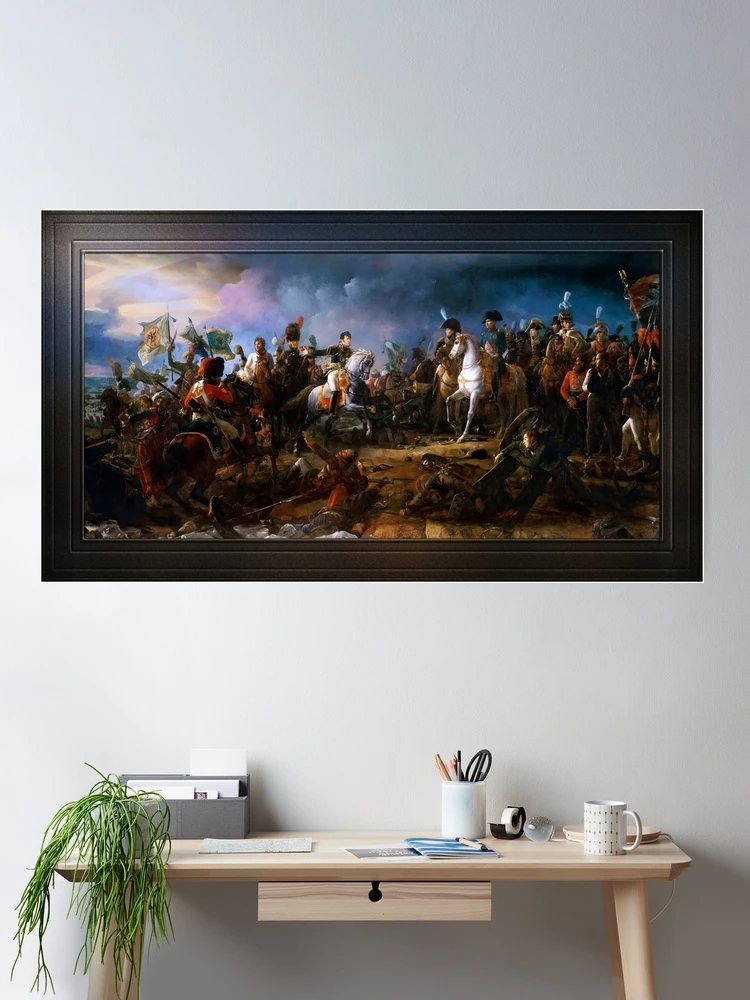
Izenburua duen artelanak The Battle of Austerlitz, (Abenduak 2, 1805), inguruan sortua 1810 by French painter François Pascal Simon, Gérard baroia (1770 – 1837), captures one of the most significant battles of the Napoleonic Wars. Known as the Battle of the Three Emperors, this pivotal confrontation between Napoleon Bonaparte, Tsar Alexander I of Russia, and Holy Roman Emperor Francis II is immortalized in this grand composition. Eszena, set in the midst of chaos and carnage, vividly portrays the intensity and dramatic nature of warfare during the early 19th century. It is an exemplary work of historical art, a striking mix of realism, drama, and national pride.
Edukien taula
Gai nagusia: The Battlefield and Its Commanders
The central subject of the painting is a vast battlefield strewn with soldiers, flags, and fallen soldiers amidst the aftermath of intense combat. At the forefront, Napoleon Bonaparte, mounted on a white steed, stands as the undeniable focal point. His commanding posture exudes authority and confidence, reflecting his role as the mastermind behind the victory. His regal presence contrasts sharply with the chaos around him, which includes the deaths of numerous soldiers and the disarray of the battlefield. Napoleon’s horse is depicted as calm amidst the violence, as his sharp, focused gaze surveys the battlefield, likely calculating his next move.
Other key figures include the Tsar of Russia, Alexander I, whose dignified yet tense posture further emphasizes the turmoil of the conflict. His royal blue uniform, complete with gold epaulets and a decorative sash, signifies his nobility and status, while also showing his involvement in a struggle that he could not win. Eszenaren ezkerraldean, other officers are seen rallying their troops, coordinating efforts in the middle of a bloody battle. These military leaders, both French and foreign, represent the intersection of power, strategy, and the high cost of war. Their interactions and movements are charged with urgency and tension.
Objektuak eta sinboloak: Flags, Weapons, and Debris
In addition to the commanding figures, the scene is teeming with symbols of war. Various military flags can be seen fluttering in the wind, a visual representation of the allegiances in this conflict. The flags are emblazoned with symbols of national pride and military power, their detailed designs hinting at the ongoing struggle for supremacy. The color contrast of these flags against the muted tones of the sky and terrain reflects the struggle between opposing forces, Napoleon’s French army and the allied Russian and Austrian forces.
Weapons, including swords, muskets, and bayonets, are scattered across the scene, many of them abandoned or broken, symbolizing the personal toll that war takes on both soldiers and commanders. Elementu hauek, while seemingly insignificant in their scattered state, contribute to the overall chaotic atmosphere of the battle. Horrez gain, the bodies of fallen soldiers, including both French and allied forces, litter the battlefield, emphasizing the devastation of war. Blood-stained uniforms and wounded men in the background reflect the personal cost of the grand political and military maneuverings.
Lurra eta Ingurumena: The Landscape of War
Paisaia barruan Austerlitz-eko gudua plays a crucial role in conveying the tone of the artwork. The background is dominated by tumultuous skies filled with stormy clouds, which intensify the scene’s mood of destruction and upheaval. The soft pink and purple hues of the clouds hint at the coming dusk, a symbolic representation of the end of the battle and the ominous aftermath that awaits the vanquished. The mountainous terrain in the distance offers a dramatic backdrop to the chaos unfolding in the foreground, while patches of fog or smoke obscure portions of the scene, adding to the disorientation of battle.
The ground is churned into mud and scattered with debris, as the clash of heavy artillery and cavalry have torn through the once-pristine field. The soil is punctuated by craters and trenches, illustrating the violent exchange of gunfire and cannonballs. This depiction serves as a visual reminder of the brutal physical toll warfare inflicts on the landscape, turning fertile earth into a desolate war zone.
Style and Artistic Technique: Realism and Drama
Baron Gérard’s painting is rendered in the neoclassical style, a reflection of the era’s preference for grandeur and idealization. The dramatic use of light and shadow creates a sense of depth, pulling the viewer’s eye from the foreground chaos to the distant horizon. The strong contrasts between light and dark enhance the sense of tension and drama, with the figures of Napoleon and his generals illuminated, creating a sense of focus on their leadership amidst the chaos. The battlefield itself is painted with great detail, capturing the human emotion of the scene, from the urgency of soldiers engaged in combat to the despair of the wounded.
The emotional intensity of the scene is amplified by Gérard’s careful attention to facial expressions, body language, and the interaction of light with the soldiers’ uniforms. The vividness of the clothing, the rich golds and reds of Napoleon’s uniform, the dark coats of the Russian soldiers, and the bloody wounds of the fallen, conveys the raw reality of battle, while also celebrating the elegance and power of the leaders at its center. Gérard’s use of texture, particularly in his rendering of the horses and soldiers’ garments, adds to the sense of realism, bringing the viewer into the very moment of this monumental historical event.
Gaia eta Aldartea: Victory, Sakrifizioa, and Tragedy
The mood of the painting is complex, balancing both triumph and tragedy. Konposizioaren erdigunean, Napoleon’s victory is evident, as he surveys the battlefield with a sense of controlled determination. Alabaina, the surrounding carnage, the broken bodies, the wounded, and the debris of war, reminds the viewer of the true cost of that victory. The victorious Napoleon is contrasted by the fallen and dying, creating a tension between the glory of military conquest and the somber realities of war.
The theme of heroism versus tragedy is deeply embedded in the composition. While Napoleon’s leadership is lauded, the human toll of his victory is undeniable. The figures of the fallen soldiers, both French and allied, serve as poignant reminders that war, though often seen as a means to an end, is a brutal and unforgiving force.
Bukaera
François Pascal Simon, Baron Gérard’s Austerlitz-eko gudua is a masterful portrayal of one of the most significant battles in European history. Through its detailed depiction of the battlefield, its figures, and its use of light and shadow, the painting encapsulates the complexity of war, its grandeur, its leaders, and the devastating human cost. The emotional intensity of the scene, combined with its historical significance, makes this work a powerful and timeless reminder of the realities of military conflict.
You can read more about the conflict here: https://en.wikipedia.org/wiki/Battle_of_Austerlitz
The Battle of Austerlitz is a retouched digital art old masters reproduction of a public domain image.
Artistaren biografia Wikipedia.org
François Gérard Erroman jaio zen J. S. Gérard eta Cleria Matteï. Hamabi urterekin, Gérard-ek Parisko Pension du Roi-n onartu zuen. Pentsiotik, Augustin Pajou eskultorearen estudiora pasatu zen, bi urteren amaieran Nicolas-Guy Brenet historia margolariaren estudiorako utzi zuena, ia berehala utzi zuen Jacques-Louis Daviden menpean jartzeko.
In 1789, Prix de Romerako lehiatu zen, Girodet lagunak eraman zuena. Hurrengo urtean (1790), berriro aurkeztu zuen bere burua, baina aitaren heriotzak bere lana amaitzea eragotzi eta bere ama Erromara laguntzera behartu zuen.
In 1791, Parisera itzuli zen, baina bere pobrezia hain zen handia non ikasketak uztera behartuta egon zen berehalako etekina ekarriko zuen enpleguaren alde..
Davidek berehala baliatu zuen bere laguntzaz, eta maisu horren erretratu ospetsuenetako bat, Louis-Michel Le Pelletier de Saint-Fargeaurena, asko zor diezaioke Gérard-en eskuari.
Pintura hau hasieran egin zen 1793, urtean Gérard, Davidek eskatuta, auzitegi iraultzaileko kide izendatu zuten, zuen erabaki larrietatik, hala ere, bere burua absent zen beti.
In 1794, lehiaketa batean lortu zuen lehen saria, gaia Abuztuaren Hamarkoa zen, hori da, Tuileries jauregiaren erasoaldia. Are gehiago, Girodet arerio eta lagunaren saloietan izandako arrakastak bultzatuta 1793 eta 1794, Gérard (Jean-Baptiste Isabeyk lagunduta, miniaturista) urtean ekoiztu 1795 bere Bélisaire ospetsua.
In 1796, bere lagun eskuzabalaren erretratua (gaur egun Louvren gordea) ukaezina den arrakasta lortu zuen, eta bi obra horiengatik Isabeytik jasotako diruari esker, Gérard-ek gauzatu ahal izan zuen 1797 bere psikea eta maitasuna (ilustrazioa).[4] Azkenean, urtean 1799, Madame Mère-ren erretratuak bere posizioa ezarri zuen egungo erretratu-margolari nagusienetako bat bezala.
In 1808, zortzi bezainbat (eta barruan 1810, hamalau baino gutxiago) haren erretratuak Saloian jarri zituzten ikusgai, eta zifra hauek urtero exekutatzen zituen kopuru izugarrien adierazgarri baino ez dute ematen. Inperioko eta Borboiko Errestaurazioko pertsonaia nagusi guztiak, eta Europako gizon-emakume ospetsuenak, Gérardentzat eseri zen.
Bere jokabidearen eta elkarrizketaren xarmari zor zitzaion neurri batean moda berezi hori, izan ere, bere apaindegia bere estudioa bezain maiz ibili zen. Madame de Stael, George Canning, Talleyrand eta Wellingtongo dukeak bere gizartearen erakargarritasunaren lekuko izan dira.
Aberatsa eta famatua, Gerardek damuak ziztatu zuen lehenago abandonatutako asmoengatik; tarteka, izan ere, Girodet eta beste arerio batzuekin ahalegindu zen historiako pinturan zuen indarra frogatzen, oraindik erretratua baino genero prestigiotsuagoa.
Bere Austerlitz-eko gudua (1810) L'Entrée d'Henri IV à Paris-en are nabarmenagoa zen asmakuntza eta estiloaren zabalera erakutsi zuen. (Versaillesen), duen lana 1817 itzulitako Luis XVIII.ari omenaldia egin zion. Data honen ondoren, Gérardek ezezkoa eman zion, atsekabe ezin indarrez ikusten eskola erromantikoaren aurrerapena.
Ohorez kargatua - Inperioko baroia 1809, Institutuko kidea 7 martxoa 1812, Ohorezko Legioko ofiziala, erregearen lehen margolaria – landu zuen, triste eta etsituta. ren iraultza 1830 bere ezinegona gaineratu zuen, eta aurrera 11 Urtarrila 1837, hiru egun sukarren ondoren, hil zen.
Gérard bere erretratuengatik gogoratzen da. Bere koadroen koloreak jasan du, baina bere marrazkiek leuntasunik gabe erakusten dute bere lerroaren garbitasuna, eta emakumeenak bereziki nabarmenak dira birjinaren soiltasun eta adierazpenaren zintzotasunagatik. Haren ikasleen artean Heinrich Christoph Kolbe zegoen.