

Битва при Аустерелице
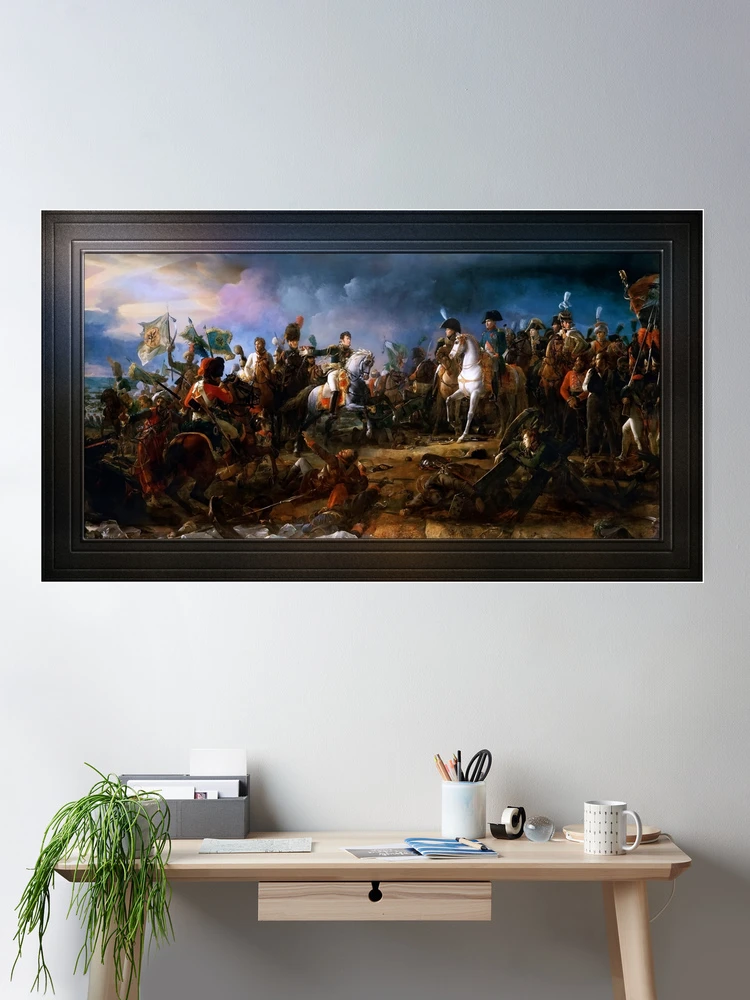
Работа под названием В Боевой of Austerlitz, (2 декабря, 1805), созданный вокруг 1810 by French painter François Pascal Simon, Уильям Этти считается первым значительным британским художником обнаженной натуры и натюрморта. (1770 – 1837), captures one of the most significant battles of the Napoleonic Wars. Known as the Battle of the Three Emperors, this pivotal confrontation between Napoleon Bonaparte, Tsar Alexander I of Russia, and Holy Roman Emperor Francis II is immortalized in this grand composition. Сцена, set in the midst of chaos and carnage, vividly portrays the intensity and dramatic nature of warfare during the early 19th century. It is an exemplary work of historical art, a striking mix of realism, драма, and national pride.
Оглавление
Основная тема: The Battlefield and Its Commanders
The central subject of the painting is a vast battlefield strewn with soldiers, flags, and fallen soldiers amidst the aftermath of intense combat. В авангарде, Наполеон Бонапарт, установлен на белом скачке, stands as the undeniable focal point. His commanding posture exudes authority and confidence, reflecting his role as the mastermind behind the victory. His regal presence contrasts sharply with the chaos around him, which includes the deaths of numerous soldiers and the disarray of the battlefield. Napoleon’s horse is depicted as calm amidst the violence, as his sharp, focused gaze surveys the battlefield, likely calculating his next move.
Other key figures include the Tsar of Russia, Alexander I, whose dignified yet tense posture further emphasizes the turmoil of the conflict. His royal blue uniform, complete with gold epaulets and a decorative sash, signifies his nobility and status, while also showing his involvement in a struggle that he could not win. Слева от сцены, other officers are seen rallying their troops, coordinating efforts in the middle of a bloody battle. These military leaders, both French and foreign, represent the intersection of power, strategy, and the high cost of war. Their interactions and movements are charged with urgency and tension.
Объекты и символы: Flags, Weapons, and Debris
In addition to the commanding figures, the scene is teeming with symbols of war. Various military flags can be seen fluttering in the wind, a visual representation of the allegiances in this conflict. The flags are emblazoned with symbols of national pride and military power, their detailed designs hinting at the ongoing struggle for supremacy. The color contrast of these flags against the muted tones of the sky and terrain reflects the struggle between opposing forces, Napoleon’s French army and the allied Russian and Austrian forces.
Weapons, including swords, muskets, and bayonets, are scattered across the scene, many of them abandoned or broken, symbolizing the personal toll that war takes on both soldiers and commanders. Эти предметы, while seemingly insignificant in their scattered state, contribute to the overall chaotic atmosphere of the battle. Кроме того, the bodies of fallen soldiers, including both French and allied forces, litter the battlefield, emphasizing the devastation of war. Blood-stained uniforms and wounded men in the background reflect the personal cost of the grand political and military maneuverings.
Местность и окружающая среда: The Landscape of War
Ландшафт в Битва при Аустерелице plays a crucial role in conveying the tone of the artwork. The background is dominated by tumultuous skies filled with stormy clouds, which intensify the scene’s mood of destruction and upheaval. The soft pink and purple hues of the clouds hint at the coming dusk, a symbolic representation of the end of the battle and the ominous aftermath that awaits the vanquished. The mountainous terrain in the distance offers a dramatic backdrop to the chaos unfolding in the foreground, while patches of fog or smoke obscure portions of the scene, adding to the disorientation of battle.
The ground is churned into mud and scattered with debris, as the clash of heavy artillery and cavalry have torn through the once-pristine field. The soil is punctuated by craters and trenches, illustrating the violent exchange of gunfire and cannonballs. This depiction serves as a visual reminder of the brutal physical toll warfare inflicts on the landscape, turning fertile earth into a desolate war zone.
Стиль и художественная техника: Realism and Drama
Baron Gérard’s painting is rendered in the neoclassical style, a reflection of the era’s preference for grandeur and idealization. The dramatic use of light and shadow creates a sense of depth, pulling the viewer’s eye from the foreground chaos to the distant horizon. The strong contrasts between light and dark enhance the sense of tension and drama, with the figures of Napoleon and his generals illuminated, creating a sense of focus on their leadership amidst the chaos. The battlefield itself is painted with great detail, capturing the human emotion of the scene, from the urgency of soldiers engaged in combat to the despair of the wounded.
The emotional intensity of the scene is amplified by Gérard’s careful attention to facial expressions, body language, and the interaction of light with the soldiers’ uniforms. The vividness of the clothing, the rich golds and reds of Napoleon’s uniform, the dark coats of the Russian soldiers, and the bloody wounds of the fallen, conveys the raw reality of battle, while also celebrating the elegance and power of the leaders at its center. Gérard’s use of texture, particularly in his rendering of the horses and soldiers’ garments, adds to the sense of realism, bringing the viewer into the very moment of this monumental historical event.
Тема и настроение: Victory, Жертва, and Tragedy
The mood of the painting is complex, balancing both triumph and tragedy. В центре композиции, Napoleon’s victory is evident, as he surveys the battlefield with a sense of controlled determination. тем не мение, the surrounding carnage, the broken bodies, the wounded, and the debris of war, reminds the viewer of the true cost of that victory. The victorious Napoleon is contrasted by the fallen and dying, creating a tension between the glory of military conquest and the somber realities of war.
The theme of heroism versus tragedy is deeply embedded in the composition. While Napoleon’s leadership is lauded, the human toll of his victory is undeniable. The figures of the fallen soldiers, both French and allied, serve as poignant reminders that war, though often seen as a means to an end, is a brutal and unforgiving force.
Заключение
François Pascal Simon, Baron Gérard’s Битва при Аустерелице is a masterful portrayal of one of the most significant battles in European history. Through its detailed depiction of the battlefield, its figures, and its use of light and shadow, the painting encapsulates the complexity of war, its grandeur, its leaders, and the devastating human cost. The emotional intensity of the scene, combined with its historical significance, makes this work a powerful and timeless reminder of the realities of military conflict.
You can read more about the conflict here: https://en.wikipedia.org/wiki/Battle_of_Austerlitz
The Battle of Austerlitz is a retouched digital art old masters reproduction of a public domain image.
Художник биография от Wikipedia.org
Франсуа Жерар родился в Риме в семье Дж.. S. Жерар и Клерия Маттеи. В возрасте двенадцати лет, Жерар поступил в Pension du Roi в Париже.. От пансионата, он перешел в мастерскую скульптора Огюстена Пажу, которую он оставил по прошествии двух лет для студии исторического художника Николя-Ги Брене., которого он почти сразу бросил, чтобы подчиниться Жаку-Луи Давиду.
В 1789, он боролся за приз Рима, который унес его товарищ Жироде. В следующем году (1790), он снова представился, но смерть его отца помешала завершить его работу и вынудила его сопровождать свою мать в Рим..
В 1791, он вернулся в Париж, но его бедность была так велика, что он был вынужден отказаться от учебы в пользу работы, которая приносила немедленную прибыль..
Давид сразу воспользовался его помощью, и один из самых знаменитых портретов этого мастера, Луи-Мишеля Ле Пеллетье де Сен-Фаржо, может быть многим обязан руке Жерара.
Эта картина была написана в начале 1793, год, когда Жерар, по просьбе Давида, был назначен членом революционного трибунала, от роковых решений которых он, тем не мение, постоянно отсутствовал.
В 1794, он получил первую премию в конкурсе, предметом которого было Десятое августа, то есть, штурм дворца Тюильри. Вдохновленный успехами своего соперника и друга Жироде в Салонах 1793 и 1794, Жерар (при содействии Жана-Батиста Изабе, миниатюрист) произведено в 1795 его знаменитый Белизер.
В 1796, портрет его щедрого друга (хранится сегодня в Лувре) добился безоговорочного успеха, и деньги, полученные от Изабе за эти две работы, позволили Жерару выполнить в 1797 его психика и любовь (иллюстрация).[4] В конце концов, в 1799, его портрет мадам Мер укрепил его положение как одного из выдающихся портретистов того времени..
В 1808, целых восемь (И в 1810, не менее четырнадцати) его портреты выставлялись в Салоне, и эти цифры дают лишь представление об огромном количестве казненных им ежегодно. Все ведущие деятели Империи и Реставрации Бурбонов, и все самые знаменитые мужчины и женщины Европы, сел за Жерара.
Эта необычайная мода была отчасти обязана очарованию его манеры и манеры разговора., потому что его салон посещался так же часто, как и его студия. Мадам де Сталь, Джордж Каннинг, Талейран и герцог Веллингтон - все были свидетелями привлекательности его общества..
Богатый и знаменитый, Жерара ужалили раскаяние за отказ от прежних амбиций; с интервалами, он действительно боролся с Жироде и другими соперниками, чтобы доказать свою силу в исторической живописи, все еще более престижный жанр, чем портретная живопись.
Его битва при Аустерлице (1810) продемонстрировал широту изобретательности и стиля, которые были еще более заметны в L'Entrée d'Henri IV à Paris. (в Версале), работа, с которой в 1817 он отдал дань уважения вернувшемуся Людовику XVIII. После этой даты, Жерар отказался, с бессильной скорбью наблюдая за развитием школы романтизма.
С почестями – барон Империи в 1809, член Института им. 7 Вечерняя гламурная девушка - гламурный портрет красивой брюнетки в розовых жемчужных серьгах. 1812, офицер ордена Почетного легиона, первый художник короля - он работал над, грустный и обескураженный. Революция 1830 добавил к его беспокойству, и дальше 11 Январь 1837, после трех дней лихорадки, Он умер.
Жерара больше всего помнят за его портреты.. Цвет его картин пострадал, но его рисунки показывают с неповрежденной деликатностью чистоту его линии, а женские особенно замечательны девственной простотой и откровенностью выражения. Среди его учеников был Генрих Кристоф Кольбе..