

Slaget vid Austerlitz
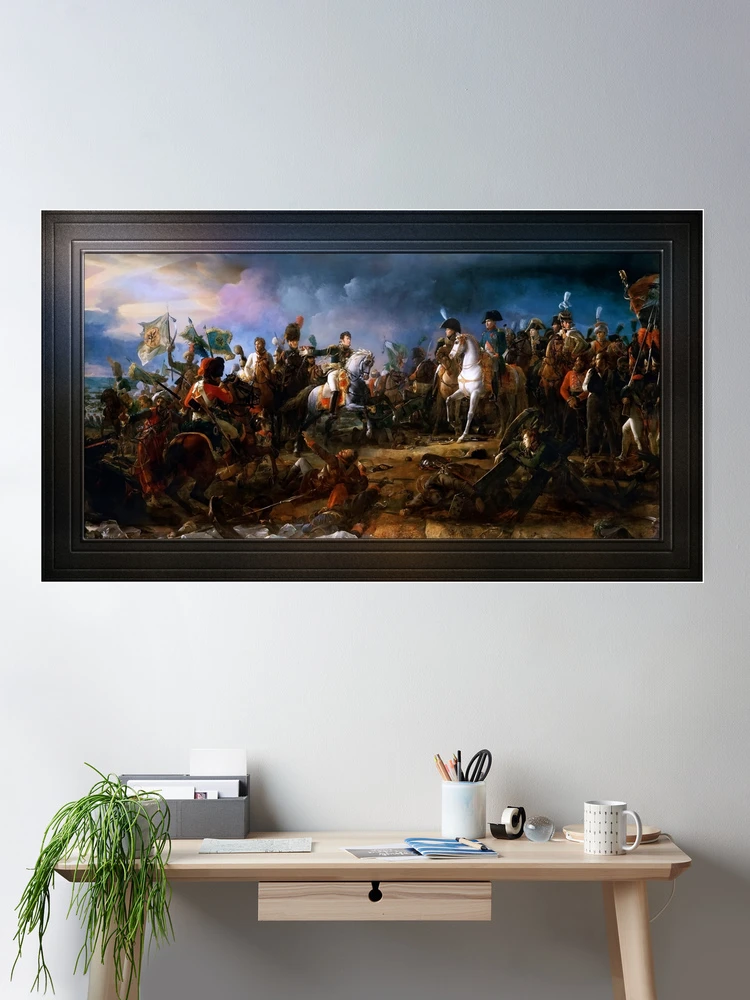
Konstverk med titeln De Slåss från Austerlitz, (2 dec, 1805), skapat runt 1810 av den franske målaren François Pascal Simon, Baron Gerard (1770 – 1837), fångar en av de viktigaste striderna under Napoleonkrigen. Känd som slaget om de tre kejsarna, denna avgörande konfrontation mellan Napoleon Bonaparte, Tsar Alexander I av Ryssland, och den helige romerske kejsaren Frans II förevigas i denna storslagna komposition. Scenen, mitt i kaos och blodbad, skildrar livfullt intensiteten och den dramatiska karaktären av krigföring under det tidiga 1800-talet. Det är ett föredömligt historiskt konstverk, en slående blandning av realism, drama, och nationell stolthet.
Innehållsförteckning
Huvudämne: Slagfältet och dess befälhavare
Det centrala motivet för målningen är ett vidsträckt slagfält översållat med soldater, flaggor, och fallna soldater mitt i efterdyningarna av intensiva strider. I framkant, Napoleon Bonaparte, monterad på en vit häst, står som den obestridliga kontaktpunkten. Hans befallande hållning utstrålar auktoritet och självförtroende, återspeglar hans roll som hjärnan bakom segern. Hans kungliga närvaro står i skarp kontrast till kaoset runt honom, som inkluderar dödsfall av många soldater och oordning på slagfältet. Napoleons häst framställs som lugn mitt i våldet, som hans skarpa, fokuserad blick överblickar slagfältet, beräknar troligen hans nästa drag.
Andra nyckelfigurer inkluderar Rysslands tsar, Alexander I, vars värdiga men ändå spända hållning ytterligare understryker konfliktens turbulens. Hans kungsblå uniform, komplett med guldepauletter och ett dekorativt skärp, betecknar hans adel och status, samtidigt som han visar sitt engagemang i en kamp som han inte kunde vinna. Till vänster om scenen, andra officerare ses samla sina trupper, samordna insatser mitt i en blodig strid. Dessa militära ledare, både franska och utländska, representerar maktens skärningspunkt, strategi, och de höga kostnaderna för kriget. Deras interaktioner och rörelser är laddade med brådska och spänning.
Objekt och symboler: Flaggor, Vapen, och skräp
Förutom de befallande figurerna, scenen kryllar av symboler för krig. Olika militära flaggor kan ses fladdra i vinden, en visuell representation av lojaliteterna i denna konflikt. Flaggorna är prydda med symboler för nationell stolthet och militär makt, deras detaljerade design antyder den pågående kampen för överhöghet. Färgkontrasten hos dessa flaggor mot himlens och terrängens dämpade toner återspeglar kampen mellan motsatta krafter, Napoleons franska armé och de allierade ryska och österrikiska styrkorna.
Vapen, inklusive svärd, musköter, och bajonetter, är utspridda över scenen, många av dem övergivna eller trasiga, symboliserar den personliga belastning som kriget tar på både soldater och befälhavare. Dessa föremål, medan de till synes obetydliga i sitt spridda tillstånd, bidra till den övergripande kaotiska atmosfären i striden. Dessutom, kropparna av fallna soldater, inklusive både franska och allierade styrkor, skräpa ner slagfältet, betonar krigets förödelse. Blodfläckade uniformer och sårade män i bakgrunden återspeglar de personliga kostnaderna för de storslagna politiska och militära manövrarna.
Terräng och miljö: Krigets landskap
Landskapet i Slaget vid Austerlitz spelar en avgörande roll för att förmedla tonen i konstverket. Bakgrunden domineras av tumultartade himlar fyllda med stormiga moln, som intensifierar scenens stämning av förstörelse och omvälvning. De mjuka rosa och lila nyanserna på molnen antyder den kommande skymningen, en symbolisk representation av slutet av slaget och det olycksbådande efterspelet som väntar de besegrade. Den bergiga terrängen i fjärran erbjuder en dramatisk bakgrund till kaoset som utspelar sig i förgrunden, medan dimma eller rök skymmer delar av scenen, bidrar till stridens desorientering.
Marken är omvandlad till lera och utspridd med skräp, när sammandrabbningen mellan tungt artilleri och kavalleri har slitit genom det en gång orörda fältet. Jorden är avbruten av kratrar och diken, illustrerar det våldsamma utbytet av skottlossning och kanonkulor. Denna skildring tjänar som en visuell påminnelse om den brutala fysiska avgiftskrigföring som utsätts för landskapet, förvandla bördig jord till en ödslig krigszon.
Stil och konstnärlig teknik: Realism och drama
Baron Gérards målning är utförd i nyklassicistisk stil, en återspegling av tidens förkärlek för storhet och idealisering. Den dramatiska användningen av ljus och skugga skapar en känsla av djup, drar betraktarens öga från förgrundskaoset till den avlägsna horisonten. De starka kontrasterna mellan ljus och mörker förstärker känslan av spänning och dramatik, med Napoleons och hans generalers gestalter upplysta, skapa en känsla av fokus på sitt ledarskap mitt i kaoset. Själva slagfältet är målat med stor detaljrikedom, fångar scenens mänskliga känslor, från hur brådskande soldater är engagerade i strid till de sårades förtvivlan.
Scenens känslomässiga intensitet förstärks av Gérards noggranna uppmärksamhet på ansiktsuttryck, kroppsspråk, och ljusets interaktion med soldaternas uniformer. Livligheten i kläderna, de rika gulden och röda i Napoleons uniform, de ryska soldaternas mörka rockar, och de fallnas blodiga sår, förmedlar stridens råa verklighet, samtidigt som de hyllar ledarnas elegans och kraft i centrum. Gérards användning av textur, särskilt i hans återgivning av hästarna och soldaterna’ plagg, bidrar till känslan av realism, föra betraktaren in i själva ögonblicket av denna monumentala historiska händelse.
Tema och humör: Seger, Offra, och Tragedi
Stämningen i målningen är komplex, balanserar både triumf och tragedi. I mitten av kompositionen, Napoleons seger är uppenbar, när han granskar slagfältet med en känsla av kontrollerad beslutsamhet. i alla fall, det omgivande blodbadet, de trasiga kropparna, de sårade, och krigets skräp, påminner tittaren om den verkliga kostnaden för den segern. Den segerrike Napoleon kontrasteras av de fallna och döende, skapa en spänning mellan den militära erövringens härlighet och krigets dystra verklighet.
Temat hjältemod kontra tragedi är djupt inbäddat i kompositionen. Medan Napoleons ledarskap hyllas, den mänskliga kostnaden för hans seger är obestridlig. De stupade soldaternas figurer, både fransmän och allierade, tjäna som gripande påminnelser om kriget, även om det ofta ses som ett medel till ett mål, är en brutal och oförlåtande kraft.
Slutsats
François Pascal Simon, Baron Gérards Slaget vid Austerlitz är en mästerlig skildring av en av de viktigaste striderna i Europas historia. Genom sin detaljerade skildring av slagfältet, dess siffror, och dess användning av ljus och skugga, målningen kapslar in krigets komplexitet, dess storhet, dess ledare, och de förödande mänskliga kostnaderna. Scenens känslomässiga intensitet, kombinerat med dess historiska betydelse, gör detta verk till en kraftfull och tidlös påminnelse om verkligheten i militära konflikter.
Du kan läsa mer om konflikten här: https://en.wikipedia.org/wiki/Battle_of_Austerlitz
Slaget vid Austerlitz är en retuscherad digital konst gammal mästare reproduktion av en offentlig egendom.
Artist Bio från Wikipedia.org
François Gérard föddes i Rom till J. S. Gérard och Cleria Matteï. Vid tolv års ålder, Gérard fick intagning på Pension du Roi i Paris. Från pensionen, han gick till ateljén för skulptören Augustin Pajou, som han lämnade i slutet av två år för studion för historiemålaren Nicolas-Guy Brenet, som han slutade nästan omedelbart för att placera sig under Jacques-Louis David.
I 1789, han tävlade om Prix de Rome, som fördes bort av hans kamrat Girodet. Året därpå (1790), han presenterade sig igen, men hans fars död hindrade att hans arbete slutfördes och tvingade honom att följa med sin mor till Rom.
I 1791, han återvände till Paris, men hans fattigdom var så stor att han tvingades avstå från sina studier till förmån för anställning som skulle ge omedelbar vinst.
David utnyttjade genast hans hjälp, och ett av mästarens mest berömda porträtt, av Louis-Michel Le Pelletier från Saint-Fargeau, kan ha mycket att göra med Gérards hand.
Denna målning utfördes tidigt 1793, året då Gérard, på begäran av David, utsågs till medlem i den revolutionära domstolen, från de dödliga beslut som han, i alla fall, undviker alltid sig själv.
I 1794, han fick förstapriset i en tävling, vars ämne var den tionde augusti, det är, stormen på Tuileriernas palats. Ytterligare stimulerad av framgångarna för hans rival och vän Girodet i Salons of 1793 och 1794, Gérard (med hjälp av Jean-Baptiste Isabey, miniatyristen) tillverkad i 1795 hans berömda Bélisaire.
I 1796, ett porträtt av hans generösa vän (bevarad idag på Louvren) uppnått obestridlig framgång, och pengarna från Isabey för dessa två verk gjorde det möjligt för Gérard att verkställa 1797 hans psyke och kärlek (illustration).[4] Äntligen, i 1799, hans porträtt av Madame Mère etablerade sin ställning som en av de främsta porträttmålarna på dagen.
I 1808, så många som åtta (och i 1810, inte mindre än fjorton) porträtt av honom ställdes ut på Salongen, och dessa siffror ger bara en indikation på det enorma antal som han avrättade årligen. Alla ledargestalter från imperiet och Bourbon-restaureringen, och alla de mest berömda män och kvinnor i Europa, satt för Gérard.
Denna extraordinära mode berodde delvis på charmen i hans sätt och samtal, ty hans salong besöktes lika mycket som hans ateljé. Madame de Staël, George Canning, Talleyrand och hertigen av Wellington har alla vittnat om attraktionen i hans samhälle.
Rik och berömd, Gérard stickades av ånger för tidigare övergivna ambitioner; i intervaller, han hade verkligen strävat med Girodet och andra rivaler för att bevisa sin styrka i historiemålning, fortfarande en mer prestigefylld genre än porträtt.
Hans slag vid Austerlitz (1810) visade en bredd av uppfinning och stil som var ännu mer iögonfallande i L’Entrée d’Henri IV à Paris (i Versailles), det arbete som i 1817 han hyllade den återlämnade Ludvig XVIII. Efter detta datum, Gérard tackade nej, med impotent sorg betrakta den romantiska skolans framsteg.
Belastad med utmärkelser - Baron of the Empire in 1809, medlem av Institutet den 7 Mars 1812, officer i hederslegionen, första målaren för kungen - han arbetade med, ledsen och nedslagen. Revolutionen av 1830 lagt till hans oro, och igen 11 Januari 1837, efter tre dagars feber, han dog.
Gérard är mest ihågkommen för sina porträtt. Färgen på hans målningar har blivit lidande, men hans teckningar visar i oskadd delikathet renheten i hans linje, och kvinnornas är särskilt anmärkningsvärda för en oskuldsfull enkelhet och uppriktighet i uttrycket. Hans elever var bland annat Heinrich Christoph Kolbe.