

La battaglia della baia di Quiberon
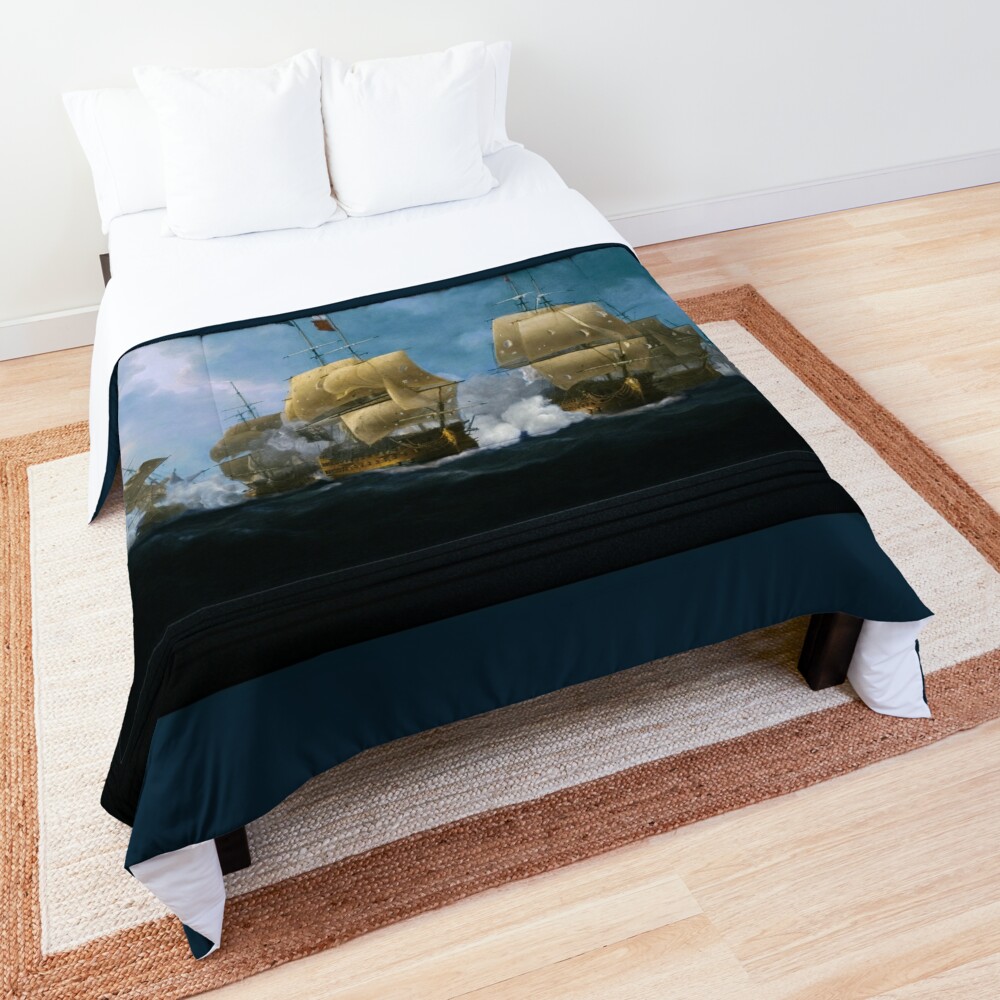
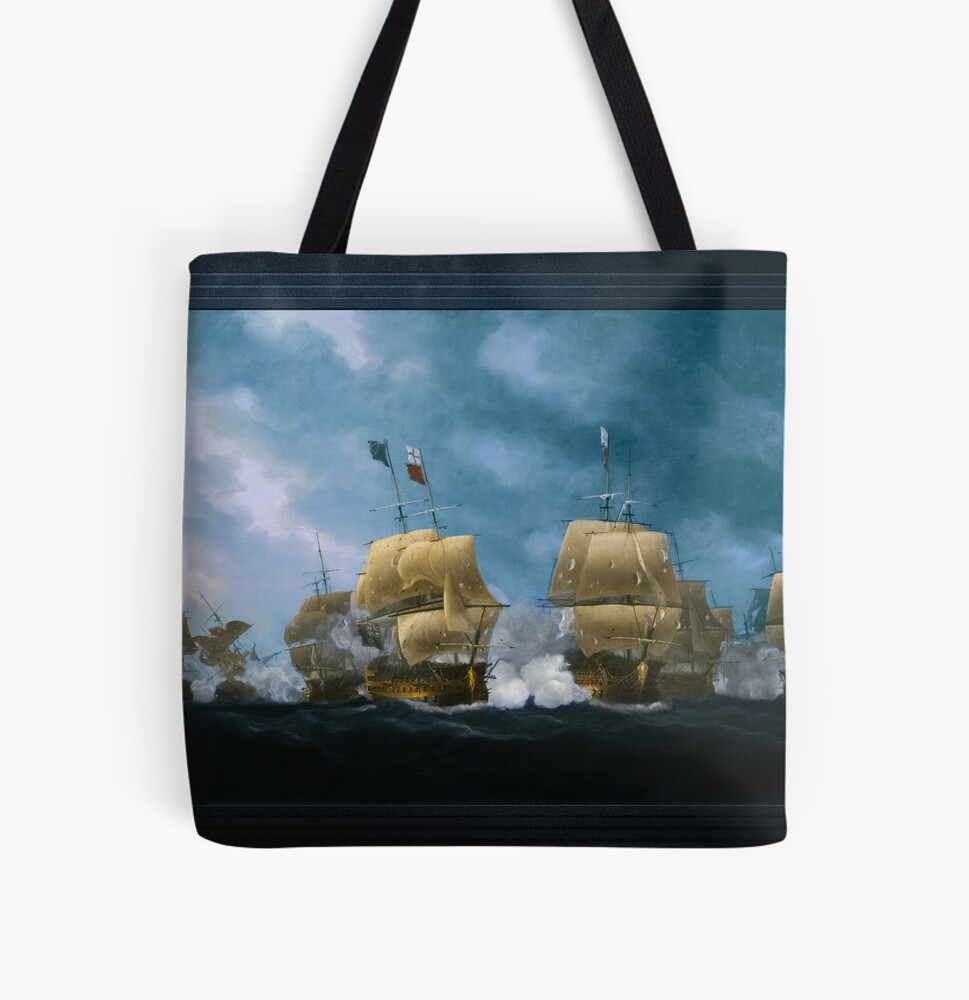
La battaglia della baia di Quiberon, sopra 20 novembre 1759 del pittore britannico Nicholas Pocock (1740 – 1821); è noto per i numerosi scene di battaglie navali creò nell'epoca dei velieri
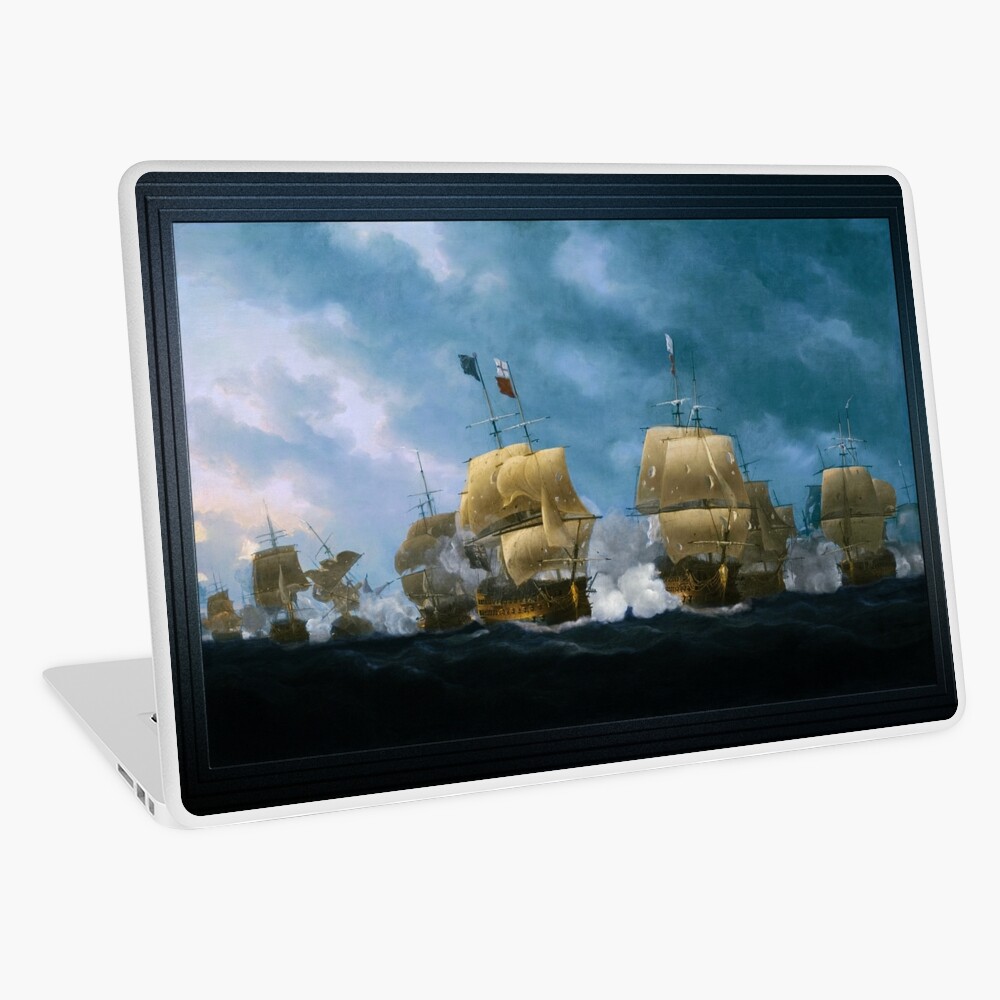
La battaglia navale della baia di Quiberon è rappresentata con forza in questo dipinto del pittore britannico Nicholas Pocock, come a flotta di navi da guerra in guerra in mare, impegnandosi a vicenda a distanza ravvicinata, sparando lì con i cannoni nelle viscere delle rispettive navi da guerra in alto mare agitato, sotto le nuvole temporalesche in una giornata molto nuvolosa.
La battaglia di Quiberon Bay è una riproduzione ritoccata di arte digitale di vecchi maestri di un'immagine di pubblico dominio disponibile per l'acquisto online in una varietà di formati di materiali, comprese le stampe su tela, stampe acriliche, stampe in metallo, stampe su legno, stampe incorniciate, manifesti, e come stampe su tela arrotolata in una varietà di dimensioni da 12 pollici a 72 pollici a seconda delle dimensioni dell'opera d'arte effettiva e del negozio di stampa su richiesta da cui scegli di acquistare l'arte.
Informazioni di seguito derivate da Musei reali Greenwich
The Battle of Quiberon Bay was a major naval engagement that took place on November 20, 1759, during the Seven Years War. The conflict involved the major European colonial powers and was fought around the globe. The French had been at war with Britain since 1756, and their position in Canada, India, and the West Indies was on the verge of collapse. In Europe, they faced stalemate against Prussia, which received British support.
The French planned to land an army of 20,000 men in Ireland, which was assembled in the gulf of Morbihan in southern Brittany under the Duc d’Aiguillon. The force was to be escorted by the Brest fleet under Admiral Hubert de Conflans. Admiral Sir Edward Hawke’s Channel Fleet blockaded Brest to prevent the French from leaving to collect the troop transports. tuttavia, during a gale in the first week of November, Hawke’s ships were forced to run for shelter in Torbay, giving de Conflans the chance to escape.
On hearing that the French had escaped, Hawke pursued them and sighted them 20 miles out to sea on November 20. De Conflans, relying on local knowledge, ordered his fleet to take refuge in Quiberon Bay, south of Morbihan, assuming Hawke would not follow due to the ill-charted rocks, reefs, and wild seas. This was a miscalculation, and Hawke relentlessly pursued him into the bay, losing two of his own ships on the outer reefs but sinking the French ‘Thesee’ and ‘Superbe’ by a combination of gunfire and the weather, and otherwise decimating de Conflans’ force in what became an action practically in the dark.
The French flagship ‘Soleil Royal’ went aground in the bay, near Le Croisic, and was burned to prevent capture the following day. Others were captured, including the ‘Heros,’ which was burned. A few French ships escaped to Rochefort, and some others managed to find refuge in the mouth of the River Vilaine, where they were trapped for months, and one more lost by grounding.
The battle was a decisive victory for the British, and it stopped any French plans to invade Britain during the Seven Years War. The famous naval song ‘Hearts of Oak’ was composed to commemorate the battle. La battaglia fu combattuta così vicino alla costa che resoconti contemporanei riferirono che diecimila persone la osservarono dalla costa.
Questo dipinto piuttosto tardo di Pocock è in parte basato su un precedente di Dominic Serres e mostra il "Royal George" di Hawke’ nel centro sinistra, con il colore blu dell'ammiraglio in alto, in azione con de Conflans’ ‘Soleil Royal’ A destra, sebbene quest'ultimo sia erroneamente indicato come un tre piani. Una nave francese a poppa della Royal George’ spara bordate da entrambe le parti, la sua batteria di tribordo probabilmente era diretta alla "Torbay" di Augustus Keppel,’ mentre tra di loro, il francese "Thesee".’ affonda a prua.
Ciò era in gran parte dovuto all'acqua che inondava i suoi cannoni sottovento inferiori e anteriori in mare agitato, since this battle was an example of the disadvantage of fighting with the ‘weather gauge’ (the generally assumed benefit of being to windward).
Informazioni di seguito derivate da Wikipedia.org
Pocock was born in Bristol in 1740; the son of a seaman, he followed in his father’s profession and was master of a merchant ship by the age of 26.
During his time at sea, he became a skilled artist by making ink and wash sketches of ships and coastal scenes for his log books.
Nel 1778, Pocock’s employer, Richard Champion, became financially insolvent due to the effects of the American Revolutionary War on transatlantic trade.
As a result, Pocock gave up the sea and devoted himself to painting; with the first of his works being exhibited by the British Royal Academy of Arts in 1782.
Later that year, Pocock was commissioned to produce a series of paintings illustrating George Rodney’s victory at the Battle of the Saintes; and as a favourite of Samuel Hood he was appointed Marine Painter to King George.
Pocock’s naval paintings incorporated extensive research, including interviewing eyewitnesses about weather and wind conditions as well as the positions, condition, and appearance of their ships; and drawing detailed plans of the battle and preliminary sketches of individual ships.
He was also present himself at the Glorious First of June in 1794, on board the frigate HMS Pegasus. In addition to his large-scale oil paintings depicting naval battles, Pocock produsse anche molti acquerelli di scene costiere e navali.