

キブロン湾の海戦
キブロン湾の海戦, オン 20 11月 1759 イギリスの画家ニコラス・ポコック (1740 – 1821); is known for the numerous naval battle scenes he created during the age of the sailing ships
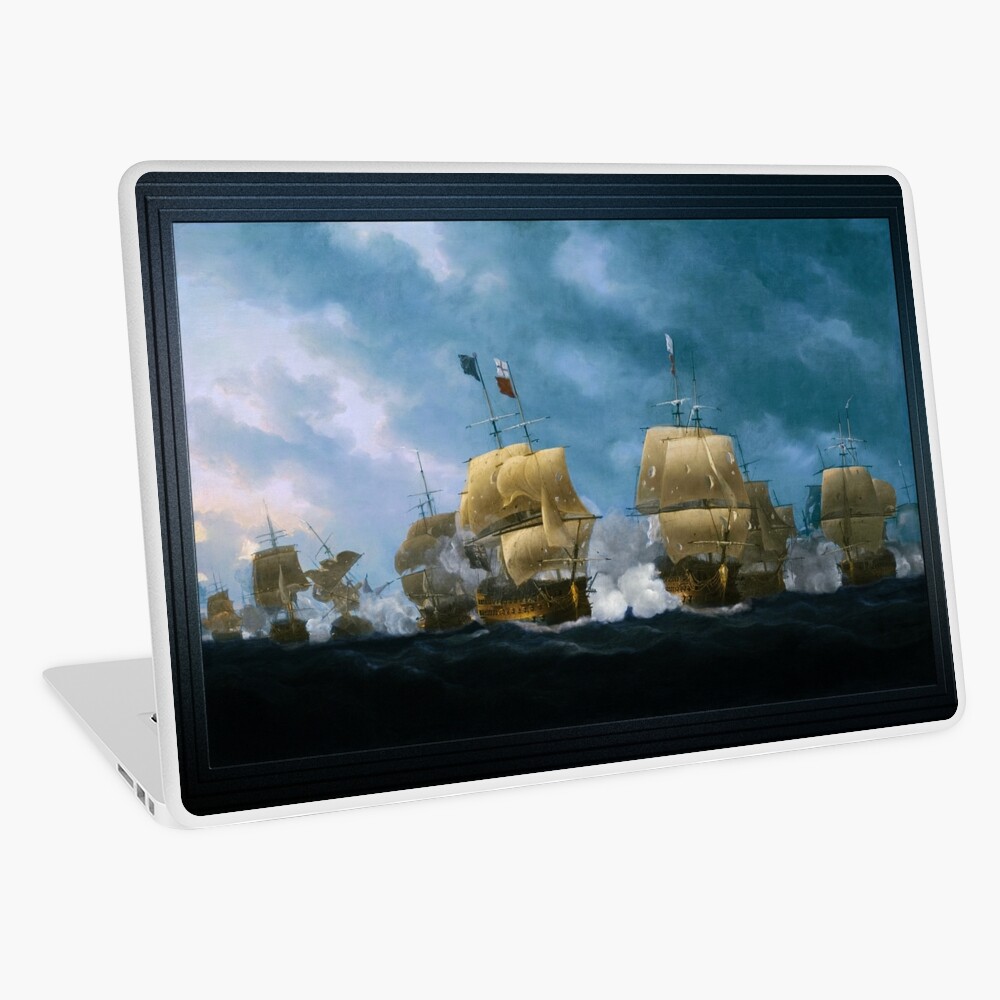
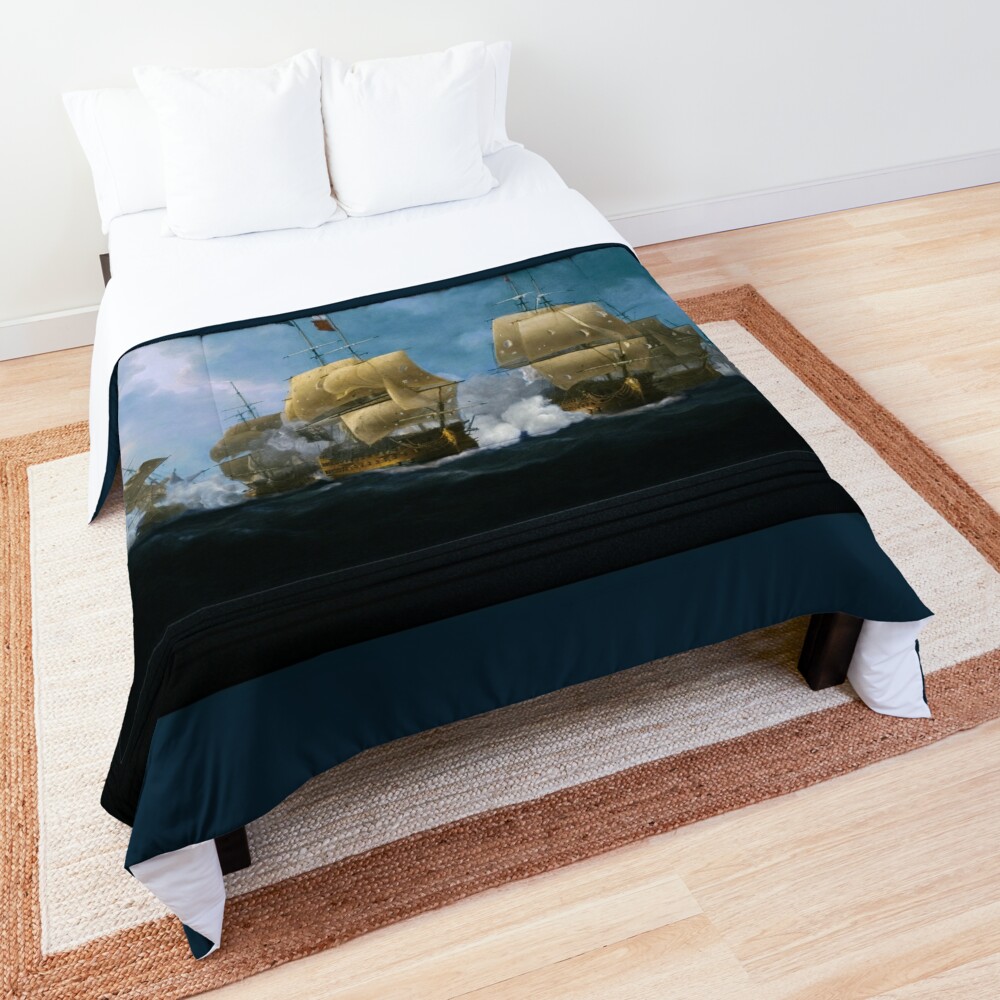
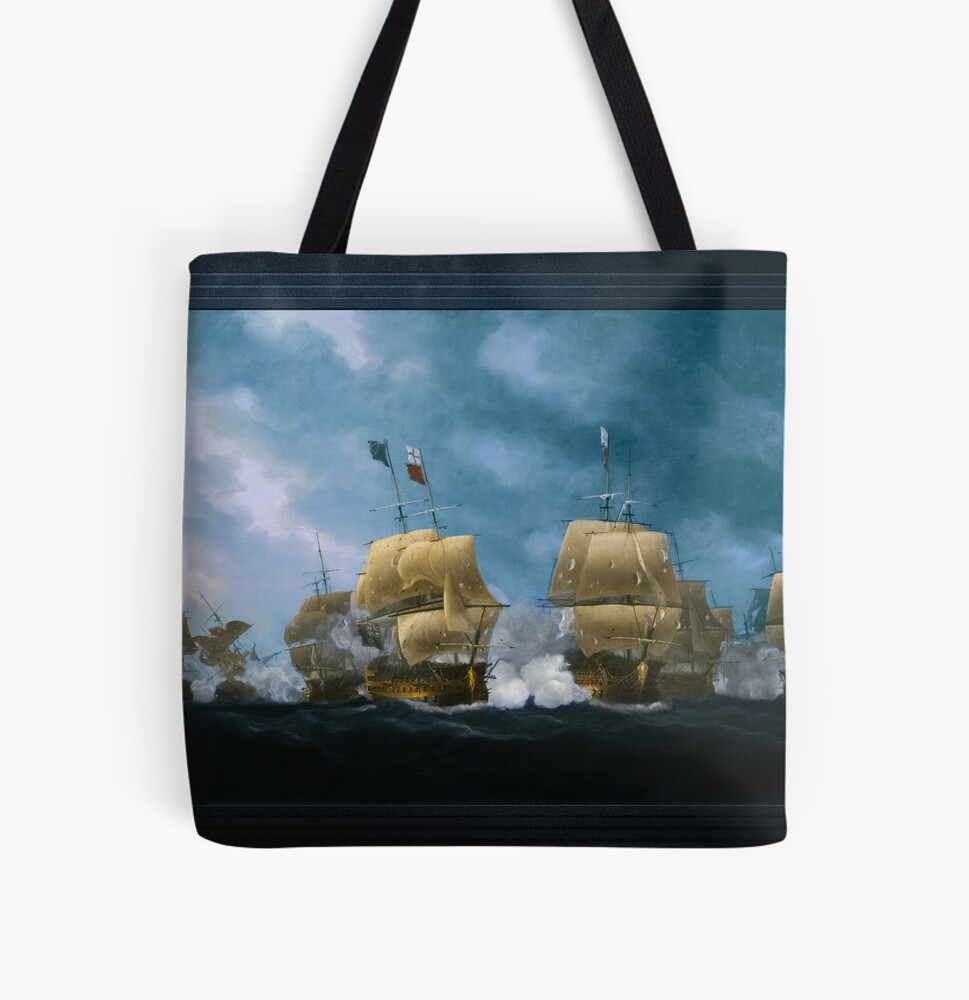
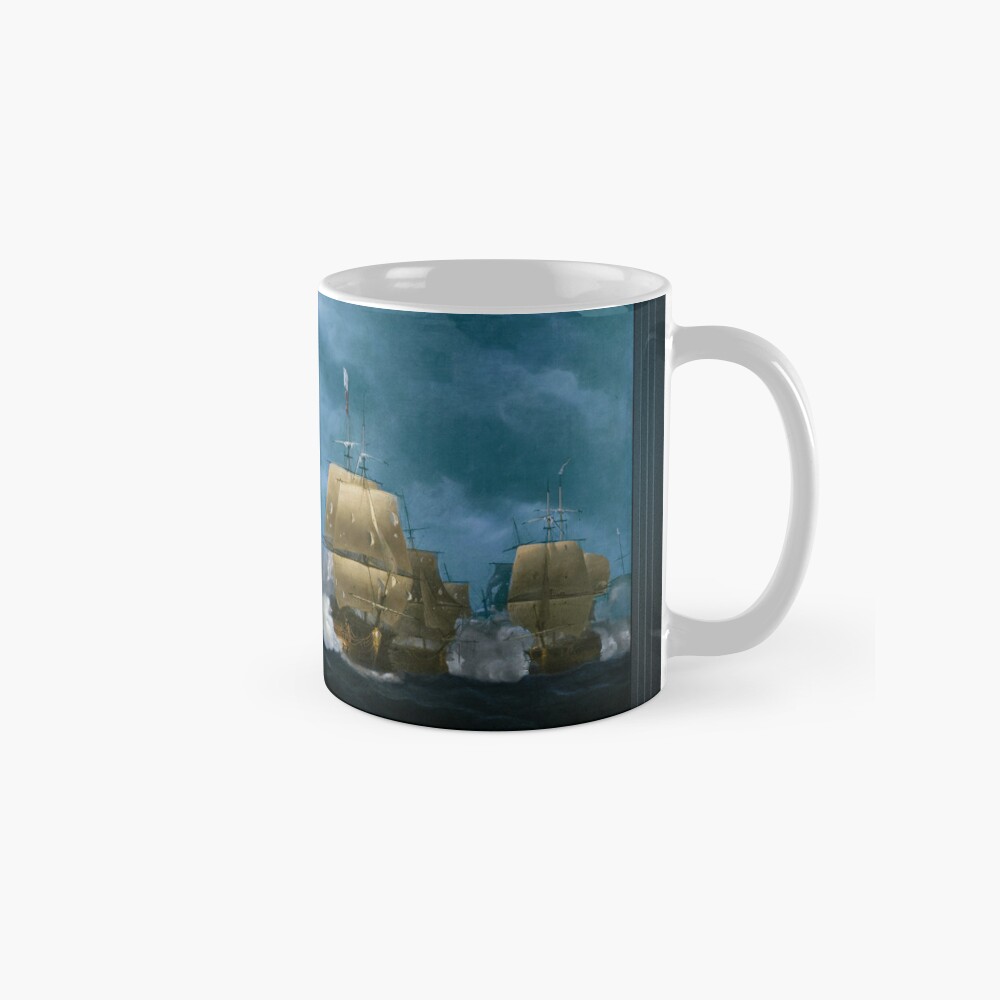
The sea Battle of Quiberon Bay is powerfully portrayed in this painting by British Painter Nicholas Pocock, as a fleet of warships under take a war at sea, engaging each other at close quarters, firing there canons into the bowels of each others warships on the rough going high seas, beneath storm clouds on a heavily overcast day.
The Battle of Quiberon Bay is a retouched digital art old masters reproduction of a public domain image that is available for purchase online in a variety of material formats including canvas prints, アクリルプリント, メタルプリント, 木版, 額入りプリント, ポスター, そしてとして ロール状のキャンバスプリント からさまざまなサイズで 12 インチから 72 インチは、実際のアートワークのサイズと、アートを購入するために選択したオンデマンド プリント ショップによって異なります。.
以下の情報から派生 Royal Museums Greenwich
The Battle of Quiberon Bay was a major naval engagement that took place on November 20, 1759, during the Seven Years War. The conflict involved the major European colonial powers and was fought around the globe. The French had been at war with Britain since 1756, and their position in Canada, India, and the West Indies was on the verge of collapse. In Europe, they faced stalemate against Prussia, which received British support.
The French planned to land an army of 20,000 men in Ireland, which was assembled in the gulf of Morbihan in southern Brittany under the Duc d’Aiguillon. The force was to be escorted by the Brest fleet under Admiral Hubert de Conflans. Admiral Sir Edward Hawke’s Channel Fleet blockaded Brest to prevent the French from leaving to collect the troop transports. しかしながら, during a gale in the first week of November, Hawke’s ships were forced to run for shelter in Torbay, giving de Conflans the chance to escape.
On hearing that the French had escaped, Hawke pursued them and sighted them 20 miles out to sea on November 20. De Conflans, relying on local knowledge, ordered his fleet to take refuge in Quiberon Bay, south of Morbihan, assuming Hawke would not follow due to the ill-charted rocks, reefs, and wild seas. This was a miscalculation, and Hawke relentlessly pursued him into the bay, losing two of his own ships on the outer reefs but sinking the French ‘Thesee’ and ‘Superbe’ by a combination of gunfire and the weather, and otherwise decimating de Conflans’ force in what became an action practically in the dark.
The French flagship ‘Soleil Royal’ went aground in the bay, near Le Croisic, and was burned to prevent capture the following day. Others were captured, including the ‘Heros,’ which was burned. A few French ships escaped to Rochefort, and some others managed to find refuge in the mouth of the River Vilaine, where they were trapped for months, and one more lost by grounding.
The battle was a decisive victory for the British, and it stopped any French plans to invade Britain during the Seven Years War. The famous naval song ‘Hearts of Oak’ was composed to commemorate the battle. The battle was fought so close inshore that contemporary accounts reported that ten thousand persons watched it from the coast.
This rather later painting by Pocock is partly based on an earlier one by Dominic Serres and shows Hawke’s ‘Royal George’ in the left center, with his blue admiral’s color at the main, in action with de Conflans’ ‘Soleil Royal’ to the right, though the latter is wrongly shown as a three-decker. A French ship astern of the ‘Royal George’ is firing broadsides on both sides, her starboard battery probably directed at Augustus Keppel’s ‘Torbay,’ while between them, the French ‘Thesee’ sinks by the bows.
This was largely due to water swamping through her lower and forward leeward gunports in the heavy seas, since this battle was an example of the disadvantage of fighting with the ‘weather gauge’ (the generally assumed benefit of being to windward).
以下の情報から派生 Wikipedia.org
Pocock was born in Bristol in 1740; the son of a seaman, he followed in his father’s profession and was master of a merchant ship by the age of 26.
During his time at sea, he became a skilled artist by making ink and wash sketches of ships and coastal scenes for his log books.
に 1778, Pocock’s employer, Richard Champion, became financially insolvent due to the effects of the American Revolutionary War on transatlantic trade.
結果として, Pocock gave up the sea and devoted himself to painting; with the first of his works being exhibited by the British Royal Academy of Arts in 1782.
Later that year, Pocock was commissioned to produce a series of paintings illustrating George Rodney’s victory at the Battle of the Saintes; and as a favourite of Samuel Hood he was appointed Marine Painter to King George.
Pocock’s naval paintings incorporated extensive research, including interviewing eyewitnesses about weather and wind conditions as well as the positions, condition, and appearance of their ships; and drawing detailed plans of the battle and preliminary sketches of individual ships.
彼はまた、6月の栄光の6月1日に出席しました。 1794, フリゲート艦HMSペガサスに搭載. 海戦を描いた彼の大規模な油絵に加えて, ポコックはまた、沿岸や船のシーンの多くの水彩画を制作しました.