

Slaget vid Quiberon Bay
Slaget vid Quiberon Bay, på 20 November 1759 av den brittiske målaren Nicholas Pocock (1740 – 1821); is known for the numerous naval battle scenes he created during the age of the sailing ships
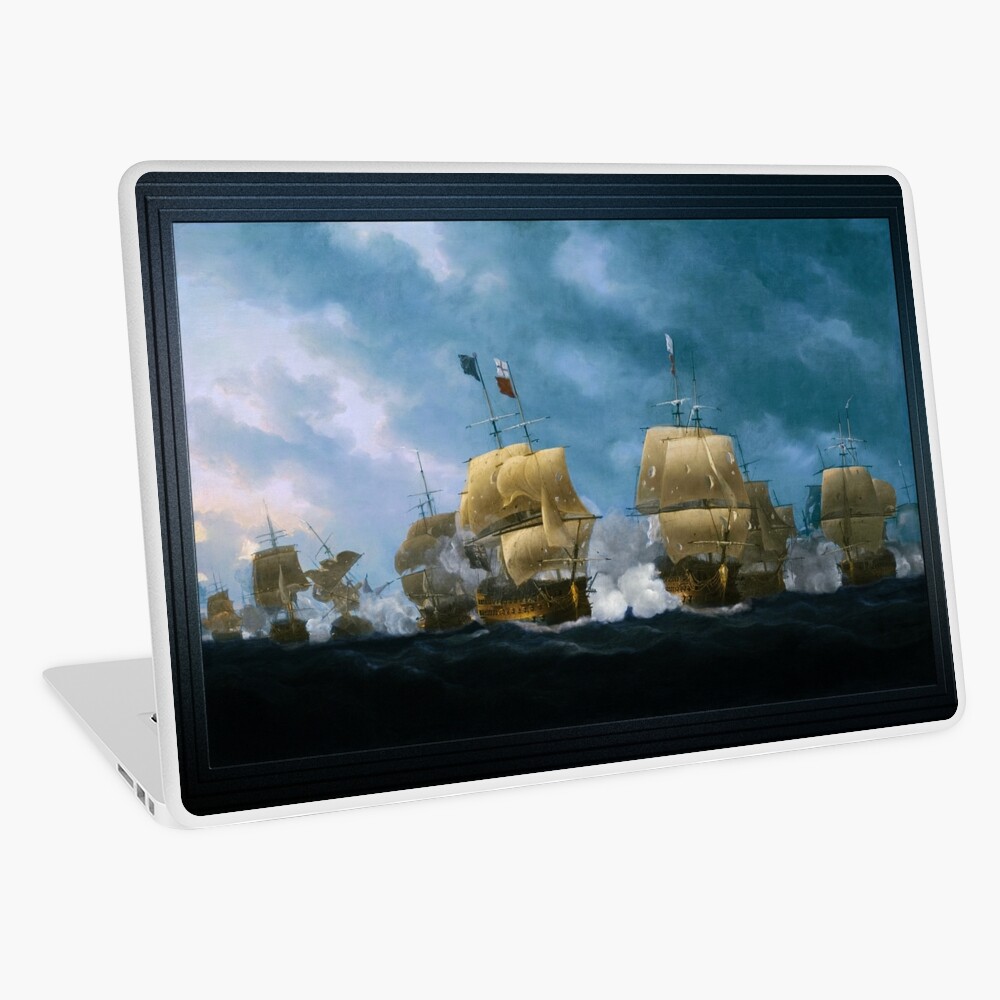
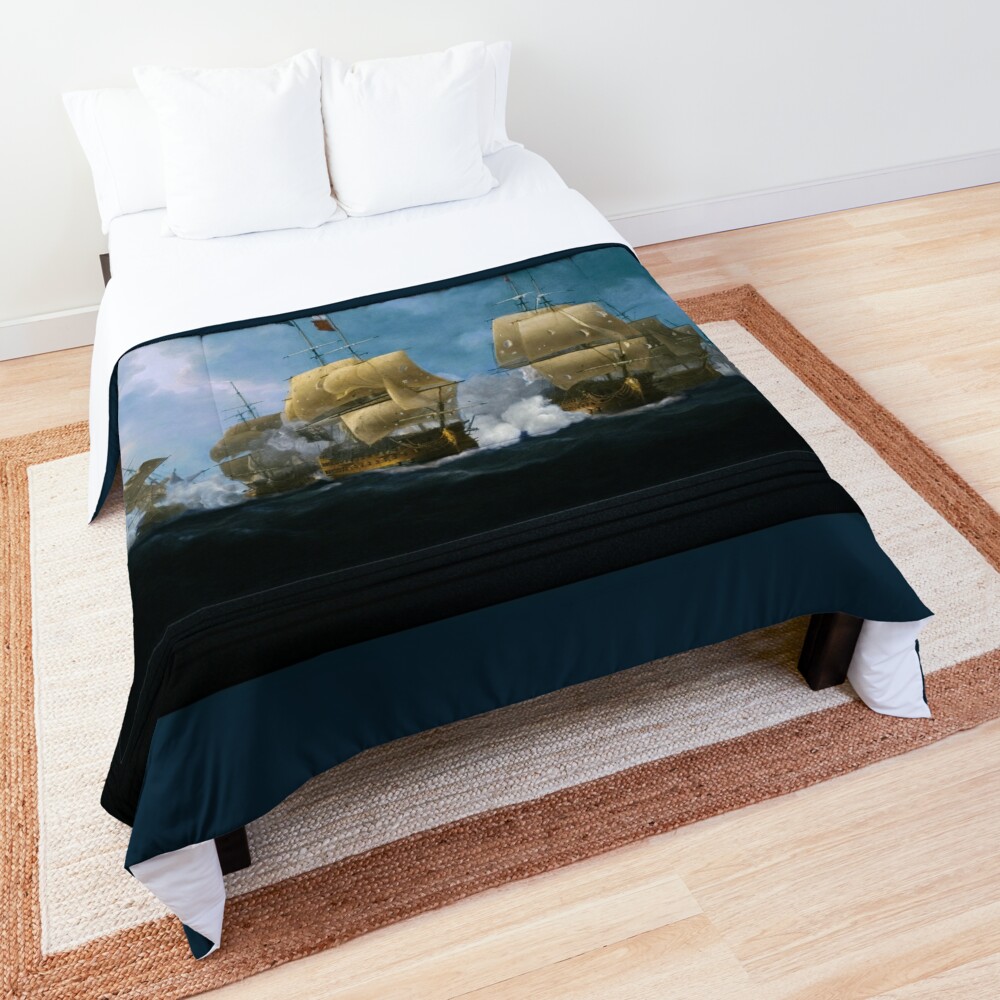
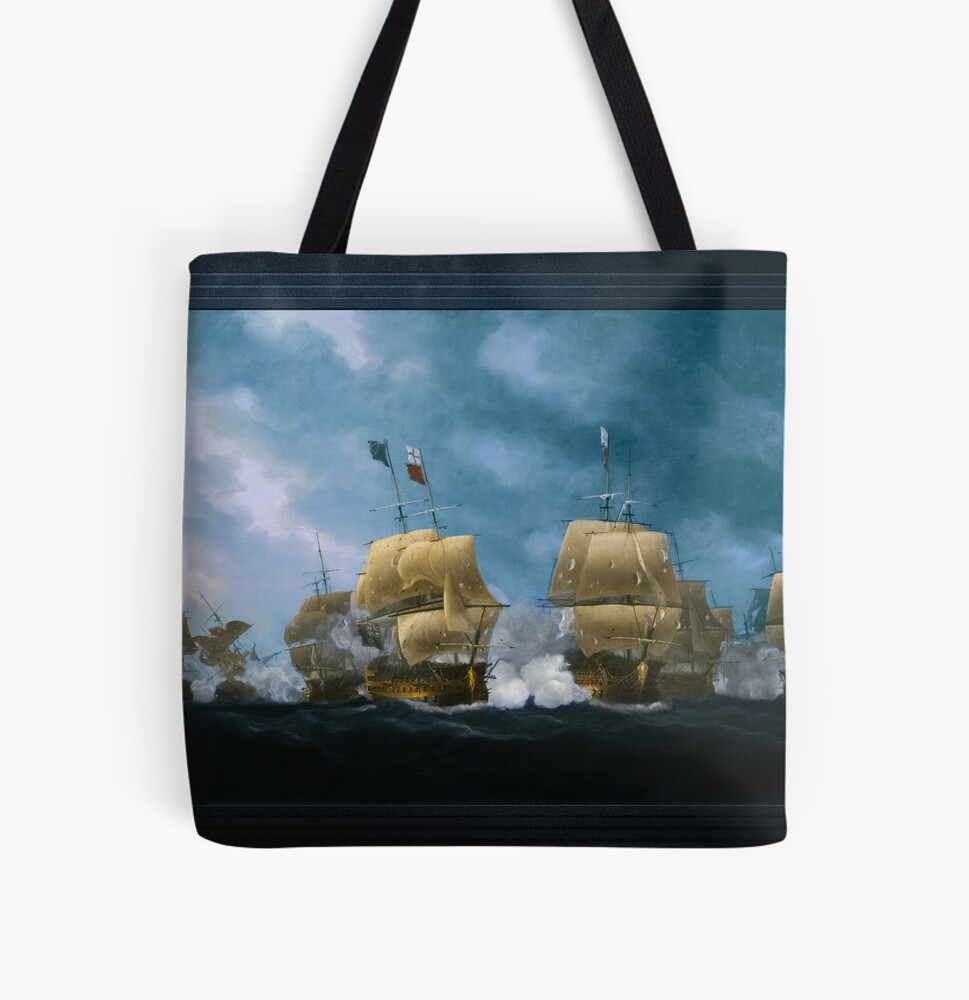
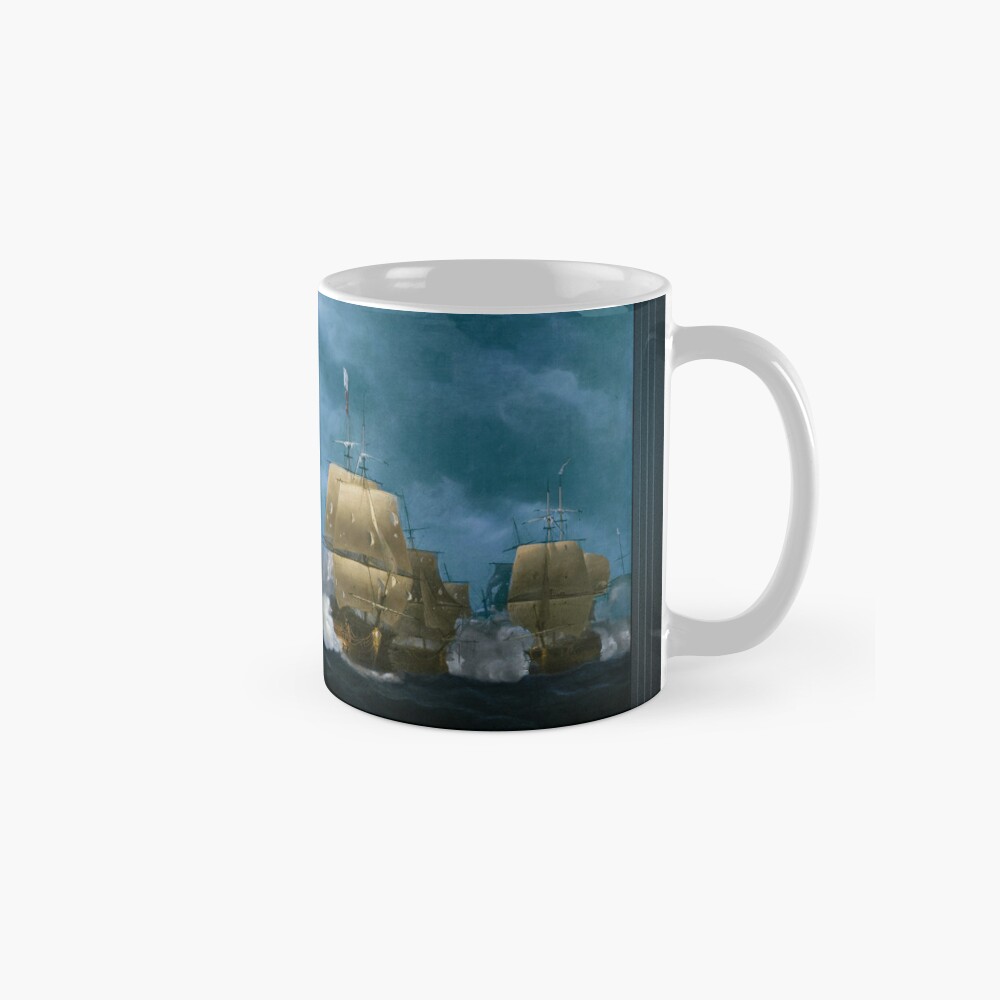
Havsslaget vid Quiberon Bay skildras kraftfullt i denna målning av brittiska målaren Nicholas Pocock, ha en flotta av krigsfartyg under ett krig till sjöss, engagerar varandra på nära håll, skjuter där kanoner i tarmarna på varandras krigsfartyg på det hårda havet, under stormmoln på en kraftigt mulen dag.
The Battle of Quiberon Bay is a retouched digital art old masters reproduction of a public domain image that is available for purchase online in a variety of material formats including canvas prints, akryltryck, metalltryck, trätryck, inramade tryck, affischer, och som rullade canvastavlor i olika storlekar från 12 tum till 72 tum beroende på storleken på det faktiska konstverket och den print on demand-butik du väljer att köpa konsten från.
Information nedan härrör från Royal Museums Greenwich
The Battle of Quiberon Bay was a major naval engagement that took place on November 20, 1759, during the Seven Years War. The conflict involved the major European colonial powers and was fought around the globe. The French had been at war with Britain since 1756, and their position in Canada, Indien, and the West Indies was on the verge of collapse. I Europa, they faced stalemate against Prussia, which received British support.
The French planned to land an army of 20,000 men in Ireland, which was assembled in the gulf of Morbihan in southern Brittany under the Duc d’Aiguillon. The force was to be escorted by the Brest fleet under Admiral Hubert de Conflans. Admiral Sir Edward Hawke’s Channel Fleet blockaded Brest to prevent the French from leaving to collect the troop transports. i alla fall, during a gale in the first week of November, Hawke’s ships were forced to run for shelter in Torbay, giving de Conflans the chance to escape.
On hearing that the French had escaped, Hawke pursued them and sighted them 20 miles out to sea on November 20. De Conflans, relying on local knowledge, ordered his fleet to take refuge in Quiberon Bay, south of Morbihan, assuming Hawke would not follow due to the ill-charted rocks, reefs, and wild seas. This was a miscalculation, and Hawke relentlessly pursued him into the bay, losing two of his own ships on the outer reefs but sinking the French ‘Thesee’ and ‘Superbe’ by a combination of gunfire and the weather, and otherwise decimating de Conflans’ force in what became an action practically in the dark.
The French flagship ‘Soleil Royal’ went aground in the bay, near Le Croisic, and was burned to prevent capture the following day. Others were captured, including the ‘Heros,’ which was burned. A few French ships escaped to Rochefort, and some others managed to find refuge in the mouth of the River Vilaine, where they were trapped for months, and one more lost by grounding.
The battle was a decisive victory for the British, and it stopped any French plans to invade Britain during the Seven Years War. The famous naval song ‘Hearts of Oak’ was composed to commemorate the battle. The battle was fought so close inshore that contemporary accounts reported that ten thousand persons watched it from the coast.
This rather later painting by Pocock is partly based on an earlier one by Dominic Serres and shows Hawke’s ‘Royal George’ in the left center, with his blue admiral’s color at the main, in action with de Conflans’ ‘Soleil Royal’ till höger, though the latter is wrongly shown as a three-decker. A French ship astern of the ‘Royal George’ is firing broadsides on both sides, her starboard battery probably directed at Augustus Keppel’s ‘Torbay,’ while between them, the French ‘Thesee’ sinks by the bows.
This was largely due to water swamping through her lower and forward leeward gunports in the heavy seas, since this battle was an example of the disadvantage of fighting with the ‘weather gauge’ (the generally assumed benefit of being to windward).
Info nedan härledd från Wikipedia.org
Pocock föddes i Bristol i 1740; en sjömans son, han följde i sin fars yrke och var befälhavare på ett handelsfartyg vid åldern av 26.
Under sin tid till sjöss, han blev en skicklig konstnär genom att göra bläck och tvätta skisser av fartyg och kustscener för sina stockböcker.
I 1778, Pococks arbetsgivare, Richard Champion, blev ekonomiskt insolvent på grund av effekterna av det amerikanska revolutionskriget på transatlantisk handel.
Som ett resultat, Pocock gav upp havet och ägnade sig åt att måla; med det första av hans verk som ställs ut av British Royal Academy of Arts i 1782.
Senare Det året, Pocock fick i uppdrag att producera en serie målningar som illustrerar George Rodneys seger i slaget vid Saintes; och som en favorit av Samuel Hood utsågs han till marinmålare till kung George.
Pococks marinmålningar inkluderade omfattande forskning, inklusive att intervjua ögonvittnen om väder och vindförhållanden samt positionerna, tillstånd, och deras fartygs utseende; och rita detaljerade planer för slaget och preliminära skisser av enskilda fartyg.
Han var också själv närvarande vid den härliga första juni i 1794, ombord på fregatten HMS Pegasus. Förutom hans storskaliga oljemålningar som skildrar sjöstrider, Pocock producerade också många akvareller av kust- och skeppsscener.