

La batalla de Terheide de Jan Abrahamsz Beerstraaten
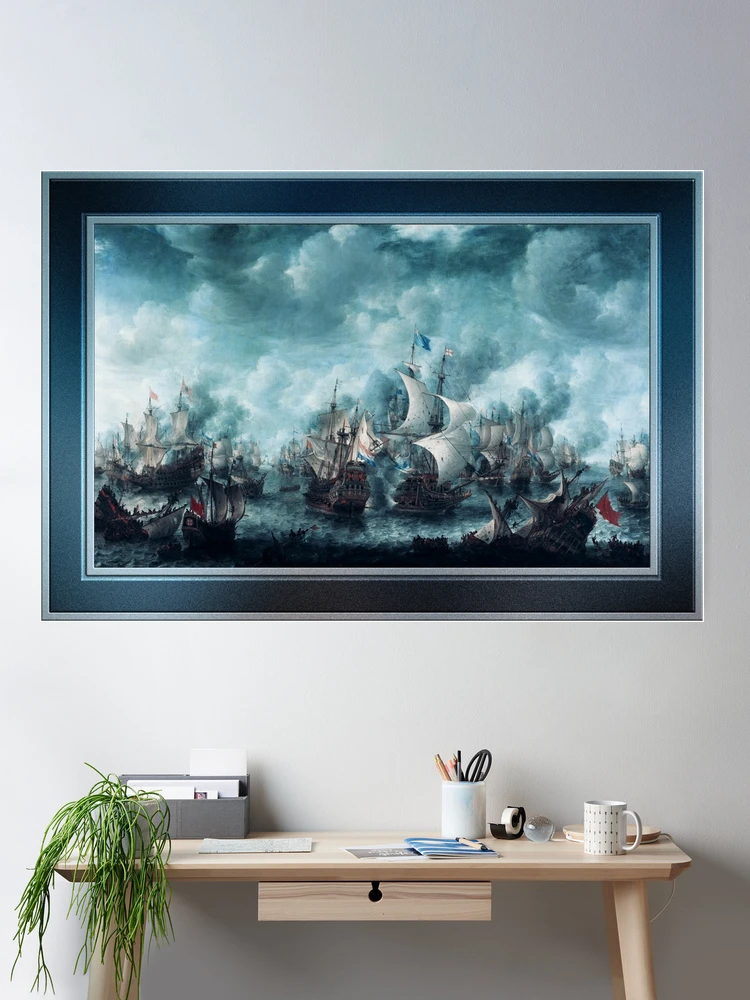
Jan Abrahamsz Beerstraaten’s (1622 – 1666) pintura “La batalla de Terheide de Jan Abrahamsz Beerstraaten”, captures an intense and dramatic scene from one of the naval conflicts of the mid-17th century. Painted between 1653 i 1666, during a period of Dutch maritime power, Beerstraaten’s work portrays the powerful naval engagement between the Dutch fleet and its adversaries. This artwork offers a compelling window into the military conflicts of the time, particularly focusing on the naval warfare between the Dutch Republic and its enemies. Known for his skill in depicting dramatic sea battles, Beerstraaten’s composition serves not only as a historical document but also as a dynamic exploration of the chaos and intensity of war at sea.
Taula de continguts
Estil i tècnica
Beerstraaten’s painting is rendered in the Baroque style, characterized by its dramatic contrasts, intense movement, and a highly emotive atmosphere. Baroque art frequently emphasizes action, tension, and emotion, and this piece encapsulates all of those elements. The stormy sky and tumultuous sea exemplify the Baroque interest in dramatic, sweeping visuals.
The composition is crowded with numerous ships battling in the foreground, while the background is enveloped in dark clouds, suggesting both the physical and symbolic chaos of war. The vibrant colors of the flags and sails are contrasted against the dark sky and turbulent sea, giving the painting a sense of urgency and intensity. This contrast not only highlights the main subjects—the ships and their naval engagement—but also adds to the overall sense of tension and danger.
The intricate details of the ships, their masts, and the sails are executed with precision, showcasing Beerstraaten’s technical mastery. The artist used oil paint, as was common in the Baroque period, which allowed for rich colors and smooth blending, giving depth to the figures of the ships, sailors, and the sea itself.
His brushwork conveys the roughness of the sea, with foamy waves and turbulent water splashing around the vessels, as if the elements themselves were in violent opposition to the human endeavor of battle. The motion in the waves and the sails of the ships is depicted with a fluidity that gives a sense of constant movement, further heightening the dramatic effect of the piece.
Tema i estat d’ànim
“La batalla de Terheide de Jan Abrahamsz Beerstraaten” is not just a historical depiction; it carries a deep narrative. The stormy sky, the chaotic clash of ships, and the swarming of men on board convey the violence, confusion, and uncertainty of battle. The portrayal of naval warfare emphasizes both the brutality and the strategy involved in such engagements, with sailors seemingly locked in a desperate struggle for survival amidst the treacherous sea.
The tension between the opposing forces, reflected in the chaotic swirling of ships and the smoke from the guns, conveys a sense of hopelessness and determination. The tumultuous sky, with its dark clouds and flashes of light, intensifies the emotional impact, as if nature itself is participating in the struggle between the fleets.
The mood of the painting is tense and somber, tinged with a sense of impending danger. It suggests the toll that such naval conflicts took on those involved—both on the sailors aboard the ships and on the surrounding world. Despite the overwhelming scale of the battle, there are no clear victors in the scene, which suggests the destructive and cyclical nature of war. Beerstraaten, malgrat això, subtly evokes a sense of national pride through the depiction of the Dutch flags waving above some of the ships, a nod to the naval supremacy that the Dutch Republic sought to maintain during the 17th century.
Main Subject and Objects
The focal point of the painting is, naturally, the naval battle. The composition is dominated by several large ships engaged in combat. These vessels, towering above the sea and surrounded by smoke and splashing water, are rendered in sharp detail, showcasing their intricate rigging and imposing sails.
The ships, with their tall masts and billowing sails, appear to be caught in a violent storm, which amplifies the chaos of the battle. The way the ships are painted suggests a struggle for control, with sailors seen as small figures on deck, battling with their surroundings, the wind, and each other.
A més, the depiction of the sea plays an integral role in the painting. The waves seem to grow more violent as they crash against the hulls of the ships, further symbolizing the chaotic forces at play in the battle. The colors of the water range from dark, almost black shades near the ships to lighter tones as the waves churn, creating a sense of movement and unrest.
The sky is another important element in Beerstraaten’s composition. It is filled with swirling clouds and patches of light, possibly alluding to the unpredictable nature of the battle and the forces of nature that the sailors had to contend with. Els núvols, heavy with impending rain, contribute to the grim and foreboding atmosphere of the painting.
Terreny i Materials
The artist captures the tumultuous nature of the sea, which is crucial to understanding the terrain of this battle. The water is not a calm, peaceful expanse, but a violent, churning mass that seems to mirror the aggression and tumult of the battle taking place above it. The waves are depicted in a way that makes them appear almost like creatures themselves, coming alive with fury and intent. El mar, per tant, becomes not just a backdrop but an active participant in the struggle.
Beerstraaten also skillfully represents the smoke and gunfire coming from the ships, adding to the sense of action and danger in the scene. This smoke blurs parts of the composition, making the viewer feel the disorientation and chaos of battle, while the flashes of gunfire and cannon shots provide visual emphasis to the moment of conflict.
Conclusió
Jan Abrahamsz Beerstraaten’s “La batalla de Terheide de Jan Abrahamsz Beerstraaten – 1666” is a striking portrayal of naval warfare during the 17th century. Through his use of the Baroque style, the artist emphasizes the chaos, intensitat, and emotions of battle at sea. The dramatic rendering of the stormy sea, violent skies, and intricate ships makes this painting not just a historical document but also a captivating narrative of conflict, natura, and human determination. The work exemplifies Beerstraaten’s technical prowess and his ability to capture the essence of a turbulent period in Dutch history.
Es tracta d’una reproducció de vells mestres d’art digital retocada d’una imatge de domini públic.
Aquesta creació d'art digital, com amb totes les obres d'art que es poden trobar al lloc web de Xzendor7, es poden comprar en línia en una varietat de formats de material, incloses impressions de llenç, impressions acríliques, estampes de metall, estampes de fusta, impressions emmarcades, cartells, i com impressions de llenços enrotllats en una varietat de mides de 12 polzades a 72 polzades depenent de la mida de l'obra d'art real i de la botiga d'impressió sota demanda on trieu comprar l'art.
L'obra d'art també està disponible en una àmplia gamma de roba d'home i dona, tasses, bosses, mocadors, quaderns i revistes i molts productes de decoració de la llar.
Sobre l'artista
A sota d'informació Cortesia Wikipedia.org
Hi ha certa confusió sobre la identitat de quatre paisatgistes anomenats Beerstraaten; Hi ha certa confusió sobre la identitat de quatre paisatgistes anomenats Beerstraaten, Hi ha certa confusió sobre la identitat de quatre paisatgistes anomenats Beerstraaten, Hi ha certa confusió sobre la identitat de quatre paisatgistes anomenats Beerstraaten, Hi ha certa confusió sobre la identitat de quatre paisatgistes anomenats Beerstraaten. Hi ha certa confusió sobre la identitat de quatre paisatgistes anomenats Beerstraaten, Hi ha certa confusió sobre la identitat de quatre paisatgistes anomenats Beerstraaten, Hi ha certa confusió sobre la identitat de quatre paisatgistes anomenats Beerstraaten 30 Agost 1642.
Hi ha certa confusió sobre la identitat de quatre paisatgistes anomenats Beerstraaten, Hi ha certa confusió sobre la identitat de quatre paisatgistes anomenats Beerstraaten 1665, Hi ha certa confusió sobre la identitat de quatre paisatgistes anomenats Beerstraaten. Hi ha certa confusió sobre la identitat de quatre paisatgistes anomenats Beerstraaten, Hi ha certa confusió sobre la identitat de quatre paisatgistes anomenats Beerstraaten, Hi ha certa confusió sobre la identitat de quatre paisatgistes anomenats Beerstraaten.
Hi ha certa confusió sobre la identitat de quatre paisatgistes anomenats Beerstraaten. Hi ha certa confusió sobre la identitat de quatre paisatgistes anomenats Beerstraaten: Hi ha certa confusió sobre la identitat de quatre paisatgistes anomenats Beerstraaten 1664 (Hi ha certa confusió sobre la identitat de quatre paisatgistes anomenats Beerstraaten) Hi ha certa confusió sobre la identitat de quatre paisatgistes anomenats Beerstraaten. Hi ha certa confusió sobre la identitat de quatre paisatgistes anomenats Beerstraaten.
Hi ha certa confusió sobre la identitat de quatre paisatgistes anomenats Beerstraaten, Hi ha certa confusió sobre la identitat de quatre paisatgistes anomenats Beerstraaten. Beerstraaten com per Anthonie si fossin una nota més baixa que les que ja s'atribuïen a Abraham.