

ベリーダンサー: 彼女の魅惑的なダンス – A Study in Light and Movement
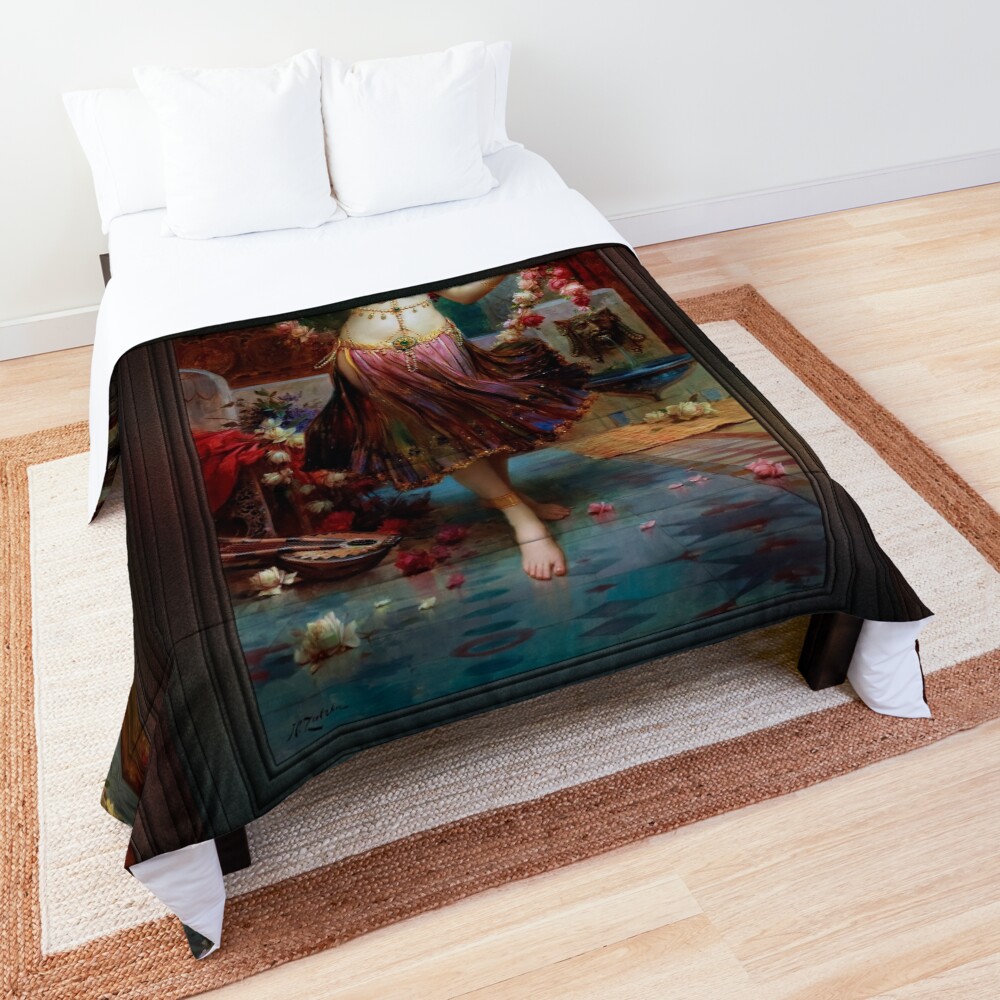
The Belly Dancer c~ by Austrian Painter ハンス・ザツカ (1859 – 1945); Pとしても知られています. ロンサール, ピエール・ド・ロンサール, またはH. Zabateriと彼はJosephBernardとして彼の作品の多くに署名しました, J. バーナード, またはBernardZatzkは、販売できる作品の数を制限するブレーキ契約のペナルティを回避します.
ハンスは、豪華な環境の中で理想的な女性像を描いたことで有名なオーストリアの芸術家でした。, 19世紀のヨーロッパ美術に広く見られるオリエンタリズムのテーマからインスピレーションを得ることも多い. “ベリーダンサー,” likely created around the turn of the century, 細心の注意を払ったディテールと刺激的な雰囲気でこのスタイルを体現しています. この絵は単にダンサーを描いたものではありません; it’s an exploration of light, テクスチャ, 豊かな装飾を施した室内空間での優雅な動き.

目次
構成要素 & 空間配置
この構図は、見る人の目をすぐにベリーダンサーの中心人物に引き寄せます。. 彼女は前景の目立つ位置を占めている, 温もりに照らされた彼女の姿, フレーム右側の見えない位置から発生する拡散光源. アーティストはピラミッド構造を採用している, ダンサーが頂点を形成し、周囲の建築ディテールが安定したベースを形成します。. この配置はシーンにバランスと調和の感覚を与えます.
床には花びらが散りばめられている, ダンサーの足元に視線を導き、彼女の中心的な役割を強化します. リュートは作品の左側に置かれています, 音楽の伴奏をほのめかし、文化的背景の別の層を追加する. 背景には精巧な彫刻が施されたアーチ道が特徴です, 部分的に影で隠れている, which provides depth and a sense of mystery to the setting.
カラーパレット & 照明効果
Zatzka’s masterful use of color is crucial to the painting’s impact. A warm palette dominates, with rich reds, 金, 茶色, and creams creating an atmosphere of luxurious warmth. The dancer’s costume is particularly striking, featuring a layered skirt in shades of crimson, ブロンズ, and gold that shimmer under the light. The skin tones are rendered with remarkable realism, capturing subtle variations in color and texture.
The lighting is not harsh or direct; その代わり, it’s soft and diffused, creating gentle gradations of tone across the dancer’s form and the surrounding environment. This technique softens the edges and contributes to the painting’s overall sense of elegance and refinement. The interplay of light and shadow emphasizes the contours of the dancer’s body while simultaneously obscuring details in the background, further focusing attention on the central figure.
ダンサー: ポーズ & 表現
The dancer is depicted mid-motion, her right leg extended slightly forward as she gracefully turns. Her left arm is raised, holding a garland of flowers, while her right hand rests gently on her hip. This pose conveys both dynamism and poise. Her head is tilted slightly downward, and her expression is one of serene concentration rather than overt sensuality. There’s a quiet dignity in her gaze, suggesting an inner focus that transcends the purely performative aspect of her dance. The artist avoids any overtly provocative gestures or expressions, 代わりに、優雅な動きと控えめな美しさの描写を選択します。.
アーキテクチャの詳細 & インテリアセッティング
明らかに豪華な室内空間です。, おそらく中東の建築からインスピレーションを得たものと思われます. 壁やアーチ道には複雑な彫刻が施されています, アーティストの細部へのこだわりを示す. 建築要素は単なる装飾ではありません; それらは、絵画全体の豪華さと異国情緒の雰囲気に大きく貢献しています。. 右側に彫刻された頭を持つ小さな噴水が見えます, 視覚的な興味深い要素を追加し、精巧な感覚を強化します。, 設備の整った空間. 建築物が落とす影は、照らされたエリアと劇的なコントラストを生み出します。, enhancing the depth and dimensionality of the scene.
芸術的な影響 & コンテクスト
ザツカの作品は、19 世紀のヨーロッパ美術で人気のあったオリエンタリズムのより広範な傾向を反映しています。. この芸術運動には、北アフリカと中東の風景を描くことが含まれていました。, しばしばこれらの文化を美化し、理想化する. ザツカの絵画はこの伝統に根ざしていますが、, また、光に対して独特の感受性を示します, 色, そして形を整える. 彼の細部への細心の注意と、優雅な動きの本質を捉える能力は、同時代の多くのアーティストとは一線を画しています。. この時期のエンターテイメントとしてのベリーダンスの人気が、この主題の魅力に貢献した可能性があります。.
技術スキル & 芸術的遺産
“ベリーダンサー” アーティストとしてのザツカの技術的スキルの証です. His mastery of oil painting techniques, 特にテクスチャをレンダリングし、光の効果をキャプチャする能力, is evident in every detail of the work. 滑らかな筆運びと微妙なトーンのグラデーションがリアルな感覚を生み出すと同時に、絵画全体の美的魅力を高めます。. ザツカの功績は、美への鋭い目とオリエンタリズムのテーマのエキゾチックな魅力への理解と、技術的な妙技を組み合わせる能力にあります。. 彼の絵画はその優雅さで賞賛され続けています, 洗練, そして刺激的な雰囲気.
アーティストバイオから Wikipedia.org
ハンス・ザツカは時々Pとして知られています. ロンサール, ピエール・ド・ロンサール, またはH. バッテリー, ジョセフ・バーナードとして彼の作品の多くに署名しました, J. バーナード, またはBernardZatzka. Zatzkaの膨大な数の仮名の目的は、販売できるアートワークの量を制限する契約違反のペナルティを回避することでした。.
これにより、一部のアートデータベースでは、仮名ジョセフバーナードの下でのザツカの作品と同じ名前のフランスの彫刻家が混同されています。. ハンス・ザツカは 8 行進 1859 ウィーンで. 彼の父バルトロマウスは建設労働者でした, 彼の母親はマリー・カルピシェク・ザツカでした.
間 1877 そして 1882, 彼は芸術アカデミーで学びました, クリスチャン・グリーペンケルの下で, カール・ウルツィンガー, とカールフォンブラース. Zatzkaは、教会やその他の機関向けのフレスコ画を制作することで生計を立てることができました。. に 1885, Zatzkaは、KurhausBadenで天井フレスコ画TheNaiadofBadenの作成を依頼されました.
Zatzkaの作品の多くは、オーストリアのさまざまな教会に捧げられた宗教画や祭壇画でした。. しかしながら, 彼は女性の絵でもっと知られています, 妖精, と他の幻想的なシーン. 頻繁, 彼はリヒャルト・ワーグナーの作品とグリム兄弟のおとぎ話からインスピレーションを得ました.
19世紀後半から20世紀初頭に, Zatzkaによるいくつかの作品が写真に撮られ、商業的で収集可能なポストカードになりました. 1920年代, Zatzkaのスタイルは、ヨーロッパ全体で選ばれる装飾になりました. 加えて, 過去30年間はZatzkaの復活を開催しました.
ベリー ダンサーは、パブリック ドメインの画像を修正したデジタル アートの古いマスターの複製であり、 ロールプリントオンライン.