

Breith Venus: Urram Neo-Chlasaigeach
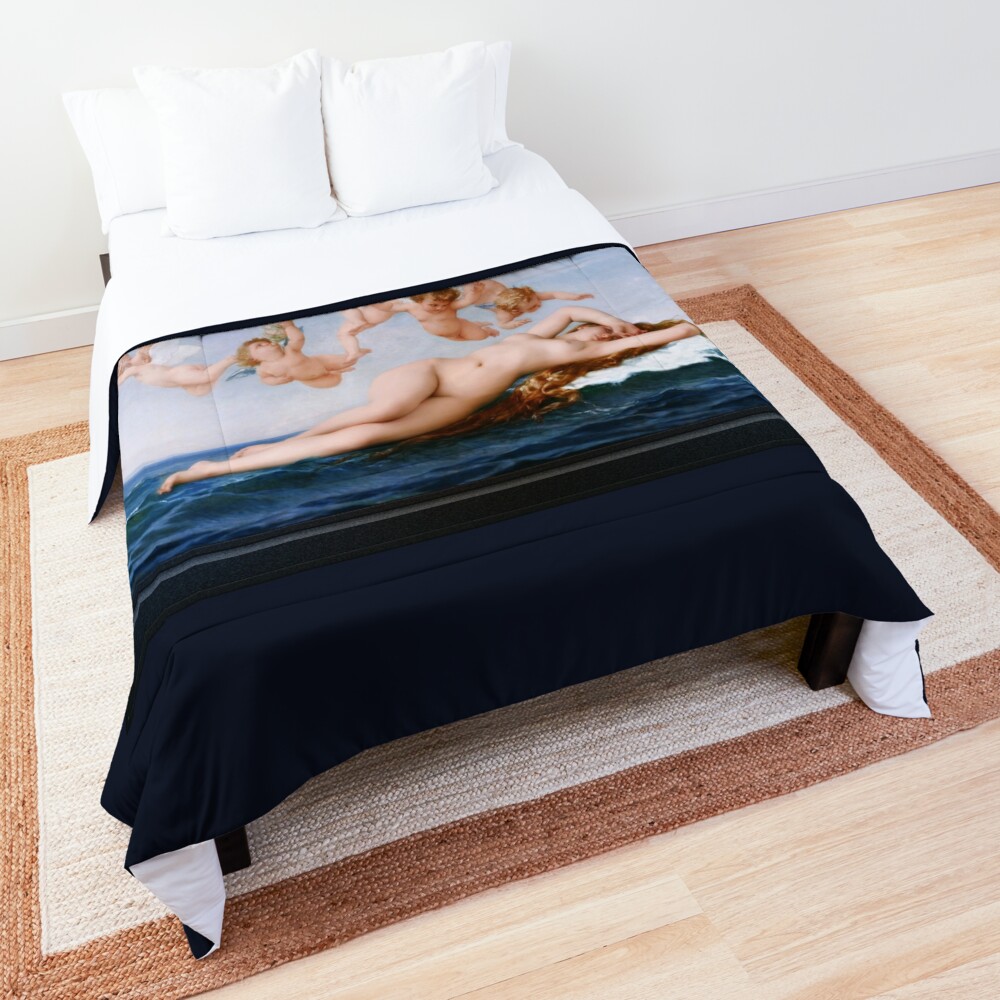
Breith Venus (Rugadh Venus) c1863 leis a’ pheantair Frangach Alexandre Cabanel (1823 – 1889), a’ seasamh mar eisimpleir air leth den stoidhle acadaimigeach Frangach a shoirbhich ann am meadhan an 19mh linn. An dealbh-ola mòr-sgèile seo, an-dràsta a’ fuireach aig an Musée d’Orsay ann am Paris, a’ tarraing gu mòr bho mhiotas-eòlas clasaigeach agus traidiseanan ealain an Ath-bheothachaidh, gu sònraichte “Breith Venus” suaicheanta Sandro Botticelli (c. 1486). Ach, Tha eadar-mhìneachadh Cabanel gu math eadar-dhealaichte, a’ taisbeanadh mothachadh mothachail air leth eadar-dhealaichte a tha freumhaichte ann an gnàthasan acadaimigeach na h-ùine aige. Chan e dìreach aithris a th’ anns an obair-ealain; is e ath-aithris a th’ ann a tha a’ nochdadh cruth-tìre ealanta mean-fhàs agus luachan sòisealta linn an Dàrna Impireachd.
Clàr-innse
Structar co-dhùnaidh & Aithris
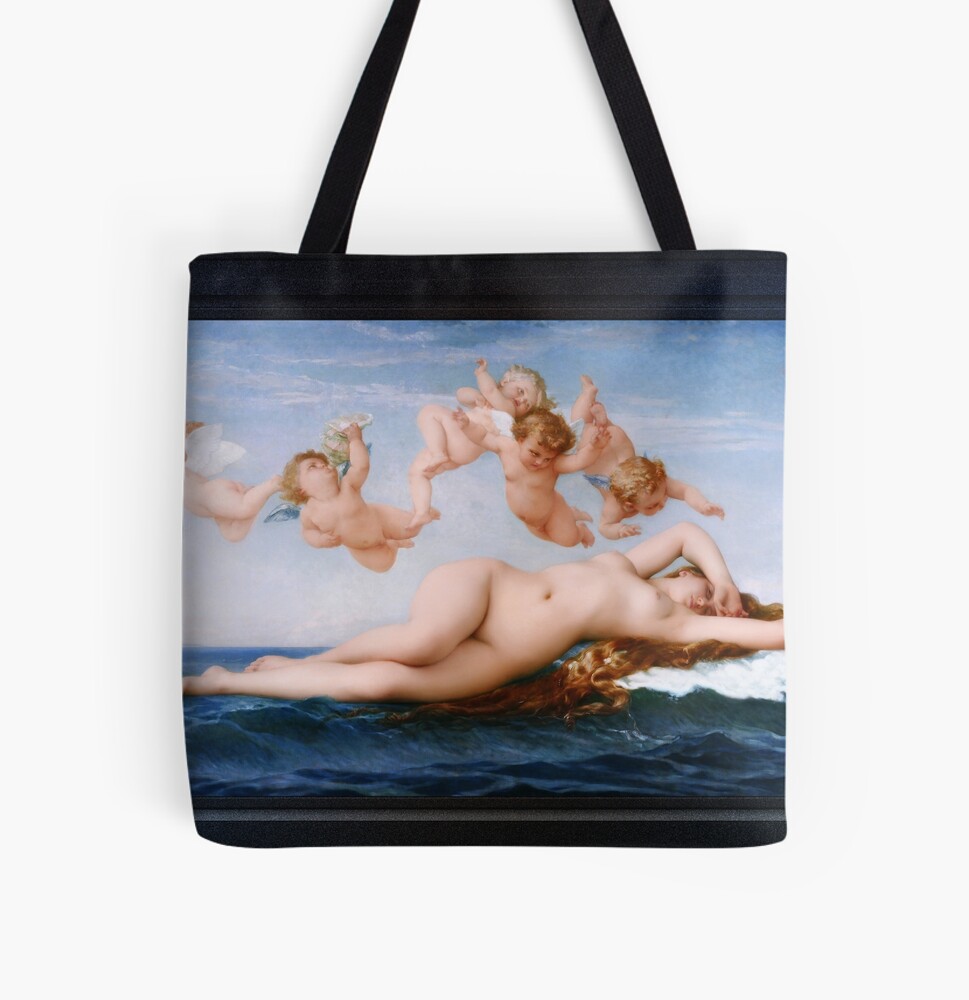
Tha an dealbh a 'sealltainn breith miotasach Venus, ban-dia na Ròimhe de ghaol agus de bhòidhchead. Tha Venus a’ tighinn a-mach à slige chreachainn mhòir, sruth air uachdar na mara. Tha an sgrìobhadh air a structaradh gu faiceallach gus sùil an neach-coimhead a stiùireadh.
Tha plèana còmhnard an uisge a 'toirt seachad seasmhachd, fhad ‘s a tha inghearachachd nam figearan gu h-àrd a’ cruthachadh eadar-dhealachadh fiùghantach. Tha rèiteachadh Cabanel a’ cur cuideam air Venus mar phrìomh fhigear, air a lasadh ann an solas bog agus air a chuairteachadh le entourage celestial de fhigearan cherubic. Tha an slige fhèin ag obair mar mheadhan fòcas, tha a mion-fhiosrachadh toinnte a’ tarraing aire gu mar a thàinig a’ bhan-dia a-steach don t-saoghal. Air a’ chùl tha farsaingeachd mhòr de mhuir is speur, air a thoirt seachad le ìrean dathte de dhhathan a tha ag adhbhrachadh faireachdainn de shealladh àile.
Venus: Bòidhchead Idealized & Pose
Tha Venus air a shealltainn ann an suidheachadh suidhe, a’ cuimhneachadh ìomhaighean clasaigeach leithid an “Venus de Milo.” Tha a corp air leth freagarrach, a 'nochdadh craiceann rèidh, curran gràsmhor, agus sealladh iomlan air cruth corporra foirfe. Tha aire mhionaideach Cabanel gu mion-fhiosrachadh anatomical a’ co-thaobhadh ris a’ chuideam acadaimigeach air reul-eòlas agus sgil theicnigeach.
Tha an abairt aice socair agus meòrachail; bha an sealladh aice beagan sìos, a’ toirt seachad faireachdainn de mhodhalachd socair seach mothachadh follaiseach. Thathas a’ beachdachadh gu faiceallach air an t-suidheachadh fhèin - tha e an dà chuid eireachdail agus nàdarrach, a’ seachnadh beachd sam bith air mì-thoileachas no fuadain. A h-o chionn fhada, falt a' sruthadh mu a gualainn, tuilleadh àrdachadh a 'bheachd mu bhòidhchead Ethereal.
An Luchd-frithealaidh nèamhaidh: Cherubs & Gluasad samhlachail
Os cionn Venus, bidh buidheann de chòig figearan cherubic a 'seòladh san adhar, an sàs ann an diofar ghnìomhan a tha a 'cur ri aithris agus brìgh samhlachail an deilbh. Bidh aon cherub a 'sèideadh gu socair air Venus le slige conch, a’ samhlachadh foillseachadh a breith agus sgaoileadh a’ ghràidh air feadh an t-saoghail. Tha fear eile a’ cumail garland fhlùraichean, a rèir coltais airson a’ bhan-dia a sgeadachadh. Tha coltas gu bheil na cheruban a tha air fhàgail a 'coimhead air Venus le seallaidhean iongantach agus toileachas. Tha na figearan sin air an toirt seachad le feartan fìnealta agus solais bog, a’ cur cuideam air an neo-chiontachd agus nàdar eile. Tha an làthaireachd aca a’ daingneachadh co-theacs miotasach an deilbh agus ag àrdachadh an t-seallaidh gu rìoghachd de bhòidhchead dhiadhaidh.
Palet dath & Solais
Tha cleachdadh dath Cabanel àbhaisteach don stoidhle acadaimigeach - co-sheirm, cothromach, agus gu foighidneach. Tha am paileas fo smachd blues bog, pincain, creamh, agus òr, a’ cruthachadh faireachdainn de bhlàths is de shàmhchair. Tha an solas sgaoilte agus cothromach, a’ soillseachadh Venus agus na ceruban gun sgàile cruaidh. Tha an soillseachadh socair seo a’ cur ri faireachdainn iomlan an deilbh de shàmhchair agus de bhòidhchead air leth. Bidh an neach-ealain a 'fastadh gu sgileil chiaroscuro- an eadar-dhealachadh eadar solas is dorcha - gus cruthan nam figearan a mhodaladh agus mothachadh doimhneachd a chruthachadh taobh a-staigh an t-suidheachaidh.
Stoidhle Acadaimigeach & Co-theacs Eachdraidheil
“Breith Venus” stèidhichte gu daingeann anns an dualchas acadaimigeach, a chuir cuideam air sgil theicnigeach, cruinneas anatomical, agus cumail ri prionnsabalan ealain clasaigeach. Bha Cabanel na phrìomh neach anns a’ ghluasad seo, agus tha an dealbh aige na eisimpleir de na prìomh luachan aige.
Tha fèill na h-obrach tron Dàrna Ìmpireachd a’ nochdadh ùidh chultarail nas fharsainge le miotas-eòlas clasaigeach agus bòidhchead air leth freagarrach.. Bha e cuideachd na aithris air dligheachd ealanta taobh a-staigh saoghal ealain làn structarail an ama, far an robh trèanadh acadaimigeach agus aithne bho ionadan oifigeil air leth cudromach. Fhad ‘s a tharraing e brosnachadh bhon dealbh a rinn Botticelli na bu thràithe, Chaidh dreach Cabanel a chomharrachadh airson a mhaighstireachd theicnigeach agus a bhith a’ cumail ri inbhean bòidhchead an latha an-diugh.
Coileanadh Teicnigeach & Mion-fhiosrachadh
Tha uachdar an dealbh gu math rèidh, air a choileanadh tro shreathadh mionaideach de pheant agus dòighean measgachaidh faiceallach. Tha obair bruis Cabanel cha mhòr do-fhaicsinneach, a’ cruthachadh crìochnachadh snasta agus fuaigheil a chuireas ri mealladh fìor-eòlas. Tha am mion-fhiosrachadh air a thoirt seachad le mionaideachd air leth - bho na pìosan fìnealta ann an aodach Venus gu na pàtrain toinnte air an t-slige chreachainn. Tha an ìre seo de mhion-fhiosrachadh a’ nochdadh buadhan teignigeach Cabanel agus a dhealas a thaobh a bhith a’ coileanadh riochdachadh air leth math de bhòidhchead..
Neach-ealain Bios bho Wikipedia.org
A rèir Salvat Encyclopedic Diccionario, Is e Cabanel an riochdaire as fheàrr airson pompier L’art agus am peantair as fheàrr le Napoleon III
Chaidh Cabanel a-steach don École des Beaux-Arts ann am Paris aig aois seachd bliadhna deug, agus rinn e sgrùdadh còmhla ri François-Édouard Picot. Bha e a’ taisbeanadh aig Salon Paris airson a’ chiad uair ann an 1844, agus choisinn e sgoilearachd Prix de Rome ann an 1845 aig aois 22. Chaidh Cabanel a thaghadh mar bhall den Institiud ann an 1863. Chaidh a chur an dreuchd mar ollamh aig an École des Beaux-Arts ann an 1864 agus theagaisg e an sin gu a bhàs.
Bha dlùth cheangal aige ri Salon Paris: “Bha e air a thaghadh gu cunbhalach gu diùraidh nan Salon agus dh’ fhaodadh a sgoilearan a bhith air an cunntadh leis a’ cheud aig na Salons. Troimh iad, Rinn Cabanel barrachd na neach-ealain sam bith eile den ghinealach aige gus caractar peantadh Frangach belle époque a chruthachadh”.
Dhiùlt e còmhla ri Uilleam-Adolphe Bouguereau cead a thoirt don pheantair dealbhaiche Édouard Manet agus mòran de pheantairean eile an obair aca a thaisbeanadh ann an Salon of 1863 mar thoradh air stèidheachadh an Salon des Refusés le riaghaltas na Frainge.
mar thoradh air stèidheachadh an Salon des Refusés le riaghaltas na Frainge 1865, 1867, agus 1878. mar thoradh air stèidheachadh an Salon des Refusés le riaghaltas na Frainge, mar thoradh air stèidheachadh an Salon des Refusés le riaghaltas na Frainge 1863 mar thoradh air stèidheachadh an Salon des Refusés le riaghaltas na Frainge.
mar thoradh air stèidheachadh an Salon des Refusés le riaghaltas na Frainge; mar thoradh air stèidheachadh an Salon des Refusés le riaghaltas na Frainge (mar thoradh air stèidheachadh an Salon des Refusés le riaghaltas na Frainge 1875 mar thoradh air stèidheachadh an Salon des Refusés le riaghaltas na Frainge, mar thoradh air stèidheachadh an Salon des Refusés le riaghaltas na Frainge) mar thoradh air stèidheachadh an Salon des Refusés le riaghaltas na Frainge. mar thoradh air stèidheachadh an Salon des Refusés le riaghaltas na Frainge 1893.
Is e seo ath-riochdachadh ealain didseatach retouched de dh ’ìomhaigh poblach a tha ri cheannach air-loidhne mar a clò-bhualadh canabhas rollaichte.