

D'Gebuert vun der Venus: Eng Neo-Klassesch Reverie
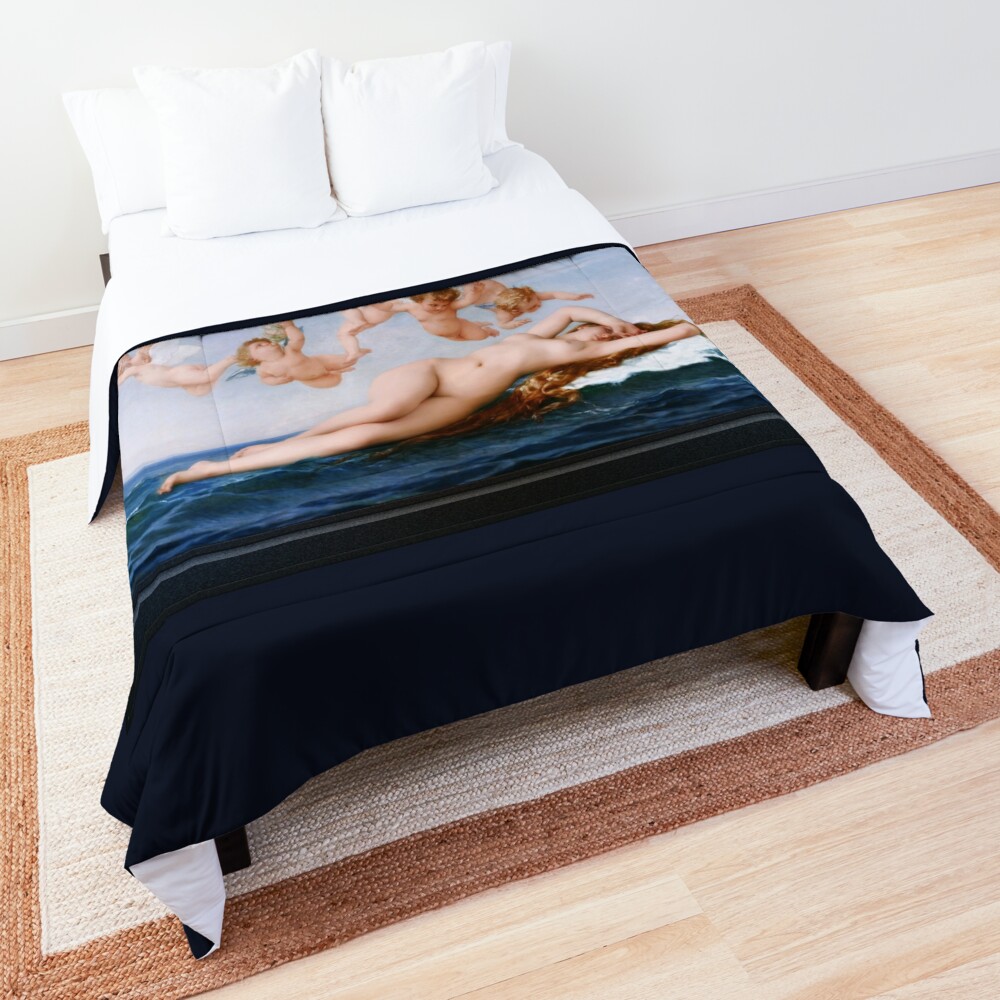
D'Gebuert vun der Venus (D'Gebuert vun der Venus) 1863 vum franséische Moler Alexandre Cabanel (1823 – 1889), steet als e wesentlecht Beispill vum franséischen akademesche Stil deen an der Mëtt vum 19.. Dëst grouss-Skala Uelegmolerei, Momentan am Musée d'Orsay zu Paräis ënnerbruecht, zitt staark aus der klassescher Mythologie a Renaissance artistesch Traditiounen, besonnesch dem Sandro Botticelli seng ikonesch "Gebuert vun der Venus" (c. 1486). Allerdéngs, Dem Cabanel seng Interpretatioun divergéiert bedeitend, eng däitlech aner ästhetesch Sensibilitéit ze weisen, déi an de herrschenden akademesche Konventioune vu senger Zäit verwuerzelt ass. D'Konschtwierk ass net nëmmen eng Imitatioun; et ass eng Neivirstellung déi déi evoluéierend kënschtleresch Landschaft a gesellschaftlech Wäerter vun der zweeter Empire Ära reflektéiert.
Inhaltsverzeechnes
Kompositiounsstruktur & Narrativ
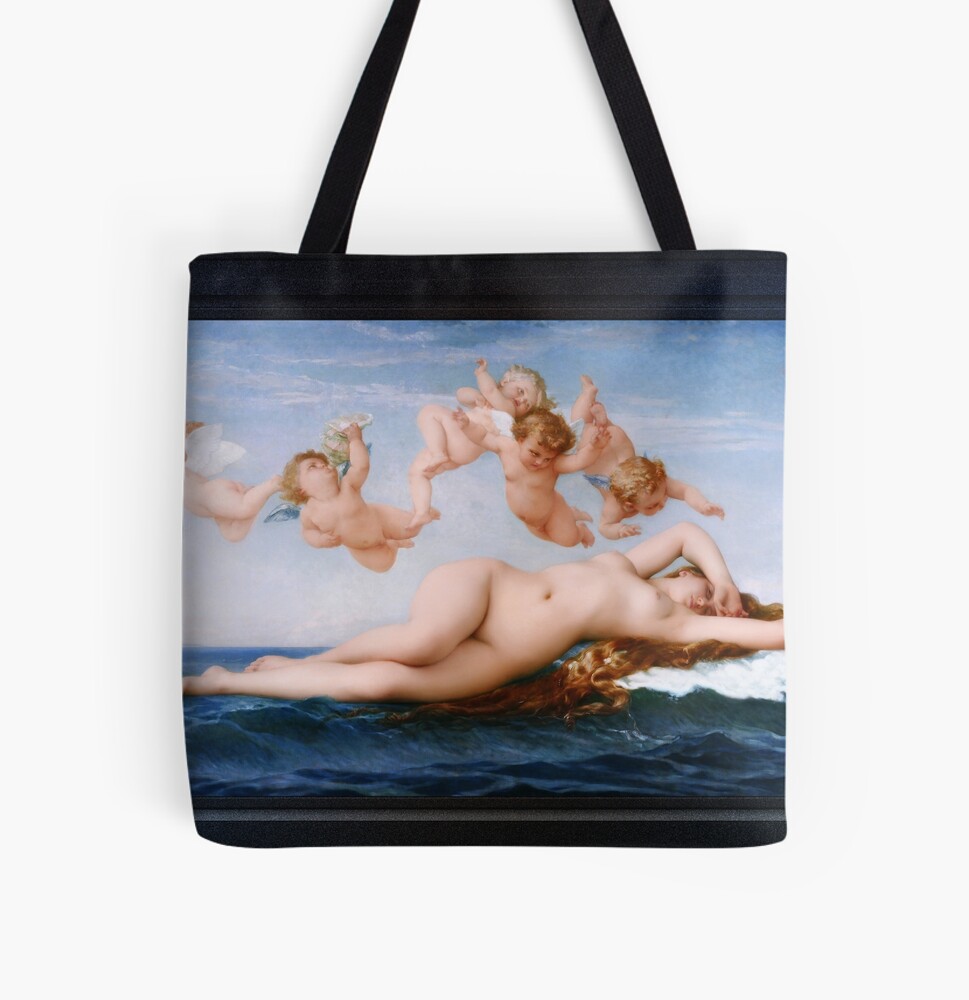
The painting depicts the mythological birth of Venus, the Roman goddess of love and beauty. Venus emerges from a giant scallop shell, adrift on the surface of the sea. The composition is carefully structured to guide the viewer’s eye.
The horizontal plane of the water provides stability, while the verticality of the figures above creates a dynamic contrast. Cabanel’s arrangement emphasizes Venus as the central figure, bathed in soft light and surrounded by a celestial entourage of cherubic figures. The shell itself acts as a focal point, its intricate details drawing attention to the goddess’s arrival into the world. The background features a vast expanse of sea and sky, rendered with subtle gradations of color that evoke a sense of atmospheric perspective.
Venus: Idealized Beauty & Pose
Venus is depicted in a reclining pose, reminiscent of classical sculptures such as the “Venus de Milo.” Her body is idealized, exhibiting smooth skin, graziéis Kéiren, and an overall impression of perfect physical form. Cabanel’s meticulous attention to anatomical detail aligns with the academic emphasis on realism and technical skill.
Hiren Ausdrock ass roueg a kontemplativ; her gaze directed slightly downward, conveying a sense of gentle modesty rather than overt sensuality. The pose itself is carefully considered – it’s both elegant and naturalistic, avoiding any hint of awkwardness or artificiality. Hir laang, fléissend Hoer Kaskaden ëm hir Schëlleren, weider den Androck vun der ätherescher Schéinheet ze verbesseren.
The Celestial Attendants: Cherubs & Symbolic Gesture
Iwwer Venus, a group of five cherubic figures float in the air, engaged in various actions that contribute to the narrative and symbolic meaning of the painting. One cherub gently blows upon Venus with a conch shell, symbolizing the announcement of her birth and the dissemination of love throughout the world. Another holds a floral garland, likely intended for adorning the goddess. The remaining cherubs appear to be observing Venus with expressions of wonder and delight. These figures are rendered with delicate features and soft lighting, emphasizing their innocence and otherworldly nature. Their presence reinforces the painting’s mythological context and elevates the scene to a realm of divine beauty.
Faarfpalette & LIGEL
Cabanel’s use of color is characteristic of the academic style – harmonious, equilibréiert, and subtly nuanced. D'Palette gëtt dominéiert vu mëllen Blues, rosa, Cremen, an Gold, eng Atmosphär vu Hëtzt a Rou ze kreéieren. D'Beliichtung ass diffus a gläichméisseg, d'Venus an d'Cheruben beliichten ouni haart Schatten. Dës sanft Beliichtung dréit zum allgemenge Sënn vu Rou an idealiséierter Schéinheet vum Bild bäi. De Kënschtler beschäftegt sech kompetent chiaroscuro-de Kontrast tëscht hell an donkel - fir d'Forme vun de Figuren ze modelléieren an e Gefill vun Déift an der Kompositioun ze kreéieren.
Academic Style & Historesch Kontext
“D'Gebuert vun der Venus” ass fest an der akademescher Traditioun verankert, déi technesch Fäegkeet betount, Anatomical Genauegkeet, an Anhale vun klassesch artistesch Prinzipien. De Cabanel war eng Haaptfigur an dëser Bewegung, a seng Molerei illustréiert seng Kärwäerter.
D'Popularitéit vum Wierk während dem Zweete Räich reflektéiert eng méi breet kulturell Faszinatioun mat der klassescher Mythologie an der idealiséierter Schéinheet. Et huet och als Ausso vun der artistescher Legitimitéit an der héich strukturéierter Konschtwelt vun der Zäit gedéngt, wou d'akademesch Ausbildung an d'Unerkennung vun offiziellen Institutiounen Haaptprioritéit waren. Wärend et Inspiratioun aus dem Botticelli senger fréierer Duerstellung gezunn huet, Dem Cabanel seng Versioun gouf gefeiert fir seng technesch Meeschterschaft an d'Anhale vun zäitgenësseschen ästheteschen Standarden.
Technesch Ausféierung & Detail
D'Uewerfläch vum Bild ass bemierkenswäert glat, erreecht duerch virsiichteg Schichten vu Faarwen a virsiichteg Mëschungstechniken. Dem Cabanel säi Pinselwierk ass praktesch onsichtbar, e poléierten an nahtlosen Ofschloss ze kreéieren deen d'Illusioun vum Realismus verbessert. The details are rendered with exceptional precision – from the delicate folds of Venus’s drapery to the intricate patterns on the scallop shell. This level of detail underscores Cabanel’s technical virtuosity and his commitment to achieving an idealized representation of beauty.
Kënschtler Bio vum Wikipedia.org
According to Diccionario Enciclopedico Salvat, Cabanel is the best representative of the L’art pompier and Napoleon III’s preferred painter
Cabanel entered the École des Beaux-Arts in Paris at the age of seventeen, and studied with François-Édouard Picot. He exhibited at the Paris Salon for the first time in 1844, and won the Prix de Rome scholarship in 1845 am Alter vun 22. Cabanel was elected a member of the Institute in 1863. He was appointed professor at the École des Beaux-Arts in 1864 and taught there until his death.
He was closely connected to the Paris Salon: “He was elected regularly to the Salon jury and his pupils could be counted by the hundred at the Salons. Through them, Cabanel did more than any other artist of his generation to form the character of belle époque French painting”.
His refusal together with William-Adolphe Bouguereau to allow the impressionist painter Édouard Manet and many other painters to exhibit their work in the Salon of 1863 led to the establishment of the Salon des Refusés by the French government.
Cabanel won the Grande Médaille d’Honneur at the Salons of 1865, 1867, an 1878. A successful academic painter, his 1863 painting The Birth of Venus is one of the best known examples of 19th-century academic painting.
D'Bild gouf vum Keeser Napoleon III kaaft; et gëtt och eng méi kleng Replica (gemoolt an 1875 fir e Banquier, John Wolf) am Metropolitan Museum of Art zu New York City. Et gouf hinnen vum Wolf ginn an 1893.
Dëst ass eng retouched digital Konschtreproduktioun vun engem ëffentleche Domain Bild dat als online kaafen ass gewalzt Leinwanddruck.