

De geboorte van Venus: A Neo-Classical Reverie
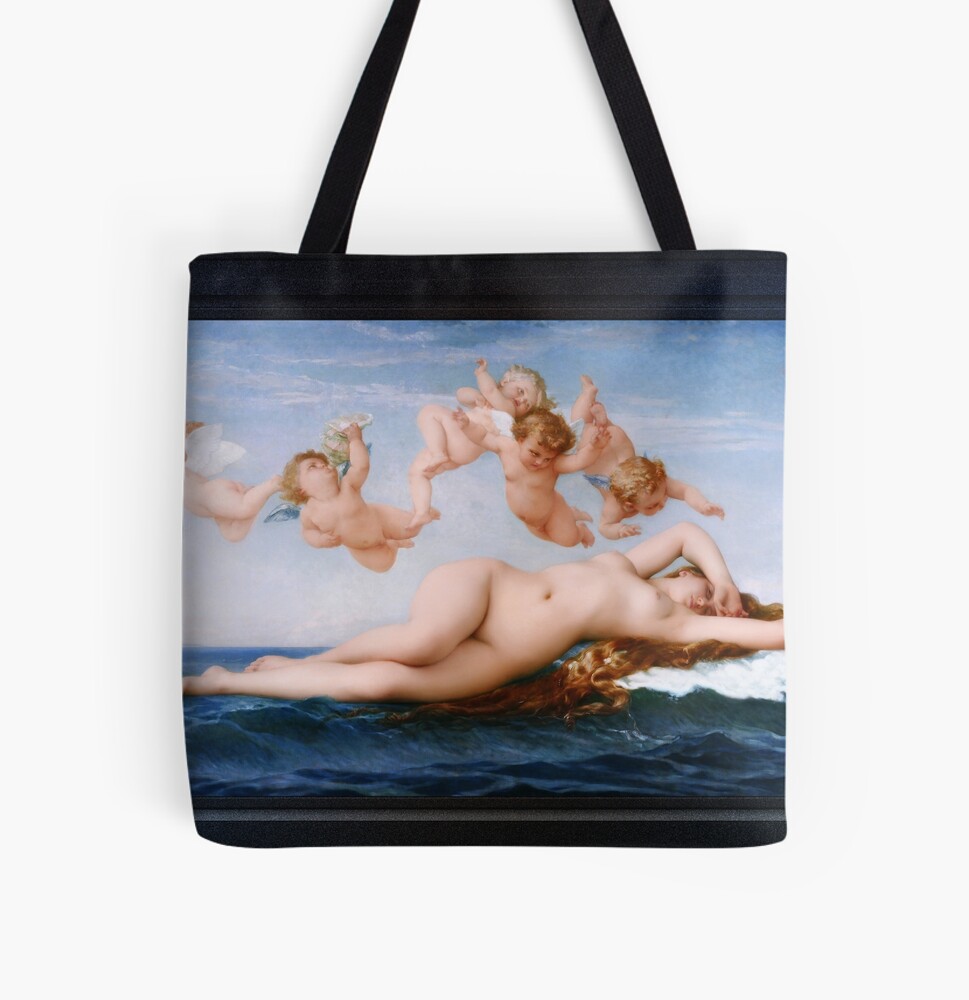
De geboorte van Venus (De geboorte van Venus) c1863 door de Franse schilder Alexandre Cabanel (1823 – 1889), stands as a quintessential example of the French academic style that flourished in the mid-19th century. This large-scale oil painting, currently housed at the Musée d’Orsay in Paris, draws heavily from classical mythology and Renaissance artistic traditions, particularly Sandro Botticelli’s iconic “Birth of Venus” (C. 1486). Echter, Cabanel’s interpretation diverges significantly, showcasing a distinctly different aesthetic sensibility rooted in the prevailing academic conventions of his time. The artwork is not merely an imitation; it’s a reimagining that reflects the evolving artistic landscape and societal values of the Second Empire era.

Inhoudsopgave
Compositorische structuur & Narrative
The painting depicts the mythological birth of Venus, the Roman goddess of love and beauty. Venus emerges from a giant scallop shell, adrift on the surface of the sea. The composition is carefully structured to guide the viewer’s eye.
The horizontal plane of the water provides stability, while the verticality of the figures above creates a dynamic contrast. Cabanel’s arrangement emphasizes Venus as the central figure, bathed in soft light and surrounded by a celestial entourage of cherubic figures. The shell itself acts as a focal point, its intricate details drawing attention to the goddess’s arrival into the world. The background features a vast expanse of sea and sky, rendered with subtle gradations of color that evoke a sense of atmospheric perspective.
Venus: Idealized Beauty & Pose
Venus is depicted in a reclining pose, reminiscent of classical sculptures such as the “Venus de Milo.” Her body is idealized, exhibiting smooth skin, graceful curves, and an overall impression of perfect physical form. Cabanel’s meticulous attention to anatomical detail aligns with the academic emphasis on realism and technical skill.
Her expression is serene and contemplative; her gaze directed slightly downward, conveying a sense of gentle modesty rather than overt sensuality. The pose itself is carefully considered – it’s both elegant and naturalistic, avoiding any hint of awkwardness or artificiality. Haar lang, golvend haar valt om haar schouders, further enhancing the impression of ethereal beauty.
The Celestial Attendants: Cherubs & Symbolic Gesture
Above Venus, a group of five cherubic figures float in the air, engaged in various actions that contribute to the narrative and symbolic meaning of the painting. One cherub gently blows upon Venus with a conch shell, symbolizing the announcement of her birth and the dissemination of love throughout the world. Another holds a floral garland, likely intended for adorning the goddess. The remaining cherubs appear to be observing Venus with expressions of wonder and delight. These figures are rendered with delicate features and soft lighting, emphasizing their innocence and otherworldly nature. Their presence reinforces the painting’s mythological context and elevates the scene to a realm of divine beauty.
Kleurenpalet & Verlichting
Cabanel’s use of color is characteristic of the academic style – harmonious, balanced, and subtly nuanced. The palette is dominated by soft blues, roze, crèmes, en goud, creating an atmosphere of warmth and tranquility. The lighting is diffused and even, illuminating Venus and the cherubs without harsh shadows. This gentle illumination contributes to the painting’s overall sense of serenity and idealized beauty. The artist skillfully employs clair-obscur—the contrast between light and dark—to model the forms of the figures and create a sense of depth within the composition.
Academic Style & Historische context
“De geboorte van Venus” is firmly rooted in the academic tradition, which emphasized technical skill, anatomical accuracy, and adherence to classical artistic principles. Cabanel was a leading figure in this movement, and his painting exemplifies its core values.
The work’s popularity during the Second Empire reflects a broader cultural fascination with classical mythology and idealized beauty. It also served as a statement of artistic legitimacy within the highly structured art world of the time, where academic training and recognition by official institutions were paramount. While it drew inspiration from Botticelli’s earlier depiction, Cabanel’s version was celebrated for its technical mastery and adherence to contemporary aesthetic standards.
Technische uitvoering & Detail
The painting’s surface is remarkably smooth, achieved through meticulous layering of paint and careful blending techniques. Cabanel’s brushwork is virtually invisible, creating a polished and seamless finish that enhances the illusion of realism. The details are rendered with exceptional precision – from the delicate folds of Venus’s drapery to the intricate patterns on the scallop shell. This level of detail underscores Cabanel’s technical virtuosity and his commitment to achieving an idealized representation of beauty.
Kunstenaar bio van Wikipedia.org
Volgens Salvat Encyclopedic Diccionario, Cabanel is de beste vertegenwoordiger van de L'art pompier en de favoriete schilder van Napoleon III
Cabanel ging op zeventienjarige leeftijd naar de École des Beaux-Arts in Parijs, en studeerde bij François-Édouard Picot. Hij exposeerde voor het eerst op de Parijse Salon in 1844, en won de Prix de Rome beurs in 1845 op de leeftijd van 22. Cabanel werd verkozen tot lid van het Instituut in 1863. Hij werd benoemd tot professor aan de École des Beaux-Arts in 1864 en gaf daar les tot aan zijn dood.
Hij was nauw verbonden met de Parijse Salon: “Hij werd regelmatig gekozen in de Salonjury en zijn leerlingen konden op de Salons bij honderd worden geteld. Door hen, Cabanel deed meer dan enige andere kunstenaar van zijn generatie om het karakter van de belle époque Franse schilderkunst te vormen”.
Zijn weigering samen met William-Adolphe Bouguereau om de impressionistische schilder Édouard Manet en vele andere schilders toe te staan hun werk tentoon te stellen in de Salon van 1863 leidde tot de oprichting van de Salon des Refusés door de Franse regering.
Cabanel won de Grande Médaille d’Honneur op de Salons van 1865, 1867, en 1878. Een succesvolle academische schilder, zijn 1863 schilderij De geboorte van Venus is een van de bekendste voorbeelden van 19e-eeuwse academische schilderkunst.
De foto werd gekocht door keizer Napoleon III; er is ook een kleinere replica (erin geschilderd 1875 voor een bankier, Johannes Wolf) in het Metropolitan Museum of Art in New York City. Het werd hen gegeven door Wolf in 1893.
Dit is een geretoucheerde digitale kunstreproductie van een afbeelding uit het publieke domein die online te koop is als opgerold canvas afdrukken.