

The Chemist
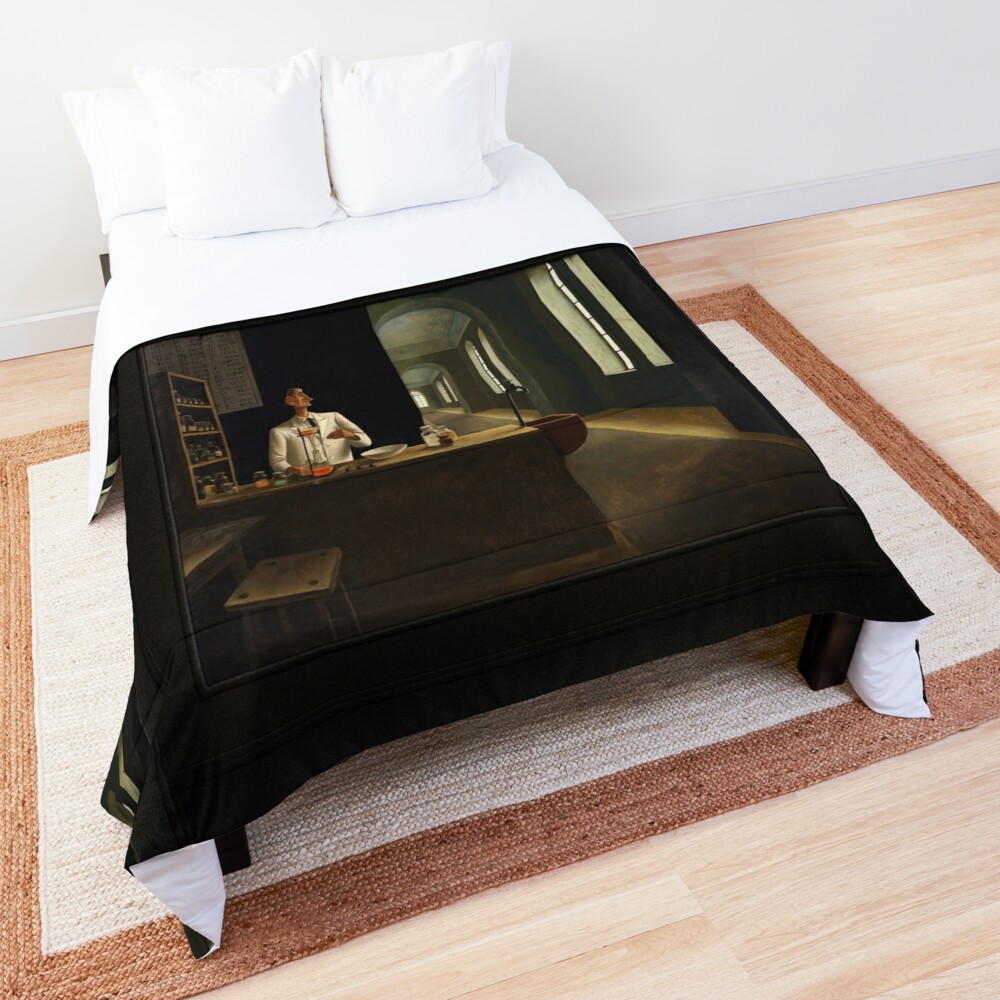
The Chemist (1932), painted by Austrian artist Franz Sedlacek (1891–1945), invites the viewer into a serene, yet somewhat enigmatic space. The scene depicted is both highly precise and almost abstract in its execution, blending elements of realism with surrealistic undertones. Sedlacek’s use of light, 그림자, and the architectural space evokes a quiet sense of solitude, while the central figure, an unnamed 화학자, appears absorbed in his task. The painting holds a significant place in the artist’s body of work, characterized by a stark, minimalist aesthetic that distills complex emotions and concepts into seemingly simple yet powerful imagery.
목차
주요 주제: The Chemist
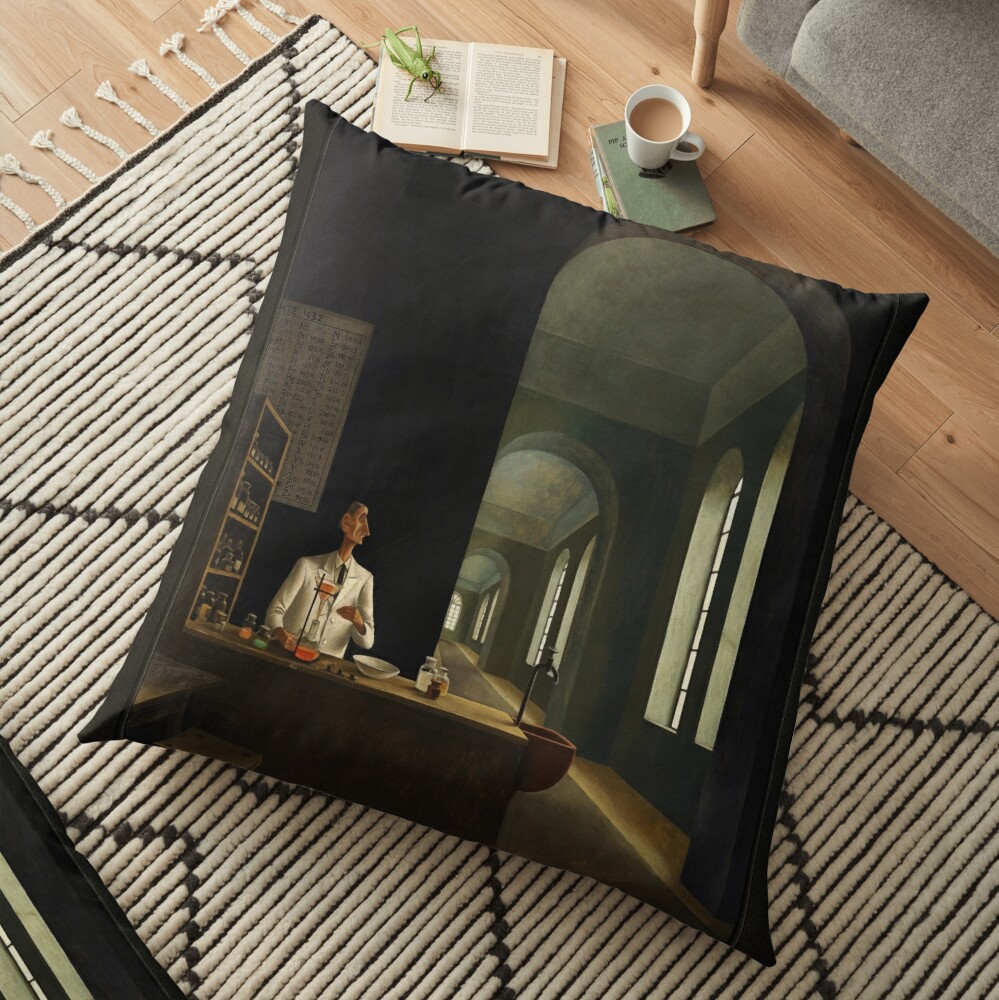
의 핵심 The Chemist stands the chemist, a tall, narrow figure dressed in a white lab coat, positioned in the middle of a laboratory setting. His thin, elongated neck and slight frame seem to evoke the image of an intellectual figure, possibly a scholar, whose work demands attention to detail and a deep focus. The chemist stands at a laboratory counter, surrounded by glassware and chemical substances that underscore the scientific nature of his environment.
The central act of the chemist appears to be a meticulous process of experimentation, as his attention is focused on a large beaker filled with a liquid. His posture is upright, suggesting a quiet confidence or concentration as he prepares to pour the contents, making a careful, deliberate gesture.
While there is no direct interaction with the viewer, the chemist’s isolated stance and distant gaze create a sense of detachment from the surrounding world, as if entirely engrossed in the task at hand. His placement within the space is very deliberate, capturing the tension between man and environment—his body forming a straight line, almost as though he is an extension of the very laboratory around him.
The Laboratory: An Eerie Space of Solitude
The laboratory itself is characterized by a series of arches that frame the background, giving the room a cavernous, almost cathedral-like appearance. The narrow hallways and repetitive windows in the background draw the viewer’s eye deep into the space, where light is streaming in from the right side of the canvas. The stark contrast between light and shadow is one of the most notable features of this work. The room feels expansive, yet empty, as though it is a space where time itself has slowed, or even ceased to exist.
매끄러운, hard surfaces of the counter, the bottles, and the chemical apparatus contribute to an austere, clinical atmosphere, but the lighting softens these edges, casting elongated shadows that add depth and dimension to the scene. The slightly muted palette of earthy tones—greens, 브라운스, and subtle yellows—intensifies this quiet mood, emphasizing the solitude of the chemist and the silence of the lab.
The chalkboard-like grid of numbers and symbols to the left of the chemist introduces a scientific element, though its illegibility adds to the feeling of ambiguity and abstraction. It suggests the notion of chemical equations or data, reinforcing the intellectual environment, yet its vague presentation makes the space feel impersonal and detached from any tangible outcome. This serves to heighten the focus on the chemist’s figure rather than the scientific endeavor he is immersed in, turning the work into a meditation on the act of creation or discovery itself.
분위기와 분위기: Solitude and Intellectual Isolation
분위기 The Chemist 조용한 명상 중 하나입니다, a serene yet profound isolation that pervades both the figure of the chemist and the surrounding space. Sedlacek’s sparse, almost barren composition removes any sense of narrative or story, leaving only the chemist and the cold, sterile laboratory. The solitude is palpable, almost as if the chemist is locked in a timeless moment, focused on his work to the exclusion of everything else. There is a subtle tension in the scene, where the viewer is left wondering whether the chemist is truly engaged in his experiments or if he has become a prisoner of the very process he represents.
This isolation is underscored by the use of light. The narrow rays of sunlight entering through the windows cast dramatic shadows across the room, creating a chiaroscuro effect that gives the space a deep sense of mystery. The shadows, particularly those stretching across the floor and walls, seem to engulf the chemist’s surroundings, creating an otherworldly quality to the otherwise mundane laboratory setting. This stark interplay between light and shadow adds an almost existential dimension to the painting, suggesting themes of knowledge, 발견, and the burden of intellectual pursuit.
스타일: Minimalist and Realist with Surrealist Undertones
Sedlacek’s style in The Chemist can be described as a blend of realism and minimalism, with a touch of surrealism. While the figure of the chemist and the surrounding objects are painted in a precise and realistic manner, the overall composition is stripped of unnecessary details, creating a sense of emptiness that intensifies the viewer’s focus on the central subject. The stark architectural lines and empty spaces seem to suggest a larger metaphor about the isolation inherent in scientific pursuit or the pursuit of knowledge itself. The artist’s decision to keep the space largely unadorned reflects a minimalist approach to both form and content, leaving ample room for the viewer to reflect on the implications of the scene.
The surrealist quality of the painting emerges in the subtle way the room seems to bend under the weight of the light and shadow, creating an almost dreamlike atmosphere. The chemist, although highly realistic in his portrayal, feels detached from his surroundings, as though he is both a part of and removed from the space in which he exists. This interplay of reality and abstraction invites deeper philosophical interpretations, with the laboratory itself becoming more of a conceptual space than a physical one.
결론: A Reflection on Knowledge and Isolation
The Chemist by Franz Sedlacek is a powerful exploration of intellectual isolation, the search for knowledge, and the quiet contemplation that often accompanies scientific discovery. The painting speaks to the loneliness that can accompany intellectual pursuits, where the act of creation or experimentation can become an isolating endeavor, separated from the external world. The minimalist style and muted colors contribute to a sense of stillness and introspection, inviting the viewer to reflect on the deeper existential questions raised by the chemist’s solitary labor.
Through his meticulous attention to detail and evocative use of light and space, Sedlacek has created a timeless piece that resonates with anyone who has ever faced the quiet solitude of intellectual pursuit, where the only companion is the work itself. The chemist, absorbed in his task, becomes a symbol of the isolation that often accompanies the quest for knowledge, 만들기 The Chemist an introspective and thought-provoking piece.
이것은 온라인에서 사용할 수 있는 퍼블릭 도메인 이미지의 수정된 디지털 아트 올드 마스터 복제품입니다. 압연 캔버스 인쇄.
이 디지털 아트 창작, Xzendor7 웹사이트에서 찾을 수 있는 모든 예술 작품과 마찬가지로 캔버스 인쇄를 포함한 다양한 재료 형식으로 온라인에서 구매할 수 있습니다., 아크릴 프린트, 금속 지문, 목판화, 액자 인쇄, 포스터, 그리고 압연 캔버스로 다양한 크기로 인쇄됩니다. 12 인치에 72 실제 작품의 크기와 작품을 구매하기로 선택한 주문형 인쇄소에 따라 인치.
이 작품은 다양한 남성복과 여성복에서도 볼 수 있습니다., 머그, 토트백, 스카프, 노트북, 저널 및 다양한 홈 데코 제품.
아티스트 약력
아래 정보 Wikipedia.org
Franz Sedlacek was born in Breslau on 21 1 월 1891, and moved with his family to Linz in 1897. 에 1909 he graduated from the Royal High School at the Fadingerstraße. 1년 후, he moved to Vienna and studied architecture and chemistry.
After serving in World War I, he completed his studies and in 1921 began working at the Technical Museum of Vienna.
에 1913, Sedlacek founded an artistic association in Linz with Anton Lutz, Klemens Brosch, Franz Bitzan, and Heinz Bitzan. Sedlacek began as a graphic artist, and later turned to oil painting.
에 1925 he produced a number of watercolours for Claire Annabel Caroline Grant Duff’s Book The Unicorn.
에 1927, Sedlacek joined the Viennese Secession, an association of artists that was founded by Gustav Klimt and others in 1897.