

Herodias Salomen tytär vastaanottaa Johannes Kastajan pään
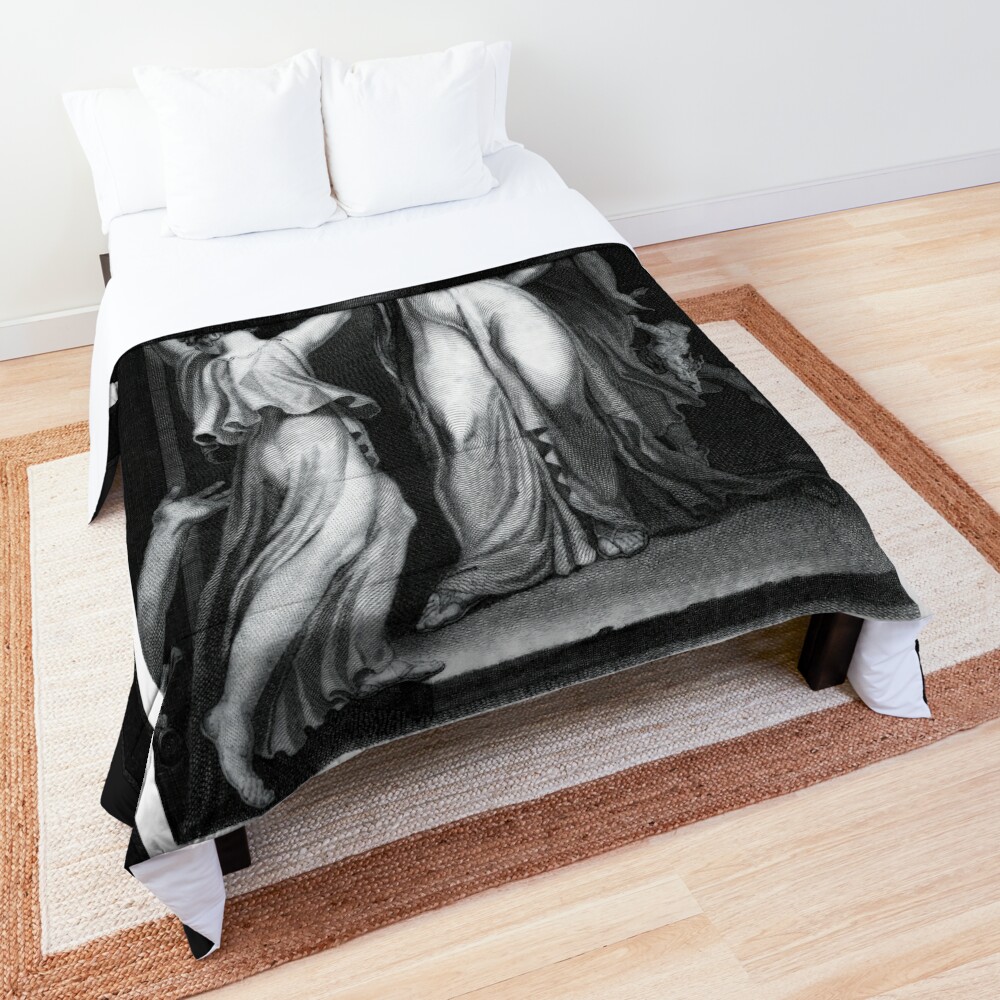
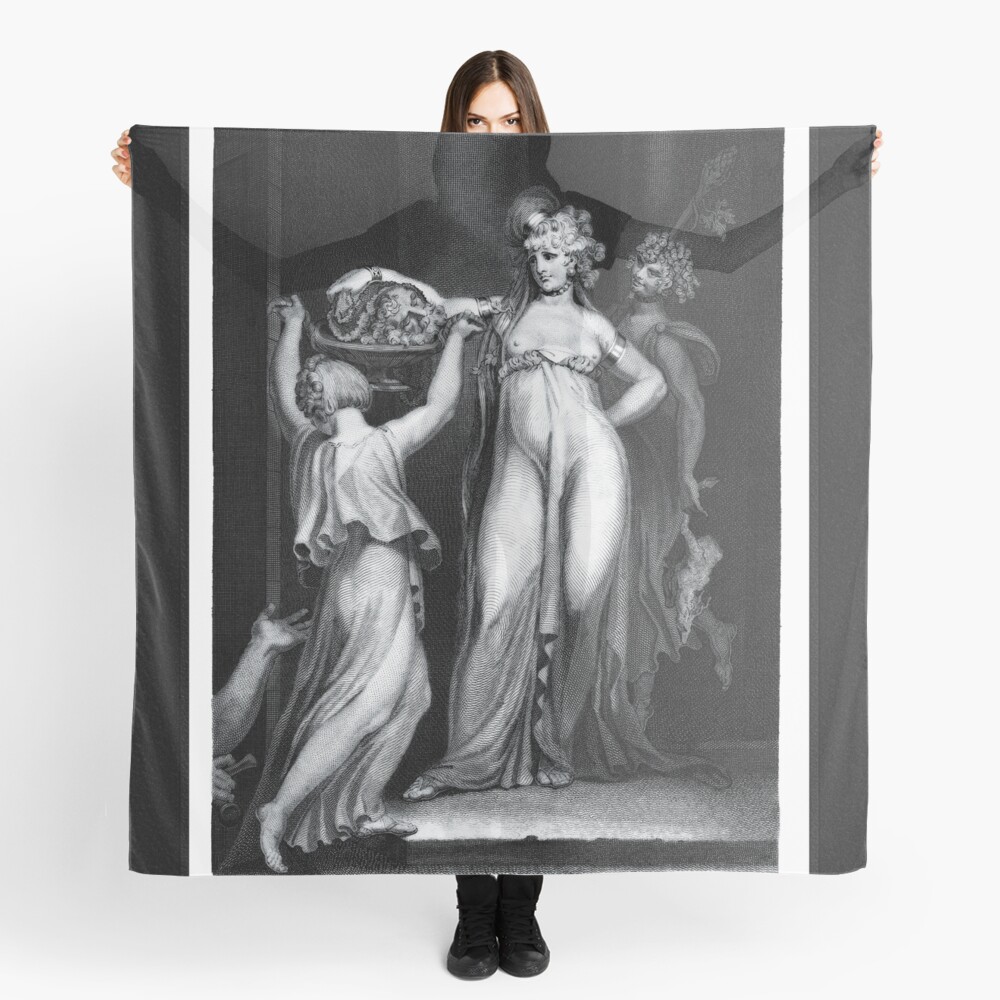
In the haunting engraving titled “Herodiaksen tytär; Salome vastaanottaa Johannes Kastajan pään,” created by the British engraver Thomas Holloway in 1798, we witness a pivotal moment drawn from the Bible, specifically Matthew 14:10-11. This stark and dramatic scene captures the tragic culmination of the beheading of John the Baptist.
Holloway’s meticulous craftsmanship evokes the emotional intensity and weight of the moment, blending both the grotesque and the regal. The engraving portrays Salome, the daughter of Herodias, holding the severed head of the prophet John, an act prompted by her mother’s desire for vengeance.
Sisällysluettelo
The Main Subject and Theme
At the heart of Holloway’s engraving stands the female figure of Salome, her expression a curious mix of satisfaction and cold indifference as she receives the gruesome head of John the Baptist. Salome is depicted with long flowing hair, dressed in an elegant yet understated gown that flows to the floor. Her posture is poised, almost regal, despite the grim nature of the event. Her delicate yet firm grasp of the dish holding the severed head of John reflects the disturbing calmness of the scene.
The head of John the Baptist is eerily centered in the image, placed on a silver platter. His features are still discernible, though his eyes are shut in death, adding to the horror of the scene. His decapitated head is an unsettling contrast to the elegant appearance of the figures around it. Behind Salome stands a smaller male figure who seems to assist in the ceremonial transfer of the head, while another figure, draped in a flowing robe, completes the scene. These secondary characters underscore the ritualistic aspect of the narrative and their submission to the will of Herodias.
The theme of the artwork revolves around the notion of vengeance and betrayal, as well as the imbalance of power. Salome’s act is one of obedience to her mother, yet there is a calculated detachment in her demeanor that speaks to the complex emotional and moral implications of her actions. Holloway portrays the moment with an intensity that transcends the physical violence of the scene, offering viewers a glimpse into the darker realms of human nature and the consequences of unchecked power.
Materiaalit ja tekniikka
Thomas Holloway’s engraving is a masterwork of the intaglio process, a technique that involves incising an image onto a surface, which is then inked and pressed onto paper to create an impression. This traditional method allows for remarkable detail and tonal gradation, and Holloway’s skillful use of light and shadow brings the composition to life. The texture of the engraving, from the intricate folds of Salome’s gown to the delicate portrayal of the severed head, exhibits an exceptional level of detail characteristic of the neoclassical era. The depth of emotion is underscored by the expert contrast between light and dark, which emphasizes the drama of the moment.
The image is rendered in black and white, a stark yet powerful choice that reinforces the gravity of the scene. The contrast between the white of Salome’s skin and gown and the deep shadows of the background lends an almost theatrical quality to the image. This use of chiaroscuro – the contrast between light and dark – is particularly effective in drawing attention to the central figures, allowing their expressions and poses to dominate the composition.
Setting and Objects
The setting of the artwork is minimalistic but purposeful. The figures are placed in a semi-darkened space, hinting at a chamber or a palace, though no specific architectural details are given. This lack of specificity enhances the sense of timelessness, allowing the narrative to be universal rather than tied to a specific location or period. The dim lighting surrounding the figures suggests a scene shrouded in secrecy or ritual, contributing to the overall somber and foreboding mood of the piece.
The dish holding John the Baptist’s severed head is one of the most critical objects in the scene. Its presence is almost ceremonial, a stark juxtaposition of death and reverence. The head, severed from the body, conveys the brutality of the execution, yet the treatment of the dish elevates it to an almost sacred object, as though the head itself is now part of a macabre offering or tribute. The blood that would naturally accompany such an event is deliberately omitted from the image, making the scene even more surreal and unsettling. It is as though the severed head is merely a symbol of the act rather than a true representation of its grisly reality.
Mieliala ja emotionaalinen vaikutus
The overall mood of the engraving is one of darkness, suspense, and moral ambiguity. The cold detachment of Salome, juxtaposed with the violent symbolism of John the Baptist’s death, creates a tense atmosphere. The lack of empathy displayed by Salome in this moment, while her expression reveals no sign of remorse or distress, calls attention to the inhumanity that often accompanies the pursuit of power. Holloway masterfully captures the eerie calmness of the scene, leaving the viewer with an unsettling sense of foreboding.
The engraved figures are imbued with a quiet stillness, but it is a stillness laced with an undercurrent of violence and intrigue. The sense of detachment from the horror of the act may provoke discomfort in the viewer, challenging them to consider the cost of vengeance and the complex nature of moral judgment. Salome’s role as the instrument of her mother’s revenge places her at the intersection of innocence and guilt, and Holloway’s work invites contemplation of the consequences of blind obedience.
Johtopäätös
Thomas Holloway’s “Herodiaksen tytär; Salome vastaanottaa Johannes Kastajan pään” is a striking representation of a dark and tragic biblical moment. Through his expert use of engraving techniques and the careful rendering of light and shadow, Holloway brings an age-old story to life with vivid detail and emotional intensity. The scene is both beautiful and horrifying, offering a compelling reflection on the themes of power, vengeance, and moral complexity.
Herodiaksen tytär; Salome vastaanottaa johtajan Johannes Kastaja, Matthew 14:10-11 c1798 kirjoittanut brittiläinen kaivertaja Thomas Holloway (1748 – 1827), Sveitsiläisen maalarin Henry Fuselin maalauksesta (741 – 1825); tunnettu erikoistumisestaan yliluonnollisten taideteosten luomiseen; joka oli myös taitava valmistelija, Kirjailija ja maalausprofessorin ja kuninkaallisen akatemian pitäjän tehtävän haltija.
Tämä Thomas Hollowayn kaiverrus perustuu Henry Fuselin maalaukseen, jossa näkyy kuningas Herodiasin tytär, Salome hyväksyy Johannes Kastajan katkaistun pään palatsin pihalla.
The Daughter of Herodias Salome Receiving the Head of John the Baptist is a retouched digital art old masters reproduction of a public domain image that is available for purchase online as a rullattu kangasprintti.

Taiteilija bio Wikipedia.org
Holloway oppilaana hylkeen kaivertajalle nimeltä Stent nuorena. Hän jatkoi kaiverruksen opiskelua Royal Academy -yhtiössä vuodesta 1773, jonka aikana hän asui 11 Rannat Row, lähellä Charles Squarea, Hoxton, ja esitteli pastellimuotokuvia Taiteilijaseurassa vuonna 1777.
Myöhemmin hän asui Orme Housessa Hamptonissa, Edgefield, Norfolk, ja Coltishall, Norfolk. Hänestä tuli tuomioistuimen kaivertaja vuonna 1792.
Syntynyt Broad Streetillä, Lontoo, hän oli kauppiaan vanhin poika, joka oli John Wesleyn varhainen seuraaja; hänen äitinsä muotokuvan on maalannut John Russell.
Hänet nivelsivät hylkeen kaivertajan nimeltä Stent, jota hän työskenteli pääasiassa teräskoristeiden veistämisessä. Myöhemmin hän osallistui Royal Academy -kouluihin, ja sisään 1773 ilmestyi ensimmäisen kerran Royal Academyssa hylkeiden ja kaiverrettujen jalokivien näytteilleasettajana. Myöhemmin ja korkeintaan 1792 hän oli mukana miniatyyreissä ja muotokuvissa öljyissä ja väriliiduissa.
Hollowayn pääsuunta oli viivakaiverrus. Hänen varhaisimmat julkaistut levyt olivat pieniä muotokuvia aikakauslehdille, pääasiassa epäkonformistisista ministereistä. Myöhemmin hän julkaisi Johann Kaspar Lavaterin esseitä fysiologiasta, kääntäjä Henry Hunter, 5 vol., 1789- 98.
Teos oli kuvattu noin 800 Hollowayn itse toteuttamat levyt, Francesco Bartolozzi, William Blake, ja muut kaivertajat, Henry Fuselin johdolla.
Hänen muotokuviinsa kuului Charles Howard, 11Norfolkin herttua, Robert Edge Pinen jälkeen, ja Timothy Priestleystä, 1792, ja Richard Price, Benjamin Westin jälkeen, 1793.
Hän työskenteli myös John Boydellin Shakespearen kuvituksissa, Robert Bowyerin Englannin historia, ja Bellin British Theatre.
Holloway tunnetaan vaikeista kaiverruksistaan Raphaelin sarjakuvista Windsorin linnassa vuonna 1800, jonka parissa hän työskenteli 30 vuotta. Tämä kunnianhimoinen hanke oli taloudellinen epäonnistuminen. Sarjakuvia oli jo kaivertanut Nicolas Dorigny.
Benjamin Westin vaikutuksen kautta, Holloway sai luvan kaivertaa laajamittaisesti seitsemän Rafael -sarjakuvaa Windsorissa, ja tähän tehtävään käytettiin loppuelämänsä.
Hän palkkasi entisten oppilaidensa avustajiksi, R. Slann ja T.. S. Webb, joista jokainen meni naimisiin Hollowayn veljentyttären kanssa, yhdessä Joseph Thomsonin kanssa, taiteilija, joka kuoli nuorena. He työskentelivät yhdessä Windsorissa kunnes 1814, kun sarjakuvia siirrettiin Hampton Courtiin.
Ensimmäisen levyn valmistuttua, Paavali saarnasi Ateenassa, sisään 1806, kuningas nimitti Hollowayn historialliseksi kaivertajakseen; toinen, Kristuksen velvollisuus Pietarille, esiintyi 1810; kolmas, Ananiasin kuolema, sisään 1816; ja neljäs, Elymas, sisään 1820.
Samana vuonna kaikki alustavat piirustukset valmistuivat, ja Holloway jäi eläkkeelle työtovereidensa kanssa Edgefieldiin Norfolkiin, ja myöhemmin Coltishalliin, lähellä Norwichia, jatkaa työtään levyillä, joista viides, Ihmeellinen luonnos kaloja, julkaistiin vuonna 1824. Tämä oli viimeinen, jonka Holloway asui loppuun.
Kuudes levy, Paavali ja Barnabas Lystrassa, oli melkein valmis vuonna 1827, ja seitsemäs, Pietari ja Johannes kauniilla portilla, alkanut.
Edellinen ilmestyi seuraavana vuonna, 1828, mutta jälkimmäisen valmistuminen viivästyi kunnes 1839, kun se julkaistiin omistautumalla kuningattarelle, ja kuten muutkin kantoivat Hollowayn nimiä, Slann, ja Webb kaivertajina ja kustantajina.