

Nighean Herodiais Salome a' faotainn Ceann Eoin Baiste
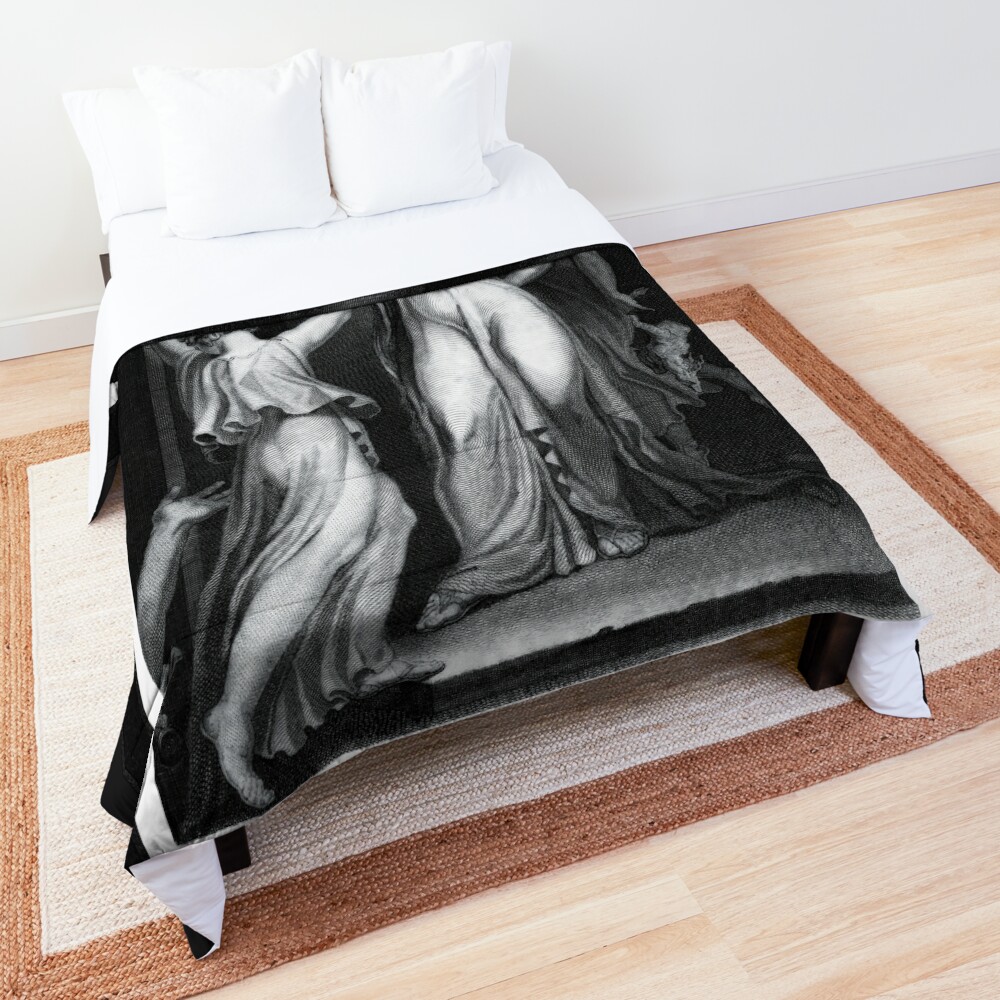
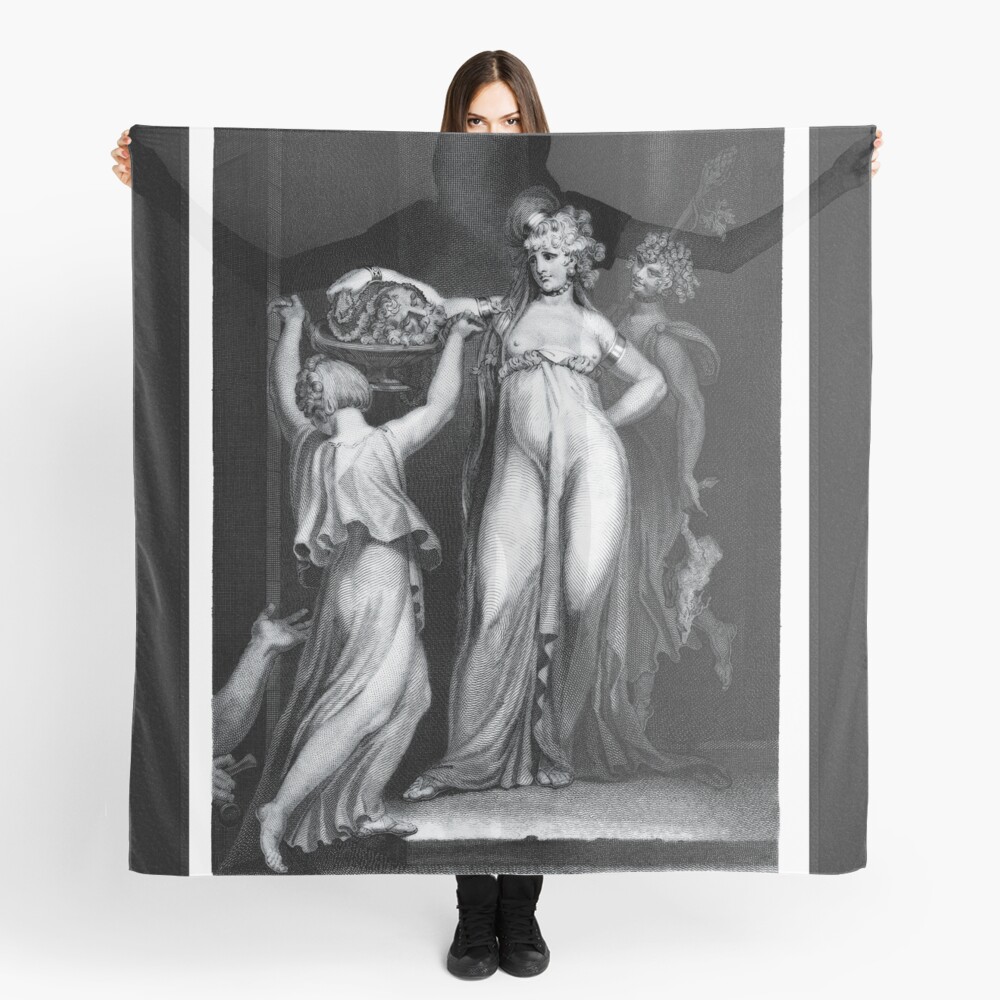
In the haunting engraving titled “Nighean Herodiais; Salome Receiving the Head of John the Baptist,” created by the British engraver Thomas Holloway in 1798, we witness a pivotal moment drawn from the Bible, specifically Matthew 14:10-11. This stark and dramatic scene captures the tragic culmination of the beheading of John the Baptist.
Holloway’s meticulous craftsmanship evokes the emotional intensity and weight of the moment, blending both the grotesque and the regal. The engraving portrays Salome, the daughter of Herodias, holding the severed head of the prophet John, an act prompted by her mother’s desire for vengeance.
Clàr-innse
The Main Subject and Theme
At the heart of Holloway’s engraving stands the female figure of Salome, her expression a curious mix of satisfaction and cold indifference as she receives the gruesome head of John the Baptist. Salome is depicted with long flowing hair, dressed in an elegant yet understated gown that flows to the floor. Tha an suidheachadh aice deiseil, almost regal, despite the grim nature of the event. Her delicate yet firm grasp of the dish holding the severed head of John reflects the disturbing calmness of the scene.
The head of John the Baptist is eerily centered in the image, placed on a silver platter. His features are still discernible, though his eyes are shut in death, adding to the horror of the scene. His decapitated head is an unsettling contrast to the elegant appearance of the figures around it. Behind Salome stands a smaller male figure who seems to assist in the ceremonial transfer of the head, while another figure, draped in a flowing robe, completes the scene. These secondary characters underscore the ritualistic aspect of the narrative and their submission to the will of Herodias.
The theme of the artwork revolves around the notion of vengeance and betrayal, as well as the imbalance of power. Salome’s act is one of obedience to her mother, yet there is a calculated detachment in her demeanor that speaks to the complex emotional and moral implications of her actions. Holloway portrays the moment with an intensity that transcends the physical violence of the scene, offering viewers a glimpse into the darker realms of human nature and the consequences of unchecked power.
Stuthan agus innleachd
Thomas Holloway’s engraving is a masterwork of the intaglio process, a technique that involves incising an image onto a surface, which is then inked and pressed onto paper to create an impression. This traditional method allows for remarkable detail and tonal gradation, and Holloway’s skillful use of light and shadow brings the composition to life. The texture of the engraving, from the intricate folds of Salome’s gown to the delicate portrayal of the severed head, exhibits an exceptional level of detail characteristic of the neoclassical era. The depth of emotion is underscored by the expert contrast between light and dark, which emphasizes the drama of the moment.
The image is rendered in black and white, a stark yet powerful choice that reinforces the gravity of the scene. The contrast between the white of Salome’s skin and gown and the deep shadows of the background lends an almost theatrical quality to the image. This use of chiaroscuro – the contrast between light and dark – is particularly effective in drawing attention to the central figures, allowing their expressions and poses to dominate the composition.
Suidheachadh agus Rudan
The setting of the artwork is minimalistic but purposeful. The figures are placed in a semi-darkened space, hinting at a chamber or a palace, though no specific architectural details are given. This lack of specificity enhances the sense of timelessness, allowing the narrative to be universal rather than tied to a specific location or period. The dim lighting surrounding the figures suggests a scene shrouded in secrecy or ritual, contributing to the overall somber and foreboding mood of the piece.
The dish holding John the Baptist’s severed head is one of the most critical objects in the scene. Its presence is almost ceremonial, a stark juxtaposition of death and reverence. The head, severed from the body, conveys the brutality of the execution, yet the treatment of the dish elevates it to an almost sacred object, as though the head itself is now part of a macabre offering or tribute. The blood that would naturally accompany such an event is deliberately omitted from the image, making the scene even more surreal and unsettling. It is as though the severed head is merely a symbol of the act rather than a true representation of its grisly reality.
Mood agus buaidh tòcail
The overall mood of the engraving is one of darkness, Suspense, and moral ambiguity. The cold detachment of Salome, juxtaposed with the violent symbolism of John the Baptist’s death, creates a tense atmosphere. The lack of empathy displayed by Salome in this moment, while her expression reveals no sign of remorse or distress, calls attention to the inhumanity that often accompanies the pursuit of power. Holloway masterfully captures the eerie calmness of the scene, leaving the viewer with an unsettling sense of foreboding.
The engraved figures are imbued with a quiet stillness, but it is a stillness laced with an undercurrent of violence and intrigue. The sense of detachment from the horror of the act may provoke discomfort in the viewer, challenging them to consider the cost of vengeance and the complex nature of moral judgment. Salome’s role as the instrument of her mother’s revenge places her at the intersection of innocence and guilt, and Holloway’s work invites contemplation of the consequences of blind obedience.
Co-dhùnadh
Thomas Holloway’s “Nighean Herodiais; Salome Receiving the Head of John the Baptist” is a striking representation of a dark and tragic biblical moment. Through his expert use of engraving techniques and the careful rendering of light and shadow, Holloway brings an age-old story to life with vivid detail and emotional intensity. The scene is both beautiful and horrifying, offering a compelling reflection on the themes of power, vengeance, and moral complexity.
Nighean Herodiais; Salome a' faighinn Ceannard na Eoin Baiste, Mata 14:10-11 c1798 leis an ghràbhalaiche Breatannach Tòmas Holloway (1748 – 1827), bho dhealbh leis a’ pheantair Eilbheis Henry Fuseli (741 – 1825); ainmeil airson a bhith gu sònraichte a’ cruthachadh obair-ealain a chaidh a-steach don os-nàdarrach; a bha mar an ceudna 'na dhreachadair ealanta, Sgrìobhadair agus neach-gleidhidh dreuchd Àrd-ollamh Peantadh agus Neach-gleidhidh aig an Acadamaidh Rìoghail.
Tha an gràbhaladh seo le Tòmas Holloway stèidhichte air dealbh a rinn Henry Fuseli a tha a' sealltainn nighean Rìgh Herodias, Salome a' gabhail ri ceann briste Iain Baiste ann an cùirt na lùchairt.
The Daughter of Herodias Salome Receiving the Head of John the Baptist is a retouched digital art old masters reproduction of a public domain image that is available for purchase online as a clò-bhualadh canabhas rollaichte.

Neach-ealain Bios bho Wikipedia.org
Bha Holloway na phreantas do ghràbhalaiche ròin leis an t-ainm Stent aig aois òg. Chaidh e air adhart gu bhith ag ionnsachadh gràbhaladh aig an Acadamaidh Rìoghail a’ tòiseachadh ann an 1773, rè na h-ùine sin bha e a chòmhnuidh 11 Sreath tràighean, faisg air Ceàrnag Theàrlaich, Hoxton, agus a’ taisbeanadh dealbhan pastel aig Comann an Luchd-ealain ann an 1777.
Nas fhaide air adhart bha e a’ fuireach ann an Orme House ann an Hampton, Edgefield, Norfolk, agus Coltishall, Norfolk. Thàinig e gu bhith na ghràbhalaiche cùirte ann an 1792.
Rugadh e air an t-Sràid Leathann, Lunnainn, b' esan mac bu shine do mharsanta a bha tràth leantuinn Iain Wesley; chaidh dealbh a mhàthar a pheantadh le Iain Russell.
Chaidh a chuir gu gràbhalaiche ròin air an robh Stent, leis an robh e gu mòr ag obair ann an gràbhaladh sgeadachaidhean stàilinn. Às deidh sin chaidh e gu sgoiltean an Acadamaidh Rìoghail, agus a-steach 1773 nochdadh an toiseach aig an Acadamaidh Rìoghail mar neach-taisbeanaidh ròin agus seudan gràbhalaidh. Nas fhaide air adhart agus suas ri 1792 bha e a' cur gu mòr ri mion-dhealbhan agus dealbhan ann an olaichean agus creagan.
B’ e gràbhaladh loidhne am prìomh stiùir aig Holloway. Bha na truinnsearan foillsichte as tràithe aige nan dealbhan beaga airson irisean, gu h-àraidh do mhinistearan neo-cho- òrdail. Às deidh sin ghabh e os làimh deasachadh de Aistean air Physiognomy aig Johann Kaspar Lavater, eadar-theangachadh le Eanraig Mac an t-Sealgair, 5 vols., 1789—98.
Chaidh an obair a shoilleireachadh le timcheall air 800 truinnsearan air an cur gu bàs le Holloway fhèin, Francesco Bartolozzi, Uilleam Blake, agus luchd-gearraidh eile, fo stiùireadh Henry Fuseli.
Am measg nan dealbhan aige bha na dealbhan aig Teàrlach Howard, 11Diùc Norfolk, às deidh Robert Edge Pine, agus Timoteus Priestley, 1792, agus Ridseard Price, às deidh Benjamin West, 1793.
Bha e cuideachd ag obair air na dealbhan gu Shakespeare aig John Boydell, Eachdraidh an Sasainn Robert Bowyer, agus Taigh-cluiche Bhreatainn Bell.
Tha Holloway ainmeil airson a ghràbhalaidhean cruaidh de chartùnaichean le Raphael aig Caisteal Windsor ann an 1800, air an robh e ag obair 30 bliadhna. Bha am pròiseact àrd-amasach seo na fhàiligeadh ionmhais. Bha na cartùnaichean air an gràbhaladh le Nicolas Dorigny mu thràth.
Tro bhuaidh Benjamin West, Fhuair Holloway cead airson na seachd cartùnaichean Raphael aig Windsor a ghràbhaladh air sgèile mhòr, agus do'n obair so bha an còrr d'a bheatha air a chur seachad.
Chaidh e an sàs mar luchd-cuideachaidh dha na seann sgoilearan aige, R. Slann and T. S. Webb, phòs gach fear dhiubh nighean-bràthar Holloway, maille ri Ioseph MacThòmais, neach-ealain a chaochail òg. Bha iad ag obair còmhla ann an Windsor gus 1814, nuair a chaidh na cartùnaichean a ghluasad gu Hampton Court.
Nuair a bhios a 'chiad chlàr air a chrìochnachadh, Paul a' searmonachadh ann an Athens, a-steach 1806, chuir an rìgh an dreuchd Holloway na ghràbhalaiche eachdraidheil aige; an dara, Dleasdanas Chriosd do Pheadar, nochd ann an 1810; an treas, Bàs Ananias, a-steach 1816; agus an ceathramh, Eilidh, a-steach 1820.
Anns a’ bhliadhna sin chaidh na dealbhan tòiseachaidh gu lèir a chrìochnachadh, agus leig Holloway dheth a dhreuchd còmhla ri a chompanaich gu Edgefield ann an Norfolk, agus an dèidh sin gu Coltishall, faisg air Norwich, an obair a leantainn air na truinnsearan, dhiubh sin an còigeamh, An dreach mìorbhaileach de dh'iasg, air a chuir a-steach 1824. B’ e seo an tè mu dheireadh a bha Holloway beò ri chrìochnachadh.
An t-siathamh clàr, Pòl agus Barnabas ann an Listra, bha cha mhòr deiseil ann an 1827, agus an seachdamh, Peadar agus Eòin aig an Geata Bòidheach, air tòiseachadh.
Nochd a’ chiad fhear an ath bhliadhna, 1828, ach chaidh dàil a chur air crìoch a chur air an fhear mu dheireadh gus 1839, nuair a chaidh fhoillseachadh le coisrigeadh don Bhànrigh, agus mar a' chuid eile bha ainmean Holloway orra, Slann, agus Webb mar luchd-gearraidh agus foillsichearan.