

De dochter van Herodias Salome ontvangt het hoofd van Johannes de Doper
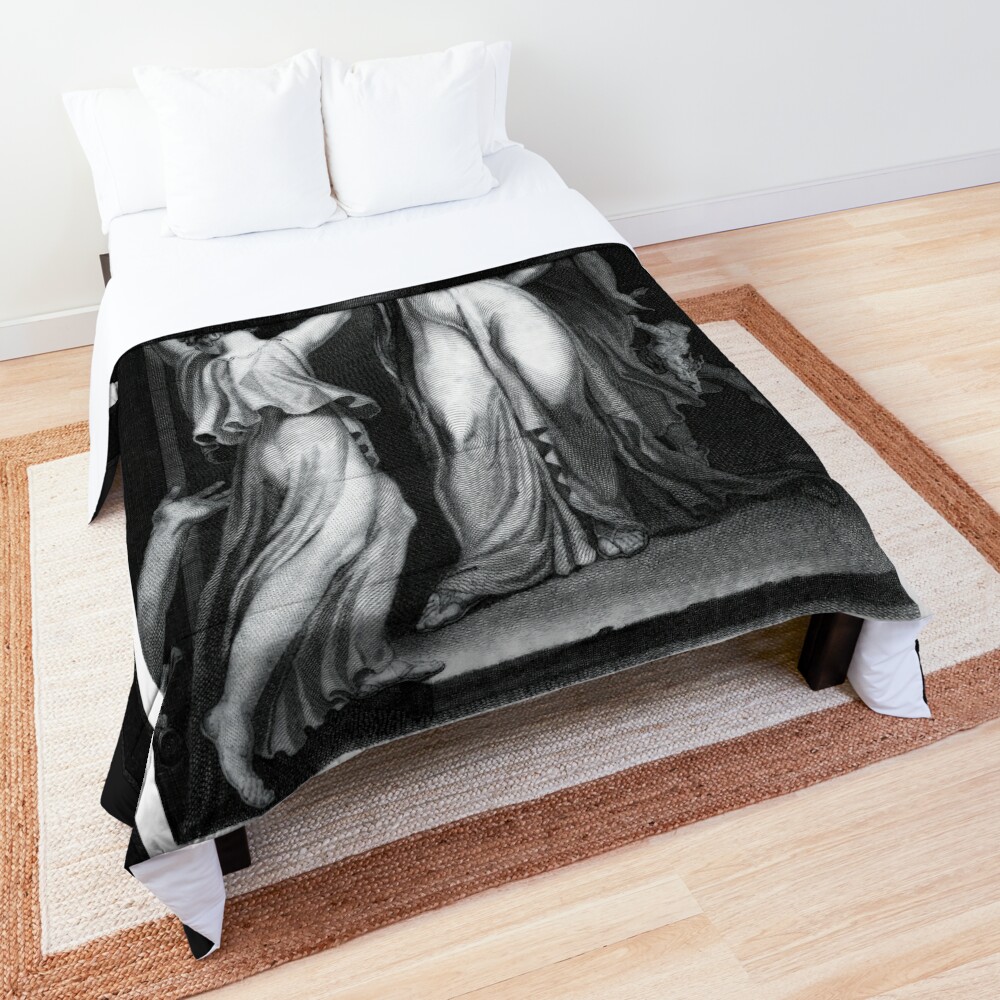
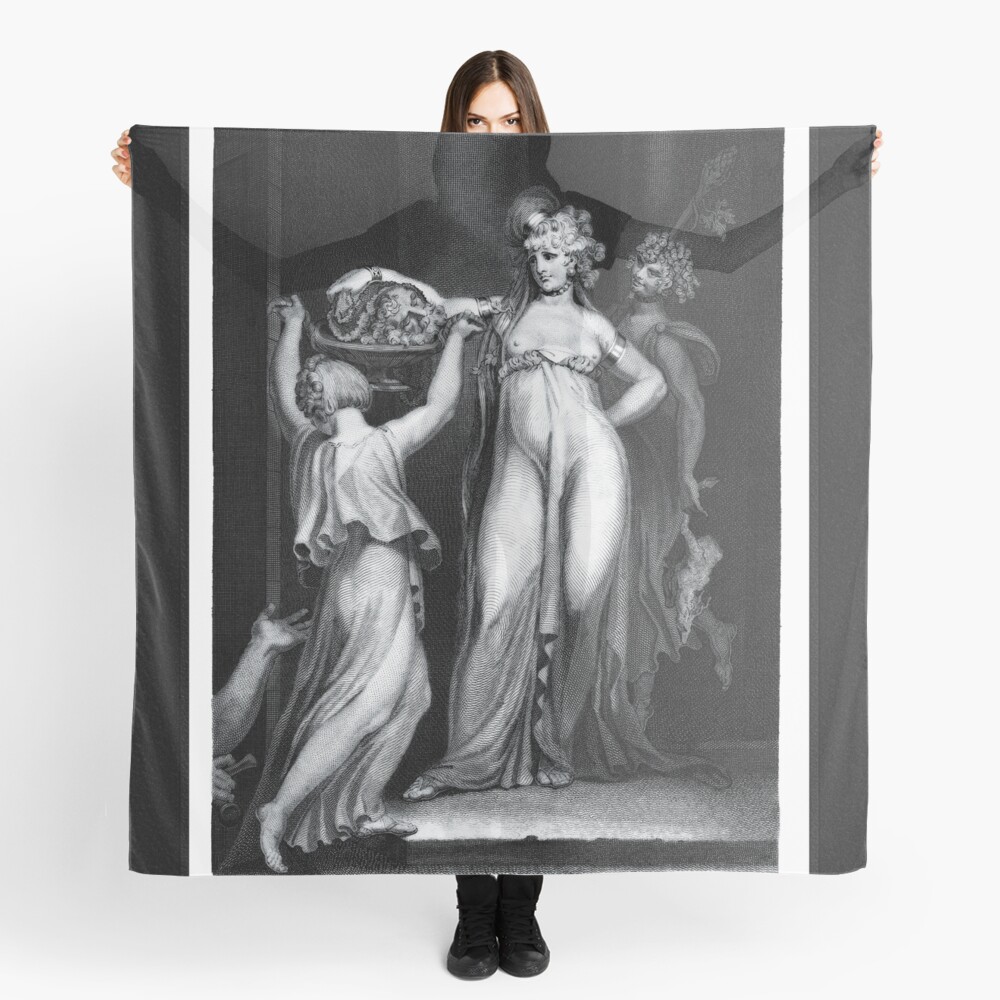
In the haunting engraving titled “De dochter van Herodias; Salome ontvangt het hoofd van Johannes de Doper,” created by the British engraver Thomas Holloway in 1798, we witness a pivotal moment drawn from the Bible, specifically Matthew 14:10-11. This stark and dramatic scene captures the tragic culmination of the beheading of John the Baptist.
Holloway’s meticulous craftsmanship evokes the emotional intensity and weight of the moment, blending both the grotesque and the regal. The engraving portrays Salome, the daughter of Herodias, holding the severed head of the prophet John, an act prompted by her mother’s desire for vengeance.
Inhoudsopgave
The Main Subject and Theme
At the heart of Holloway’s engraving stands the female figure of Salome, her expression a curious mix of satisfaction and cold indifference as she receives the gruesome head of John the Baptist. Salome is depicted with long flowing hair, dressed in an elegant yet understated gown that flows to the floor. Her posture is poised, almost regal, despite the grim nature of the event. Her delicate yet firm grasp of the dish holding the severed head of John reflects the disturbing calmness of the scene.
The head of John the Baptist is eerily centered in the image, placed on a silver platter. His features are still discernible, though his eyes are shut in death, adding to the horror of the scene. His decapitated head is an unsettling contrast to the elegant appearance of the figures around it. Behind Salome stands a smaller male figure who seems to assist in the ceremonial transfer of the head, while another figure, draped in a flowing robe, completes the scene. These secondary characters underscore the ritualistic aspect of the narrative and their submission to the will of Herodias.
The theme of the artwork revolves around the notion of vengeance and betrayal, as well as the imbalance of power. Salome’s act is one of obedience to her mother, yet there is a calculated detachment in her demeanor that speaks to the complex emotional and moral implications of her actions. Holloway portrays the moment with an intensity that transcends the physical violence of the scene, offering viewers a glimpse into the darker realms of human nature and the consequences of unchecked power.
Materialen en techniek
Thomas Holloway’s engraving is a masterwork of the intaglio process, a technique that involves incising an image onto a surface, which is then inked and pressed onto paper to create an impression. This traditional method allows for remarkable detail and tonal gradation, and Holloway’s skillful use of light and shadow brings the composition to life. The texture of the engraving, from the intricate folds of Salome’s gown to the delicate portrayal of the severed head, exhibits an exceptional level of detail characteristic of the neoclassical era. The depth of emotion is underscored by the expert contrast between light and dark, which emphasizes the drama of the moment.
The image is rendered in black and white, a stark yet powerful choice that reinforces the gravity of the scene. The contrast between the white of Salome’s skin and gown and the deep shadows of the background lends an almost theatrical quality to the image. This use of chiaroscuro – the contrast between light and dark – is particularly effective in drawing attention to the central figures, allowing their expressions and poses to dominate the composition.
Instelling en objecten
The setting of the artwork is minimalistic but purposeful. The figures are placed in a semi-darkened space, hinting at a chamber or a palace, though no specific architectural details are given. This lack of specificity enhances the sense of timelessness, allowing the narrative to be universal rather than tied to a specific location or period. The dim lighting surrounding the figures suggests a scene shrouded in secrecy or ritual, contributing to the overall somber and foreboding mood of the piece.
The dish holding John the Baptist’s severed head is one of the most critical objects in the scene. Its presence is almost ceremonial, a stark juxtaposition of death and reverence. The head, severed from the body, conveys the brutality of the execution, yet the treatment of the dish elevates it to an almost sacred object, as though the head itself is now part of a macabre offering or tribute. The blood that would naturally accompany such an event is deliberately omitted from the image, making the scene even more surreal and unsettling. It is as though the severed head is merely a symbol of the act rather than a true representation of its grisly reality.
Stemming en emotionele impact
The overall mood of the engraving is one of darkness, spanning, and moral ambiguity. The cold detachment of Salome, juxtaposed with the violent symbolism of John the Baptist’s death, creates a tense atmosphere. The lack of empathy displayed by Salome in this moment, while her expression reveals no sign of remorse or distress, calls attention to the inhumanity that often accompanies the pursuit of power. Holloway masterfully captures the eerie calmness of the scene, leaving the viewer with an unsettling sense of foreboding.
The engraved figures are imbued with a quiet stillness, but it is a stillness laced with an undercurrent of violence and intrigue. The sense of detachment from the horror of the act may provoke discomfort in the viewer, challenging them to consider the cost of vengeance and the complex nature of moral judgment. Salome’s role as the instrument of her mother’s revenge places her at the intersection of innocence and guilt, and Holloway’s work invites contemplation of the consequences of blind obedience.
Conclusie
Thomas Holloway’s “De dochter van Herodias; Salome ontvangt het hoofd van Johannes de Doper” is a striking representation of a dark and tragic biblical moment. Through his expert use of engraving techniques and the careful rendering of light and shadow, Holloway brings an age-old story to life with vivid detail and emotional intensity. The scene is both beautiful and horrifying, offering a compelling reflection on the themes of power, vengeance, and moral complexity.
De dochter van Herodias; Salome ontvangt het hoofd van Johannes de Doper, Matthew 14:10-11 c1798 door de Britse graveur Thomas Holloway (1748 – 1827), van een schilderij van de Zwitserse schilder Henry Fuseli (741 – 1825); bekend om zijn specialisatie in het maken van kunstwerken die in het bovennatuurlijke zijn gedoken; die ook een ervaren tekenaar was, Schrijver en houder van de functie van Professor of Painting and Keeper aan de Koninklijke Academie.
Deze gravure van Thomas Holloway is gebaseerd op een schilderij van Henry Fuseli waarop de dochter van koning Herodias te zien is, Salome aanvaardt het afgehakte hoofd van Johannes de Doper in het paleishof.
The Daughter of Herodias Salome Receiving the Head of John the Baptist is a retouched digital art old masters reproduction of a public domain image that is available for purchase online as a opgerold canvas afdrukken.

Kunstenaar bio van Wikipedia.org
Holloway ging op jonge leeftijd in de leer bij een zeehondengraveur genaamd Stent. Hij ging graveren studeren aan de Koninklijke Academie begin in 1773, gedurende welke tijd hij woonde in 11 Stranden Rij, in de buurt van Karelsplein, Hoxton, en exposeerde pastelportretten bij de Society of Artists in 1777.
Hij woonde later in Orme House in Hampton, Edgefield, Norfolk, en Coltishall, Norfolk. Hij werd een rechtbankgraveur in 1792.
Geboren in Broad Street, Londen, hij was de oudste zoon van een koopman die een vroege volgeling was van John Wesley; het portret van zijn moeder is geschilderd door John Russell.
Hij werd verbonden met een zegelgraveur genaamd Stent, door wie hij voornamelijk werkzaam was in het snijden van stalen ornamenten. Vervolgens bezocht hij de scholen van de Royal Academy, en in 1773 verscheen voor het eerst op de Koninklijke Academie als exposant van zegels en gegraveerde edelstenen. Later en tot 1792 hij leverde een bijdrage aan miniaturen en portretten in olieverf en kleurpotloden.
Holloway's hoofdrichting was lijngravure. Zijn vroegst gepubliceerde platen waren kleine portretten voor tijdschriften, voornamelijk van non-conformistische ministers. Later ondernam hij een editie van Johann Kaspar Lavater's Essays on Physiongomy, vertaald door Henry Hunter, 5 vol., 1789–98.
Het werk werd geïllustreerd met ongeveer 800 platen uitgevoerd door Holloway zelf, Francesco Bartolozzi, William Blake, en andere graveurs, onder leiding van Henry Fuseli.
Zijn portretten omvatten die van Charles Howard, 11de hertog van Norfolk, naar Robert Edge Pine, en van Timothy Priestley, 1792, en Richard Prijs, na Benjamin West, 1793.
Hij was ook werkzaam bij de illustraties van John Boydell's Shakespeare, Robert Bowyer's Geschiedenis van Engeland, en Bell's British Theatre.
Holloway staat bekend om zijn moeizame gravures van cartoons van Raphael in Windsor Castle in 1800, waar hij voor werkte 30 jaren. Dit ambitieuze project was een financiële mislukking. De cartoons waren al gegraveerd door Nicolas Dorigny.
Door de invloed van Benjamin West, Holloway kreeg toestemming om op grote schaal de zeven Raphael-cartoons in Windsor . te graveren, en aan deze taak was de rest van zijn leven gewijd.
Hij nam zijn voormalige leerlingen aan als assistenten, R. Slann en T. S. Webb, elk van hen trouwde met een nicht van Holloway, samen met Joseph Thomson, een artiest die jong stierf. Ze werkten samen bij Windsor tot 1814, toen de tekenfilms werden verplaatst naar Hampton Court.
Bij de voltooiing van de eerste plaat, Paulus predikt in Athene, in 1806, de koning benoemde Holloway tot zijn historische graveur; de seconde, De opdracht van Christus aan Petrus, verscheen in 1810; de derde, De dood van Ananias, in 1816; en de vierde, Elymas, in 1820.
In dat jaar waren alle voorlopige tekeningen klaar, en Holloway trok zich met zijn medewerkers terug in Edgefield in Norfolk, en later naar Coltishall, in de buurt van Norwich, om hun werk op de platen voort te zetten, waarvan de vijfde, De wonderbaarlijke visvangst, werd uitgegeven in 1824. Dit was het laatste dat Holloway leefde om te voltooien.
De zesde plaat, Paulus en Barnabas in Lystra, was bijna klaar in 1827, en de zevende, Petrus en Johannes bij de mooie poort, begonnen.
De eerste verscheen in het volgende jaar, 1828, maar de voltooiing van de laatste werd uitgesteld tot 1839, toen het werd gepubliceerd met een opdracht aan de koningin, en net als de rest droeg de namen van Holloway, Slan, en Webb als de graveurs en uitgevers.