

The Dovecote c1758
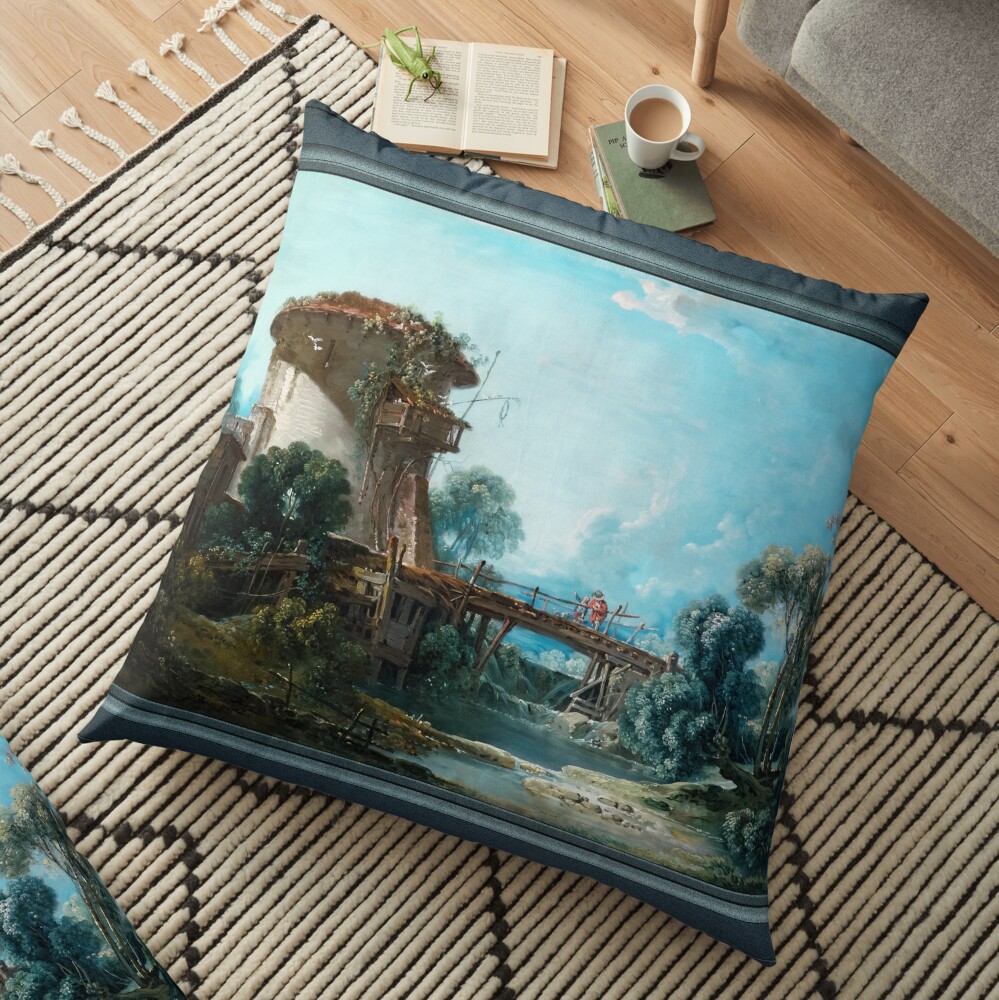
Francois Boucher‘s painting “The Dovecote” (C. 1758) is a captivating example of the French Rococo style. Boucher (1703 – 1770), one of the foremost painters of the 18th century, was known for his vibrant, delicate compositions and a distinctive lightness that characterized the era. This artwork embodies the Rococo spirit with its emphasis on nature, leisure, and an idyllic, almost dreamlike world. Boucher’s work often focused on the themes of aristocratic enjoyment, tender moments, and pastoral beauty, which are all reflected here in this serene, enchanting scene.

Obsah
Hlavní předmět a složení
v “The Dovecote,” the central focus is a tranquil rural setting that captures the idyllic beauty of nature. A man and a woman are depicted in the foreground, casually conversing, while standing on a rustic wooden bridge. The bridge spans a calm river, which reflects the soft hues of the sky and surrounding greenery. The figures are dressed in fashionable, yet simple 18th-century attire, their clothing bright and vibrant, contrasting with the natural tones around them. Their relaxed postures and the peacefulness of their interaction suggest a moment of quiet harmony in the countryside.
The scene’s setting, a rural landscape dotted with trees, gently rolling hills, and a distant stone structure—possibly a dovecote itself—evokes a pastoral life of leisure. The man and woman seem to be at ease in this bucolic world, their peaceful presence adding to the calm atmosphere of the composition.
Objekty a symboly
V pozadí, we see a distinctively constructed stone dovecote, a structure used for housing doves or pigeons. This is where the painting’s title comes from, symbolizing perhaps a quiet, secluded part of nature that complements the tranquil lives of the individuals depicted. The dovecote is placed prominently on the left side of the canvas, with the trees encircling it, drawing attention to its importance as both a physical object and a symbol of rural life.
The wooden bridge that spans the river adds another layer of meaning to the painting. It not only serves as a functional element connecting two areas but also becomes a metaphorical bridge between the viewer and the tranquil world of the figures, inviting them into a space of calm contemplation. The landscape itself, with its harmonious blend of natural and architectural elements, underscores the Rococo fascination with combining beauty and nature.
dodatečně, the soft, delicate brushwork captures the lush greenery, the water’s reflective qualities, and the atmosphere’s lightness, evoking a sense of serenity. The birds in flight above the dovecote add to the mood of freedom and peace, echoing the peaceful existence of the figures below.
Terén a prostředí
The terrain is depicted with lush, vibrant greenery, characteristic of the Rococo love for lush nature. The rolling hills in the distance are soft and inviting, bathed in a warm golden light that suggests either the early morning or late afternoon sun. The gentle curves of the hills lead the eye toward the horizon, giving a sense of depth to the landscape.
The flowing water at the bottom of the scene is tranquil, its surface gently disturbed by the occasional ripple, mirroring the calmness of the figures. The trees lining the riverbank are rich with foliage, their forms rounded and almost soft, contributing to the overall sense of gentleness that pervades the painting. The sky above is expansive and vibrant, painted with light, airy blues, and soft cloud formations, adding to the tranquil, almost dreamlike atmosphere of the scene.
Materiály a technika
Boucher’s signature technique of soft brushstrokes is evident throughout “The Dovecote.” The composition feels effortlessly fluid, with no harsh lines or contrasts, reflecting the Rococo aesthetic’s preference for lightness and grace. The use of light and shadow is subtle, contributing to the overall softness of the piece. The warm golden light that bathes the scene enhances the mood of serenity and the sense of timeless beauty.
Boucher’s handling of color is masterful. The contrast between the lively tones of the figures’ clothing and the natural greens and blues of the environment draws the viewer’s attention to the human subjects while still maintaining a balanced, harmonious composition. The vibrancy of the figures’ attire, with rich reds and muted yellows, echoes the playfulness and elegance of the Rococo period, where fashion and art were inextricably linked.
Styl, Téma, a nálada
“The Dovecote” je příkladem rokokového stylu, characterized by its focus on lightness, elegance, and the beauty of the natural world. The subject matter—the peaceful rural landscape, the leisurely figures, and the idyllic surroundings—speaks to the Rococo fascination with beauty, Příroda, and the simple pleasures of life. There is no sense of urgency or conflict in the painting; spíše, the viewer is invited into a world where time slows down and the natural world offers peace and harmony.
The mood of the painting is gentle and soothing, enhanced by the soft color palette, the tranquil water, and the idyllic rural scene. The figures themselves appear content and relaxed, their quiet interaction suggesting a sense of contentment and ease. The painting evokes a sense of nostalgia for a simpler, more peaceful time, free from the concerns of the bustling urban world.
Závěr
François Boucher’s “The Dovecote” is a quintessential Rococo painting that encapsulates the period’s love for nature, krása, and refined leisure. With its serene landscape, tender figures, and masterful technique, it invites the viewer into a world of tranquility and grace. The subtle use of symbolism, combined with Boucher’s soft brushwork and vibrant color palette, creates a harmonious composition that remains a delightful representation of 18th-century French art.
Toto je remasterovaná reprodukce starých mistrů digitálního umění obrázku ve veřejné doméně, který je dostupný jako a tisk na plátno online.
Životopis umělce
Níže uvedené informace jsou odvozeny z Wikipedia.org
I když existuje několik protichůdných verzí mýtu, I když existuje několik protichůdných verzí mýtu, I když existuje několik protichůdných verzí mýtu. I když existuje několik protichůdných verzí mýtu, I když existuje několik protichůdných verzí mýtu. I když existuje několik protichůdných verzí mýtu, I když existuje několik protichůdných verzí mýtu, I když existuje několik protichůdných verzí mýtu.
v 1720, vyhrál elitní Grand Prix de Rome za malbu, vyhrál elitní Grand Prix de Rome za malbu, vyhrál elitní Grand Prix de Rome za malbu[1] Po návratu ze studia v Itálii byl přijat na refounded Académie de peinture et de sochařství na 24 listopad 1731. Jeho přijímací kus (přijímací kus) byl jeho Rinaldo a Armida z 1734.
Boucher si vzal Marie-Jeanne Buzeau v 1733. Pár měl spolu tři děti. Boucher se stal členem fakulty v 1734 a jeho kariéra se od tohoto okamžiku zrychlila, když byl povýšen na profesora, poté rektora akademie, stává inspektorem v Royal Gobelins Manufactory a nakonec Premier Peintre du Roi (První malíř krále) v 1765. Portrét Marie-Louise O'Murphyho c. 1752
Boucher zemřel dne 30 Smět 1770 v rodné Paříži. Jeho jméno, spolu s patronkou jeho madame de Pompadour, se stal synonymem pro francouzský rokokový styl, vede bratry Goncourty k psaní: “Boucher je jedním z těch mužů, kteří představují vkus století, kteří vyjadřují, personifikovat a ztělesnit to.”
Boucher je známý tím, že říká, že příroda je “příliš zelené a špatně osvětlené” (příliš zelené a špatně osvětlené).
Boucher byl spojován s rytec drahokamů Jacques Guay, kterého učil kreslit. Mentoroval také moravsko-rakouského malíře Martina Ferdinanda Quadala a neoklasického malíře Jacquese-Louis Davida v r. 1767.[4] Později, Boucher vytvořil sérii kreseb Guayových děl, které madame de Pompadour poté vyryl a distribuoval jako pohledně svázaný svazek oblíbeným dvořanům