

The Dovecote c1758
Francois Boucher‘s painting “The Dovecote” (c. 1758) is a captivating example of the French Rococo style. Boucher (1703 – 1770), one of the foremost painters of the 18th century, was known for his vibrant, delicate compositions and a distinctive lightness that characterized the era. This artwork embodies the Rococo spirit with its emphasis on nature, leisure, and an idyllic, almost dreamlike world. Boucher’s work often focused on the themes of aristocratic enjoyment, tender moments, and pastoral beauty, which are all reflected here in this serene, enchanting scene.

Indholdsfortegnelse
Hovedemne og komposition
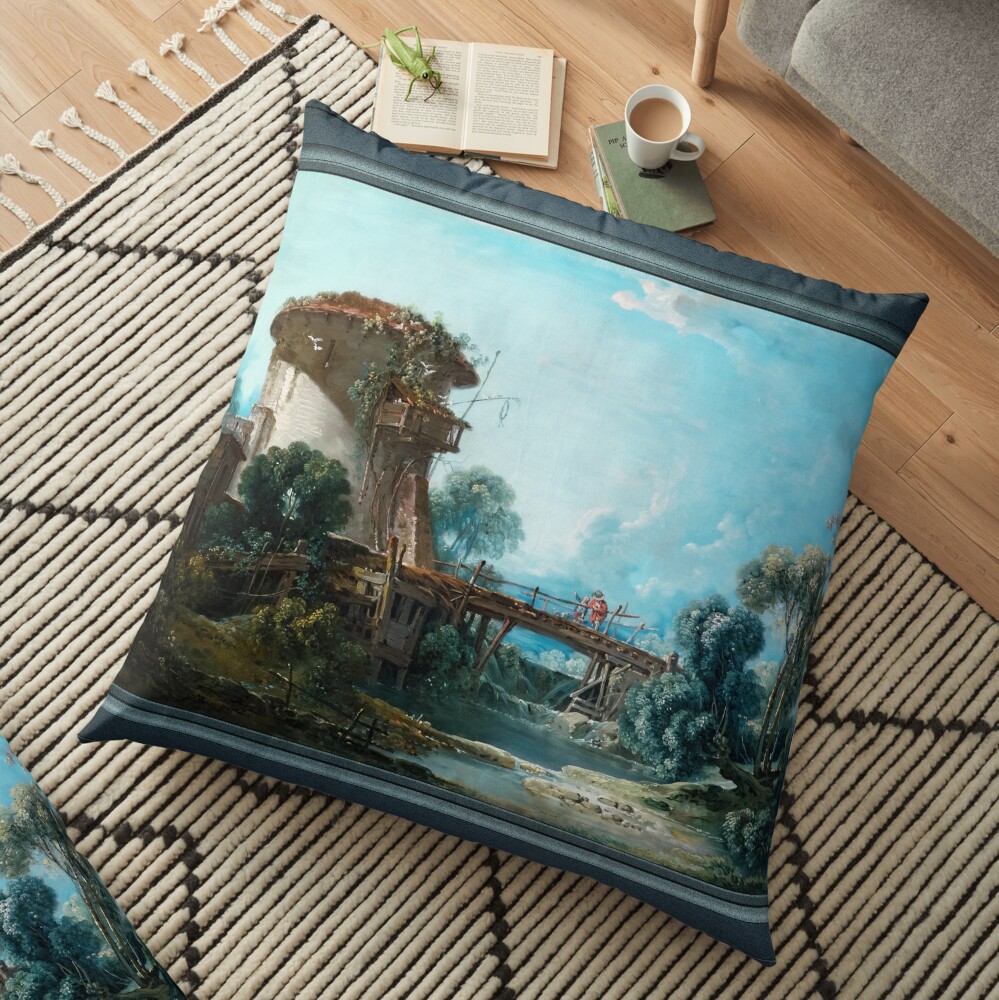
I “The Dovecote,” the central focus is a tranquil rural setting that captures the idyllic beauty of nature. A man and a woman are depicted in the foreground, casually conversing, while standing on a rustic wooden bridge. The bridge spans a calm river, which reflects the soft hues of the sky and surrounding greenery. The figures are dressed in fashionable, yet simple 18th-century attire, their clothing bright and vibrant, contrasting with the natural tones around them. Their relaxed postures and the peacefulness of their interaction suggest a moment of quiet harmony in the countryside.
The scene’s setting, a rural landscape dotted with trees, gently rolling hills, and a distant stone structure—possibly a dovecote itself—evokes a pastoral life of leisure. The man and woman seem to be at ease in this bucolic world, their peaceful presence adding to the calm atmosphere of the composition.
Objects and Symbols
I baggrunden, we see a distinctively constructed stone dovecote, a structure used for housing doves or pigeons. This is where the painting’s title comes from, symbolizing perhaps a quiet, secluded part of nature that complements the tranquil lives of the individuals depicted. The dovecote is placed prominently on the left side of the canvas, with the trees encircling it, drawing attention to its importance as both a physical object and a symbol of rural life.
The wooden bridge that spans the river adds another layer of meaning to the painting. It not only serves as a functional element connecting two areas but also becomes a metaphorical bridge between the viewer and the tranquil world of the figures, inviting them into a space of calm contemplation. The landscape itself, with its harmonious blend of natural and architectural elements, underscores the Rococo fascination with combining beauty and nature.
Derudover, the soft, delicate brushwork captures the lush greenery, the water’s reflective qualities, and the atmosphere’s lightness, evoking a sense of serenity. The birds in flight above the dovecote add to the mood of freedom and peace, echoing the peaceful existence of the figures below.
Terræn og miljø
The terrain is depicted with lush, vibrant greenery, characteristic of the Rococo love for lush nature. The rolling hills in the distance are soft and inviting, bathed in a warm golden light that suggests either the early morning or late afternoon sun. The gentle curves of the hills lead the eye toward the horizon, giving a sense of depth to the landscape.
The flowing water at the bottom of the scene is tranquil, its surface gently disturbed by the occasional ripple, mirroring the calmness of the figures. The trees lining the riverbank are rich with foliage, their forms rounded and almost soft, contributing to the overall sense of gentleness that pervades the painting. The sky above is expansive and vibrant, painted with light, airy blues, and soft cloud formations, adding to the tranquil, almost dreamlike atmosphere of the scene.
Materialer og teknik
Boucher’s signature technique of soft brushstrokes is evident throughout “The Dovecote.” The composition feels effortlessly fluid, with no harsh lines or contrasts, reflecting the Rococo aesthetic’s preference for lightness and grace. The use of light and shadow is subtle, contributing to the overall softness of the piece. The warm golden light that bathes the scene enhances the mood of serenity and the sense of timeless beauty.
Boucher’s handling of color is masterful. The contrast between the lively tones of the figures’ clothing and the natural greens and blues of the environment draws the viewer’s attention to the human subjects while still maintaining a balanced, harmonious composition. The vibrancy of the figures’ attire, with rich reds and muted yellows, echoes the playfulness and elegance of the Rococo period, where fashion and art were inextricably linked.
Stil, Tema, og humør
“The Dovecote” exemplifies the Rococo style, characterized by its focus on lightness, elegance, og skønheden i den naturlige verden. The subject matter—the peaceful rural landscape, the leisurely figures, and the idyllic surroundings—speaks to the Rococo fascination with beauty, natur, og livets simple glæder. There is no sense of urgency or conflict in the painting; snarere, the viewer is invited into a world where time slows down and the natural world offers peace and harmony.
The mood of the painting is gentle and soothing, enhanced by the soft color palette, the tranquil water, and the idyllic rural scene. The figures themselves appear content and relaxed, their quiet interaction suggesting a sense of contentment and ease. The painting evokes a sense of nostalgia for a simpler, more peaceful time, free from the concerns of the bustling urban world.
Konklusion
François Boucher's “The Dovecote” is a quintessential Rococo painting that encapsulates the period’s love for nature, skønhed, and refined leisure. With its serene landscape, tender figures, and masterful technique, it invites the viewer into a world of tranquility and grace. The subtle use of symbolism, combined with Boucher’s soft brushwork and vibrant color palette, creates a harmonious composition that remains a delightful representation of 18th-century French art.
Dette er en remastered digital art old masters reproduktion af et offentligt domæne billede, der er tilgængeligt som en lærred print online.
Kunstner Bio
Info nedenfor stammer fra Wikipedia.org
Indfødt i Paris, Boucher var søn af en mindre kendt maler Nicolas Boucher, der gav ham sin første kunstneriske uddannelse. I en alder af sytten, et maleri af Boucher blev beundret af maleren François Lemoyne. Lemoyne udnævnte senere Boucher til sin lærling, men efter kun tre måneder, han gik på arbejde for graveren Jean-François Cars.
I 1720, han vandt eliten Grand Prix de Rome for maleri, men tog ikke den deraf følgende mulighed for at studere i Italien før fem år senere, på grund af økonomiske problemer på Royal Academy of Painting and Sculpture.[1] Da han vendte tilbage fra studiet i Italien, blev han optaget i den refunderede Académie de peinture et de sculpture på 24 november 1731. Hans modtagelse (modtagelse stykke) var hans Rinaldo og Armida af 1734.
Boucher blev gift med Marie-Jeanne Buzeau i 1733. Parret fik tre børn sammen. Boucher blev fakultetsmedlem i 1734 og hans karriere accelererede fra dette tidspunkt, da han blev forfremmet til professor, derefter rektor for akademiet, blive inspektør ved Royal Gobelins Manufactory og til sidst Premier Peintre du Roi (Kongens første maler) i 1765. Portræt af Marie-Louise O'Murphy c. 1752
Boucher døde den 30 Kan 1770 i sit hjemland Paris. Hans navn, sammen med hans protektor Madame de Pompadour, var blevet synonym med den franske rokokostil, førte Goncourt -brødrene til at skrive: “Boucher er en af de mænd, der repræsenterer smagen af et århundrede, der udtrykker, personificere og legemliggøre det.”
Boucher er berømt for at sige, at naturen er det “for grønt og dårligt belyst” (for grønt og dårligt oplyst).
Boucher var forbundet med ædelstensgraveren Jacques Guay, som han lærte at tegne. Han mentorerede også den moravisk-østrigske maler Martin Ferdinand Quadal såvel som den nyklassicistiske maler Jacques-Louis David i 1767.[4] Senere, Boucher lavede en række tegninger af værker af Guay, som Madame de Pompadour derefter indgraverede og distribuerede som et smukt bundet bind til foretrukne hovmænd