

The Dovecote c1758
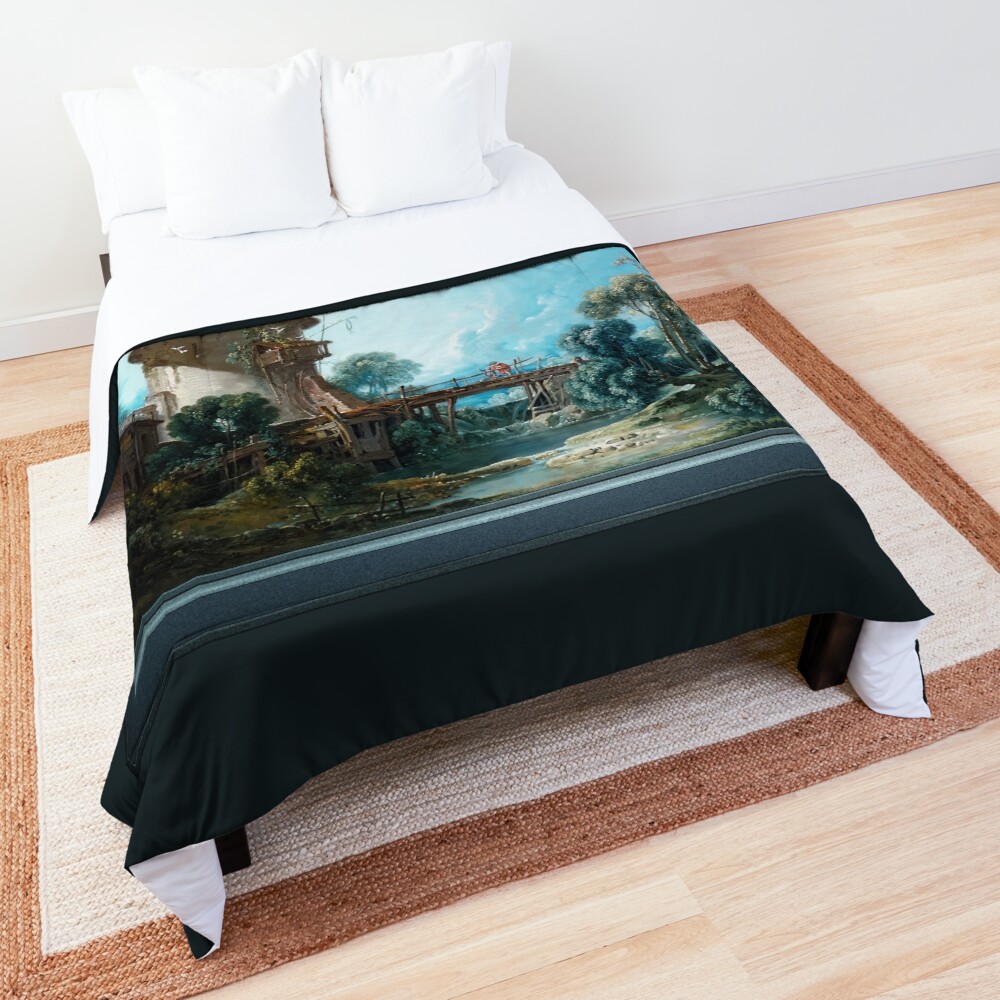
フランソワ・ブーシェ‘s painting “鳩小屋” (NS. 1758) is a captivating example of the French Rococo style. Boucher (1703 – 1770), one of the foremost painters of the 18th century, was known for his vibrant, delicate compositions and a distinctive lightness that characterized the era. This artwork embodies the Rococo spirit with its emphasis on nature, leisure, and an idyllic, almost dreamlike world. Boucher’s work often focused on the themes of aristocratic enjoyment, tender moments, and pastoral beauty, which are all reflected here in this serene, enchanting scene.
目次
主な主題と構成
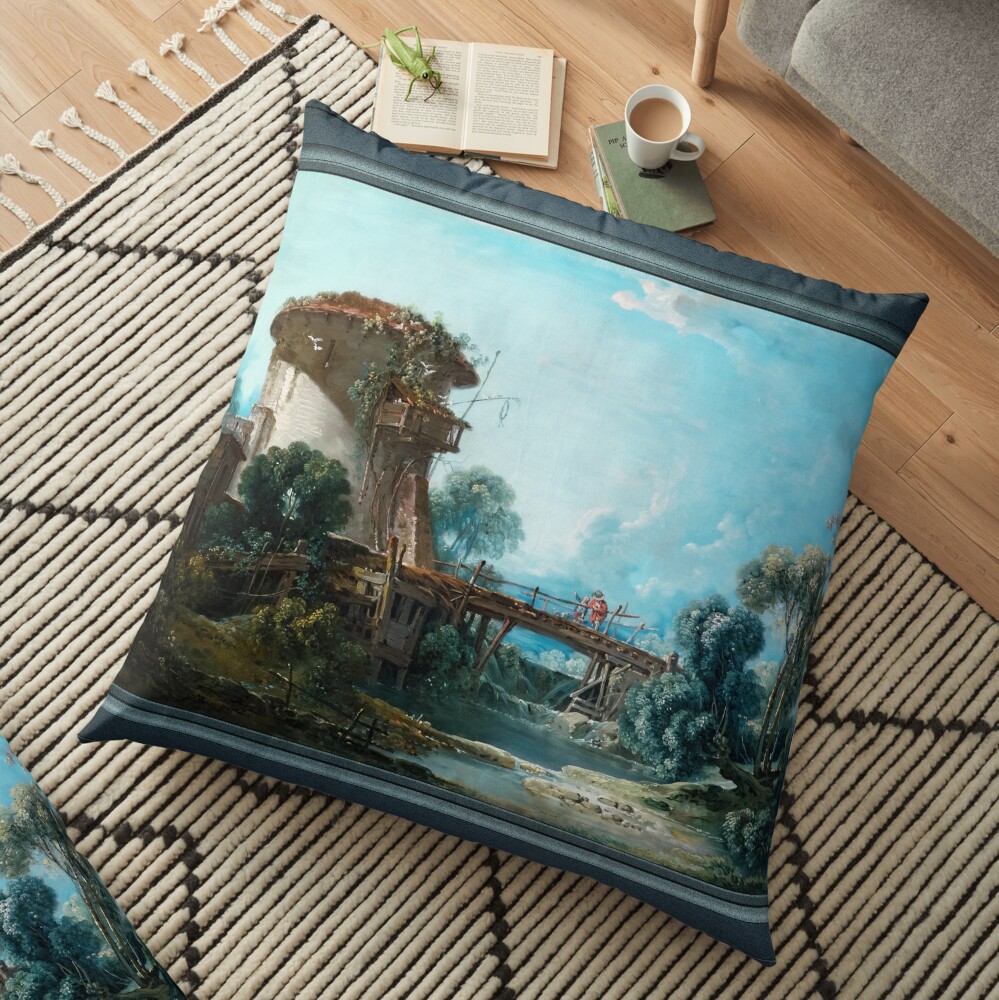
に “鳩小屋,” the central focus is a tranquil rural setting that captures the idyllic beauty of nature. A man and a woman are depicted in the foreground, casually conversing, while standing on a rustic wooden bridge. The bridge spans a calm river, which reflects the soft hues of the sky and surrounding greenery. The figures are dressed in fashionable, yet simple 18th-century attire, their clothing bright and vibrant, contrasting with the natural tones around them. Their relaxed postures and the peacefulness of their interaction suggest a moment of quiet harmony in the countryside.
The scene’s setting, a rural landscape dotted with trees, gently rolling hills, and a distant stone structure—possibly a dovecote itself—evokes a pastoral life of leisure. The man and woman seem to be at ease in this bucolic world, their peaceful presence adding to the calm atmosphere of the composition.
オブジェクトとシンボル
バックグラウンドで, we see a distinctively constructed stone dovecote, a structure used for housing doves or pigeons. This is where the painting’s title comes from, symbolizing perhaps a quiet, secluded part of nature that complements the tranquil lives of the individuals depicted. The dovecote is placed prominently on the left side of the canvas, with the trees encircling it, drawing attention to its importance as both a physical object and a symbol of rural life.
The wooden bridge that spans the river adds another layer of meaning to the painting. It not only serves as a functional element connecting two areas but also becomes a metaphorical bridge between the viewer and the tranquil world of the figures, inviting them into a space of calm contemplation. The landscape itself, with its harmonious blend of natural and architectural elements, underscores the Rococo fascination with combining beauty and nature.
さらに, the soft, delicate brushwork captures the lush greenery, the water’s reflective qualities, and the atmosphere’s lightness, evoking a sense of serenity. The birds in flight above the dovecote add to the mood of freedom and peace, echoing the peaceful existence of the figures below.
地形と環境
The terrain is depicted with lush, vibrant greenery, characteristic of the Rococo love for lush nature. The rolling hills in the distance are soft and inviting, bathed in a warm golden light that suggests either the early morning or late afternoon sun. The gentle curves of the hills lead the eye toward the horizon, giving a sense of depth to the landscape.
The flowing water at the bottom of the scene is tranquil, its surface gently disturbed by the occasional ripple, mirroring the calmness of the figures. The trees lining the riverbank are rich with foliage, their forms rounded and almost soft, contributing to the overall sense of gentleness that pervades the painting. The sky above is expansive and vibrant, painted with light, airy blues, and soft cloud formations, adding to the tranquil, almost dreamlike atmosphere of the scene.
素材と技法
Boucher’s signature technique of soft brushstrokes is evident throughout “The Dovecote.” The composition feels effortlessly fluid, with no harsh lines or contrasts, reflecting the Rococo aesthetic’s preference for lightness and grace. The use of light and shadow is subtle, contributing to the overall softness of the piece. The warm golden light that bathes the scene enhances the mood of serenity and the sense of timeless beauty.
Boucher’s handling of color is masterful. The contrast between the lively tones of the figures’ clothing and the natural greens and blues of the environment draws the viewer’s attention to the human subjects while still maintaining a balanced, 調和のとれた構成. The vibrancy of the figures’ attire, with rich reds and muted yellows, echoes the playfulness and elegance of the Rococo period, where fashion and art were inextricably linked.
スタイル, テーマ, と気分
“鳩小屋” exemplifies the Rococo style, characterized by its focus on lightness, 優雅, and the beauty of the natural world. The subject matter—the peaceful rural landscape, the leisurely figures, and the idyllic surroundings—speaks to the Rococo fascination with beauty, 自然, and the simple pleasures of life. There is no sense of urgency or conflict in the painting; それよりも, the viewer is invited into a world where time slows down and the natural world offers peace and harmony.
The mood of the painting is gentle and soothing, enhanced by the soft color palette, the tranquil water, and the idyllic rural scene. The figures themselves appear content and relaxed, their quiet interaction suggesting a sense of contentment and ease. The painting evokes a sense of nostalgia for a simpler, more peaceful time, free from the concerns of the bustling urban world.
結論
フランソワ・ブーシェ “鳩小屋” is a quintessential Rococo painting that encapsulates the period’s love for nature, 美しさ, and refined leisure. With its serene landscape, tender figures, and masterful technique, it invites the viewer into a world of tranquility and grace. The subtle use of symbolism, combined with Boucher’s soft brushwork and vibrant color palette, creates a harmonious composition that remains a delightful representation of 18th-century French art.
これは、リマスターされたデジタルアートのオールドマスターであり、パブリックドメインの画像を複製したものです。 キャンバスプリントオンライン.
アーティスト略歴
以下の情報から派生 Wikipedia.org
パリ出身, ブーシェはあまり知られていない画家ニコラスブーシェの息子でした, 彼に彼の最初の芸術的訓練を与えた人. 17歳で, ブーシェの絵画は、画家フランソワ・ルモワンに賞賛されました. Lemoyneは後にBoucherを彼の見習いとして任命しました, でもたった3ヶ月で, 彼は彫刻家ジャン=フランソワ・カーズのために働きに行きました.
に 1720, 彼は絵画でエリートローマグランプリを受賞しました, しかし、5年後までイタリアで勉強する結果的な機会をとらなかった, 王立絵画彫刻アカデミーの財政問題のため。[1] イタリアでの勉強から戻ったとき、彼は再建された王立絵画彫刻アカデミーに入学しました。 24 11月 1731. 彼のレセプションピース (レセプションピース) 彼のリナルドとアルミダは 1734.
ブーシェはマリージャンヌブゾーと結婚しました 1733. カップルには3人の子供がいました. Boucherはの教員になりました 1734 そして彼のキャリアはこの時点から加速し、彼は教授、そしてアカデミーの学長に昇進しました。, 王立ゴブラン製作所の検査官になり、ついに国王の筆頭画家になりました (王の最初の画家) に 1765. マリー=ルイーズ・オマーフィーの肖像c. 1752
ブーシェはで死んだ 30 5月 1770 彼の生まれ故郷のパリで. 彼の名前, 彼の常連客であるポンパドゥール夫人のそれと一緒に, フランスのロココ様式の代名詞になっていた, ゴンコート兄弟を率いて書く: “ブーシェは世紀の味を代表する男性の一人です, 表現する人, それを具体化して具体化します。”
ブーシェは自然が “緑が多すぎて照明が不十分” (緑が強すぎて照明が悪い).
ブーシェは宝石の彫刻家ジャック・ゲと関係がありました, 彼が描くことを教えた人. 彼はまた、モラヴィア・オーストリアの画家マーティン・フェルディナンド・クアダルと新古典主義の画家ジャック=ルイ・ダヴィッドを指導しました。 1767.[4] 後で, ブーシェは、ポンパドゥール夫人が彫刻し、好意的な廷臣に見事に綴じられた巻として配布した、グアイの一連の作品の素描を作成しました。