

The Dovecote c1758
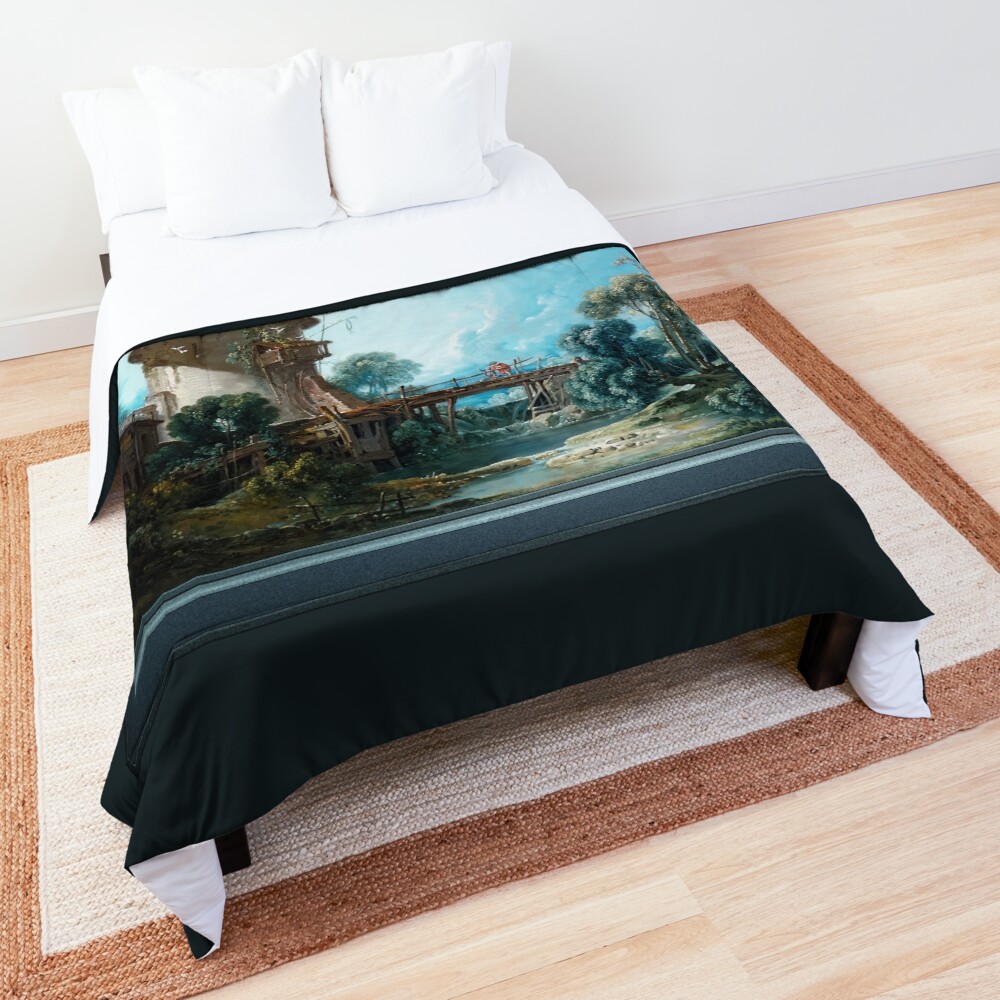
François Boucher's Molerei “The Dovecote” (c. 1758) is a captivating example of the French Rococo style. Boucher (1703 – 1770), one of the foremost painters of the 18th century, war bekannt fir seng lieweg, delicate compositions and a distinctive lightness that characterized the era. This artwork embodies the Rococo spirit with its emphasis on nature, Fräizäit, and an idyllic, almost dreamlike world. Boucher’s work often focused on the themes of aristocratic enjoyment, tender moments, and pastoral beauty, which are all reflected here in this serene, enchanting scene.
Inhaltsverzeechnes
Haaptwiel a Zesummesetzung
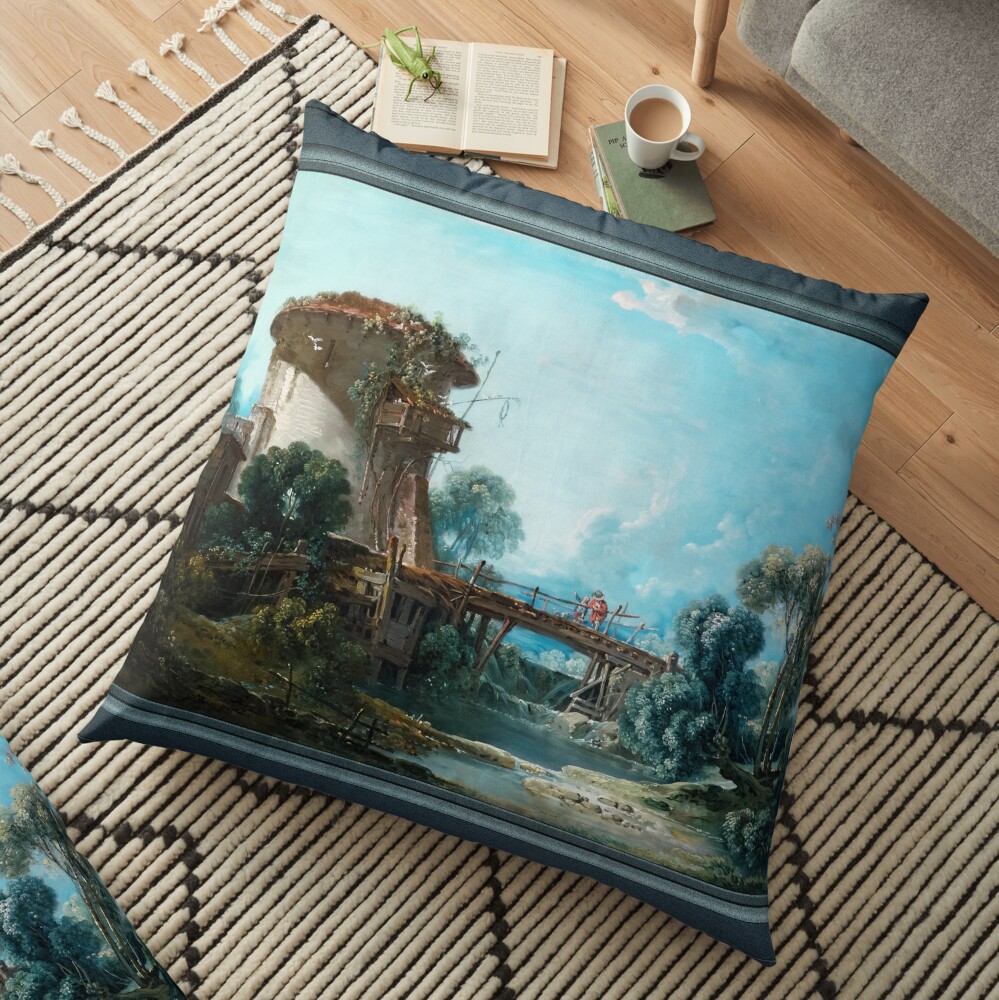
An “The Dovecote,” the central focus is a tranquil rural setting that captures the idyllic beauty of nature. A man and a woman are depicted in the foreground, casually conversing, wärend se op enger rustikaler Holzbréck stoen. D'Bréck iwwerdeckt e rouege Floss, wat déi mëll Nuancen vum Himmel a ronderëm Gréngs reflektéiert. D'Figure si moudesch gekleet, awer einfach 18. Joerhonnert Kleedung, hir Kleeder hell a knalleg, am Géigesaz zu den natierlechen Téin ronderëm si. Hir entspaant Haltungen an d'Friddlechkeet vun hirer Interaktioun proposéiere e Moment vu roueger Harmonie am Land.
De Kader vun der Szen, eng ländlech Landschaft mat Beem gestierzt, sanft Rolling Hiwwele, an eng wäit Steenstruktur - méiglecherweis eng Dauwenhaut selwer - evokéiert e Pastoralliewen vun der Fräizäit. De Mann an d'Fra schéngen an dëser bukolescher Welt bequem ze sinn, hir friddlech Präsenz bäidroe fir déi roueg Atmosphär vun der Kompositioun.
Objeten a Symboler
Am Hannergrond, gesi mer eng markant opgebaute Steendueblech, eng Struktur benotzt fir Dauwen oder Dauwen ze wunnen. Dëst ass wou den Titel vum Bild hierkënnt, symboliséiert vläicht eng roueg, ofgeséchert Deel vun der Natur, déi dat rouegt Liewen vun den Individuen ergänzt. D'Dovecote ass prominent op der lénker Säit vum Canvas plazéiert, mat de Beem ronderëm et, Opmierksamkeet op seng Wichtegkeet als physesch Objet an als Symbol vum ländleche Liewen opmierksam ze maachen.
Déi hëlze Bréck, déi de Floss iwwerdeckt, füügt eng aner Schicht vu Bedeitung un d'Bild. Et déngt net nëmmen als funktionellt Element dat zwee Beräicher verbënnt, mee gëtt och eng metaphoresch Bréck tëscht dem Betrachter an der roueger Welt vun de Figuren, invitéieren se an e Raum vu roueger Iwwerleeung. D'Landschaft selwer, mat senger harmonescher Mëschung vun natierlechen an architektoneschen Elementer, ënnersträicht d'Rokoko Faszinatioun mat der Kombinatioun vu Schéinheet an Natur.
Zousätzlech, der mëller, delikat Pinselwierk erfaasst déi üppig Gréng, d'Waasser reflektéiert Qualitéiten, an d'Atmosphär Liichtegkeet, e Gefill vu Rou opruffen. D'Villercher am Fluch iwwer d'Dovecote addéieren d'Stëmmung vu Fräiheet a Fridden, echo déi friddlech Existenz vun de Figuren hei drënner.
Terrain an Ëmfeld
Den Terrain ass mat üppig duergestallt, lieweg Gréngs, Charakteristesch vun der Rokoko Léift fir üppig Natur. Déi rullende Hiwwelen an der Distanz si mëll an invitéierend, an engem waarme gëllene Liicht gebascht, dat entweder fréi moies oder spéiden Nomëtteg Sonn suggeréiert. Déi sanft Kéiren vun den Hiwwele féieren d'Aen op den Horizont, gëtt e Gefill vun Déift an der Landschaft.
Dat fléissend Waasser um Enn vun der Szen ass roueg, seng Uewerfläch liicht gestéiert duerch heiansdo Ripple, spigelen d'Rou vun de Figuren. D'Beem déi de Floss ufer sinn räich mat Blieder, hir Formen ofgerënnt a bal mëll, bäidroen zum allgemenge Gefill vu Gentilitéit, déi d'Bild duerchdréit. Den Himmel uewen ass expansiv a lieweg, mat Liicht gemoolt, lofteg Blues, a mëll Wollekeformatiounen, der Rou bäidroen, bal dreamlike Atmosphär vun der Zeen.
Materialien an Technik
Dem Boucher seng Ënnerschrëft Technik vu mëlle Pinselstécker ass evident uechter “D'Dovecote.” D'Kompositioun fillt sech ouni Ustrengung flësseg, ouni haarde Linnen oder Kontraster, reflektéiert d'Rokoko Ästhetik hir Präferenz fir Liichtegkeet a Gnod. D'Benotzung vu Liicht a Schatten ass subtil, contributing to the overall softness of the piece. The warm golden light that bathes the scene enhances the mood of serenity and the sense of timeless beauty.
Boucher’s handling of color is masterful. The contrast between the lively tones of the figures’ clothing and the natural greens and blues of the environment draws the viewer’s attention to the human subjects while still maintaining a balanced, harmonesch Zesummesetzung. The vibrancy of the figures’ attire, with rich reds and muted yellows, echoes the playfulness and elegance of the Rococo period, where fashion and art were inextricably linked.
Stil, Thema, a Stëmmung
“The Dovecote” illustréiert de Rokoko-Stil, characterized by its focus on lightness, eleganzwannen, and the beauty of the natural world. The subject matter—the peaceful rural landscape, the leisurely figures, an déi idyllesch Ëmgéigend - schwätzt mat der Rokoko Faszinatioun mat Schéinheet, Natur, an déi einfach Genoss vum Liewen. Et gëtt kee Sënn vun Dringendes oder Konflikt am Bild; éischter, den Zuschauer gëtt an eng Welt invitéiert wou d'Zäit verlangsamt gëtt an d'Naturwelt Fridden an Harmonie bitt.
D'Stëmmung vum Bild ass sanft a berouegend, verstäerkt vun der mëller Faarfpalette, dat rouegt Waasser, an déi idyllesch ländlech Zeen. D'Figure selwer schéngen zefridden an entspaant, hir roueg Interaktioun suggeréiert e Gefill vun Zefriddenheet a Liichtegkeet. D'Bild erënnert e Gefill vun Nostalgie fir eng méi einfach, méi friddlech Zäit, fräi vun de Bedenken vun der lieweger urbaner Welt.
Conclusioun
François Boucher “The Dovecote” ass e quintessentescht Rokoko Molerei dat d'Léift vun der Period fir d'Natur encapsuléiert, Schéinheet, a raffinéiert Fräizäit. Mat senger roueger Landschaft, Ausschreiwung Zuelen, a masterful Technik, et invitéiert den Zuschauer an eng Welt vu Rou a Gnod. De subtile Gebrauch vu Symbolismus, kombinéiert mat Boucher senger mëller Pinsel a lieweg Faarfpalette, schaaft eng harmonesch Kompositioun déi eng herrlech Duerstellung vun der franséischer Konscht aus dem 18. Joerhonnert bleift.
Dëst ass eng remastered digital Konscht al Master Reproduktioun vun engem Public Domain Bild dat als verfügbar ass Leinwandprint online.
Kënschtler Bio
Info drënner ofgeleet vun Wikipedia.org
Eng gebierteg vu Paräis, De Boucher war de Jong vun engem manner bekannte Moler Nicolas Boucher, deen him seng éischt artistesch Ausbildung ginn huet. Am Alter vu siwwenzéng, e Bild vum Boucher gouf vum Moler François Lemoyne bewonnert. De Lemoyne huet spéider de Boucher als seng Léierin ernannt, awer no nëmmen dräi Méint, hien ass fir de Gravure Jean-François Cars ze schaffen.
An 1720, hien huet den Elite Grand Prix de Rome fir Molerei gewonnen, awer huet déi konsequent Geleeënheet net geholl fir an Italien ze studéieren bis fënnef Joer méi spéit, wéinst finanzielle Problemer op der Royal Academy of Painting and Sculpture.[1] Beim Retour vum Studium an Italien gouf hien an d'Refounded Académie de peinture et de sculpture opgeholl 24 November 1731. Säi Empfangsstéck (Empfangstéck) war säi Rinaldo an den Armida vum 1734.
Boucher bestuet Marie-Jeanne Buzeau am 1733. D'Koppel hat dräi Kanner zesummen. Boucher gouf e Fakultéit Member an 1734 a seng Karriär huet vun dësem Punkt beschleunegt wéi hie Professer gefördert gouf dann de Rektor vun der Akademie, Inspekter bei der Royal Gobelins Fabrik ginn a schlussendlech Premier Peintre du Roi (Éischte Moler vum Kinnek) an 1765. Portrait vum Marie-Louise O'Murphy c. 1752
Boucher gestuerwen den 30 Mee 1770 a sengem Heemechtsland Paräis. Säin Numm, zesumme mat deem vu sengem Patréiner Madame de Pompadour, war synonym fir de franséische Rokokostil ginn, féiert de Goncourt Bridder ze schreiwen: “De Boucher ass ee vun deene Männer, déi de Goût vun engem Joerhonnert duerstellen, déi ausdrécken, personifizéieren a beliichten.”
De Boucher ass berühmt fir ze soen datt d'Natur ass “ze gréng a schlecht beliicht” (ze gréng a schlecht beliicht).
De Boucher war mam Edelsteengraver Jacques Guay verbonnen, deen hien geléiert huet ze molen. Hie mentoréiert och de moravesch-éisträichesche Moler Martin Ferdinand Quadal souwéi den neoklassesche Moler Jacques-Louis David am 1767.[4] Méi spéit, De Boucher huet eng Serie vun Zeechnunge vu Wierker vum Guay gemaach, déi d'Madame de Pompadour duerno gravéiert a verdeelt huet als e flott gebonnen Volumen un favoriséiert Haffbierger