

De Duiventil c1758
Francois Boucher's schilderij “De duiventil” (C. 1758) is een boeiend voorbeeld van de Franse rococostijl. Boucher (1703 – 1770), een van de belangrijkste schilders van de 18e eeuw, stond bekend om zijn levendige, delicate composities en een kenmerkende lichtheid die het tijdperk kenmerkte. Dit kunstwerk belichaamt de Rococo-geest met de nadruk op de natuur, vrije tijd, en een idyllisch, bijna droomachtige wereld. Bouchers werk concentreerde zich vaak op de thema's van aristocratisch genot, tedere momenten, en pastorale schoonheid, die hier allemaal worden weerspiegeld in deze serene, betoverende scène.
Inhoudsopgave
Hoofdonderwerp en compositie
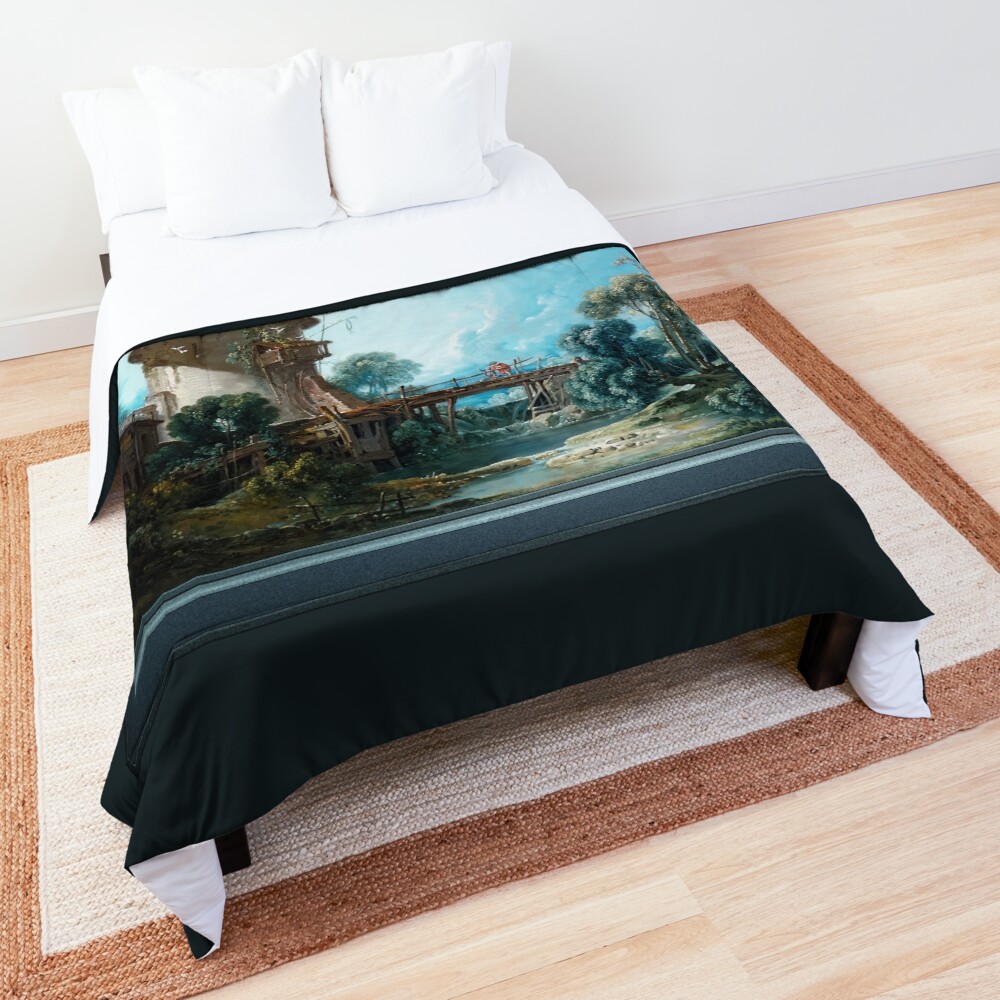
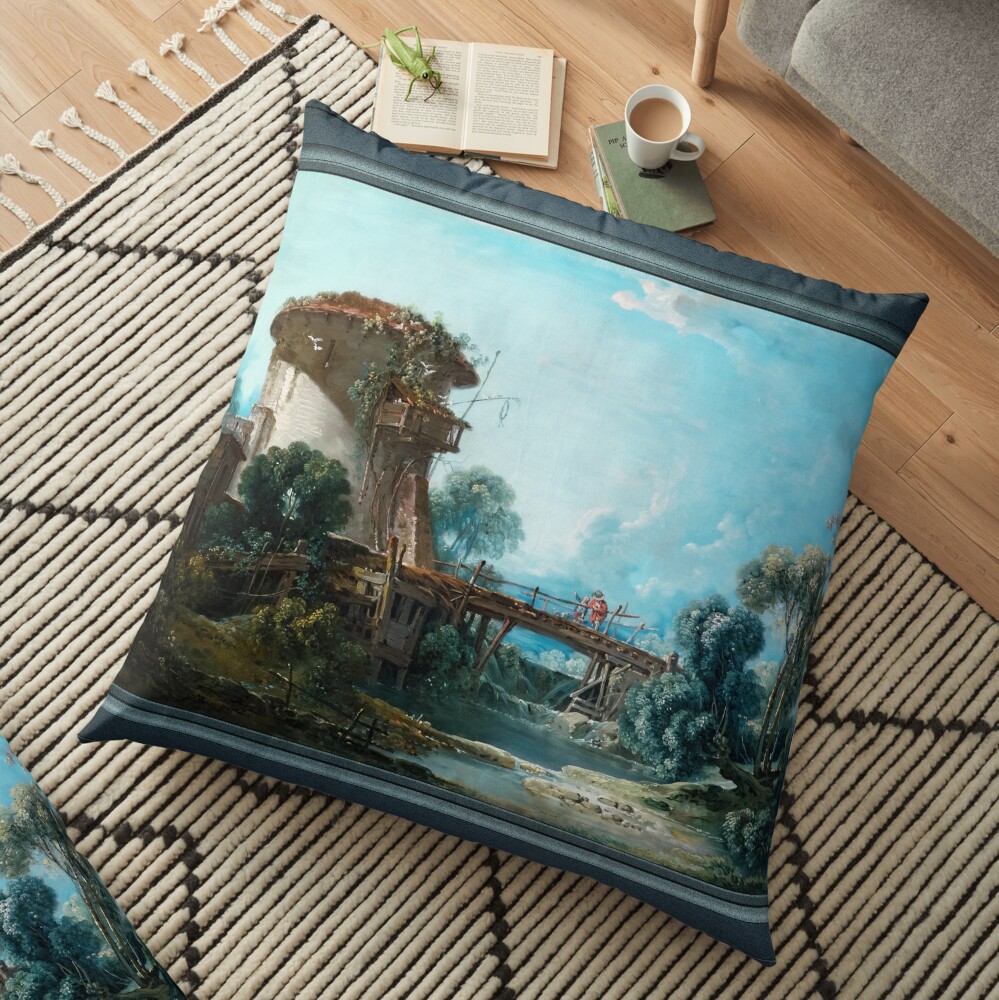
In “De duiventil,” de centrale focus is een rustige, landelijke omgeving die de idyllische schoonheid van de natuur vastlegt. A man and a woman are depicted in the foreground, casually conversing, while standing on a rustic wooden bridge. The bridge spans a calm river, which reflects the soft hues of the sky and surrounding greenery. The figures are dressed in fashionable, yet simple 18th-century attire, their clothing bright and vibrant, contrasting with the natural tones around them. Their relaxed postures and the peacefulness of their interaction suggest a moment of quiet harmony in the countryside.
The scene’s setting, a rural landscape dotted with trees, gently rolling hills, and a distant stone structure—possibly a dovecote itself—evokes a pastoral life of leisure. The man and woman seem to be at ease in this bucolic world, their peaceful presence adding to the calm atmosphere of the composition.
Objecten en symbolen
Op de achtergrond, we see a distinctively constructed stone dovecote, a structure used for housing doves or pigeons. This is where the painting’s title comes from, symbolizing perhaps a quiet, secluded part of nature that complements the tranquil lives of the individuals depicted. The dovecote is placed prominently on the left side of the canvas, with the trees encircling it, drawing attention to its importance as both a physical object and a symbol of rural life.
The wooden bridge that spans the river adds another layer of meaning to the painting. It not only serves as a functional element connecting two areas but also becomes a metaphorical bridge between the viewer and the tranquil world of the figures, inviting them into a space of calm contemplation. The landscape itself, with its harmonious blend of natural and architectural elements, underscores the Rococo fascination with combining beauty and nature.
aanvullend, de zachte, delicate brushwork captures the lush greenery, the water’s reflective qualities, and the atmosphere’s lightness, evoking a sense of serenity. The birds in flight above the dovecote add to the mood of freedom and peace, echoing the peaceful existence of the figures below.
Terrein en omgeving
The terrain is depicted with lush, vibrant greenery, characteristic of the Rococo love for lush nature. The rolling hills in the distance are soft and inviting, bathed in a warm golden light that suggests either the early morning or late afternoon sun. The gentle curves of the hills lead the eye toward the horizon, giving a sense of depth to the landscape.
The flowing water at the bottom of the scene is tranquil, its surface gently disturbed by the occasional ripple, mirroring the calmness of the figures. The trees lining the riverbank are rich with foliage, their forms rounded and almost soft, contributing to the overall sense of gentleness that pervades the painting. The sky above is expansive and vibrant, painted with light, airy blues, and soft cloud formations, adding to the tranquil, almost dreamlike atmosphere of the scene.
Materialen en techniek
Boucher’s signature technique of soft brushstrokes is evident throughout “The Dovecote.” The composition feels effortlessly fluid, with no harsh lines or contrasts, reflecting the Rococo aesthetic’s preference for lightness and grace. The use of light and shadow is subtle, contributing to the overall softness of the piece. The warm golden light that bathes the scene enhances the mood of serenity and the sense of timeless beauty.
Boucher’s handling of color is masterful. The contrast between the lively tones of the figures’ clothing and the natural greens and blues of the environment draws the viewer’s attention to the human subjects while still maintaining a balanced, harmonious composition. The vibrancy of the figures’ attire, with rich reds and muted yellows, echoes the playfulness and elegance of the Rococo period, where fashion and art were inextricably linked.
Stijl, Thema, en stemming
“De duiventil” illustreert de Rococo-stijl, characterized by its focus on lightness, elegantie, and the beauty of the natural world. The subject matter—the peaceful rural landscape, the leisurely figures, and the idyllic surroundings—speaks to the Rococo fascination with beauty, natuur, and the simple pleasures of life. There is no sense of urgency or conflict in the painting; liever, the viewer is invited into a world where time slows down and the natural world offers peace and harmony.
The mood of the painting is gentle and soothing, enhanced by the soft color palette, the tranquil water, and the idyllic rural scene. The figures themselves appear content and relaxed, their quiet interaction suggesting a sense of contentment and ease. The painting evokes a sense of nostalgia for a simpler, more peaceful time, free from the concerns of the bustling urban world.
Conclusie
François Boucher “De duiventil” is a quintessential Rococo painting that encapsulates the period’s love for nature, schoonheid, and refined leisure. With its serene landscape, tender figures, and masterful technique, it invites the viewer into a world of tranquility and grace. The subtle use of symbolism, combined with Boucher’s soft brushwork and vibrant color palette, creates a harmonious composition that remains a delightful representation of 18th-century French art.
Dit is een remastered reproductie van digitale kunst oude meesters van een openbaar domeinafbeelding dat beschikbaar is als a canvas print online.
Bio -kunstenaar
Info hieronder afgeleid van Wikipedia.org
Een inwoner van Parijs, Boucher was de zoon van een minder bekende schilder Nicolas Boucher, die hem zijn eerste artistieke opleiding gaf. Op de leeftijd van zeventien, een schilderij van Boucher werd bewonderd door de schilder François Lemoyne. Lemoyne benoemde later Boucher als zijn leerling, maar na slechts drie maanden, hij ging werken voor de graveur Jean-François Cars.
In 1720, hij won de elite Grand Prix de Rome voor schilderen, maar maakte pas vijf jaar later gebruik van de daaruit voortvloeiende kans om in Italië te studeren, vanwege financiële problemen bij de Koninklijke Academie voor Schilderkunst en Beeldhouwkunst.[1] Bij zijn terugkeer van zijn studie in Italië werd hij toegelaten tot de opnieuw opgerichte Académie de peinture et de sculpture on 24 november 1731. Zijn receptie stuk (receptie stuk) was zijn Rinaldo en Armida van 1734.
Boucher huwde Marie-Jeanne Buzeau in 1733. Het echtpaar kreeg samen drie kinderen. Boucher werd een faculteitslid in 1734 en zijn carrière versnelde vanaf dit punt toen hij werd gepromoveerd tot hoogleraar en vervolgens tot rector van de Academie, inspecteur worden bij de Royal Gobelins Manufactory en uiteindelijk Premier Peintre du Roi (Eerste schilder van de koning) in 1765. Portret van Marie-Louise O'Murphy c. 1752
Boucher stierf op 30 Kunnen 1770 in zijn geboorteland Parijs. Zijn naam, samen met die van zijn beschermheer Madame de Pompadour, synoniem was geworden met de Franse Rococo-stijl, de gebroeders Goncourt ertoe brengen te schrijven: “Boucher is een van die mannen die de smaak van een eeuw vertegenwoordigen, wie uiten, personifiëren en belichamen.”
Boucher staat erom bekend dat de natuur dat is “te groen en slecht verlicht” (te groen en slecht verlicht).
Boucher werd geassocieerd met de edelsteengraveur Jacques Guay, wie hij leerde tekenen. Hij begeleidde ook de Moravisch-Oostenrijkse schilder Martin Ferdinand Quadal en de neoklassieke schilder Jacques-Louis David in 1767.[4] Later, Boucher maakte een reeks tekeningen van werken van Guay, die Madame de Pompadour vervolgens graveerde en als een mooi gebonden boekdeel verspreidde onder bevoorrechte hovelingen