

Y Breuddwydiwr
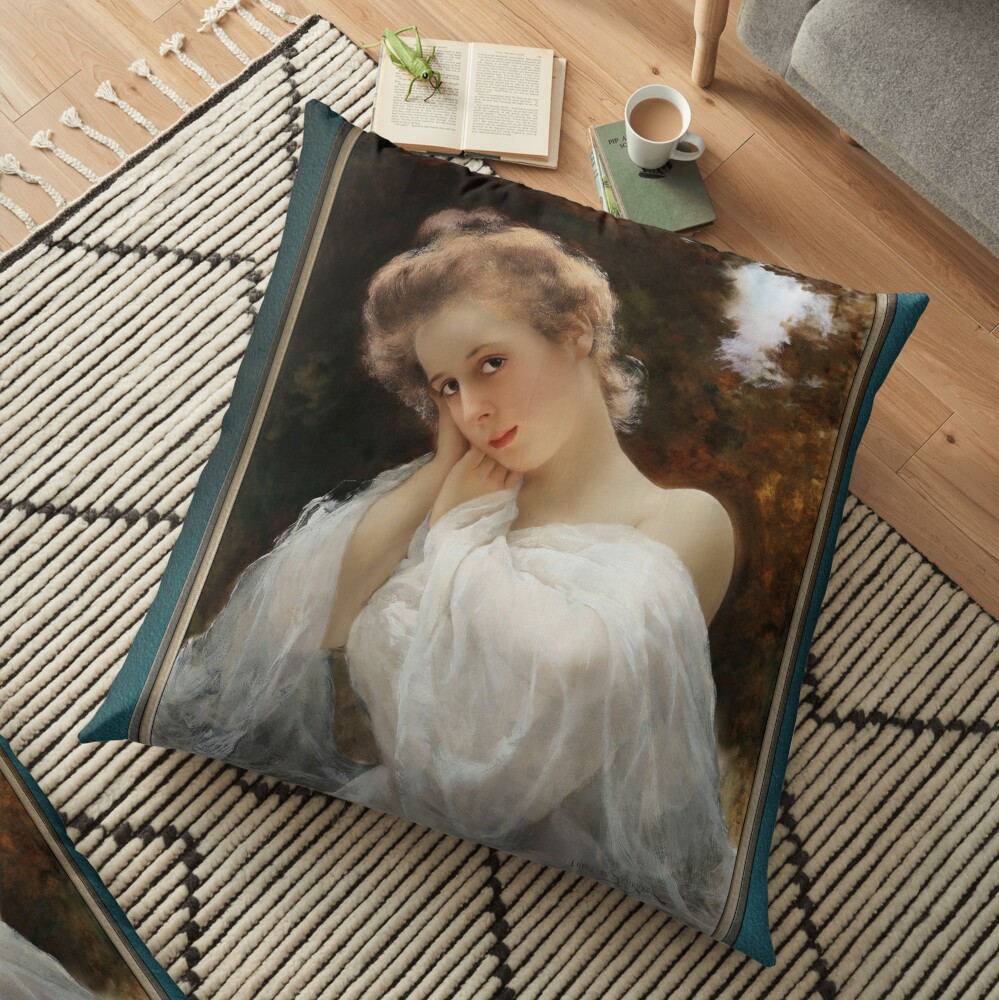
“Y Breuddwydiwr” yn baentiad a grëwyd gan yr arlunydd Ffrengig Louis Marie de Schryver, arlunydd enwog o ddiwedd y 19eg ganrif a dechrau'r 20fed ganrif. Cwblhawyd ddiwedd y 1800au neu ddechrau'r 1900au, mae’r campwaith hwn yn enghraifft o feistrolaeth wych de Schryver o ddal y ffurf fenywaidd, yn ogystal â'i fanylder wrth gyfleu emosiynau trwy baletau lliw cain a gwaith brwsh. Yr arlunydd, eni yn 1862 a phasio i mewn 1942, arbenigo mewn portreadu merched hardd gyda meddal, rhinweddau ethereal, yn aml mewn lleoliadau moethus. Yn y gwaith arbennig hwn, mae de Schryver yn trwytho naws dawel ond agos atoch trwy bortreadu merch ifanc, sy'n syllu'n hamddenol tuag allan, wedi'i lapio mewn cyflwr bron yn freuddwydiol.
Tabl Cynnwys
Y Pwnc: Y Breuddwydiwr
Wrth wraidd y cyfansoddiad y gorwedd pwnc “Y Breuddwydiwr,” a gosgeiddig dynes ifanc exuding synnwyr tawel o barchedigaeth. Mae ei mynegiant yn feddal ac yn fyfyriol, fel pe bai ar goll mewn eiliad o fewnwelediad personol neu freuddwydio. Mae'r ystum y mae hi'n ei gymryd yn gain, ag un llaw wedi ei gosod yn feddylgar yn ymyl ei boch, sy'n pwysleisio ei nodweddion cain. Y syllu, tra'n cyfeirio ychydig i'r ochr, yn ymddangos yn bell, bron fel petai'r ffigwr yn cael ei amsugno yn ei meddyliau ei hun. Ei tousled, gwallt meddal, gyda'i donnau tyner, yn ysgafn ac yn awyrog, cyfrannu at y naws dyner o ddiniweidrwydd a benyweidd-dra y mae'r artist yn ei lunio'n ofalus.
Mae'r gwrthrych wedi'i wisgo mewn dilledyn gwyn sy'n llifo sy'n asio â'r arlliwiau meddal o'i chwmpas, bron fel pe bai hi'n rhan o'r dirwedd ethereal. Mae'r ffabrig pur yn ymddangos bron yn dryloyw, dal y golau mewn ffyrdd sy’n datgelu sgil yr artist wrth bortreadu gweadau cain a dyfnder. Mae'r dewisiadau lliw yn gwella ansawdd breuddwydiol y darn, gan fod y ffabrig gwyn yn cyferbynnu â thonau tywyllach y cefndir, sy'n parhau i fod yn feddal, ond pell. Mae symlrwydd ei gwisg a’i mynegiant tawel yn cyfeirio sylw’r gwyliwr ati’n unig, creu cysylltiad pwerus rhwng y pwnc a’r gynulleidfa.
Cefndir a Thirwedd
Mae cefndir y paentiad yn gynnil ond yn rhan annatod o'r naws gyffredinol. Mae arlliwiau tywyll o frown ac ocr yn golchi dros y corneli uchaf, fframio'r ffigwr. Mae graddiad lliwiau yn creu ymdeimlad o ddyfnder, arwain llygaid y gwyliwr tuag at y breuddwydiwr. Small touches of lighter, almost ethereal highlights suggest a vague landscape, perhaps an indistinct garden or natural setting, but the focus remains on the figure rather than the environment. These details evoke an ambiance that feels suspended in time—unfamiliar yet comforting.
The background’s smooth blending of colors reflects the softness and timelessness that de Schryver often infused into his works. There is a sense of quietude in the scene, where natural elements seem to fade into an otherworldly atmosphere. By avoiding distinct terrain or objects, the artist isolates the figure, allowing the dreamer to remain the central focus of the composition, unaffected by any external environment.
Deunyddiau ac Arddull
Louis Marie de Schryver’s approach to materials is evident in the texture and fluidity of his work. Known for his mastery in oil painting, de Schryver uses layers of pigment to create a soft and rich appearance, showcasing his meticulous attention to detail. The brushstrokes in “Y Breuddwydiwr” are smooth and refined, characteristic of the artist’s style that aimed to mimic the elegance and delicate nature of the human form. Y meddal, almost velvety application of paint adds to the illusion of lightness and airiness that pervades the piece.
The style itself draws upon the academic realism of the late 19th century, but it is imbued with a sense of romanticism. De Schryver does not merely depict a woman but rather presents her as an idealized vision of feminine beauty. This approach is in line with the ideals of the French Salon painting tradition, where beauty, harddaf, and refinement were paramount. Eto, there is also a subtle abstraction in the work that allows the viewer to project their own interpretations, making the artwork transcend any one specific period or style.
The choice of using predominantly soft tones—beiges, whites, and muted golds—against the darkened backdrop creates a gentle contrast that emphasizes the lightness of the figure while maintaining the softness of the scene. De Schryver’s ability to create fluidity between the subject and its surroundings is evident, as the figure and background merge seamlessly, suggesting the dreamlike quality of the painting.
Thema a Naws y Gwaith Celf
Mae thema “Y Breuddwydiwr” is one of introspection, femininity, and delicate beauty. The painting seems to invite the viewer into a moment of calm reverie, where the boundaries between reality and dream blur. Y pwnc, wrapped in soft, light fabrics, could represent an idealized vision of womanhood or simply the quiet introspection that the artist wished to convey. The air of delicacy and fragility in the composition speaks to the vulnerability of the subject, drawing on themes of youth and purity.
The overall mood of the painting is one of quiet serenity. There is no overt emotion in the subject’s expression, but the subtlety of her demeanor suggests a peaceful contemplation, a calmness that pervades the entire composition. Y meddal, muted tones—paired with the grace of the figure—imbue the piece with a timeless elegance. The stillness of the woman’s pose contrasts with the flowing movement of the fabric, creating a harmonious tension between the static and the dynamic elements.
The dreamlike quality in this piece suggests the artist’s romantic view of femininity, presenting the woman as both a figure of beauty and an enigmatic presence. This ethereal representation aligns with the ideals of the time, where the ideal woman was often depicted as elusive and unattainable, existing in a world of soft light and undisturbed solitude.
Nghasgliad
Yn “Y Breuddwydiwr,” Louis Marie de Schryver has created a poignant and elegant depiction of feminine beauty and tranquility. Through his delicate brushwork and mastery of color, he presents a vision of a young woman enveloped in a moment of quiet reverie. The muted tones, flowing fabric, and gentle composition invite the viewer to reflect on the peaceful and idealized nature of the figure, while the absence of any definitive background allows for a timeless interpretation. Y paentiad hwn, while rooted in the academic traditions of the late 19th century, transcends its era to become a universal expression of beauty, harddaf, a mewnsylliad.
Mae hwn yn atgynhyrchiad hen feistri celf ddigidol wedi'i ailfeistroli o ddelwedd parth cyhoeddus sydd ar gael fel a argraffu cynfas ar-lein.
Bio artist yn deillio o Rehs.com
Ganed Louis ym Mharis, France on October 12, 1862 to a well established journalist, and from a very early age was interested in art and began teaching himself how to paint.
He was so talented that by the age of 13 he exhibited to still life works Marguerites et Chrysanthèmes and Violettes et Fleurs Printanières at the 1876 Paris Salon.
The following year he began studying with the French Still Life and Genre Painter Philippe Rousseau (1816 – 1887), and also exhibited at the 1877 Paris Salon.
Yn 1880 yn oed 17 was awarded a bronze medal at the Sydney Worlds Fair for the painting entitled Lilas.
For the next six years he continued to submit still life paintings as well as genre scenes and portraits to the annual Salons; a chan 1886 had focused his attentions to Parisian daily life, and began earning commissions to paint portraits of the high society figures of the time.
Yn 1891 he exhibited the painting La Fin d’une Rêve to the Paris Salon, which earned him a bronze medal; ac yna i mewn 1900 he exhibited the Exposition Universelle, earning a Gold Medal.
During this period Louis shifted his attention from the period of La Belle Époque (1871 – 1880 a 1914 the outbreak of World War I), to that of painting portraits and doing costume painting that featured elegant men and women from a bygone era dressed in silk and satin attire.