

The Dreamer
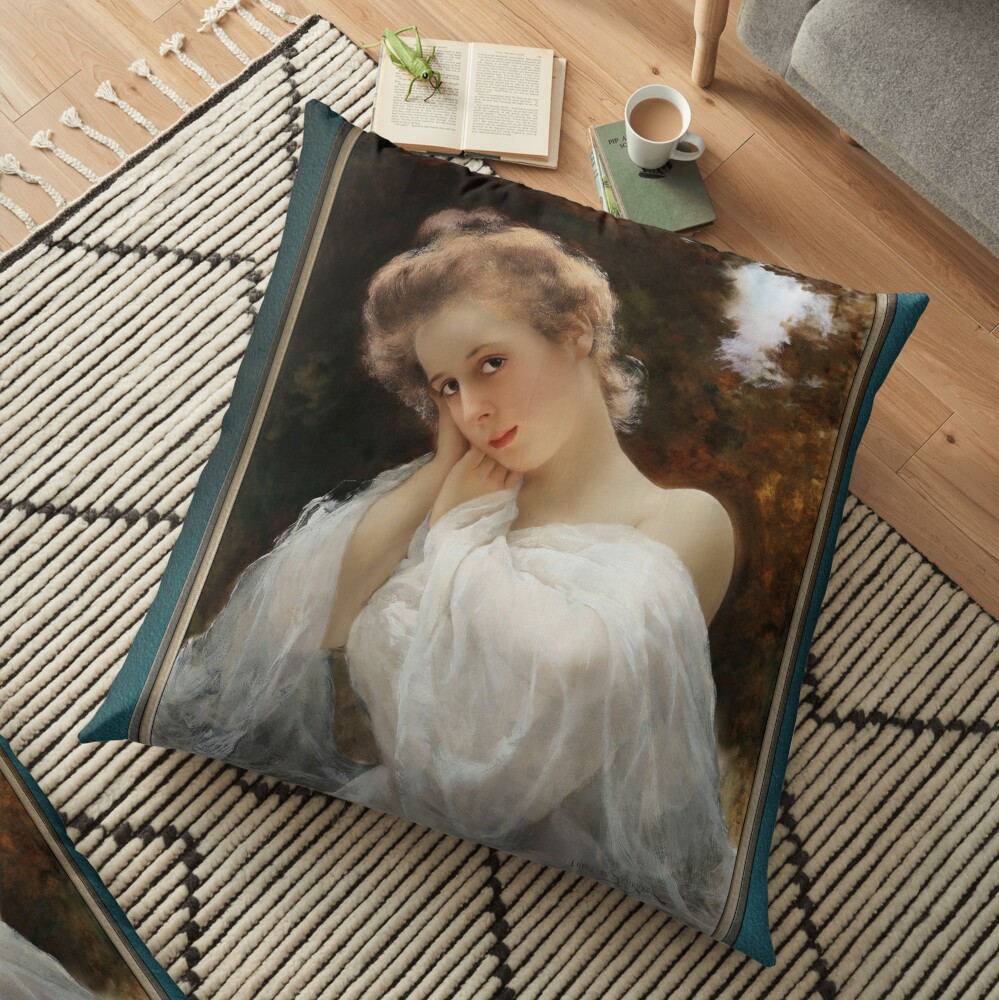
“The Dreamer” is a painting created by the French artist Louis Marie de Schryver, a renowned painter from the late 19th and early 20th century. Completed during the late 1800s or early 1900s, this masterpiece exemplifies de Schryver’s exquisite mastery of capturing the feminine form, as well as his finesse in conveying emotions through delicate color palettes and brushwork. Kunstneren, født i 1862 og passerer ind 1942, specialized in portraying beautiful women with soft, ethereal qualities, often enveloped in luxurious settings. In this particular work, de Schryver imbues a serene yet intimate mood through the portrayal of a young woman, who gazes gently outward, wrapped in an almost dreamlike state.
Indholdsfortegnelse
Emnet: The Dreamer
Kernen i kompositionen ligger emnet for “The Dreamer,” en yndefuld ung kvinde udstråler en stille følelse af drømmeri. Hendes udtryk er blødt og kontemplativt, som fortabt i et øjebliks personlig introspektion eller drøm. Den positur, hun indtager, er elegant, med den ene hånd placeret eftertænksomt nær hendes kind, som fremhæver hendes sarte træk. Blikket, mens den er rettet lidt til siden, virker fjernt, næsten som om figuren er opslugt af hendes egne tanker. Hendes pjuskede, blødt hår, med sine blide bølger, er let og luftig, bidrager til den blide aura af uskyld og femininitet, som kunstneren omhyggeligt konstruerer.
Motivet er klædt i et flydende hvidt tøj, der blander sig med de bløde nuancer, der omgiver hende, almost as if she is part of the ethereal landscape. The sheer fabric appears almost translucent, catching the light in ways that reveal the artist’s skill in portraying delicate textures and depth. The color choices enhance the dreamlike quality of the piece, as the white fabric contrasts with the darker tones of the background, which remains soft, but distant. The simplicity of her attire and serene expression directs the viewer’s attention solely to her, creating a powerful connection between the subject and the audience.
Background and Terrain
The background of the painting is subtle yet integral to the overall mood. Dark tones of brown and ochre wash over the upper corners, framing the figure. The gradation of colors creates a sense of depth, leading the viewer’s eyes towards the dreamer. Small touches of lighter, almost ethereal highlights suggest a vague landscape, perhaps an indistinct garden or natural setting, but the focus remains on the figure rather than the environment. These details evoke an ambiance that feels suspended in time—unfamiliar yet comforting.
The background’s smooth blending of colors reflects the softness and timelessness that de Schryver often infused into his works. There is a sense of quietude in the scene, where natural elements seem to fade into an otherworldly atmosphere. By avoiding distinct terrain or objects, the artist isolates the figure, allowing the dreamer to remain the central focus of the composition, unaffected by any external environment.
Materialer og stil
Louis Marie de Schryver’s approach to materials is evident in the texture and fluidity of his work. Kendt for sin beherskelse i oliemaling, de Schryver bruger lag af pigment for at skabe et blødt og rigt udseende, viser sin omhyggelige opmærksomhed på detaljer. Penselstrøgene ind “The Dreamer” er glatte og raffinerede, karakteristisk for kunstnerens stil, der havde til formål at efterligne den menneskelige forms elegance og delikate natur. Den bløde, næsten fløjlsagtig påføring af maling bidrager til illusionen af lethed og luftighed, der gennemsyrer stykket.
Selve stilen trækker på den akademiske realisme fra det sene 19. århundrede, men den er gennemsyret af en følelse af romantik. De Schryver skildrer ikke blot en kvinde, men præsenterer hende snarere som en idealiseret vision om feminin skønhed. Denne tilgang er i tråd med idealerne fra den franske Salon-malertradition, hvor skønhed, nåde, og raffinement var altafgørende. Endnu, der er også en subtil abstraktion i værket, der giver beskueren mulighed for at projicere deres egne fortolkninger, få kunstværket til at overskride en bestemt periode eller stil.
Valget af at bruge overvejende bløde toner - beige, hvide, og dæmpede guld – mod den mørke baggrund skaber en blid kontrast, der understreger figurens lethed, samtidig med at scenens blødhed bevares. De Schryvers evne til at skabe fluiditet mellem motivet og dets omgivelser er tydelig, da figur og baggrund smelter sammen, antyder maleriets drømmeagtige kvalitet.
Kunstværkets tema og stemning
Temaet for “The Dreamer” er en af introspektion, femininitet, og delikat skønhed. Maleriet synes at invitere beskueren ind i et øjebliks rolige drømmeri, hvor grænserne mellem virkelighed og drøm udviskes. Emnet, pakket ind i blødt, lette stoffer, could represent an idealized vision of womanhood or simply the quiet introspection that the artist wished to convey. The air of delicacy and fragility in the composition speaks to the vulnerability of the subject, drawing on themes of youth and purity.
The overall mood of the painting is one of quiet serenity. There is no overt emotion in the subject’s expression, but the subtlety of her demeanor suggests a peaceful contemplation, a calmness that pervades the entire composition. Den bløde, muted tones—paired with the grace of the figure—imbue the piece with a timeless elegance. The stillness of the woman’s pose contrasts with the flowing movement of the fabric, creating a harmonious tension between the static and the dynamic elements.
The dreamlike quality in this piece suggests the artist’s romantic view of femininity, presenting the woman as both a figure of beauty and an enigmatic presence. This ethereal representation aligns with the ideals of the time, where the ideal woman was often depicted as elusive and unattainable, existing in a world of soft light and undisturbed solitude.
Konklusion
I “The Dreamer,” Louis Marie de Schryver has created a poignant and elegant depiction of feminine beauty and tranquility. Through his delicate brushwork and mastery of color, he presents a vision of a young woman enveloped in a moment of quiet reverie. The muted tones, flowing fabric, and gentle composition invite the viewer to reflect on the peaceful and idealized nature of the figure, while the absence of any definitive background allows for a timeless interpretation. Dette maleri, while rooted in the academic traditions of the late 19th century, transcends its era to become a universal expression of beauty, nåde, og introspektion.
Dette er en remastered digital art old masters reproduktion af et offentligt domæne billede, der er tilgængeligt som en lærred print online.
Kunstner bio afledt fra Rehs.com
Louis blev født i Paris, France on October 12, 1862 to a well established journalist, and from a very early age was interested in art and began teaching himself how to paint.
He was so talented that by the age of 13 he exhibited to still life works Marguerites et Chrysanthèmes and Violettes et Fleurs Printanières at the 1876 Paris Salon.
The following year he began studying with the French Still Life and Genre Painter Philippe Rousseau (1816 – 1887), and also exhibited at the 1877 Paris Salon.
I 1880 i en alder af 17 was awarded a bronze medal at the Sydney Worlds Fair for the painting entitled Lilas.
For the next six years he continued to submit still life paintings as well as genre scenes and portraits to the annual Salons; og af 1886 had focused his attentions to Parisian daily life, and began earning commissions to paint portraits of the high society figures of the time.
I 1891 he exhibited the painting La Fin d’une Rêve to the Paris Salon, which earned him a bronze medal; and then in 1900 he exhibited the Exposition Universelle, earning a Gold Medal.
During this period Louis shifted his attention from the period of La Belle Époque (1871 – 1880 og 1914 the outbreak of World War I), to that of painting portraits and doing costume painting that featured elegant men and women from a bygone era dressed in silk and satin attire.