

Avlytteren
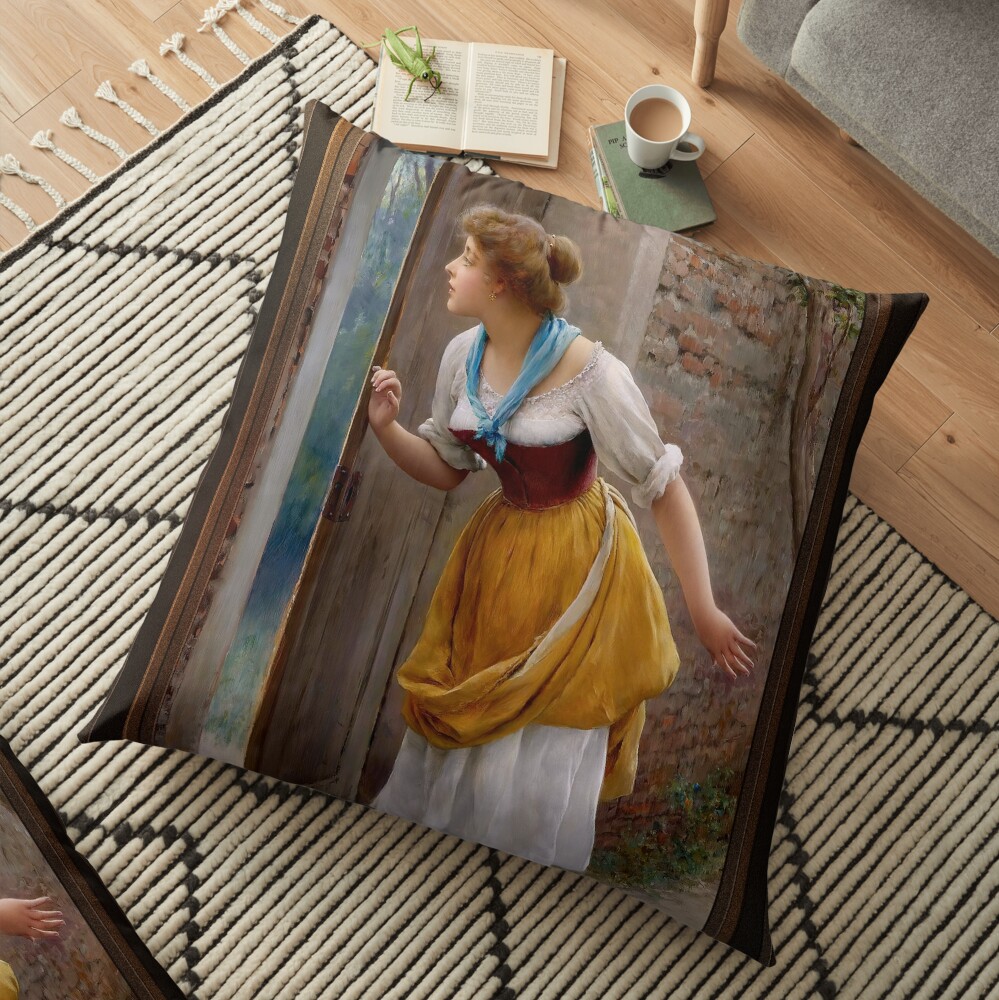
“Avlytteren,” opprettet i 1906 av den italienske maleren Eugen von Blaas (1843–1931), er en slående skildring av en ung kvinne fanget i et øyeblikk av nysgjerrighet og intriger. Verket eksemplifiserer kunstnerens dyktighet i å skildre både uskylden og den subtile følelsesmessige kompleksiteten til motivene hans.
Sett mot en rustikk bakgrunn av dempede jordfarger, maleriet er en elegant blanding av realisme og intim fortelling. Den unge kvinnen, med hodet vendt mot en delvis åpen dør, blikk med fokusert oppmerksomhet, som om hun hører på noe på den andre siden. Komposisjonen fanger et stille, men likevel spenningsfylt øyeblikk, perfekt egnet til sjangeren sjangermaleri som von Blaas er kjent for.
Innholdsfortegnelse
Hovedfag
I hjertet av dette arbeidet er den unge kvinnen, hennes delikate form innrammet av den værbitte døråpningen. Hun er kledd i et tradisjonelt europeisk bondedrakt, en kombinasjon av jordfarger som står i skarp kontrast til livligheten til hennes slående blå skjerf og myke hvite bluse. Kvinnens antrekk, overdelen hennes stram og karmosinrød, skjørt flyter med en gul nyanse, gjennomsyrer henne med både ydmykhet og nåde.
De myke foldene på skjørtet og forkleet hennes antyder at hun sannsynligvis er en hushjelp eller en figur med beskjeden sosial status. Holdningen hennes er forventningsfull, kroppen hennes vinklet mot døren, en lett vipping av hodet som gir inntrykk av å lytte intenst til noe hun ikke er ment å høre.
Hånden hennes ligger forsiktig på døren, som om hun er i ferd med å åpne den bredere, men forblir suspendert i et øyeblikk av ubesluttsomhet. Figuren settes i bevegelse av hennes bevegelse og den livaktige kvaliteten som von Blaas har fanget. Kvinnens blikk er rettet like utenfor dørkanten, uttrykket hennes fanget mellom nysgjerrighet og nøling, øynene hennes ser ut til å lete etter ledetråder, søkte kilden til det som fanget hennes oppmerksomhet. Fokuset på ansiktsuttrykket hennes øker intrigen, som lar seeren undre seg over hva hun har overhørt eller skimtet.
Objekter og detaljer
Kvinnens tilstedeværelse i scenen blir enda mer slående av omgivelsene. Innstillingen er en smal, rustikk smug eller gårdsplass, tydelig fra det grovhuggede murverket og den rike teksturen til murveggen bak henne. Arkitekturen og terrenget til dette bakteppet avslører mye om tidsperioden og sosiale omgivelser. Veggen er eldet og forvitret, gir scenen en følelse av historie, som om dette øyeblikket med avlytting finner sted i et rom som har vært vitne til mange slike private møter før.
Selve døren er også et sentralt element i komposisjonen, treet er mørkt og gammelt, viser synlige tegn på slitasje. Et rustent metallhåndtak står i kontrast til mursteinenes rike teksturer, bringe et nivå av realisme til kunstverket. Kvinnens hånd er nesten i direkte kontakt med dette håndtaket, understreker øyeblikkets skjørhet, hun står på kanten til noe ukjent, en grense mellom det som er offentlig og privat.
Natur, også, spiller en viktig rolle i maleriet. I øvre venstre hjørne, et lite tre eller en busk vokser ved siden av steinmuren, et mildt hint av grønt som gir et snev av liv til et ellers nøytralt tonet miljø. Plantene, selv om det er sparsomt, bidra til å dempe de stive, industriell preg av murverket, gir varme og organisk balanse til komposisjonen.
Stil og teknikk
Eugen von Blaas var kjent for sin omhyggelige oppmerksomhet på detaljer og sin evne til å lage malerier som nesten så ut til å puste av liv. “Avlytteren” er et godt eksempel på dette. Kunstnerens teknikk er dypt forankret i den realistiske tradisjonen, med vekt på naturlig lys, tekstur, og den nøyaktige gjengivelsen av menneskelige figurer. Foldene på kvinnens skjørt og det fine stoffet på blusen hennes er malt med stor forsiktighet, fanger alle nyanser av materiale og tekstur. Det myke lysspillet over ansiktet hennes og skyggene rundt døren gir dybde og dimensjon, skape et troverdig tredimensjonalt rom.
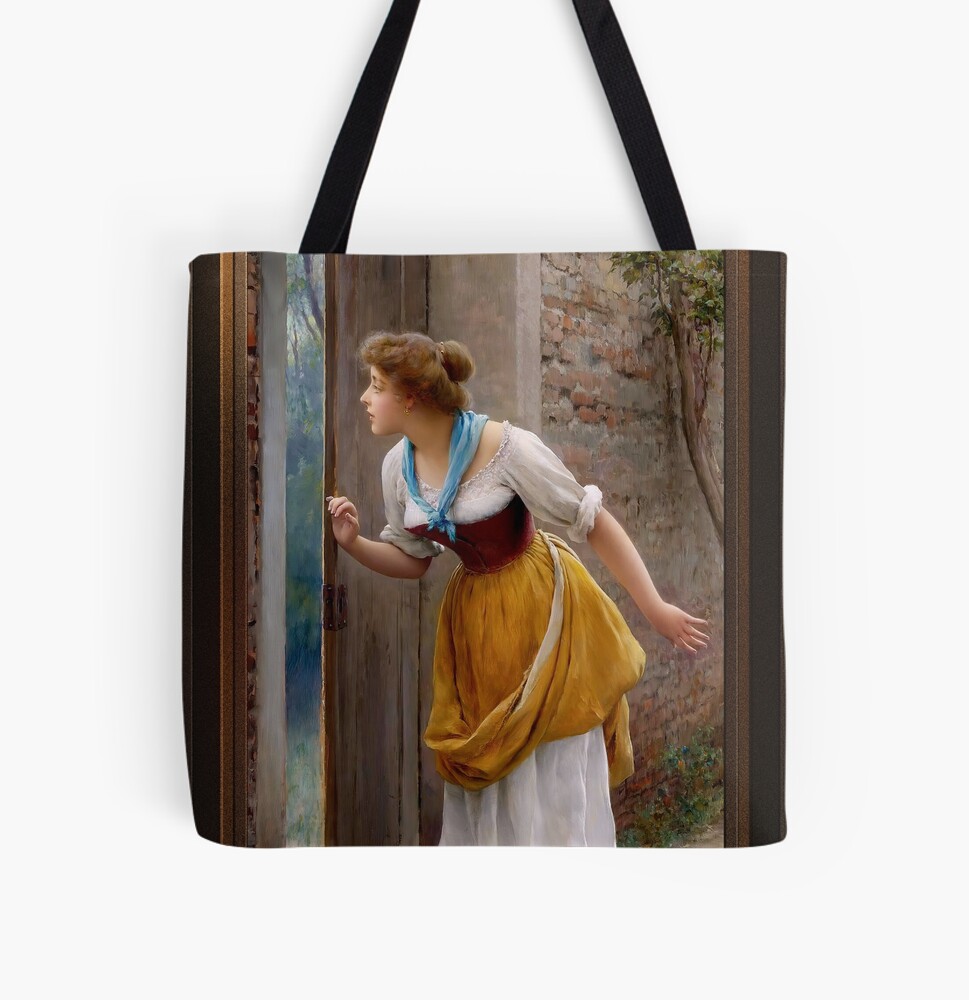
Fargene i dette stykket er varme, men likevel behersket, med jordfargene til mursteinene og kvinnens klær som danner en harmonisk palett. De myke gule og hvite i antrekket hennes står i kontrast til de mer dempede fargene i bakgrunnen, skaper et fokuspunkt i kvinnens figur.
Det blå skjerfet, bundet rundt halsen hennes, fungerer som en slående visuell aksent, trekke oppmerksomhet til ansiktet hennes og tilføre en følelse av mykhet og ro. Denne fargekontrasten forsterker den generelle emosjonelle tonen i arbeidet, bidrar til stemningen av stille spenning.
Penselen inn “Avlytteren” er både presis og flytende. Kunstnerens håndtering av teksturer, fra de rustikke mursteinene til de delikate stofffoldene, er utrolig detaljert. Ansiktet til kvinnen er gjengitt med en mykhet som inviterer betrakteren til å koble seg følelsesmessig med henne, understreker realismen som von Blaas forsøkte å oppnå. Maleriet har en fotografisk kvalitet, fanger et flyktig øyeblikk med en slik klarhet at det nesten virker som om det kunne ha vært en ekte scene kunstneren har sett.
Tema og stemning
Temaet for “Avlytteren” er en nysgjerrighet, spenning, og kanskje til og med hemmelighold. Kvinnens handlinger innebærer en følelse av avlytting – noe forbudt eller privat som hun prøver å avdekke. Denne følelsen av voyeurisme tilfører et element av psykologisk dybde til stykket, trekke betrakteren inn i en fortelling om skjult kunnskap og konsekvensene av å oppdage noe som aldri var ment å bli hørt.
Stemningen i maleriet er en stille spenning. Mens det ikke er noen åpenbar handling, kvinnens kroppsspråk og blikk skaper en følelse av spenning. Det er en implisitt antydning av noe som utspiller seg like utenfor døren, noe kvinnen ikke kan se fullt ut, men er likevel tiltrukket av. Den dempede bakgrunnen og stillheten i øyeblikket øker spenningen, som lar seeren projisere sin egen tolkning på scenen.
Konklusjon
Eugen von Blaas sin “Avlytteren” er en mesterlig skildring av et flyktig øyeblikk i tid, dyktig fange de følelsesmessige nyansene av nysgjerrighet og spenningen mellom offentlige og private rom. Realismen og oppmerksomheten på detaljer inviterer betrakteren til å tenke på ikke bare de fysiske omgivelsene, men også den indre verdenen til motivet.. I sin stille spenning, maleriet taler til universelle temaer for menneskets natur - vårt ønske om å vite hva som ligger utenfor terskelen, og de komplekse følelsene som følger med å avdekke hemmeligheter som ikke er ment for våre ører.
Dette er en remastret digital kunst-gamle mesterreproduksjon av et offentlig domenebilde som er tilgjengelig som en lerretstrykk online.
Denne digitale kunstkreasjonen, som med alle kunstverkene som finnes på Xzendor7-nettstedet, er det tilgjengelig for kjøp online i en rekke materialformater, inkludert lerretstrykk, akryltrykk, metalltrykk, treutskrifter, innrammede trykk, plakater, og som rullede lerret utskrifter i en rekke størrelser fra 12 tommer til 72 tommer avhengig av størrelsen på det faktiske kunstverket og print on demand-butikken du velger å kjøpe kunsten fra.
Kunstverket er også tilgjengelig på et bredt utvalg av herre- og dameklær, krus, totes, skjerf, notatbøker og journaler og mange hjemmeinnredningsprodukter.
Kunstnerbiografi
Info nedenfor avledet fra Wikipedia.org
Han ble født i Albano, i nærheten av Roma, til en tyrolsk far og italiensk mor. Faren Karl, også en maler, var læreren hans. Hans mor, Agnesina Auda, var en velstående romersk kvinne. Familien flyttet til Venezia da Karl ble professor ved Akademiet i Venezia. Han malte ofte scener i Venezia, men også portretter og religiøse malerier.
Blant verkene hans er bryllupsformen i sakristiet; Bingo i Campielo i Venezia; En dukketeater på en skole; og La Ninetta. Kunstkritikeren Luigi Chirtani, da maleriet ble vist på Mostra Nazionale di Venezia, beskrev det som vakkert, smigrende, ganske, kjærtegnet, rengjort, polert, vaskeri i et maleri av Mr.. Blære, favorittportrettisten til store venetianske aristokrater, kledd i gallasatiner, skinnende smykker, frisyrer til de rike.
Hans fargerike og ganske teatrale periodebilder av det venetianske samfunnet, f.eks. På balkongen (1877; Privat samling), var ganske forskjellige i forhold til delikate pasteller og etsninger på gårdsplassene, balkong og kanaler i det moderne Venezia.
Eugene de Blaas’ malerier ble stilt ut på Royal Academy, Fine Art Society, New Gallery og Arthur Tooth and Sons Gallery i London, og også på Walker Art Gallery i Liverpool