

The Flood Destroying The World
The Flood Destroying The World c1866 by French Painter Gustave Dore (1832 – 1883); ancu s'ellu hà travagliatu principalmente cum'è un incisore di lignu, era ancu un stampatore, caricature, artista di fumetti, illustratore è scultore.
This is another harrowing scene of the Great Flood story told in the Christian Bible and that is part of Gustave’s Bible Illustration tales.
In this scene we can see in the far distance Noah’s Ark; the only place on the planet earth of salvation; while in the foreground we see all the non believers and sinners.
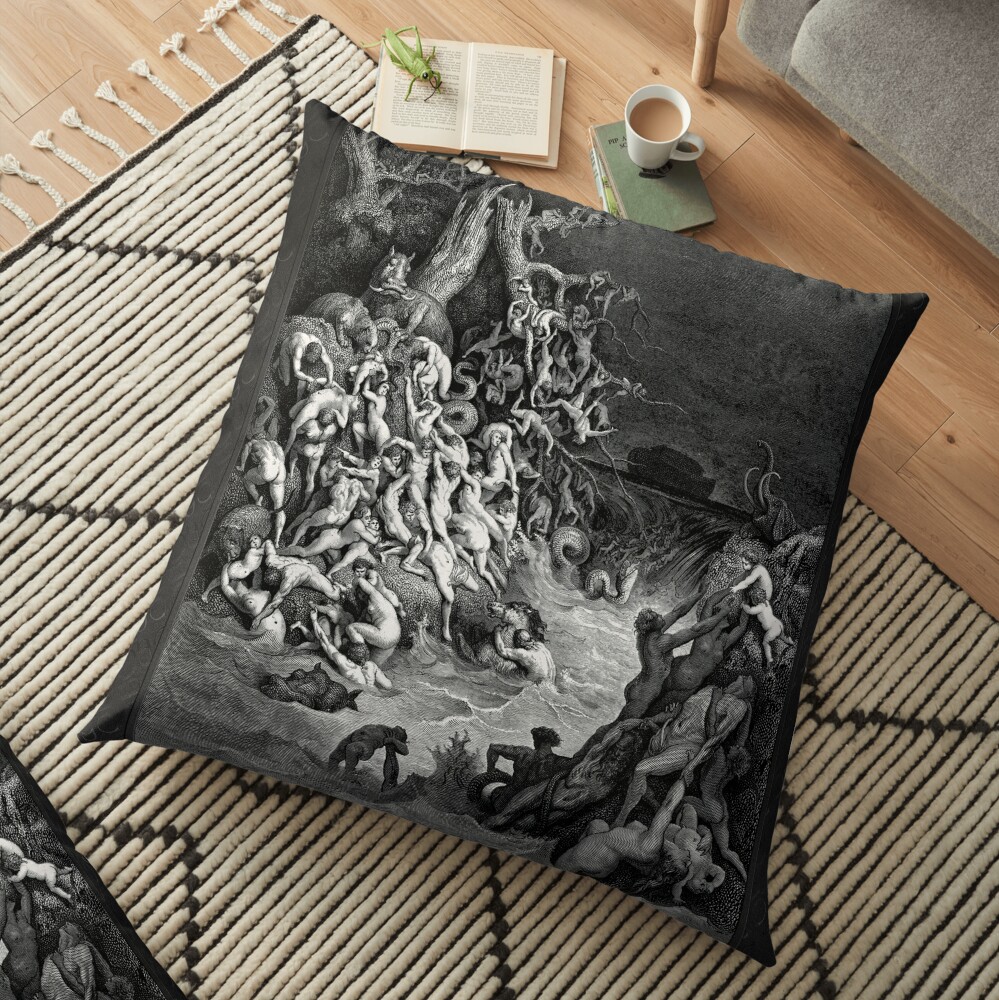
These individuals a grasping on rocks and trees trying to save themselves from the deluge of on coming water, as mothers and fathers try to pull and lift their children to safety; and children already on the rocks try to help their parents climb on top of them.
In the water are people and animals such as snakes and horses and on what little land that there is left that everyone is scrambling for are dozens of men, women and children, along with various animals such as wild cats, buffalo and elephants; with more people dangling off broken trees as the end approaches quickly.
The Flood Destroying The World is a remastered digital art old masters reproduction of a public domain image that is available as a stampa su tela in linea.
Info sottu Derivatu da Wikipedia.org
Doré hè natu in Strasburgu, Francia è à l'età di 5 era un artista di u zitellu prodigiu; criendu disegni chì eranu maturi oltre i so anni. Allora à l'età di 12, cuminciò à sculture in petra, è da 15, principia a so carriera cum'è caricaturista per u ghjurnale francese Le journal pour rire.
In u principiu, l'incisione in legnu era u so metudu primariu di spressione artistica durante a fini di l'anni 1840 è u principiu di l'anni 1850., facennu parechji testi comics, cum'è I travagli di Ercole (1847), Trè artisti incomprensi è scontenti (1851), I svantaghji di un viaghju di piacè (1851) è A Storia di a Santa Russia (1854).
In seguitu, Doré hà guadagnatu cumissioni per rapprisintà scene di libri di Cervantes, Rabelais, Balzac, Milton, è Dante. Hà illustratu ancu “Gargantua è Pantagruel” in 1854; quandu era ghjustu 22 età.
In 1853 Doré hè statu dumandatu à illustrà l'opere di Lord Byron; è sta cumissioni hà purtatu à un travagliu supplementu per l'editori britannichi, inclusa una nova Bibbia illustrata, è trè anni dopu averia pruduciutu 12 Illustrazioni in fogliu di A Legenda di u Ghjudeu Errante, chì hà propagatu veduti antisemiti di longa data di l'epica, per un brevi poema chì Pierre-Jean de Béranger avia derivatu da un rumanzu di Eugène Sue di 1845.
Duranti l'anni 1860, Doré hà illustratu una edizione francese di Don Chisciotte di Cervantes, è e so raffigurazioni di u cavaliere è u so scudieru, Sancho Panza, sò diventati cusì famosi chì anu influenzatu i lettori successivi, artisti, è registi di scena è di film’ idee di u fisicu “fighjate” di i dui caratteri.
Hà illustratu ancu una grande edizione di Edgar Allan Poe “U corbu”, un effort qui lui a valu 30,000 franchi da l'editore Harper & Fratelli in 1883.
E so illustrazioni per a Bibbia (1866) anu assai successu, è in 1867 Doré hà avutu una grande mostra di u so travagliu in Londra, chì hà purtatu à a fundazione di a Galleria Doré in Bond Street, Londra. In 1869, Blanchard Jerrold, u figliolu di Douglas William Jerrold, suggeriu ch'elli travaglianu inseme per pruduce un ritrattu cumpletu di Londra.
Jerrold avia ottenutu l'idea da u Microcosmu di Londra pruduciutu da Rudolph Ackermann, William Pyne, è Thomas Rowlandson (publicatu in trè volumi da 1808 à 1810). Doré hà firmatu un cuntrattu di cinque anni cù l'editori Grant & Co chì implicava a so sughjornu in Londra per trè mesi à l'annu, è hà ricivutu a vasta summa di £ 10,000 annu per u prugettu.
Ancu Doré hè statu celebratu principalmente per i so pitture durante u so tempu, è ancu s'ellu fermanu famosi in u mondu ancu finu à questu ghjornu, sò i so woodcuts è incisioni, cum'è quelli chì hà fattu per Jerrold, chì dimustratu hè un talentu artisticu eccezziunale cum'è un artista cù una visione individuale.