

De Gleaner c1841
“Der Gleaner,” erstallt an 1841 vum franséischen Moler Joseph Désiré Geriicht (1797 – 1865), stellt eng markant an emotional resonant Bild vum ländleche Liewen vir, déi eng eenzegaarteg Lens bitt, duerch déi déi sozial a wirtschaftlech Konditioune vun der Zäit beobachtet kënne ginn. Dëst Konschtwierk, beaflosst vum Geriichtsromantesche Stil, encapsuléiert souwuel déi delikat Schéinheet an ustrengend Natur vun der ländlecher Aarbecht. D'Thema vun der Molerei, eng Fra engagéiert am Akt vun gleaning, steet géint eng räich detailléiert Landschaft am Virdergrond. Dem Geriicht seng virsiichteg Opmierksamkeet op Detailer a Gebrauch vu Liicht verbessert d'emotional Kraaft vum Konschtwierk, erlaabt Zuschauer d'Hëtzt vum Sonneliicht op de Figuren an d'Textur vun der Ëmgéigend ze spieren.
Inhaltsverzeechnes
Den Haaptthema a Kompositioun
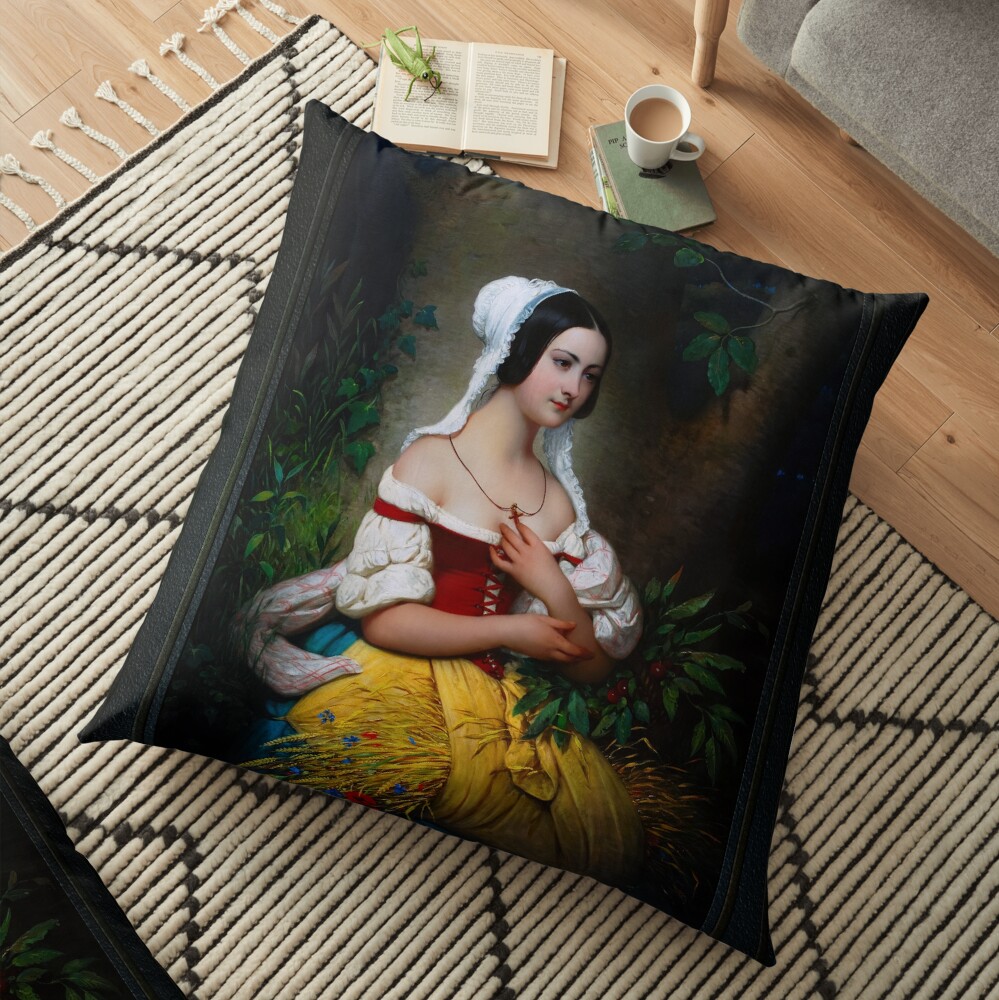
Déi zentral Figur an “Der Gleaner” ass eng jonk Fra, portrayed in a moment of rest amidst her laborious task. She is depicted with a dignified yet humble demeanor, dressed in traditional peasant attire, consisting of a red bodice, a white blouse with puffed sleeves, and a yellow skirt that flows outward, highlighting the fullness of the fabric and the labor of her work.
The woman is wearing a simple white headscarf, typesch vun der Period, which frames her face delicately, showcasing her serene expression as she pauses to gather the remnants of crops. An hirer rietser Hand, she gently holds a bundle of wheat she has collected, while her left hand touches her chest in a gesture that suggests quiet contemplation. This pause between tasks offers a poignant moment, symbolizing the dignity found in manual labor, a theme that was increasingly relevant during the social movements of the 19th century.
D'Zesummesetzung ass equilibréiert, with the woman placed slightly off-center, allowing for a wide expanse of the field and surrounding landscape to be visible. The background depicts a rural landscape with a mix of crops, including wheat and other forms of vegetation, which appear to stretch out towards the horizon. This vast terrain surrounding the subject suggests the relationship between the laborer and the land she works, déi de Kär vun der narrativ vum Konschtwierk ass. Et gëtt e Kontrast tëscht der Gréisst vum Land an dem Klenge, eenzeg Figur vun der Fra, betount d'Skala vun der Aarbecht an déi bescheiden Natur vun hirer Aufgab.
Landschaft an Terrain
Geriicht Handhabung vum Terrain an “Der Gleaner” ass en anere bemierkenswäerten Aspekt vum Bild. D'Landschaft ass mat engem schéinen A fir Realismus gemoolt, bitt eng üppig Duerstellung vum landwirtschaftleche Kader. D'Faarwen sinn Äerd, mat Téin vun Gréngs, giel, a Braun dominéiert d'Zesummesetzung. Dës naturalistesch Behandlung vun der Ëmwelt verbessert d'Gefill vu Rou an Harmonie tëscht der Figur an der Ëmgéigend Natur.
De fruchtbare Feld erstreckt sech hannert der Fra, während Beem d'Kante vun der Szen cadreieren, bäidroe fir d'Déift a raimlech Zesummesetzung. Den Himmel ass roueg, mat Hiweiser vu Sonneliicht duerchfiltert, déi d'Szene mat enger friddlecher a kontemplativer Stëmmung duerchdréit.
Gläichzäiteg, d'Terrain vum Feld a seng gewellte Konturen liwweren e Verständnis vun der landwirtschaftlecher Aarbecht déi zentral am Liewen vun der Fra ass. D'Äerd, iwwerdeems fruchtbar, ass nach gefuerdert, an d'Präsenz vu verspreete Weessschéier, déi vun den Erntester hannerlooss sinn, beliicht déi ustrengend Aufgab fir ze sammelen - den Akt fir d'Iwwerreschterkorn no der Ernte ze sammelen. Den Äerdmound, déi iwwerwuessene Gräser, an déi verspreet Weess vermëttelen souwuel de Räichtum an d'Schwieregkeet vum Liewen vum ländlechen Aarbechter.
The Materials and Artistic Techniques
Joseph Désiré Geriicht, bekannt fir seng romantesch Approche, beschäftegt Ueleg op Leinwand fir e Räich ze kreéieren, texturéiert Uewerfläch déi d'Subtletien vum Liicht an d'natierlech Schéinheet vun der ländlecher Ëmwelt erfaasst. Dem Geriicht seng kompetent Pinselwierk ass evident an der Aart a Weis wéi hien d'Stoff behandelt, d'Hauttéin, an d'Vegetatioun. D'Weichheet vun der Fra Kleedung kontrastéiert mat de méi raue Texturen vum Feld, weist seng Fäegkeet fir verschidde Materialien mat taktile Realismus ze portraitéieren. D'Glattheet vun hirer Haut, am Géigesaz zu der méi robuster Textur vun hirem Ëmfeld, zitt op hir Figur als Brennpunkt vun der Kompositioun op.
De Kënschtler benotzt Liicht bis déif Effekt, mat waarmen Téin e mëllen Glanz iwwer d'Gesiicht an de Kierper vun der Fra, während d'Schatten iwwer d'Falten vun hire Kleeder an den Terrain spillen. Dëst Zesummespill tëscht Liicht a Schied verstäerkt déi emotional Resonanz vum Bild, suggesting both a physical and metaphorical contrast between the hard work of the woman and the beauty of her surroundings.
D'Thema a Stëmmung vum Konschtwierk
Déi iwwergräifend Thema vun “Der Gleaner” revolves around the dignity of rural labor, the connection between human beings and the land, and the cyclical nature of work. The woman in the painting, with her laborious yet serene posture, is depicted with a quiet strength and grace, reflecting the romantic idealization of rural life.
Allerdéngs, there is an underlying message about the hardships faced by those who toil in the fields, particularly the gleaners, who were often among the poorest members of society. Der mëller, warm light and the peaceful expression on the woman’s face contrast with the backbreaking nature of her task, suggesting both the beauty and the difficulty inherent in this form of work.
Dem Geriicht seng Porträtatioun vum Gleaner fuerdert den Zuschauer eraus fir d'Roll vun den Aarbechter aarm an der Gesellschaft an hire Bäitrag zu der landwirtschaftlecher Wirtschaft ze berücksichtegen. Et gëtt keen direkten Kommentar iwwer déi sozial Ongläichheete vun der Zäit, mä de Betrachter kann net hëllefen, wéi iwwer d'Juxtaposition vun der Fra hir roueg Aarbecht an déi grouss ze reflektéieren, anscheinend indifferent Landschaft.
Conclusioun
“Der Gleaner” vum Joseph Désiré Court ass e masterful Beispill vum romantesche Realismus aus dem 19. Joerhonnert, souwuel d'Schéinheet an de Kampf vum ländleche Liewen erfaassen. Duerch seng sensibel Porträtatioun vum Gleaner, Geriicht entdeckt déi intim Relatioun tëscht Aarbecht an Natur, wärend eng schrecklech Meditatioun iwwer d'Dignitéit, déi an haarder Aarbecht fonnt gëtt. Déi üppig, naturalistesch Landschaft, kombinéiert mat dem Kënschtler seng deft Handhabung vu Liicht an Textur, creates an immersive and emotional experience for the viewer, making this artwork a powerful commentary on both the personal and collective nature of labor in rural France.
This is a remastered digital art old masters reproduction of a public domain image that is available as an acrylic, metallen, gerullt, encadréiert, Canvas Print online.
Information About The Artwork Courtesy Galerie Matthiesen
Et gëtt ugeholl datt de Portrait, bezeechent an der 1838 Salonkatalog als Portrait of Miss W, kann vläicht vun der Duechter vum Louis-Philippe sengem vertrauenswürdege Valet sinn, George Weiss. Et war eng 'Mademoiselle White' am Déngscht an den 1830er Joren als Kammermeier zu Adélaïde d'Orléans, Dem Louis Philippe seng Schwëster an et wier net ongewéinlech gewiescht fir d'Kand vun engem vertrauenswürdege Knecht eng Aarbecht am Stot vun engem anere Member vun der kinneklecher Famill ze kréien.
Den George White selwer war ursprénglech vum Brudder vum Kinnek agestallt ginn, den Herzog vu Montpensier, an no sengem Doud an 1807 gouf vum Louis-Philippe iwwerholl. De George While gëtt ugeholl datt hien de Service vun der kinneklecher Famill wärend hirem éischten Exil an England agaangen ass, iwwuerten 1800-1815, an opgestan fir déi nootste vu perséinlechen Dénger ze sinn. De George hat Zëmmer souwuel am Schlass vu Randan an am Trianon zu Versailles a krut eng Zoulag vun 3000 Frang während dem Louis-Philippe sengem zweeten Exil, 1848-1850.
Et ass och bekannt datt de George en Ae fir Konscht hat, Wierker am Numm vum Louis-Philippe op eng Rei Geleeënheeten kaaft. Och wann dëse Portrait fir e Knecht grouss schénge kann, et weist vläicht souwuel de Wäertschätzung mat deem d'Famill am kinnekleche Stot gehal gouf an och dem George seng Verbindunge bannent der artistescher Brudderschaft. Ob hie perséinlech um Geriicht bekannt war si mir net sécher, allerdéngs muss dem Geriicht seng verlängert Aktivitéit zu Versailles während der Julimonarchie déi zwee matenee Bekanntschaft bruecht hunn.