

Saklausi svanurinn (Svanurinn; Sakleysi)
“Saklausi svanurinn (Svanurinn; Sakleysi)” is a remarkable work created by Elisabeth Sonrel (1874 – 1953), inn 1905, encapsulating the graceful and serene qualities associated with the Symbolist movement that defined much of the late 19th and early 20th centuries. Fæddur í 1874 og lést í 1953, Sonrel was a French artist whose works often blended the ethereal and the earthly, producing dreamlike scenes that were deeply influenced by mythology and the natural world. This specific piece, infused with both tranquility and delicate beauty, perfectly exemplifies Sonrel’s ability to combine the elegance of natural forms with symbolic richness.
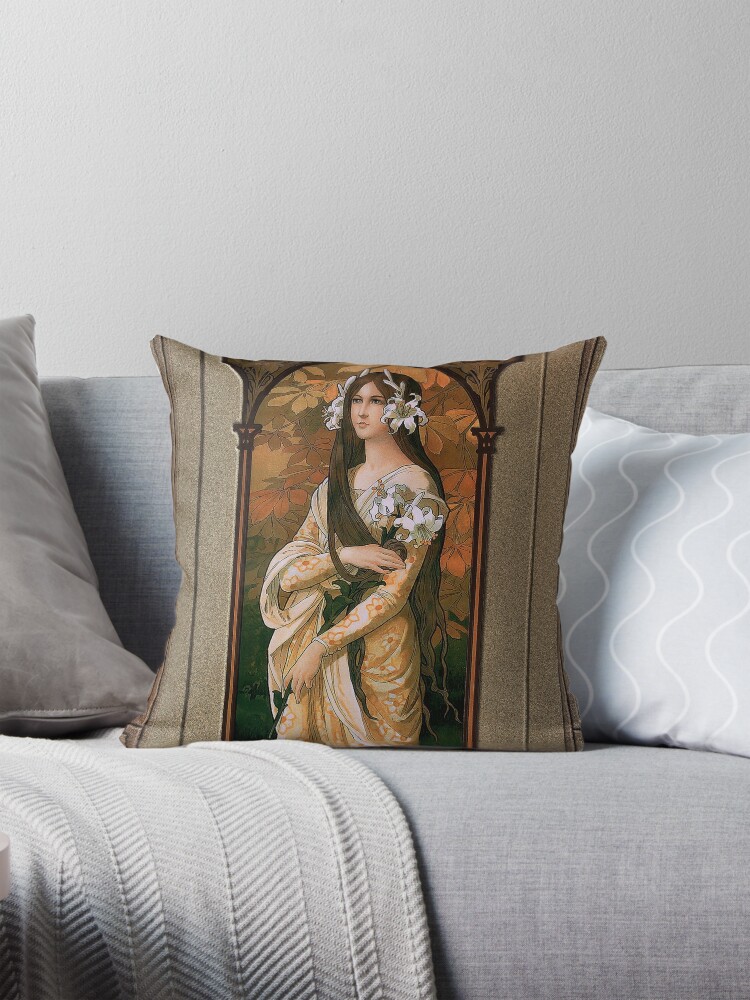
The central figure of the painting is a young woman dressed in an opulent yellow gown adorned with soft floral patterns. Her long brown hair cascades past her shoulders, entwined with white lilies that give her a pure and almost mystical appearance. She stands in a calm, poised stance with a swan at her feet, symbolizing the innocence and grace attributed to both the bird and the figure she represents. The soft rendering of her face, with an expression of contemplation, invites the viewer to ponder her thoughts while gazing upon the tranquil setting that surrounds her.
Efnisyfirlit
Composition and Surroundings
The composition of the painting is characterized by a harmonious blend of the natural and the human, with the figure of the woman placed in a vertical format that emphasizes the elongated style of the subject. She is situated against a lush, verdant background, where delicate autumn leaves in shades of orange, gulli, and green suggest the time of year and create a backdrop that contrasts beautifully with the pale, luminous gown she wears. The subtle inclusion of the swan further elevates the symbolic aspect of the work, as swans are traditionally linked with themes of purity, sakleysi, og fegurð, reinforcing the title of the piece.
The swan, which rests at the woman’s feet, seems to mirror her own graceful posture. Its neck curves delicately, almost as if echoing the lines of her figure. This visual connection between the human and the bird further deepens the symbolism of the painting, suggesting a harmonious relationship between humanity and nature. The swan’s white feathers reflect the woman’s innocence, offering a serene presence that balances the vibrancy of the autumn leaves in the background.
Color Palette and Technique
Sonrel’s use of color is one of the most striking aspects of the painting. The soft pastel tones of the yellow gown are balanced by the earthier tones of the foliage behind the figure, creating a warm and inviting ambiance. The yellows, gull, and subtle greens of the dress blend with the oranges and reds of the autumn leaves, evoking a sense of calm serenity that is further reflected in the softness of the background. The subdued hues work together to draw attention to the figure of the woman, allowing her to remain the focal point of the piece.
The technique employed by Sonrel showcases her skill in using soft brushstrokes and a gentle application of light and shadow. Burstaverkið, though precise, retains an air of fluidity that enhances the overall delicacy of the scene. There is an almost translucent quality to the woman’s skin, suggesting her ethereal nature, while the details in the gown, blóm, and leaves are rendered with a subtle yet deliberate attention to texture and form. This blending of realism with a dreamy, almost otherworldly quality is characteristic of Sonrel’s approach to painting.
Symbolism and Meaning
The swan in “Saklausi svanurinn” is not just a decorative element, but rather a powerful symbol. In various cultures, the swan is associated with purity, Umbreyting, og hið guðlega. In Greek mythology, for example, swans were often connected to gods and goddesses, embodying both grace and the higher realms of beauty. Hérna, the swan’s purity is reflected in the figure of the young woman, who is portrayed with an expression of innocence and calm. The lily flowers, which intertwine with her hair, further reinforce this symbolism of purity and innocence.
The combination of the woman’s serene posture, the swan’s graceful presence, and the natural elements around them creates a timeless scene of tranquility, emphasizing the connection between humanity and nature. The autumnal setting could be seen as a representation of the fleeting nature of innocence and beauty, reminding the viewer of the transient moments in life. The gentle curve of the woman’s figure and the soft tones of the piece give the painting a nostalgic quality, evoking a sense of longing for a simpler, purer time.
Style and Artistic Influence
“Saklausi svanurinn” is a prime example of the Symbolist style, which was marked by an emphasis on emotions, the imagination, and an exploration of the mystical and metaphysical realms. Sonrel’s work is deeply embedded in this tradition, capturing moments that evoke a sense of reverie and contemplation. Fínu línurnar, athygli á smáatriðum, and use of symbolic imagery also tie her work to the Art Nouveau movement, which was flourishing in France during her time. The floral motifs, flæðandi línur, and organic forms in the painting align it with the decorative and ornamental elements that defined Art Nouveau.
In terms of mood, the painting exudes a quiet, peaceful atmosphere, filled with an air of timeless grace. Tjáning viðfangsefnisins, the soft light, and the harmonious relationship between the figure and the swan all contribute to a sense of calm and purity. It is a work that encourages the viewer to pause, to appreciate the subtle beauty of the scene, and to reflect on the deeper symbolism that lies beneath the surface.
Niðurstaða
Í “Saklausi svanurinn (Svanurinn; Sakleysi),” Élisabeth Sonrel captures the delicate beauty of innocence through the portrayal of a young woman in a serene, dreamlike setting. The careful composition, combined with the symbolic imagery of the swan and the soft palette, creates a work that is both visually captivating and emotionally resonant. Through her meticulous rendering of natural forms and the symbolic interplay between the human and the animal, Sonrel invites the viewer into a world of tranquil reverie, where innocence, hreinleiki, and beauty are forever preserved in time.
Saklausi svanurinn (Svanurinn; Sakleysi) eftir franska málarann Elisabeth Sonrel (1874 – 1953); og teiknari Art Nouveau stíl; verk hvers innihéldu allegórísk efni, dulspeki og táknfræði, portrett og landslag.
Saklausi svanurinn er lagfærð stafræn list af gömlum meistara eftirgerð af mynd í almenningseign.
Þessi stafræna listsköpun, eins og með öll listaverkin sem finna má á Xzendor7 vefsíðunni er hægt að kaupa á netinu í ýmsum efnissniðum þar á meðal strigaprentun, akrýl prentun, málmprentun, viðarprentanir, innrömmuð prentun, veggspjöld, og sem rúlluð strigaprentun í ýmsum stærðum frá 12 tommur til 72 tommur eftir stærð raunverulegu listaverksins og prentunarversluninni sem þú velur að kaupa listina frá.
Listaverkin eru einnig fáanleg á breitt úrval af herra- og kvenfatnaði, krúsar, töskur, trefla, minnisbækur og dagbækur og margar heimilisskreytingarvörur.
Listamaður Bio
Upplýsingar fyrir neðan með kurteisi Wikipedia.org
Elisabeth Sonrel (1874 Ferðir - 1953 innsigli) var franskur málari og myndskreytir í Art Nouveau stíl. Verk hennar innihéldu allegórísk efni, dulspeki og táknfræði, portrett og landslag.
Hún var dóttir Nicolas Stéphane Sonrel, málari frá Tours, og fékk snemma þjálfun hennar frá honum. Til frekara náms fór hún til Parísar sem nemandi Jules Lefebvre við Ecole des Beaux-Arts.
Í 1892 hún málaði diplómavinnuna sína, "Friður og vinna", verk sem verður að sjá í Musée des Beaux-Arts de Tours. Upp frá því sýndi hún á Salon des Artistes Français á milli 1893 og 1941, Undirskriftarverkin hennar eru stórar vatnslitamyndir á pre-rafaelískum hætti, sem hún ættleiddi eftir ferð til Flórens og Rómar, að uppgötva endurreisnarmálarana – sum verk hennar hafa skýran yfirtón Botticelli. Málverk hennar voru oft innblásin af Arthurian rómantík, „Guðdómleg gamanmynd Dante Alighieri’ og 'La Vita Nuova', biblíuleg þemu, og miðaldasagnir. Dulræn verk hennar eru meðal annars 'Ames errantes’ (Salon af 1894) og „Andar undirdjúpsins’ (Salon af 1899) og „Ung kona með veggteppi“.
Á Exposition Universelle í 1900, aðalþema þess var Art Nouveau, henni 1895 málverkið „The Sleep of the Virgin“’ (Svefn meyjar), hlaut bronsverðlaun, og Henri Lehmann verðlaunin fyrir 3000 frönkum frá Listaakademíunni.[3] Frá 1900 áfram einskorðaði hún málverk sitt við portrett, fallegt Bretagnelandslag, og einstaka blómarannsókn.
Hún fór reglulega í málaraferðir til Bretagne, innblásin af skóginum í Brocéliande, og frá 1910 til ýmissa staða við ströndina eins og Concarneau, Plougastel, Pont-l'Abbé og Loctudy, gjarnan gist á gistihúsum og í fylgd með einum eða tveimur nemendum. Hún málaði nokkur verk í Le Faouët áður en hún byggði einbýlishús í La Baule á þriðja áratugnum.. Vinnur aðallega í vatnslitum og gouache, hún uppgötvaði tilbúið framboð af fyrirsætum meðal ungra stúlkna á svæðinu, og fannst Bretónar almennt vera vinalegir, heiðarlegur og sjálfsöruggur.
Lokasýning hennar á stofunni var í 1941 á aldrinum 67. Það er líka heimild um að hún hafi sýnt í Liverpool. Á fyrstu árum sínum framleiddi Sonrel veggspjöld, póstkort og myndskreytingar, í Art Nouveau stíl.