

The Judgment of Solomon
The Judgment of Solomon (1Konungabók 3_16-28) c1866 by French Painter Gustave Doré (1832 – 1883); þó hann hafi fyrst og fremst starfað sem trégrafari, hann var líka prentsmiður, skopmyndir, myndasögulistamaður, teiknari og myndhöggvari.
The Judgment of Solomon is an engraving that depicts the Biblical tale of King Solomon and the two mothers each claiming to be and fighting over an infant son; with both claiming to be the mother of the baby.
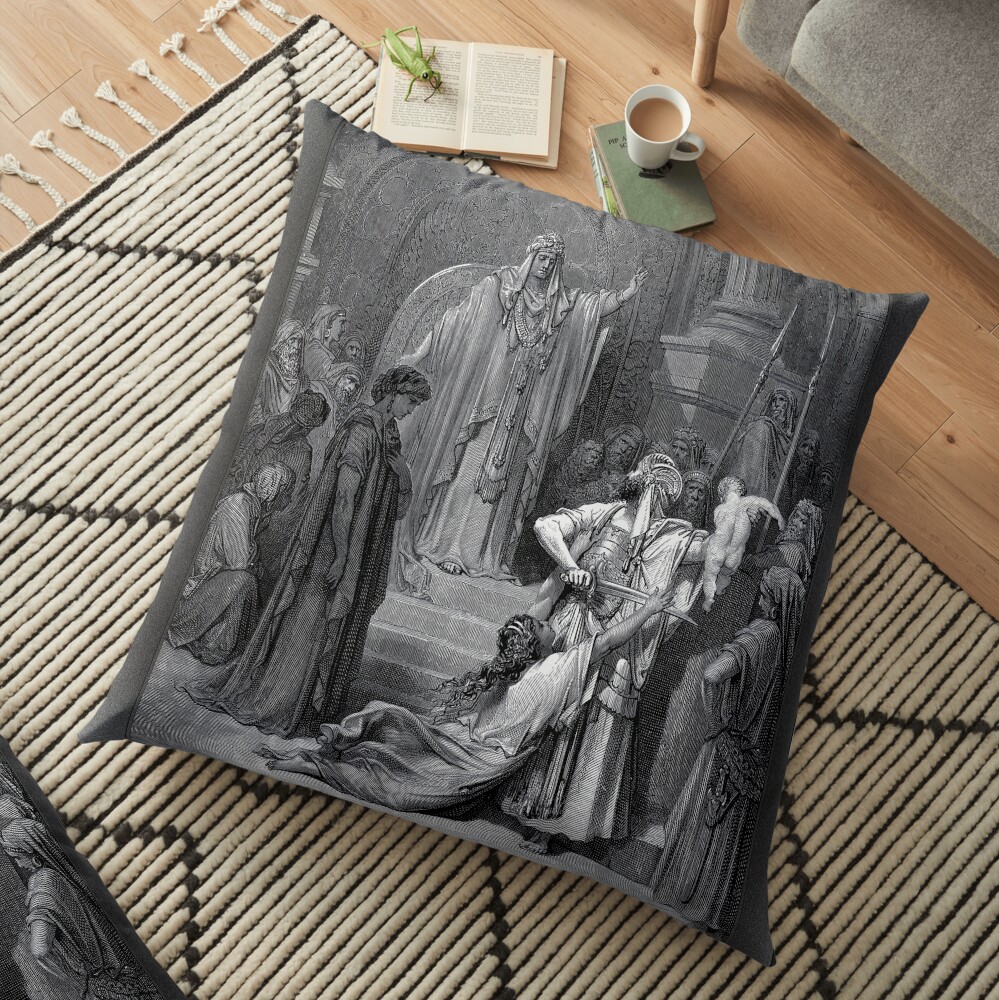
In order to solve this dilemma the women and the baby are brought before King Solomon to each plead their case; and to resolve this life altering dispute, King Solomon orders his soldier to cut the baby in half, and give each women a half of the baby.
Upon hearing this the true mother of the child tells the King that the other women can have the child and please not kill; and then Solomon orders the soldier to give the baby to the woman that is willing to give up the child to save its life, as this is the true mother of the baby.
The Judgment of Solomon scene shows the throne room with the members of the court and others along its perimeter and King Solomon standing in front of his throne dealing out the justice of his wisdom.
There at the front of the throne is a soldier holding the baby up in his left hand, and a sword in his right; while the true mother of the child is on her knees begging for the child’s life and the other woman just stands there looking down at her
The Judgment of Solomon is a remastered digital art old masters reproduction of a public domain image that is available as a strigaprentun á netinu.
Upplýsingar hér að neðan fengnar af Wikipedia.org
Doré was born in Strasbourg, Frakklandi og um aldur 5 var undrabarn listamaður; að búa til teikningar sem voru þroskaðar fram yfir hans ár. Þá á umr 12, hann byrjaði að höggva í stein, og af 15, hóf feril sinn sem skopteiknari fyrir franska blaðið Le journal pour rire.
Í upphafi var tréskurður aðalaðferð hans við listræna tjáningu á seinni hluta 1840 og snemma á 1850., gera nokkrar myndasögur, like Les Travaux d’Hercule (1847), Þrír misskildir og óánægðir listamenn (1851), Les Dés-agréments d’un voyage d’agrément (1851) and L’Histoire de la Sainte Russie (1854).
Doré vann síðan umboð til að sýna atriði úr bókum eftir Cervantes, Rabelais, Balzac, Milton, og Dante. He also illustrated “Gargantua et Pantagruel” inn 1854; þegar hann var bara 22 ára.
Í 1853 Doré var beðin um að myndskreyta verk Byrons lávarðar; og þessi umboð leiddi til viðbótarvinnu fyrir breska útgefendur, þar á meðal ný myndskreytt biblíu, og þremur árum síðar myndi hann framleiða 12 myndskreytingar á stærð við The Legend of The Wandering Jew, sem boðaði langvarandi gyðingahatur þess tíma, fyrir stutt ljóð sem Pierre-Jean de Béranger hafði dregið úr skáldsögu eftir Eugène Sue frá 1845.
During the 1860s Doré illustrated a French edition of Cervantes’s Don Quixote, og myndir hans af riddaranum og bónda sínum, Sancho Panza, eru orðnar svo frægar að þær hafa haft áhrif á síðari lesendur, listamenn, og sviðs- og kvikmyndaleikstjórar’ ideas of the physical “look” af persónunum tveimur.
He also illustrated an oversized edition of Edgar Allan Poe’s “The Raven”, viðleitni sem skilaði honum 30,000 frönkum frá útgefandanum Harper & Bræður í 1883.
Teikningar hans fyrir Biblíuna (1866) voru mjög vel heppnaðar, og inn 1867 Doré hélt stórsýningu á verkum sínum í London, sem leiddi til stofnunar Doré Gallery í Bond Street, London. Í 1869, Blanchard Jerrold, sonur Douglas William Jerrold, lagði til að þeir myndu vinna saman að heildarmynd af London.
Jerrold hafði fengið hugmyndina frá The Microcosm of London sem Rudolph Ackermann framleiddi, William Pyne, og Thomas Rowlandson (gefið út í þremur bindum frá 1808 til 1810). Doré skrifaði undir fimm ára samning við útgefendur Grant & Co sem fól í sér að hann dvaldi í London í þrjá mánuði á ári, og hann fékk háar upphæðir upp á 10.000 pund á ári fyrir verkefnið.
Þó Doré hafi aðallega verið frægur fyrir málverk sín á sínum tíma, og þó að þeir séu heimsþekktir allt til þessa dags, það eru tréskurðir hans og leturgröftur, eins og þeir sem hann gerði fyrir Jerrold, sem sýndi sig eru einstakir listrænir hæfileikar sem listamaður með einstaka sýn.