

Damen med sløret
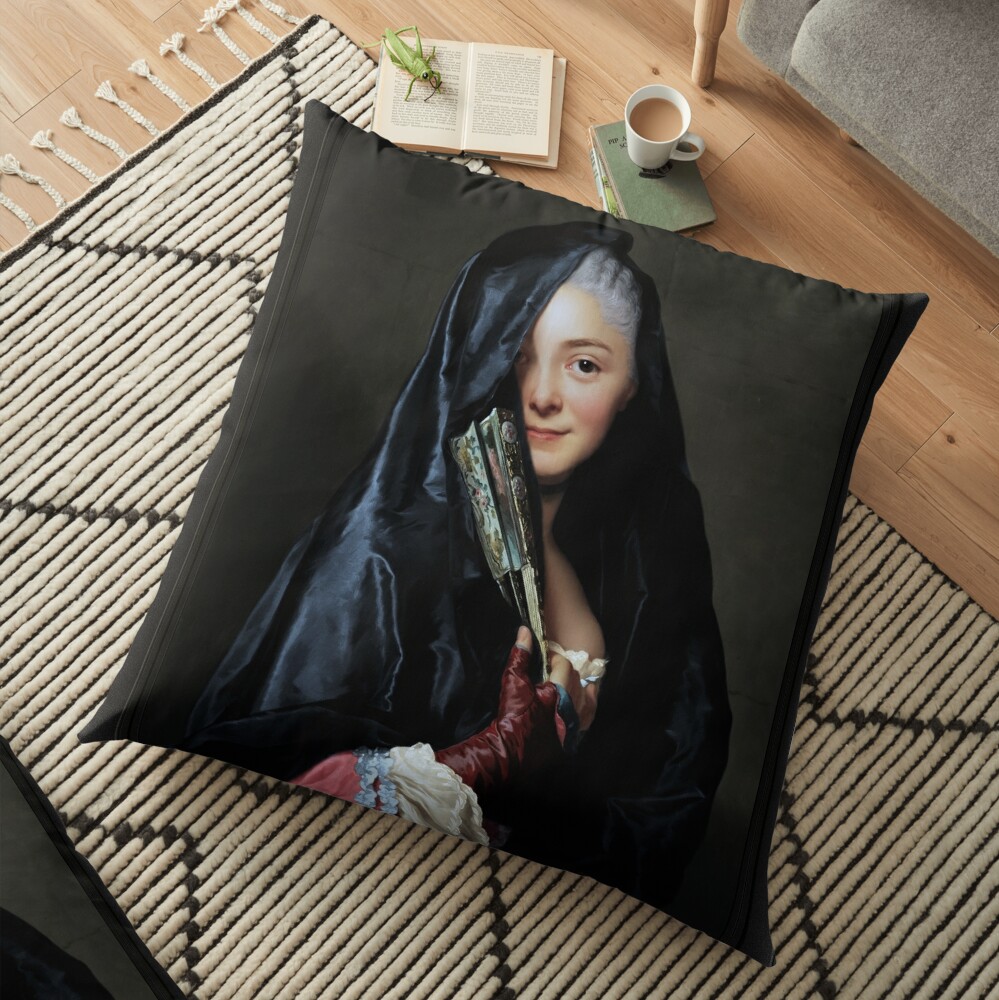
“Damen med sløret (kunstnerens hustru)” is a captivating portrait created by Swedish painter Alexander Roslin i 1768. Roslin, som er født i 1718 and died in 1793, was renowned for his skill in portraiture, and this work stands as a testament to his mastery. The subject of the painting is none other than the artist’s own wife, Marie Suzanne, who was often depicted by Roslin in several of his works. In this particular portrait, the artist captures his wife with an alluring and serene expression, her face partially veiled, adding an air of mystery and grace to the composition.
The painting’s subtle yet sophisticated tone is enhanced by Roslin’s delicate brushwork and the soft, almost ethereal quality he imparts to his subjects. The mood is one of quiet elegance and restrained sensuality, drawing the viewer into an intimate moment with the woman behind the veil. The composition is meticulously planned, with a focus on the textures of fabric, the play of light and shadow, and the precise rendering of the subject’s features. It is a classic example of the Rococo style, which was prominent in Europe during the 18th century. Roslin’s use of color, lys, and shadow exemplifies the Rococo’s emphasis on elegance, romance, and decorative detail.
Indholdsfortegnelse
Hovedemnet: The Artist’s Wife
At the heart of the painting stands the artist’s wife, who exudes an aura of calm and sophistication. Her gaze is direct and engaging, yet there is a soft mystery to her expression, partly due to the veil that covers her head. The veil is a significant element in the composition, as it creates an element of intrigue and lends an air of modesty and delicacy to the subject, while still allowing for a glimpse of her refined beauty. The artist has chosen to depict her not in an overtly dramatic pose, but rather in a natural, serene manner that suggests a quiet moment of reflection or contemplation.
Her attire is another striking aspect of the painting. She wears a luxurious gown, typical of the Rococo period, in which delicate fabrics such as silk and lace are used to create a sense of refinement and aristocratic elegance. The gown is adorned with rich folds and intricate details that showcase Roslin’s attention to fabric texture. The contrast between the flowing silk of the gown and the more rigid, structured nature of the veil enhances the visual depth of the painting, adding layers of texture and dimension to the composition.
Objekter: The Fan and Accessories
One of the most notable objects in the painting is the fan held by the subject. The fan is not only a fashionable accessory, but it also serves as a symbolic gesture of grace and refinement. Its position in the composition, near the subject’s face, subtly directs the viewer’s attention toward her face and adds to the overall sense of elegance. The fan’s intricate design, with its delicate patterns and textures, contrasts beautifully with the smooth sheen of the veil and the soft folds of the gown.
Another important detail is the gloved hand of the subject, which adds a touch of formal propriety and underscores the aristocratic nature of the painting. The gloves are richly textured, their deep red hue contrasting with the white lace trim of the gown. This attention to detail in both the clothing and accessories speaks to Roslin’s technical skill and his ability to render the material world with accuracy and beauty.
Terræn og baggrund
The background of the painting is kept simple and unobtrusive, with a muted, almost abstract color palette that ensures the viewer’s focus remains on the subject. The use of shadow and light in the backdrop is masterful, enhancing the depth of the portrait while keeping the overall composition elegant and restrained. The subtle darkness of the background also serves to highlight the subject’s face, creating a striking contrast between her illuminated features and the shadowy surroundings.
The lack of any overtly defined setting contributes to the intimacy of the portrait. By omitting detailed backgrounds or landscapes, Roslin places the emphasis solely on the figure and her attire, allowing her persona to take center stage. This approach was characteristic of many portrait artists of the time, as it emphasized the dignity and elegance of the sitter over their surroundings.
Stil og teknik
As with many of Roslin’s works, “Damen med sløret” exemplifies the Rococo style, which is known for its lightness, elegance, and elaborate detail. Brugen af blød, pastel colors and the fluid, graceful rendering of fabrics and textures is a hallmark of this style. The painting is filled with refined, delicate details, from the intricate lace trim of the gown to the subtle shading on the subject’s face, which conveys a sense of realism and three-dimensionality. Roslin’s mastery of light is evident in the way the soft light falls on the subject’s face, accentuating the softness of her features while also adding depth to the folds of her gown.
The artist’s brushwork is delicate yet assured, capturing both the textures of the materials and the inner calm of the subject. The veil itself is rendered with remarkable skill, the fabric appearing almost weightless, yet conveying a sense of richness and texture. This level of technical proficiency is one of the reasons why Roslin is considered one of the preeminent portrait painters of the 18th century.
Tema og humør
The overall theme of the portrait revolves around aristocratic grace and refinement, as well as the intimate relationship between the artist and his wife. The mood is one of quiet elegance, with an undercurrent of mystery. The veil, combined with the soft lighting and the elegant pose, suggests a hidden depth to the subject’s character, inviting the viewer to reflect on the identity and personality of the woman behind the portrait. This air of mystery is complemented by the subdued, almost introspective expression on her face, which draws the viewer into a private moment with the subject.
The portrait also speaks to the Rococo fascination with beauty, luksus, and the refinement of the aristocracy. By focusing on the details of the subject’s attire and accessories, Roslin not only portrays his wife but also captures the essence of the high-society world in which she moved.
Konklusion
“Damen med sløret” is a masterpiece of 18th-century portraiture that encapsulates the elegance, nåde, and technical precision of the Rococo period. Through his portrayal of his wife, Alexander Roslin creates a work that is both intimate and refined, drawing the viewer into a world of aristocratic beauty and quiet sophistication. Opmærksomheden på detaljer, the play of light and shadow, and the careful rendering of fabric and texture all contribute to the timeless quality of this work. It is a portrait that invites contemplation and appreciation of both the subject and the artist’s exceptional skill.
The Lady with the Veil er en remasteret digital kunst, gamle mestre reproduktion af et offentligt domæne billede, der er tilgængeligt som en lærred print online.
Kunstner Bio
Alexander blev født af sølægen Hans Roslin og hans kone Catherine Wertmüller i juli 15, 1718; og viste et tidligt talent for at tegne og male blev han sendt til Karlskrona, Sverige for at blive uddannet i tegning under admiralitetskaptajn Lars Ehrenbill (1697–1747), så han kunne blive flådetegner.
Det var i denne tid, han også begyndte at male miniaturer og skulle senere flytte til Stockholm, Sverige; som på det tidspunkt var blevet et intellektuelt og kunstnerisk centrum [på grund af dronning Christinas indsats (1626 – 1689 styret fra 1644 – 1654), som havde etableret bånd til Paris, Frankrig], og kom i en alder af seksten år i lære hos den svenske hofmaler Georg Engelhard Schröder (1684 – 1750); forbliver der studerer maleri indtil 1941, flytte til Gøteborg, og så Skåne året efter, hvor han opholdt sig de næste fire år.
Tynd ind 1745 Alexander forlod Sverige til Bayreuth, Tyskland efter at have modtaget en invitation til at arbejde for Frederick, Markgreve af Brandenburg-Kulmbach (1711 – 1763) af huset Hohenzollern og ældste søn af Georg Frederik Karl (1688 – 1735).
To år senere flyttede han til Italien for at studere de store mestres værker; flyttede senere samme år til Paris, Frankrig hvor er han ville slå sig ned og blive resten af sit liv.
I 1759 i en alder af 41 han giftede sig med pastelmaleren Marie-Suzanne Giroust (1734 – 1772) som havde seks børn med (tre sønner og tre døtre); og ville male et portræt af sin kone i 1768 med hende klædt på Bolognesisk mode i et stykke kaldet Lady with Veil; han malede også et dobbeltportræt af ham og hans kone, hun er afbildet arbejder i pasteller på et portræt af Henrik Wilhelm Peill (1730 – 1797), mens han peger på en guldæske, han fik af Peill i gave.
Mens han boede i Paris, Alexander blev en protegé for den franske maler François Boucher (1703 – 1770), hvilket hurtigt gjorde hans kunst på mode i Frankrig, og medvirke til, at han blev udvalgt som medlem af det franske kunstakademi, hvortil også hans kone hørte; snart at blive en af sin tids førende portrættegnere, værdsat mest for øvet gengivelse af luksuriøse stoffer og blide teint.
Selvom Alexander var en udlænding, blev han prisbelønnet 1765, en folkepension og en gratis lejlighed i Louuvre; og blev i det følgende år tildelt den kongelige Vasaorden af Sverige, hvorefter han blev kaldt Roslin le Chevalier eller Roslin ridderen.