

The Lady with the Veil
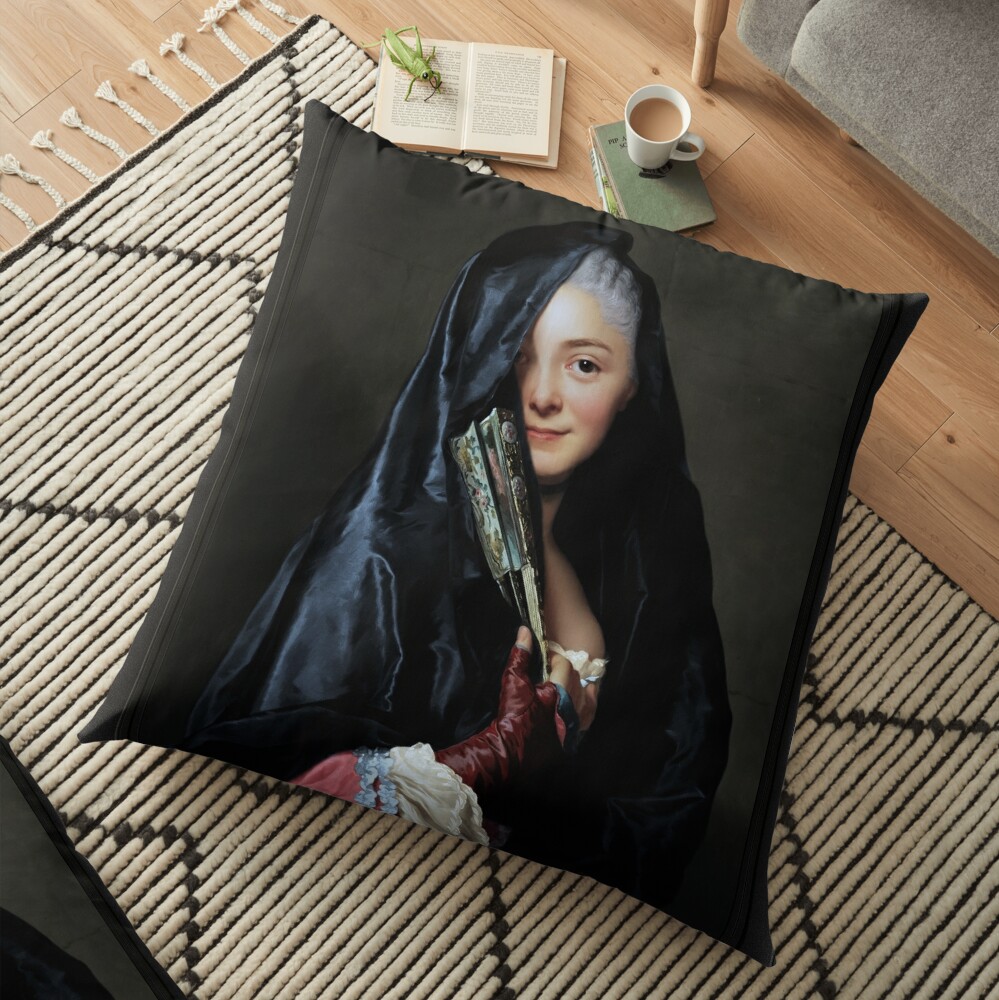
“The Lady with the Veil (the Artist’s Wife)” is a captivating portrait created by Swedish painter Александр Рослин в 1768. Roslin, кто родился в 1718 and died in 1793, was renowned for his skill in portraiture, and this work stands as a testament to his mastery. The subject of the painting is none other than the artist’s own wife, Marie Suzanne, who was often depicted by Roslin in several of his works. В этом конкретном портрете, the artist captures his wife with an alluring and serene expression, her face partially veiled, adding an air of mystery and grace to the composition.
The painting’s subtle yet sophisticated tone is enhanced by Roslin’s delicate brushwork and the soft, almost ethereal quality he imparts to his subjects. The mood is one of quiet elegance and restrained sensuality, drawing the viewer into an intimate moment with the woman behind the veil. The composition is meticulously planned, with a focus on the textures of fabric, Пьеса света и тени, and the precise rendering of the subject’s features. It is a classic example of the Rococo style, which was prominent in Europe during the 18th century. Roslin’s use of color, свет, and shadow exemplifies the Rococo’s emphasis on elegance, романтика, и декоративные детали.
Оглавление
Основная тема: The Artist’s Wife
At the heart of the painting stands the artist’s wife, who exudes an aura of calm and sophistication. Her gaze is direct and engaging, yet there is a soft mystery to her expression, partly due to the veil that covers her head. The veil is a significant element in the composition, as it creates an element of intrigue and lends an air of modesty and delicacy to the subject, while still allowing for a glimpse of her refined beauty. The artist has chosen to depict her not in an overtly dramatic pose, but rather in a natural, serene manner that suggests a quiet moment of reflection or contemplation.
Her attire is another striking aspect of the painting. She wears a luxurious gown, typical of the Rococo period, in which delicate fabrics such as silk and lace are used to create a sense of refinement and aristocratic elegance. The gown is adorned with rich folds and intricate details that showcase Roslin’s attention to fabric texture. The contrast between the flowing silk of the gown and the more rigid, structured nature of the veil enhances the visual depth of the painting, adding layers of texture and dimension to the composition.
Объекты: The Fan and Accessories
One of the most notable objects in the painting is the fan held by the subject. The fan is not only a fashionable accessory, but it also serves as a symbolic gesture of grace and refinement. Its position in the composition, near the subject’s face, subtly directs the viewer’s attention toward her face and adds to the overall sense of elegance. The fan’s intricate design, with its delicate patterns and textures, contrasts beautifully with the smooth sheen of the veil and the soft folds of the gown.
Another important detail is the gloved hand of the subject, which adds a touch of formal propriety and underscores the aristocratic nature of the painting. The gloves are richly textured, their deep red hue contrasting with the white lace trim of the gown. This attention to detail in both the clothing and accessories speaks to Roslin’s technical skill and his ability to render the material world with accuracy and beauty.
Местность и фон
The background of the painting is kept simple and unobtrusive, with a muted, almost abstract color palette that ensures the viewer’s focus remains on the subject. The use of shadow and light in the backdrop is masterful, enhancing the depth of the portrait while keeping the overall composition elegant and restrained. The subtle darkness of the background also serves to highlight the subject’s face, creating a striking contrast between her illuminated features and the shadowy surroundings.
The lack of any overtly defined setting contributes to the intimacy of the portrait. By omitting detailed backgrounds or landscapes, Roslin places the emphasis solely on the figure and her attire, allowing her persona to take center stage. This approach was characteristic of many portrait artists of the time, as it emphasized the dignity and elegance of the sitter over their surroundings.
Стиль и техника
As with many of Roslin’s works, “The Lady with the Veil” олицетворяет стиль рококо, which is known for its lightness, элегантность, and elaborate detail. Использование мягких, pastel colors and the fluid, graceful rendering of fabrics and textures is a hallmark of this style. The painting is filled with refined, delicate details, from the intricate lace trim of the gown to the subtle shading on the subject’s face, which conveys a sense of realism and three-dimensionality. Roslin’s mastery of light is evident in the way the soft light falls on the subject’s face, accentuating the softness of her features while also adding depth to the folds of her gown.
The artist’s brushwork is delicate yet assured, capturing both the textures of the materials and the inner calm of the subject. The veil itself is rendered with remarkable skill, the fabric appearing almost weightless, yet conveying a sense of richness and texture. This level of technical proficiency is one of the reasons why Roslin is considered one of the preeminent portrait painters of the 18th century.
Тема и настроение
The overall theme of the portrait revolves around aristocratic grace and refinement, as well as the intimate relationship between the artist and his wife. The mood is one of quiet elegance, with an undercurrent of mystery. Завеса, combined with the soft lighting and the elegant pose, suggests a hidden depth to the subject’s character, inviting the viewer to reflect on the identity and personality of the woman behind the portrait. This air of mystery is complemented by the subdued, almost introspective expression on her face, which draws the viewer into a private moment with the subject.
The portrait also speaks to the Rococo fascination with beauty, роскошь, and the refinement of the aristocracy. By focusing on the details of the subject’s attire and accessories, Roslin not only portrays his wife but also captures the essence of the high-society world in which she moved.
Заключение
“The Lady with the Veil” is a masterpiece of 18th-century portraiture that encapsulates the elegance, милость, and technical precision of the Rococo period. Through his portrayal of his wife, Alexander Roslin creates a work that is both intimate and refined, drawing the viewer into a world of aristocratic beauty and quiet sophistication. Внимание к деталям, Пьеса света и тени, and the careful rendering of fabric and texture all contribute to the timeless quality of this work. It is a portrait that invites contemplation and appreciation of both the subject and the artist’s exceptional skill.
The Lady with the Veil is a remastered digital art old masters reproduction of a public domain image that is available as a Все эти ремастерированные изображения старых мастеров цифрового искусства, являющиеся общественным достоянием, доступны как.
Биография художника
Александр родился в семье военно-морского врача Ганса Рослина и его жены Екатерины Вертмюллер в июле. 15, 1718; и проявив ранний талант к рисованию и живописи, его отправили в Карлскруну., Швецию будут обучать рисованию под руководством капитана Адмиралтейства Ларса Эренбилла (1697–1747 г.), чтобы он мог стать военно-морским чертежником.
Именно в это время он начал рисовать миниатюры, а позже переехал в Стокгольм., Швеция; который в то время стал интеллектуальным и художественным центром [благодаря усилиям королевы Кристины (1626 – 1689 правил из 1644 – 1654), который установил связи с Парижем, Франция], и в шестнадцать лет стал учеником шведского придворного художника Георга Энгельхарда Шредера. (1684 – 1750); оставаясь там, изучая живопись, пока 1941, переезд в Гетеборг, а затем Scania в следующем году, где он пробыл следующие четыре года.
Тонкий 1745 Александр уехал из Швеции в Байройт., Германия после получения приглашения на работу к Фредерику, Маркграф Бранденбург-Кульмбахский (1711 – 1763) из Дома Гогенцоллернов и старший сын Георга Фридриха Карла (1688 – 1735).
Через два года он переехал в Италию, чтобы изучать произведения великих мастеров.; затем позже в том же году переехал в Париж, Франция, где он поселится и останется на всю оставшуюся жизнь.
В 1759 в возрасте 41 он женился на художнице-пастельистке Мари-Сюзанне Жируст. (1734 – 1772) от которого было шестеро детей (три сына и три дочери); и нарисовал портрет своей жены в 1768 с ней, одетой в болонском стиле, в пьесе «Дама с вуалью».; он также написал двойной портрет себя и его жены., она изображена работающей пастелью над портретом Хенрика Вильгельма Пейля. (1730 – 1797), пока он указывает на золотую шкатулку, которую он получил от Пейля в подарок.
Пока жил в Париже, Александр стал протеже французского художника Франсуа Буше. (1703 – 1770), что быстро сделало его работы модными во Франции., и помочь ему быть выбранным членом Французской академии художеств., к которому принадлежала и его жена; вскоре стал одним из выдающихся портретистов своего времени., ценится главным образом за умелую передачу роскошных тканей и нежного цвета лица..
Хотя Александр был иностранцем, он был награжден в 1765, государственная пенсия и бесплатная квартира в Лувре; а в следующем году был награжден Швецией Королевским орденом Васа., после чего его стали называть Рослин ле Шевалье или Рослин-рыцарь..