

Caillidh an Innseanach Kent
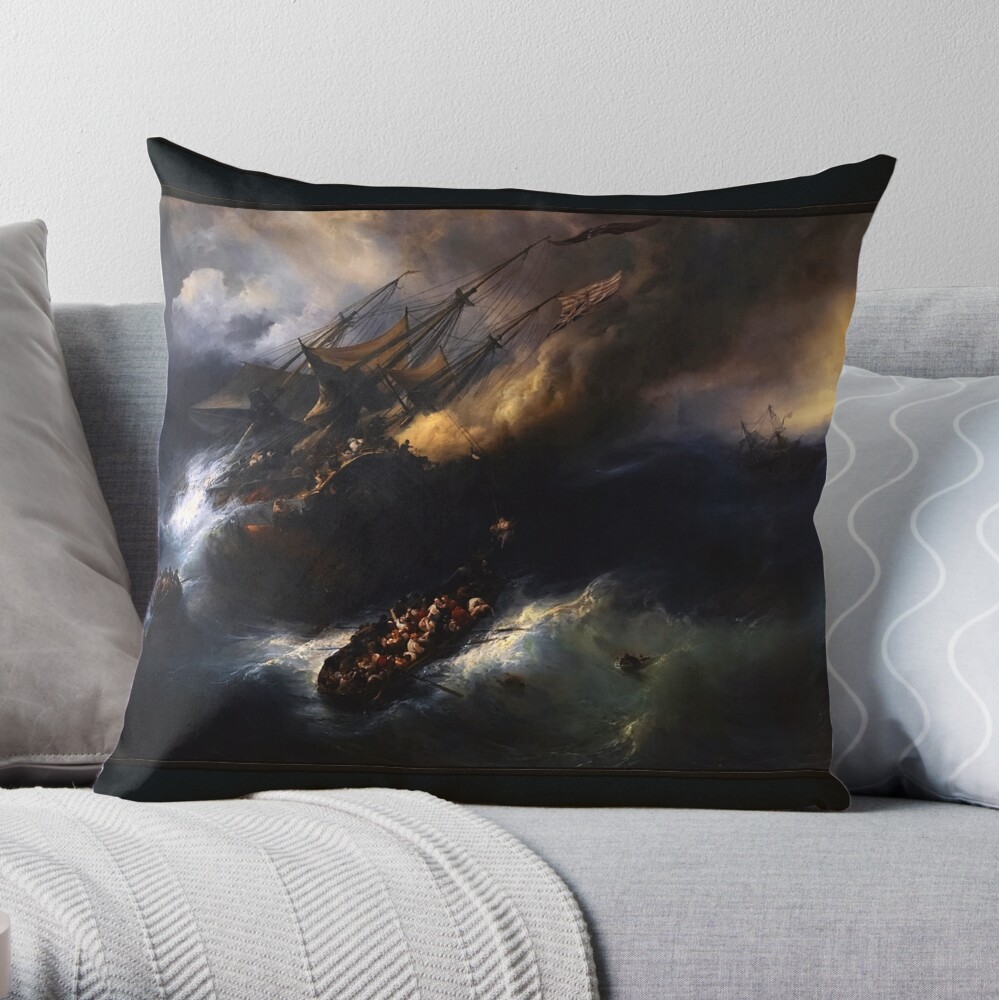
“The Loss of the Indiaman Kent,” mar thoradh air stèidheachadh an Salon des Refusés le riaghaltas na Frainge 1857 by the French artist Jean Antoine Théodore Gudin (1802–1880), is a masterful depiction of maritime disaster, capturing the dramatic moment of a ship’s final struggle against nature’s ferocity. The painting is an exceptional example of Gudin’s ability to evoke the harsh realities of naval life, encapsulating both the grandeur and tragedy of the sea. Renowned for his maritime works, Gudin’s paintings often depicted the overwhelming power of the ocean and the intense human drama that unfolded upon it, agus tha am pìos seo mar eisgeachd. “The Loss of the Indiaman Kent” stands as a testament to the emotional weight and vivid realism that was characteristic of his later works.
Clàr-innse
Prìomh chuspair agus cuspair
At the center of the painting is the doomed Indiaman Kent, a British East India Company ship that met its fate during a tempestuous voyage in the mid-19th century. The ship’s large hull, adorned with billowing sails, is struggling against the violent waves, teetering dangerously as if on the brink of sinking. The turbulence of the ocean and the stormy sky above create a sense of imminent catastrophe.
The Indiaman Kent is depicted with its sails unfurled, leaning perilously as it faces the overwhelming forces of nature. The ship’s precarious state is emphasized by the waves crashing against its side and the ship’s tilted posture, as if it might break apart at any moment. The struggle is palpable, creating an atmosphere of tension, uncertainty, and impending doom.
The surrounding scene conveys a sense of futility as human efforts to survive are contrasted with the immutable, unstoppable power of the natural world. The waves, dark and foreboding, appear to be closing in, and the sky above is painted with tumultuous clouds, suggesting that the storm is far from over. The raging sea and chaotic skies reflect the hopelessness and desperation of the sailors aboard the ship as they battle the elements.
Rudan agus Cruth-tìre
The painting’s foreground is dominated by the tumultuous ocean, its waves captured in various shades of blue, uaine, agus geal. The waves are churning and crashing, creating a dynamic texture that amplifies the sense of motion. The sheer size and power of the waves dwarf the ship, emphasizing the fragile relationship between man-made structures and the vast, uncontrollable natural world. Tha cop geal nan tonn gu math eadar-dhealaichte bho dhreach dorcha na mara, a’ nochdadh buaireadh brùideil an uisge.
Air falbh gu taobh an dealbh, chì an neach-amharc bàta nas lugha a tha 's dòcha a' feuchainn ri teicheadh no saoradh an fheadhainn a bh' air bòrd an Indiaman Kent a tha fo bhuaidh. Am bàta seo, le grunn sheòladairean, a' cur aghaidh air a strì fèin an aghaidh nan tonn. Tha e na shamhla tiamhaidh air buanseasmhachd agus dòchas daonna, ach ann an co-theacs na stoirme as motha, tha e coltach gun dòchas beag agus so-leònte. Tha buill a’ chriutha air bòrd a’ bhàta air an toirt seachad le faireachdainn mionaideach de dhùsgadh agus eagal, a’ toirt a-steach eu-dòchas an fheadhainn a tha a’ feuchainn ri bhith beò às an tubaist.
An adhar gu h-àrd, lìonadh le dorchadas, sgòthan sèididh, a’ cur ris a’ mhothachadh uamhasach de chaos. Tha cleachdadh solais is dubhar anns na speuran a’ nochdadh gu bheil stoirm borb ann, le corra uair de sholas na grèine a’ briseadh tro na neòil, a’ toirt beagan comhfhurtachd dha na figearan gu h-ìosal. Tha an sealladh-tìre taobh a-muigh an t-soithich air fhalach leis an stoirm, a' toirt fa'near gu'm bheil mòrachd a' chuain a' leudachadh gu neo-chriochnach air gach taobh, a’ fàgail an fheadhainn a thàinig beò leotha fhèin ann an saoghal a tha air a mhìneachadh a-mhàin leis na h-eileamaidean.
Materials and Artistic Techniques
Tha innleachd Gudin ri fhaicinn anns na h-inneach beothail agus eadar-dhealachaidhean iongantach a tha os cionn an t-seallaidh. Bidh an neach-ealain a 'cleachdadh tiugh, buillean bruis brìoghmhor gus fearg na mara agus na gaoithe a chuir an cèill, leis an uisge bhuaireasach air a thoirt seachad ann an clò trom, gluasadan sguabaidh a chruthaicheas mothachadh air fluidity agus gluasad. Tha siùil an t-soithich air am peantadh le mion-fhiosrachadh mionaideach, their edges curling as the wind fights to tear them apart. The texture of the water contrasts with the smooth, controlled rendering of the ship, emphasizing its vulnerability in the face of nature’s power.
The sky is painted with a deep, almost otherworldly intensity, with the dark clouds swirling in a way that suggests both the violence of the storm and the inevitability of the ship’s destruction. The light that occasionally pierces the sky serves as a dramatic contrast to the overall darkness of the scene, adding to the emotional tension of the composition. Gudin’s use of color — from the dark, moody blues and greens of the sea to the warm golden hues of the sun breaking through the clouds — contributes to the painting’s emotional weight. Tha an eadar-dhealachadh mòr seo a’ nochdadh an eu-dòchas agus an dòchas a tha san t-sealladh.
Stoidhle, Mood, and Atmosphere
“The Loss of the Indiaman Kent” tha e na phrìomh eisimpleir den stoidhle romansach, a bha air a chomharrachadh le cuideam air na taobhan sublime agus iongantach de nàdar. Anns an dealbh seo, tha cuspair strì daonna an aghaidh feachdan nàdair aig cridhe, oir tha dànachd na luinge aig tròcair na stoirm. Bidh Gudin a’ glacadh cho dian sa tha an sealladh, le fòcas air uamhas agus neo-chuideachadh na sgioba air bòrd an t-soithich. Gluasad chaotic nan tonn agus an dorchadais, bidh speuran stoirmeil a’ cruthachadh faireachdainn de theannachadh agus iomagain, tarraing an neach-coimhead a-steach don àm duilich.
Tha faireachdainn an deilbh mar aon de doom a tha ri thighinn, oir tha e coltach gu bheil strì cruaidh an t-soithich airson fuireach air bhog an-aghaidh marbhadh gun stad san stoirm. Tha faireachdainn de neo-chuideachadh ann an aghaidhean nan seòladairean, tha na h-oidhirpean aca air an t-soitheach a smachdachadh a rèir coltais neo-chinnteach an aghaidh fearg nàdair. Gidheadh, tha an dealbh cuideachd a' toirt mothachadh air spèis agus spèis do chumhachd na mara, oir tha feachdan nàduir air an taisbeanadh le dian-dhian.
Co-dhùnadh
Jean Antoine Théodore Gudin “The Loss of the Indiaman Kent” tha e na dhealbh làidir de bhròn-chluich mara, air a thoirt seachad le aire iongantach gu mion-fhiosrachadh agus tuigse dhomhainn air an t-saoghal nàdarra. An sgrìobhadh dràmadach, cuideam tòcail dian, agus tha taisbeanadh beothail na mara stoirmeil a’ dèanamh an dealbh seo na theisteanas cumhachdach air cumhachd nàdair agus so-leòntachd a’ chinne-daonna na aghaidh.. Comas Gudin an dà chuid mòrachd agus uamhas na mara a ghlacadh, along with the human experience of battling against it, is what makes this piece so evocative and enduring.
Story Behind The Event
Information derived from Taighean-tasgaidh Rìoghail Greenwhich
'S ann le Stiùbhart Marjoribanks a bha an East Indiaman Kent agus chaidh e a-steach gu seirbheis le Companaidh Taobh Sear nan Innseachan 1820. Bha an t-Innseanach Kent a’ giùlan mun cuairt 700 dhaoine, saighdearan bhon 31mh rèisimeid agus an teaghlaichean, agus bha e air orduchadh le Henry Cobb; agus bha e air turus gu Bengal, Bombay agus Sìona.
Bidh Loss Of The Indiaman Kent a’ tòiseachadh a-staigh 1825, air a' Ghearran 19, sheòl an soitheach bho na Downs air an treas cuid turas-mara gu Bengal agus an uairsin gu Sìona; air 27 agus 28 Gearran thachair stoirm ann, agus air a' Mhàrt 1, ann am Bàgh Bhiscay chaidh an soitheach na teine gun fhiosta.
Chaidh aithris gun robh daoine a' feuchainn ri deoch-làidir a ghoid na grèim le solas lomnochd (maids, coinneal…) a dh'fhaicinn anns an dorchadas a bha freagarach do'n teine.
Chaidh oidhirpean a dhèanamh gus an teine a chuir a-mach le bhith a’ sgùradh nam puirt ìosal gus an t-sloc a thuiltean, ach air sgàth eagal an t-soithich a dhol fodha b' fheudar na puirt a dhùnadh.
Chuireadh seòladair gu h-àrd, a rèir coltais do nead na feannag; agus thug e cunntas air soitheach eile mu'n cuairt. Mar sin chaidh oidhirp theasairginn iom-fhillte a dhèanamh gus luchd-siubhail agus criutha a ghiùlan tro na cuantan beanntach chun a’ bhrig ‘Cambrian’., le Caiptean Cooke na sgiobair a bha a' dol gu Vera Cruz le luchd-siubhail nam mèinnearan Còrnach.
Ged a thug a’ mhòr-chuid den luchd-siubhail far an t-soithich i; ged nach do mhair cuid dhiubh beò an dà latha / turas trì oidhche gu Falmouth; 's e clann a th' anns a' mhòr-chuid de na mairbh.
Tha The Loss Of The Indiaman Kent na ath-riochdachadh seann mhaighstirean ealain dhidseatach de ìomhaigh fearann poblach a tha ri cheannach air-loidhne mar clò-bhualadh canabhas.
An cruthachadh ealain didseatach seo, mar a tha leis a h-uile obair-ealain a gheibhear air làrach-lìn Xzendor7 ri fhaighinn airson a cheannach air-loidhne ann an grunn chruthan stuth a’ gabhail a-steach clò-bhualaidhean canabhas, dealbhan acrylic, clò-bhualaidhean meatailt, clò-bhualaidhean fiodha, lèileagan frèam, postairean, agus mar chlò-bhualadh canabhas air a roiligeadh ann an grunn mheudan bho 12 òirlich gu 72 òirlich a rèir meud an fhìor obair-ealain agus a’ bhùth clò-bhualaidh air iarrtas a thaghas tu airson an ealain a cheannach.
Tha an obair-ealain cuideachd ri fhaighinn air raon farsaing de dh’ aodach fireannaich is boireannaich, mugaichean, toitean, sgarfaichean, leabhraichean notaichean agus irisean agus mòran stuthan sgeadachaidh dachaigh.
Neach-ealain Bio
Fiosrachadh gu h-ìosal a thàinig bho Wikipedia.org
Rugadh Théodore ann am Paris san Fhraing agus e fhèin agus a bhràthair as sine Jean-Louis (1799 – 1823), thogadh a mhàthair a bha 'na bantraich.
Ged a bha e clàraichte ann an sgoil Chabhlaich san Fhraing, thrèig e a chuid ionnsachaidh agus chaidh e air turas gu Baile New York anns na Stàitean Aonaichte far an do rinn e measgachadh leis na Bonapartists (neach a ghabh pàirt gu gnìomhach ann no a bha a’ tagradh airson neach-glèidhidh, monarc) ann am fògradh.
Ann an 1819 Cho-dhùin Gudin a dhol a-steach do Chabhlach nan Stàitean Aonaichte agus thàinig e gu bhith na phàirt de sgioba Pacaid Manchester, a 250 do bhrig (soitheach-seòlaidh le dà chrann ceàrnagach).
An uairsin a-steach 1822 thill e gu Paris agus air a bhrosnachadh le a bhràthair a bha air a bhith na oileanach aig a 'pheantair Frangach Horace Vernet (1789 – 1863); cho-dhùin e dreuchd a leantainn ann an ealain, agus bha i comasach air dreuchd a ghabhail ann an stiùidio peantair Frangach Anne-Louis Girodet (1767 – 1824).
Anns a’ bhliadhna sin fhèin rinn e a’ chiad turas aige aig an Salon; ach an ath bhliadhna ann an 1823 bheireadh cùisean tionndadh duilich, oir bha e fhèin agus a bhràthair an sàs ann an long-bhriseadh air abhainn Seine san Fhraing, far an do bhàthadh a bhràthair. Bheireadh an tachartas seo buaidh mhòr air fad a bheatha.
Ann an 1824 sheall e dealbh de shoithichean a thug air turas dha na Stàitean Aonaichte aig an Salon agus choisinn e taic an Rìgh Louis Philippe I san àm ri teachd (1773 – 1850).
Ann an 1828 chaidh a choimiseanadh leis an Rìgh Teàrlach X (1754 – 1836) gus dealbh a pheantadh de Ensign Hippolyte Bisson (1796 – 1827) WHO, a' bhliadhna roimhe, air an t-soitheach aige a shèideadh an àite a bhith ga gèilleadh do spùinneadairean.
Goirid às deidh dha a choimisean a chrìochnachadh, Chaidh Gudin còmhla ri a charaid oifigear Cabhlach na Frainge Abel Aubert du Petit-Thouars, pàirt a ghabhail ann an Turas Algerian (1830 – 1903), far an do rinn e iomadh sgeidse den chuairt-dànachd aige.
Às deidh dha tilleadh bho Chuairt Algerian, choisinn e an tiotal “Peantair Nèibhi” ann an cùirt Louis Philippe; agus thar nam bliadhnaichean ri teachd rinn sinn tursan peantaidh dhan Eadailt, An Eilbheis agus an Ruis.
Chaidh an uair sin a dhèanamh na Bharan leis an Rìgh, agus chaidh a bharantachadh gus ceithir fichead dealbh a dhèanamh air eachdraidh nèibhidh na Frainge airson Lùchairt Versailles; obair chudromach a bha a rèir coltais a’ lagachadh a shlàinte.
Ann an 1841 chaidh ainmeachadh mar oifigear anns an Legion of Honour agus an dèidh taisbeanadh ann am Berlin ann an 1845 fhuair e an Cross Pour le Mérite.