

La perdita dell'Indiaman Kent
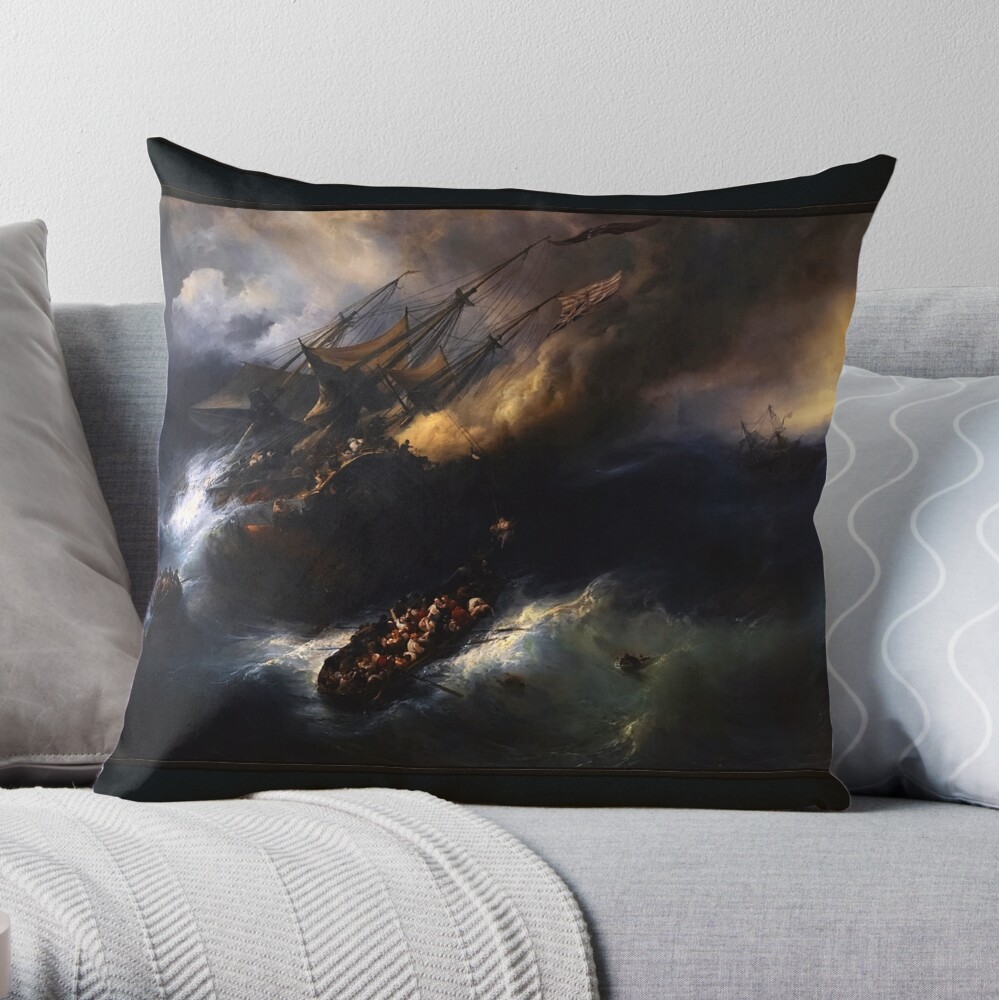
“The Loss of the Indiaman Kent,” dipinto dentro 1857 by the French artist Jean Antoine Théodore Gudin (1802–1880), is a masterful depiction of maritime disaster, capturing the dramatic moment of a ship’s final struggle against nature’s ferocity. The painting is an exceptional example of Gudin’s ability to evoke the harsh realities of naval life, encapsulating both the grandeur and tragedy of the sea. Renowned for his maritime works, Gudin’s paintings often depicted the overwhelming power of the ocean and the intense human drama that unfolded upon it, e questo pezzo non fa eccezione. “The Loss of the Indiaman Kent” stands as a testament to the emotional weight and vivid realism that was characteristic of his later works.
Sommario
Argomento principale e tema
At the center of the painting is the doomed Indiaman Kent, a British East India Company ship that met its fate during a tempestuous voyage in the mid-19th century. The ship’s large hull, adorned with billowing sails, is struggling against the violent waves, teetering dangerously as if on the brink of sinking. The turbulence of the ocean and the stormy sky above create a sense of imminent catastrophe.
The Indiaman Kent is depicted with its sails unfurled, leaning perilously as it faces the overwhelming forces of nature. The ship’s precarious state is emphasized by the waves crashing against its side and the ship’s tilted posture, as if it might break apart at any moment. The struggle is palpable, creating an atmosphere of tension, uncertainty, and impending doom.
The surrounding scene conveys a sense of futility as human efforts to survive are contrasted with the immutable, unstoppable power of the natural world. Le onde, dark and foreboding, appear to be closing in, and the sky above is painted with tumultuous clouds, suggesting that the storm is far from over. The raging sea and chaotic skies reflect the hopelessness and desperation of the sailors aboard the ship as they battle the elements.
Oggetti e terreno
The painting’s foreground is dominated by the tumultuous ocean, its waves captured in various shades of blue, verde, e bianco. The waves are churning and crashing, creating a dynamic texture that amplifies the sense of motion. The sheer size and power of the waves dwarf the ship, emphasizing the fragile relationship between man-made structures and the vast, uncontrollable natural world. The white foam of the waves contrasts sharply against the darker hues of the sea, illustrating the violent turbulence of the water.
Off to the side of the painting, the viewer can see a smaller boat that is perhaps trying to escape or rescue those aboard the stricken Indiaman Kent. This boat, manned by several sailors, faces its own struggle against the waves. It is a poignant symbol of human perseverance and hope, though in the context of the larger storm, it appears hopelessly small and vulnerable. The crew members aboard the boat are rendered with detailed expressions of concentration and fear, embodying the desperation of those trying to survive the disaster.
Il cielo sopra, filled with dark, swirling clouds, adds to the overwhelming sense of chaos. The use of light and shadow in the sky suggests the presence of a fierce storm, with the occasional streak of sunlight breaking through the clouds, offering little comfort to the figures below. The landscape beyond the ship is obscured by the storm, suggesting that the vastness of the ocean extends infinitely in all directions, leaving the survivors isolated in a world defined only by the elements.
Materials and Artistic Techniques
Gudin’s technique is evident in the vivid textures and dramatic contrasts that dominate the scene. The artist uses thick, expressive brushstrokes to convey the fury of the sea and the wind, with the turbulent water rendered in bold, sweeping motions that create a sense of fluidity and movement. The billowing sails of the ship are painted with intricate detail, their edges curling as the wind fights to tear them apart. The texture of the water contrasts with the smooth, controlled rendering of the ship, emphasizing its vulnerability in the face of nature’s power.
The sky is painted with a deep, almost otherworldly intensity, with the dark clouds swirling in a way that suggests both the violence of the storm and the inevitability of the ship’s destruction. The light that occasionally pierces the sky serves as a dramatic contrast to the overall darkness of the scene, adding to the emotional tension of the composition. Gudin’s use of color — from the dark, moody blues and greens of the sea to the warm golden hues of the sun breaking through the clouds — contributes to the painting’s emotional weight. This stark contrast highlights the despair and hope that coexist within the scene.
Stile, Umore, and Atmosphere
“The Loss of the Indiaman Kent” is a prime example of the Romantic style, which was characterized by an emphasis on the sublime and the dramatic aspects of nature. In questo dipinto, the theme of human struggle against the forces of nature is central, as the ship’s fate lies at the mercy of the storm. Gudin captures the emotional intensity of the scene, focusing on the terror and helplessness of the crew aboard the ship. The chaotic movement of the waves and the dark, stormy sky create a mood of tension and anxiety, drawing the viewer into the tragic moment.
The mood of the painting is one of impending doom, as the ship’s desperate struggle to stay afloat seems futile against the relentless onslaught of the storm. There is a sense of helplessness in the faces of the sailors, whose attempts to control the ship seem futile in the face of nature’s wrath. Ancora, the painting also conveys a sense of awe and respect for the power of the sea, as the forces of nature are portrayed with overwhelming intensity.
Conclusione
Jean Antoine Théodore Gudin’s “The Loss of the Indiaman Kent” is a compelling portrayal of maritime tragedy, rendered with remarkable attention to detail and a deep understanding of the natural world. The dramatic composition, intense emotional weight, and vivid rendering of the stormy sea make this painting a powerful testament to the power of nature and the vulnerability of mankind in the face of it. Gudin’s ability to capture both the majesty and the terror of the sea, along with the human experience of battling against it, is what makes this piece so evocative and enduring.
Story Behind The Event
Information derived from Musei Reali Greenwhich
L'East Indiaman Kent era di proprietà di Stewart Marjoribanks ed entrò in servizio con la Compagnia delle Indie Orientali 1820. L'Indiaman Kent era in giro 700 le persone, principalmente soldati del 31 ° reggimento e le loro famiglie, ed era comandato da Henry Cobb; ed era in viaggio nel Bengala, Bombay e la Cina.
La perdita dell'Indiaman Kent inizia nel 1825, in febbraio 19, la nave salpò dai Downs su un terzo viaggio nel Bengala e poi in Cina; durante il 27 e 28 febbraio ha incontrato una tempesta, e a marzo 1, nel Golfo di Biscaglia la nave ha preso fuoco accidentalmente.
È stato riferito che c'erano persone che cercavano di rubare liquori nella sua stiva usando una luce nuda (incontro, candela…) vedere nell'oscurità che era responsabile dell'incendio.
Furono compiuti sforzi per spegnere l'incendio affondando le porte inferiori per allagare la stiva, ma per paura che la nave affondasse i porti dovettero essere chiusi.
Un marinaio è stato inviato in alto, presumibilmente al nido di corvi; e ha segnalato un'altra nave nelle vicinanze. Così è stato intrapreso un complesso sforzo di salvataggio per traghettare passeggeri ed equipaggio attraverso i mari montuosi fino al brigantino "Cambrian", capitanata dal capitano Cooke che era diretta a Vera Cruz con i suoi passeggeri di minatori della Cornovaglia.
Anche se la maggior parte dei passeggeri è riuscita a scendere dalla nave; alcuni però non sono sopravvissuti ai due giorni / viaggio di tre notti a Falmouth; la maggior parte dei morti sono bambini.
The Loss Of The Indiaman Kent è una riproduzione rimasterizzata di vecchi maestri di arte digitale di un'immagine di dominio pubblico disponibile per l'acquisto online come stampa su tela.
Questa creazione di arte digitale, come tutte le opere d'arte che si possono trovare sul sito Web di Xzendor7 è disponibile per l'acquisto online in una varietà di formati di materiali, comprese le stampe su tela, stampe acriliche, stampe in metallo, stampe su legno, stampe incorniciate, manifesti, e come stampe su tela arrotolata in una varietà di formati da 12 pollici a 72 pollici a seconda delle dimensioni dell'opera d'arte effettiva e del negozio di stampa su richiesta da cui scegli di acquistare l'arte.
L'opera d'arte è disponibile anche su un'ampia gamma di abbigliamento da uomo e da donna, tazze, borse, sciarpe, quaderni e diari e tanti prodotti per l'arredamento della casa.
Biografia dell'artista
Informazioni di seguito derivate da Wikipedia.org
Théodore è nato a Parigi, in Francia, insieme a suo fratello maggiore Jean-Louis (1799 – 1823), sono stati allevati da sua madre che era una vedova.
Sebbene fosse iscritto a una scuola navale in Francia, abbandonò gli studi e intraprese un viaggio a New York City negli Stati Uniti dove si mescolò con i bonapartisti (persona che ha partecipato attivamente o sostenuto per il conservatore, monarchico) in esilio.
Nel 1819 Gudin decise di arruolarsi nella Marina degli Stati Uniti ed entrò a far parte dell'equipaggio del Manchester Packet, UN 250 il tuo brigantino (un veliero con due alberi a vele quadre).
poi in 1822 tornò a Parigi e ispirato da suo fratello che era diventato uno studente del pittore francese Horace Vernet (1789 – 1863); ha deciso di intraprendere una carriera nell'arte, e fu in grado di prendere posizione negli studi del pittore francese Anne-Louis Girodet (1767 – 1824).
Nello stesso anno debutta al Salon; ma proprio l'anno dopo 1823 le cose avrebbero preso una piega tragica, poiché lui e suo fratello furono coinvolti in un naufragio sulla Senna in Francia, dove suo fratello è annegato. Questo evento avrebbe avuto un profondo impatto su di lui per il resto della sua vita.
Nel 1824 espose al Salon un dipinto di navi che lo aveva portato in visita negli Stati Uniti e ottenne l'appoggio del futuro re Luigi Filippo I (1773 – 1850).
Nel 1828 fu incaricato dal re Carlo X (1754 – 1836) per dipingere una rappresentazione del guardiamarina Hippolyte Bisson (1796 – 1827) Chi, l'anno prima, aveva fatto saltare in aria la sua nave piuttosto che consegnarla ai pirati.
Poco dopo aver completato la sua commissione, Gudin è andato con il suo amico ufficiale della marina francese Abel Aubert du Petit-Thouars, partecipare alla spedizione algerina (1830 – 1903), dove ha realizzato numerosi schizzi della sua avventura.
Dopo il ritorno dalla spedizione algerina, gli è stato conferito il titolo di “Pittore della Marina” alla corte di Luigi Filippo; e negli anni successivi fece viaggi di pittura in Italia, Svizzera e Russia.
Fu quindi nominato barone dal re, ed è stato incaricato di produrre novanta dipinti sulla storia navale francese per il Palazzo di Versailles; un compito monumentale che apparentemente ha minato la sua salute.
Nel 1841 fu nominato ufficiale della Legion d'Onore e in seguito ad un'esibizione a Berlino nel 1845 ha ricevuto la Cross Pour le Mérite.