

The Loss Of The Indiaman Kent
“The Loss of the Indiaman Kent,” 描かれた 1857 by the French artist Jean Antoine Théodore Gudin (1802–1880), is a masterful depiction of maritime disaster, capturing the dramatic moment of a ship’s final struggle against nature’s ferocity. The painting is an exceptional example of Gudin’s ability to evoke the harsh realities of naval life, encapsulating both the grandeur and tragedy of the sea. Renowned for his maritime works, Gudin’s paintings often depicted the overwhelming power of the ocean and the intense human drama that unfolded upon it, そして、この作品も例外ではありません. “The Loss of the Indiaman Kent” stands as a testament to the emotional weight and vivid realism that was characteristic of his later works.
目次
主な主題とテーマ
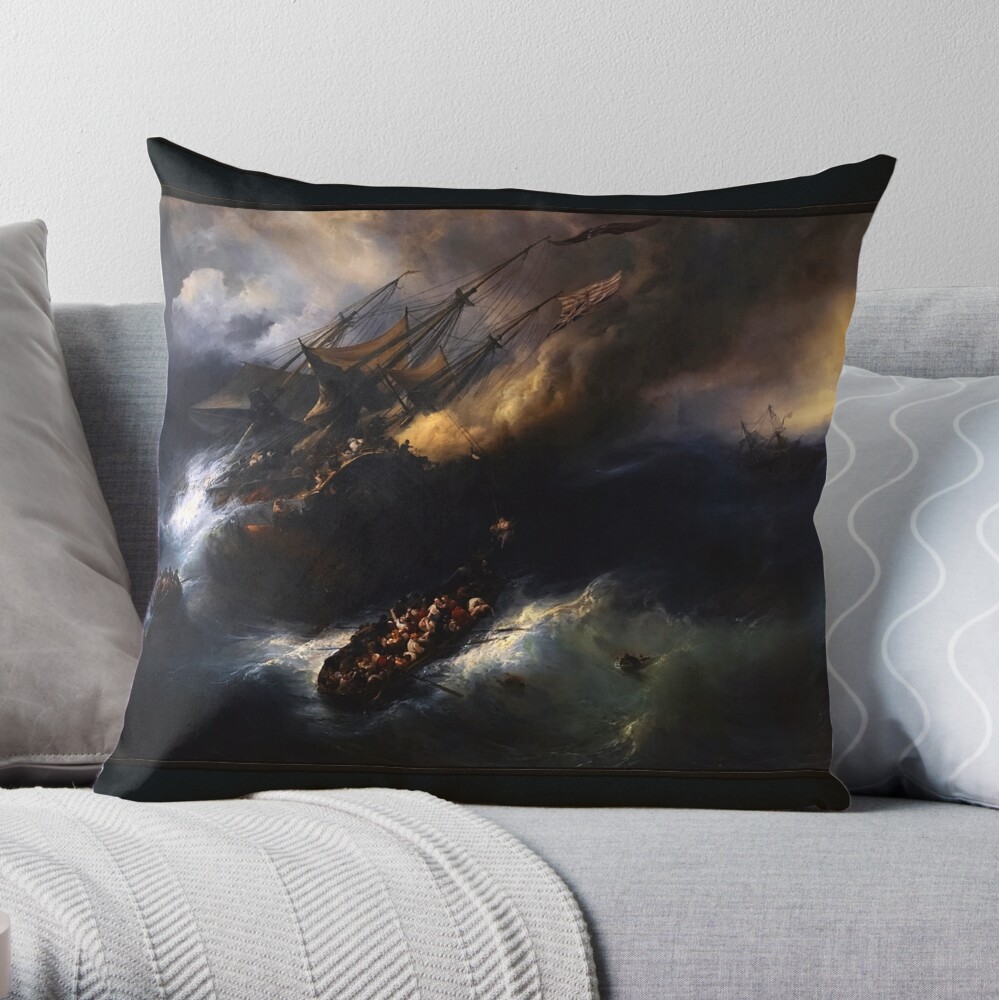
At the center of the painting is the doomed Indiaman Kent, a British East India Company ship that met its fate during a tempestuous voyage in the mid-19th century. The ship’s large hull, adorned with billowing sails, is struggling against the violent waves, teetering dangerously as if on the brink of sinking. The turbulence of the ocean and the stormy sky above create a sense of imminent catastrophe.
The Indiaman Kent is depicted with its sails unfurled, leaning perilously as it faces the overwhelming forces of nature. The ship’s precarious state is emphasized by the waves crashing against its side and the ship’s tilted posture, as if it might break apart at any moment. The struggle is palpable, creating an atmosphere of tension, uncertainty, and impending doom.
The surrounding scene conveys a sense of futility as human efforts to survive are contrasted with the immutable, unstoppable power of the natural world. The waves, dark and foreboding, appear to be closing in, and the sky above is painted with tumultuous clouds, suggesting that the storm is far from over. The raging sea and chaotic skies reflect the hopelessness and desperation of the sailors aboard the ship as they battle the elements.
オブジェクトと地形
The painting’s foreground is dominated by the tumultuous ocean, its waves captured in various shades of blue, 緑, そして白. The waves are churning and crashing, creating a dynamic texture that amplifies the sense of motion. The sheer size and power of the waves dwarf the ship, emphasizing the fragile relationship between man-made structures and the vast, uncontrollable natural world. The white foam of the waves contrasts sharply against the darker hues of the sea, illustrating the violent turbulence of the water.
Off to the side of the painting, the viewer can see a smaller boat that is perhaps trying to escape or rescue those aboard the stricken Indiaman Kent. This boat, manned by several sailors, faces its own struggle against the waves. It is a poignant symbol of human perseverance and hope, though in the context of the larger storm, it appears hopelessly small and vulnerable. The crew members aboard the boat are rendered with detailed expressions of concentration and fear, embodying the desperation of those trying to survive the disaster.
The sky above, filled with dark, 渦巻く雲, adds to the overwhelming sense of chaos. The use of light and shadow in the sky suggests the presence of a fierce storm, with the occasional streak of sunlight breaking through the clouds, offering little comfort to the figures below. The landscape beyond the ship is obscured by the storm, suggesting that the vastness of the ocean extends infinitely in all directions, leaving the survivors isolated in a world defined only by the elements.
Materials and Artistic Techniques
Gudin’s technique is evident in the vivid textures and dramatic contrasts that dominate the scene. The artist uses thick, expressive brushstrokes to convey the fury of the sea and the wind, with the turbulent water rendered in bold, sweeping motions that create a sense of fluidity and movement. The billowing sails of the ship are painted with intricate detail, their edges curling as the wind fights to tear them apart. The texture of the water contrasts with the smooth, controlled rendering of the ship, emphasizing its vulnerability in the face of nature’s power.
The sky is painted with a deep, almost otherworldly intensity, with the dark clouds swirling in a way that suggests both the violence of the storm and the inevitability of the ship’s destruction. The light that occasionally pierces the sky serves as a dramatic contrast to the overall darkness of the scene, adding to the emotional tension of the composition. Gudin’s use of color — from the dark, moody blues and greens of the sea to the warm golden hues of the sun breaking through the clouds — contributes to the painting’s emotional weight. This stark contrast highlights the despair and hope that coexist within the scene.
スタイル, 気分, と雰囲気
“The Loss of the Indiaman Kent” is a prime example of the Romantic style, which was characterized by an emphasis on the sublime and the dramatic aspects of nature. この絵の中で, the theme of human struggle against the forces of nature is central, as the ship’s fate lies at the mercy of the storm. Gudin captures the emotional intensity of the scene, focusing on the terror and helplessness of the crew aboard the ship. The chaotic movement of the waves and the dark, stormy sky create a mood of tension and anxiety, drawing the viewer into the tragic moment.
The mood of the painting is one of impending doom, as the ship’s desperate struggle to stay afloat seems futile against the relentless onslaught of the storm. There is a sense of helplessness in the faces of the sailors, whose attempts to control the ship seem futile in the face of nature’s wrath. まだ, the painting also conveys a sense of awe and respect for the power of the sea, as the forces of nature are portrayed with overwhelming intensity.
結論
Jean Antoine Théodore Gudin’s “The Loss of the Indiaman Kent” is a compelling portrayal of maritime tragedy, rendered with remarkable attention to detail and a deep understanding of the natural world. The dramatic composition, intense emotional weight, and vivid rendering of the stormy sea make this painting a powerful testament to the power of nature and the vulnerability of mankind in the face of it. Gudin’s ability to capture both the majesty and the terror of the sea, along with the human experience of battling against it, is what makes this piece so evocative and enduring.
Story Behind The Event
Information derived from Royal Museums Greenwhich
The East Indiaman Kent was owned by Stewart Marjoribanks and entered service with the East India Company in 1820. The Indiaman Kent was carrying about 700 人, mainly solders from the 31st regiment and their families, and it was commanded by Henry Cobb; and was on a voyage to Bengal, Bombay and China.
The Loss Of The Indiaman Kent starts off in 1825, on February 19, the ship sailed from the Downs on a third voyage to Bengal and then China; during the 27th and 28th of February it encountered a storm, and on March 1, in the Bay of Biscay the ship accidentally caught fire.
It was reported that there were individuals trying to steal liquor in her hold using a naked light (match, candle…) to see in the darkness that was responsible for the fire.
Efforts were made to put out the fire by scuttling the lower ports to flood the hold, but due to the fear of the ship sinking the ports had to be shut.
A sailor was sent aloft, presumably to the crows-nest; and reported another vessel in the vicinity. Thus a complex rescue effort was undertaken to ferry passengers and crew through the mountainous seas to the brig ‘Cambrian’, captained by Captain Cooke which was bound for Vera Cruz with its passengers of Cornish miners.
Though the majority of the passengers made it off the ship; some though did not survive the two day / three night journey to Falmouth; most of the dead being children.
The Loss Of The Indiaman Kent is a remastered digital art old masters reproduction of a public domain image that is available for purchase online as a キャンバスプリント.
このデジタルアート作品は、, Xzendor7 Web サイトにあるすべてのアートワークと同様に、キャンバス プリントを含むさまざまな素材形式でオンラインで購入できます。, アクリルプリント, メタルプリント, 木版, 額入りプリント, ポスター, ロール状のキャンバス プリントとしてさまざまなサイズでご利用いただけます。 12 インチから 72 インチは、実際のアートワークのサイズと、アートを購入するために選択したオンデマンド プリント ショップによって異なります。.
このアートワークは、幅広いメンズおよびウィメンズのアパレルでも利用可能です, マグカップ, トートバッグ, スカーフ, ノートや日記帳、その他多くの室内装飾品.
アーティスト略歴
以下の情報から派生 Wikipedia.org
テオドールはフランスのパリで生まれ、彼と兄のジャン・ルイは (1799 – 1823), 未亡人だった母親に育てられた.
彼はフランスの海軍学校に在籍していましたが、, 彼は学業を放棄し、アメリカのニューヨーク市への旅に出て、そこでボナパルティストと交流した。 (保守派に積極的に参加したか、保守派を擁護した人, 君主主義者) 亡命中.
に 1819 グディンはアメリカ海軍への入隊を決意し、マンチェスター・パケットの乗組員の一員となった, a 250 あなたの営倉 (2本の四角いマストを備えた帆船).
その後、 1822 彼はパリに戻り、フランスの画家オレス・ヴェルネの弟子となった兄にインスピレーションを受けました。 (1789 – 1863); 芸術の道に進むことを決意した, そしてフランスの画家アンヌ・ルイ・ジロデのアトリエに就職することができました。 (1767 – 1824).
同年、彼はサロンにデビューしました。; しかしその翌年に 1823 物事は悲劇的な方向へ進むだろう, 彼と彼の兄弟はフランスのセーヌ川で難破船に巻き込まれた。, 彼の兄が溺れた場所. この出来事は彼の残りの人生に重大な影響を与えることになる.
に 1824 彼は米国訪問に連れて行った船の絵をサロンに出品し、後の国王ルイ・フィリップ1世の支持を得た。 (1773 – 1850).
に 1828 彼はチャールズ10世からの依頼を受けました (1754 – 1836) ヒポリット・ビッソン少尉の肖像画を描く (1796 – 1827) WHO, 前の年, 彼の船を海賊に引き渡すのではなく爆破した.
任務を終えてすぐに, グディンは友人のフランス海軍士官アベル・オベール・デュ・プティ・トゥアールと一緒に行きました。, アルジェリア遠征に参加する (1830 – 1903), 彼はそこで冒険のスケッチを数多く描きました.
アルジェリア遠征から帰国後, 彼はの称号を授与された “海軍の画家” ルイ・フィリップの宮廷で; そしてその後数年間イタリアへ絵を描く旅行をしました, スイスとロシア.
その後、彼は国王によって男爵に叙せられました, ベルサイユ宮殿のためにフランス海軍の歴史に関する90点の絵画の制作を依頼されました; 明らかに彼の健康を損なう記念碑的な任務.
に 1841 彼はレジオンドヌール勲章の士官に任命され、ベルリンでの展示会の後、 1845 彼はプール・ル・メリット十字章を受賞した.