

Потеря Индиамена Кента
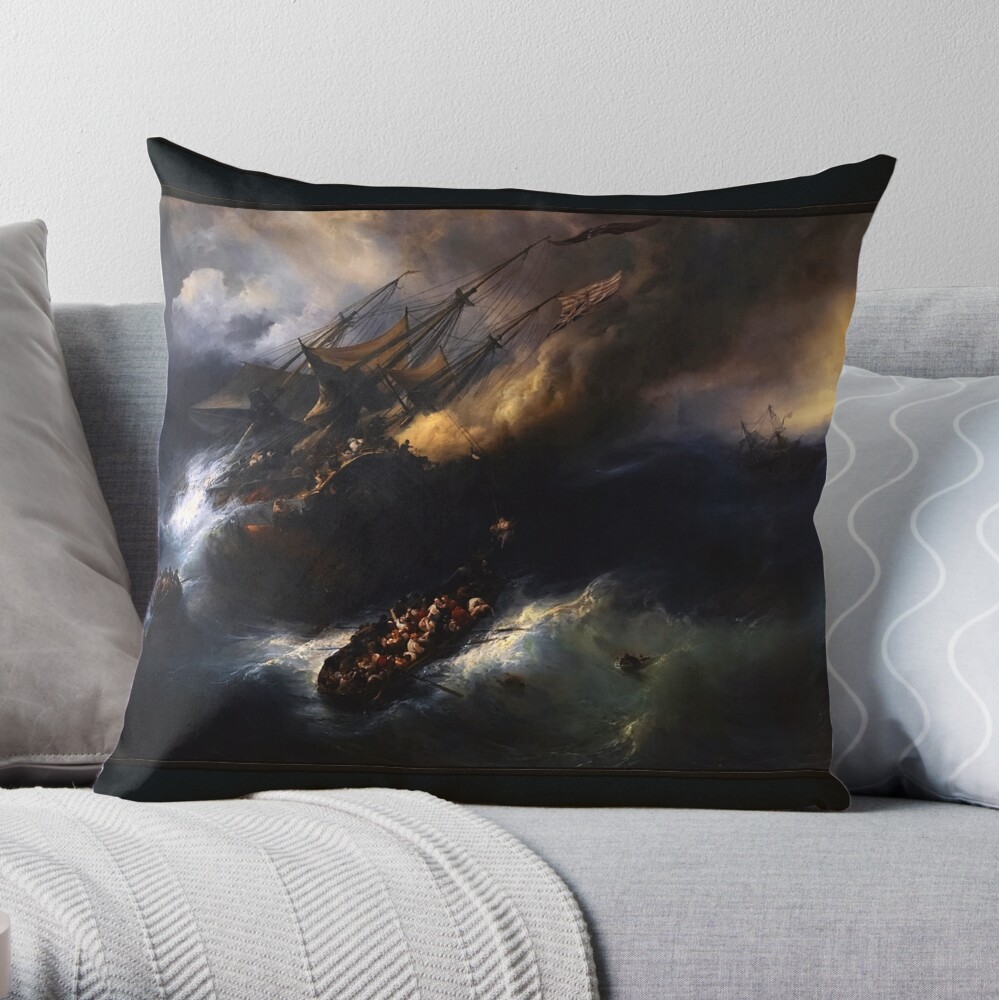
“The Loss of the Indiaman Kent,” окрашены в 1857 by the French artist Jean Antoine Théodore Gudin (1802–1880), is a masterful depiction of maritime disaster, capturing the dramatic moment of a ship’s final struggle against nature’s ferocity. The painting is an exceptional example of Gudin’s ability to evoke the harsh realities of naval life, encapsulating both the grandeur and tragedy of the sea. Renowned for his maritime works, Gudin’s paintings often depicted the overwhelming power of the ocean and the intense human drama that unfolded upon it, И эта часть не является исключением. “The Loss of the Indiaman Kent” stands as a testament to the emotional weight and vivid realism that was characteristic of his later works.
Оглавление
Main Subject and Theme
At the center of the painting is the doomed Indiaman Kent, a British East India Company ship that met its fate during a tempestuous voyage in the mid-19th century. The ship’s large hull, adorned with billowing sails, is struggling against the violent waves, teetering dangerously as if on the brink of sinking. The turbulence of the ocean and the stormy sky above create a sense of imminent catastrophe.
The Indiaman Kent is depicted with its sails unfurled, leaning perilously as it faces the overwhelming forces of nature. The ship’s precarious state is emphasized by the waves crashing against its side and the ship’s tilted posture, as if it might break apart at any moment. The struggle is palpable, creating an atmosphere of tension, uncertainty, and impending doom.
The surrounding scene conveys a sense of futility as human efforts to survive are contrasted with the immutable, unstoppable power of the natural world. Волны, dark and foreboding, appear to be closing in, and the sky above is painted with tumultuous clouds, suggesting that the storm is far from over. The raging sea and chaotic skies reflect the hopelessness and desperation of the sailors aboard the ship as they battle the elements.
Объекты и местность
The painting’s foreground is dominated by the tumultuous ocean, its waves captured in various shades of blue, зеленый, и белый. The waves are churning and crashing, creating a dynamic texture that amplifies the sense of motion. The sheer size and power of the waves dwarf the ship, emphasizing the fragile relationship between man-made structures and the vast, uncontrollable natural world. The white foam of the waves contrasts sharply against the darker hues of the sea, illustrating the violent turbulence of the water.
Off to the side of the painting, the viewer can see a smaller boat that is perhaps trying to escape or rescue those aboard the stricken Indiaman Kent. This boat, manned by several sailors, faces its own struggle against the waves. It is a poignant symbol of human perseverance and hope, though in the context of the larger storm, it appears hopelessly small and vulnerable. The crew members aboard the boat are rendered with detailed expressions of concentration and fear, embodying the desperation of those trying to survive the disaster.
Небо выше, filled with dark, кружащиеся облака, adds to the overwhelming sense of chaos. The use of light and shadow in the sky suggests the presence of a fierce storm, with the occasional streak of sunlight breaking through the clouds, offering little comfort to the figures below. The landscape beyond the ship is obscured by the storm, suggesting that the vastness of the ocean extends infinitely in all directions, leaving the survivors isolated in a world defined only by the elements.
Materials and Artistic Techniques
Gudin’s technique is evident in the vivid textures and dramatic contrasts that dominate the scene. The artist uses thick, expressive brushstrokes to convey the fury of the sea and the wind, with the turbulent water rendered in bold, sweeping motions that create a sense of fluidity and movement. The billowing sails of the ship are painted with intricate detail, their edges curling as the wind fights to tear them apart. The texture of the water contrasts with the smooth, controlled rendering of the ship, emphasizing its vulnerability in the face of nature’s power.
The sky is painted with a deep, almost otherworldly intensity, with the dark clouds swirling in a way that suggests both the violence of the storm and the inevitability of the ship’s destruction. The light that occasionally pierces the sky serves as a dramatic contrast to the overall darkness of the scene, adding to the emotional tension of the composition. Gudin’s use of color — from the dark, moody blues and greens of the sea to the warm golden hues of the sun breaking through the clouds — contributes to the painting’s emotional weight. This stark contrast highlights the despair and hope that coexist within the scene.
Стиль, Настроение, и атмосфера
“The Loss of the Indiaman Kent” is a prime example of the Romantic style, which was characterized by an emphasis on the sublime and the dramatic aspects of nature. На этой картине, the theme of human struggle against the forces of nature is central, as the ship’s fate lies at the mercy of the storm. Gudin captures the emotional intensity of the scene, focusing on the terror and helplessness of the crew aboard the ship. The chaotic movement of the waves and the dark, stormy sky create a mood of tension and anxiety, drawing the viewer into the tragic moment.
The mood of the painting is one of impending doom, as the ship’s desperate struggle to stay afloat seems futile against the relentless onslaught of the storm. There is a sense of helplessness in the faces of the sailors, whose attempts to control the ship seem futile in the face of nature’s wrath. Еще, the painting also conveys a sense of awe and respect for the power of the sea, as the forces of nature are portrayed with overwhelming intensity.
Заключение
Jean Antoine Théodore Gudin’s “The Loss of the Indiaman Kent” is a compelling portrayal of maritime tragedy, rendered with remarkable attention to detail and a deep understanding of the natural world. The dramatic composition, intense emotional weight, and vivid rendering of the stormy sea make this painting a powerful testament to the power of nature and the vulnerability of mankind in the face of it. Gudin’s ability to capture both the majesty and the terror of the sea, along with the human experience of battling against it, is what makes this piece so evocative and enduring.
Story Behind The Event
Information derived from Royal Museums Greenwhich
The East Indiaman Kent was owned by Stewart Marjoribanks and entered service with the East India Company in 1820. The Indiaman Kent was carrying about 700 люди, mainly solders from the 31st regiment and their families, and it was commanded by Henry Cobb; and was on a voyage to Bengal, Bombay and China.
The Loss Of The Indiaman Kent starts off in 1825, в феврале 19, the ship sailed from the Downs on a third voyage to Bengal and then China; during the 27th and 28th of February it encountered a storm, and on March 1, in the Bay of Biscay the ship accidentally caught fire.
It was reported that there were individuals trying to steal liquor in her hold using a naked light (match, candle…) to see in the darkness that was responsible for the fire.
Efforts were made to put out the fire by scuttling the lower ports to flood the hold, but due to the fear of the ship sinking the ports had to be shut.
A sailor was sent aloft, presumably to the crows-nest; and reported another vessel in the vicinity. Thus a complex rescue effort was undertaken to ferry passengers and crew through the mountainous seas to the brig ‘Cambrian’, captained by Captain Cooke which was bound for Vera Cruz with its passengers of Cornish miners.
Though the majority of the passengers made it off the ship; some though did not survive the two day / three night journey to Falmouth; most of the dead being children.
The Loss Of The Indiaman Kent is a remastered digital art old masters reproduction of a public domain image that is available for purchase online as a печать на холсте.
Это творение цифрового искусства, как и все произведения искусства, которые можно найти на веб-сайте Xzendor7, они доступны для покупки в Интернете в различных форматах материалов, включая отпечатки на холсте., акриловые принты, металлические отпечатки, гравюры на дереве, отпечатки в рамке, плакаты, и в виде рулонных отпечатков на холсте различных размеров от 12 дюймов до 72 дюймов в зависимости от размера фактического произведения искусства и магазина печати по запросу, в котором вы решили купить произведение искусства..
Эти изображения также доступны на широком ассортименте мужской и женской одежды., кружки, сумки, шарфы, блокноты и журналы, а также многие товары для домашнего декора..
Биография художника
Информация ниже получена из Wikipedia.org
Теодор родился в Париже, Франция, и он и его старший брат Жан-Луи (1799 – 1823), воспитывалась его матерью, которая была вдовой.
Хотя он был зачислен в военно-морскую школу во Франции., он бросил учебу и отправился в поездку в Нью-Йорк в Соединенных Штатах, где он смешался с бонапартистами. (человек, который либо активно участвовал, либо выступал за консервативное, монархист) в изгнании.
В 1819 Гуден решил присоединиться к ВМС США и стал частью экипажа Manchester Packet., а 250 тонна бриг (парусное судно с двумя мачтами с квадратным вооружением).
Затем в 1822 он вернулся в Париж и вдохновился своим братом, который стал учеником французского художника Горация Верне. (1789 – 1863); решил заняться искусством, и смог занять место в мастерской французского художника Анн-Луи Жироде. (1767 – 1824).
В том же году он дебютировал в Салоне; но уже в следующем году в 1823 дело приняло бы трагический оборот, поскольку он и его брат потерпели кораблекрушение на реке Сене во Франции., где его брат утонул. Это событие окажет на него глубокое влияние на всю оставшуюся жизнь..
В 1824 он выставил картину кораблей, которые доставили его с визитом в Соединенные Штаты, в Салоне и получил поддержку будущего короля Людовика-Филиппа I. (1773 – 1850).
В 1828 он был заказан королем Карлом X (1754 – 1836) написать изображение прапорщика Ипполита Биссона (1796 – 1827) Вечер в Le Pré Catelan, за год до, скорее взорвал свой корабль, чем сдал его пиратам.
Вскоре после выполнения его поручения, Гюден отправился со своим другом, офицером французского флота Абелем Обером дю Пети-Туар., участвовать в Алжирской экспедиции (1830 – 1903), где он сделал многочисленные зарисовки своего приключения.
После возвращения из Алжирской экспедиции, ему было присвоено звание “Военно-морской художник” при дворе Луи-Филиппа; и в течение следующих нескольких лет совершал живописные поездки в Италию., Швейцария и Россия.
Затем король сделал его бароном., и ему было поручено создать девяносто картин по истории французского военно-морского флота для Версальского дворца.; монументальная задача, которая явно подорвала его здоровье.
В 1841 он был назначен офицером Почетного легиона и после выставки в Берлине в 1845 он получил Крест Pour le Mérite.