

El Mirall
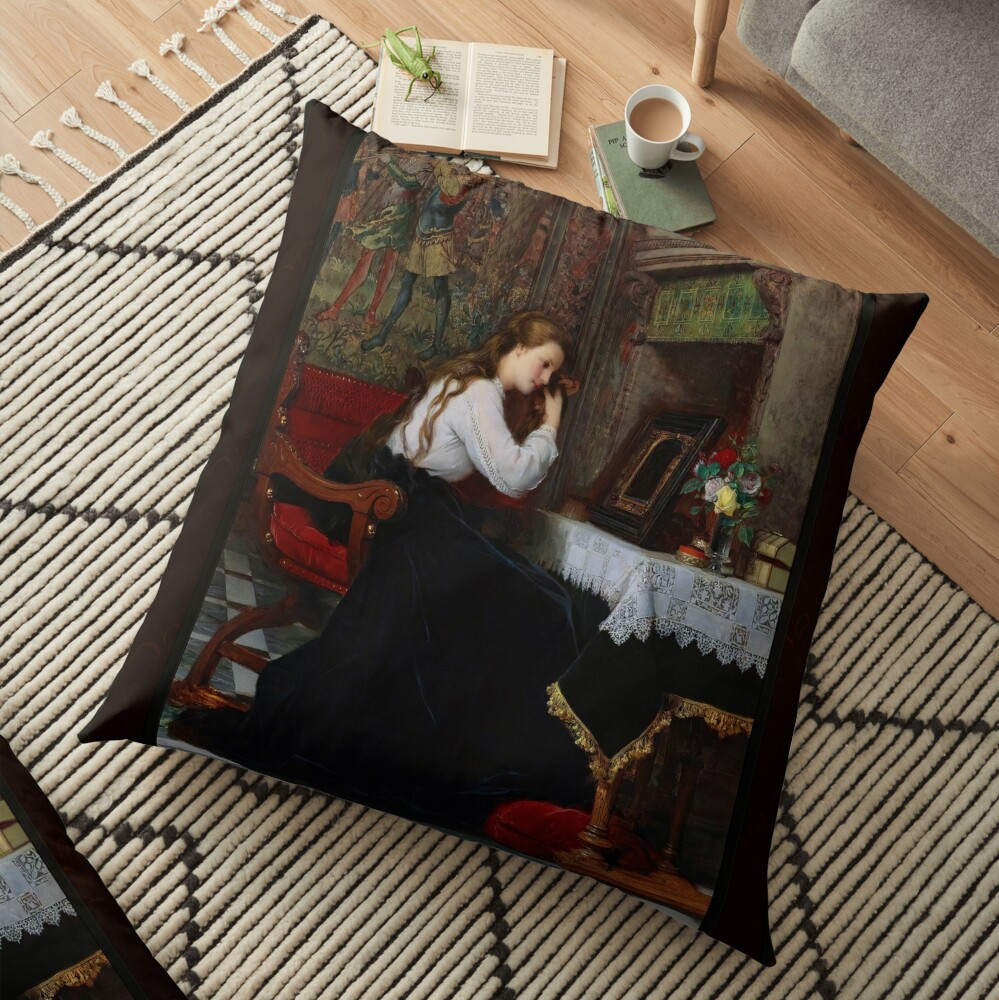
“El Mirall,” creat per Pierre-Charles Comte (1823 – 1895), és un retrat delicat i íntim d'una dona jove asseguda en un ambient refinat, ambient aristocràtic. Aquesta obra d'art és un exemple ben executat del romanticisme francès, un moviment que posava èmfasi en l'emoció, individualisme, i una connexió profunda amb la bellesa del passat. La composició, estat d'ànim, i l'atenció meticulosa al detall diuen molt sobre l'habilitat de l'artista per capturar els matisos de l'emoció humana, bellesa refinada, i la grandesa dels espais interiors propis de l'elit francesa del segle XIX.
Taula de continguts
Tema principal
Al cor d'això pintura de gènere és la dona jove, el perfil de la qual està lleugerament girat mentre mira el seu reflex en un mirall. Va vestida amb un vestit negre fluid, which contrasts beautifully with the white blouse peeking from beneath it. La seva llarga, wavy brown hair is gracefully arranged, with a few strands falling loosely around her face.
The soft lighting accentuates the delicacy of her features, lending an almost ethereal quality to her portrayal. The expression on her face, a mix of contemplation and slight melancholy, is the focal point of the painting. She is absorbed in her reflection, yet there is a sense of something beyond vanity; her gaze seems to suggest introspection or perhaps a memory of something distant.
The young woman’s pose, seated with one hand near her face, gently adjusting her hair, further enhances the impression of a delicate moment. The act of looking into the mirror, combined with the solitude of her figure, suggests a narrative of self-reflection, tant literal com metafòric. It is as if the artist is inviting the viewer into a private, personal moment, suspès en el temps.
Objectes i ambientació
La configuració de “El Mirall” is a richly adorned, luxurious interior, one that reflects the opulence of French aristocracy during the Romantic period. Darrere de la dona, a finely painted tapestry decorates the wall. The figures within the tapestry, though somewhat subdued in detail compared to the primary subject, help set the scene by adding depth and historical context.
The tapestry features two figures, likely noblemen or warriors, clothed in Renaissance-style garments. Their presence hints at a time of grandeur, reinforcing the social status and refinement of the young woman in the foreground.
In front of her, on the table, several objects are arranged with careful precision. A dark wood-framed mirror sits prominently, reflecting the woman’s image. Beside it is a small collection of decorative items: a vase filled with fresh flowers, a box, and a few books.
The arrangement of these objects suggests a world of calm leisure, where the subject is engaged in personal care or thought. Les flors, possibly roses, hint at themes of beauty and fragility, reinforcing the intimate mood of the painting.
The tablecloth beneath the objects is richly detailed, showcasing lace and embroidery that highlight the artist’s dedication to texture and visual richness. The fine linen contrasts with the darker tones of the furniture and the dress of the subject, drawing attention to the finer, softer aspects of the scene.
Terreny i Materials
The floor beneath the woman’s feet is decorated with intricate marble tiles, their geometric patterns creating a sense of space and movement within the room. The play of light across the polished surface emphasizes the luxurious nature of the setting and complements the opulence of the woman’s attire.
The space surrounding her is both intimate and expansive, with the marble floor suggesting a room that is grand yet private. L'ús del marbre, a classic material for high-society interiors, adds an extra layer of refinement to the piece.
The materials that Comte chose for this painting, particularly in the rendering of textures, showcase his ability to capture the play of light and shadow. The reflective surfaces of the mirror and the polished floor contrast with the softness of the woman’s clothing and the delicate details of the table. This interplay of surfaces, shiny, suau, and textured, creates a dynamic visual experience for the viewer.
Estil i estat d'ànim
The overall style of the painting is characterized by a fine attention to detail, a hallmark of 19th-century French Romanticism. Comte’s precise brushwork and careful layering of light and shadow bring the scene to life, infusing it with an almost photographic realism.
No obstant això, despite this realism, there is an undeniable romantic quality to the piece, from the contemplative nature of the subject to the luxurious surroundings. The mood evoked is one of quiet introspection, where the young woman’s moment of personal reflection seems to carry a sense of melancholy, as though she is lost in thought or caught in a moment of nostalgia.
La configuració, while grand, does not overshadow the subject; una mica, serveix per potenciar la seva solitud i contemplació tranquil·la. L'ús del color per part de l'artista és subtil però efectiu, fosc, els tons rics dominen el fons, mentre que la vestimenta de la dona és un profund contrast, dibuixant l'ull directament a la seva figura. La suau llum que il·lumina la seva cara i les mans afegeix una qualitat onírica, millorant encara més l'estat d'ànim romàntic general de la pintura.
Tema
En el seu nucli, “El Mirall” explora temes d'autoreflexió, bellesa, i el pas del temps. El mirall en si, com a objecte, esdevé un símbol d'autoconeixement, vanitat, i potser fins i tot un sentiment fugaç d'identitat. El compromís de la dona amb la seva pròpia imatge convida l'espectador a reflexionar sobre la naturalesa dels seus pensaments.
Simplement admira la seva aparença, o està contemplant alguna cosa més profunda? Her solitary pose and introspective gaze suggest that the painting’s true theme is one of personal introspection, where the mirror serves as a gateway not only to the physical self but to the emotional world beneath the surface.
Conclusió
Pierre-Charles Comte’s “El Mirall” is a masterful example of Romanticism, capturing both the elegance and the emotional depth of a young woman lost in the quiet moment of self-reflection. Through his detailed rendering of light, textura, and space, Comte transforms an ordinary scene of vanity into a poetic exploration of introspection. The combination of the luxurious interior, the graceful subject, and the reflective mirror creates a timeless narrative that speaks to the viewer’s sense of personal reflection and emotional connection.
Aquesta és una reproducció de mestres antics d'art digital remasteritzada d'una imatge de domini públic que està disponible com a impressió de llenç en línia..
Biografia de l'artista derivada de AskArt.com
Pierre was born on April 23,1823 in Lyon, France and studied under the French Painters Jean-Claude Bonnefond (1796 – 1860) and Joseph-Nicolas Robert-Fleury (1797 – 1890); and demonstrated a talent for creating grand historic paintings which was so popular at the time in France; and was encouraged by his teachers to focus in this area of art.
However Pierre was also very gifted at creating intimate genre scenes the depicted the Medieval and Renaissance periods that captured the everyday activities of life, that many people could relate to, since it wasn’t much different then the way people were living at the time.