

The Monuments of Paris (Minnismerki Parísar) c1789
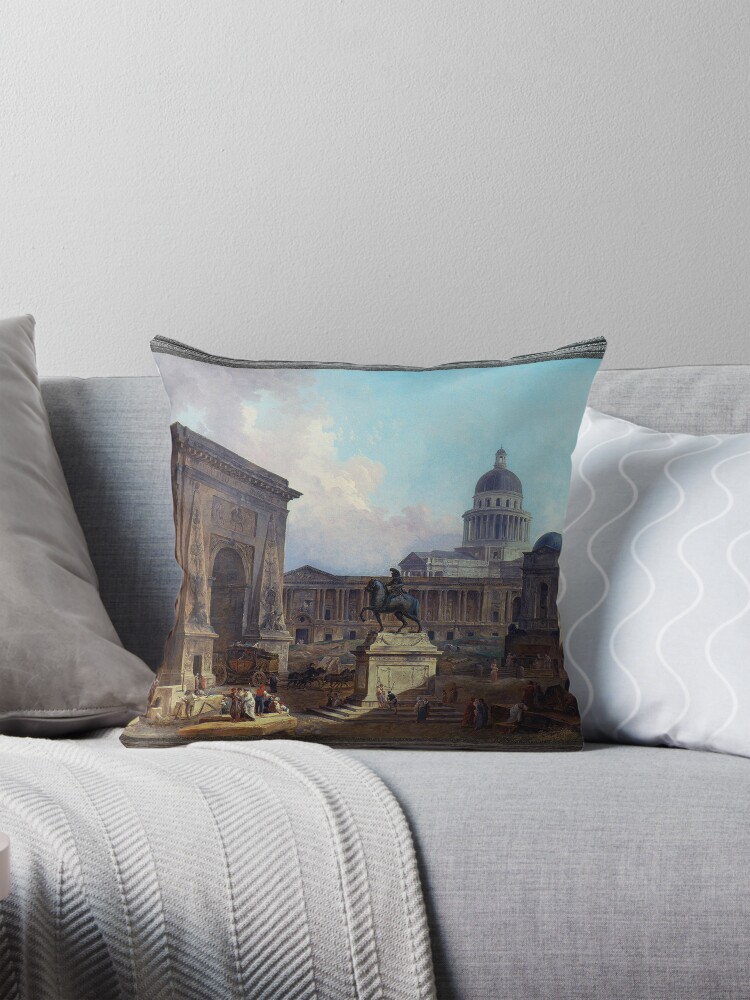
“The Monuments of Paris” (Minnismerki Parísar), málað í 1789 eftir franska listamanninn Hubert Róbert (1733 – 1808), is a magnificent example of classical landscape painting that showcases the enduring beauty and grandeur of Parisian architecture in a moment frozen in time. A well-known painter during the French Enlightenment period, Robert was celebrated for his historical and picturesque views of both real and imagined ruins, creating a sense of timelessness that evokes nostalgia for a lost era. This work is one of his many contributions to the genre of “capricci,” a type of landscape that often combines elements of actual buildings with imaginative ruins, offering a contemplative vision of what was, what could have been, and what remains.
Efnisyfirlit
Aðalefni og samsetning
The central focus of the painting is an imposing Roman-style arch, reminiscent of the iconic triumphal arches of the Roman Empire. This monumental arch, which stands boldly in the foreground, is not only the primary subject of the artwork but also serves as a symbol of grandeur, sögu, and human achievement. The arch’s weathered stone surface, carved with intricate reliefs, suggests a narrative of past glory and civilization. It is strategically positioned in the center of the composition, anchoring the viewer’s eye and creating a sense of balance within the artwork.
To the left of the arch, we see a regal statue of a horse-mounted figure, perhaps a historical leader or emperor, adding further grandeur and historical weight to the scene. This figure, rendered in exquisite detail, contrasts with the surrounding crumbling ruins, heightening the sense of both imperial magnificence and the inevitable passage of time. The figure appears to watch over the decaying remnants of what once was, capturing the viewer’s imagination with the juxtaposition of human strength against nature’s inexorable erosion.
The background of the painting is dominated by the stately dome of a neoclassical building, which stands as a beacon of human achievement and architectural skill. The building’s grand dome is flanked by columns, and the entire structure seems to radiate a sense of permanence and majesty. It contrasts with the surrounding ruins, reinforcing the theme of lost grandeur. This building, possibly meant to represent the Pantheon or another significant structure in Paris, plays a crucial role in emphasizing the temporal nature of empires and architectural endeavors.
Landsvæði, Efni, and Texture
The terrain depicted in “The Monuments of Paris” is one of uneven surfaces and scattered remnants. Large stones and broken columns are strewn across the foreground, as if the scene captures the aftermath of some historical event. These fallen fragments symbolize the decay of once-great civilizations, inviting reflection on the fragility of human accomplishments. The rocks, though broken, still retain their monumental forms, serving as a reminder that while physical structures may crumble, their historical and artistic legacies endure in the collective memory.
The artist’s use of materials is masterful, with delicate brushwork that gives texture and depth to the scene. The stones of the arch and the statue possess a tactile quality, almost inviting the viewer to reach out and touch their weathered surfaces. The soft light that bathes the scene enhances the sense of realism, casting long shadows that suggest the passing of time. The ruins themselves, bathed in the golden light of either dawn or dusk, seem to take on a melancholic beauty, further enhancing the mood of nostalgic reflection that permeates the painting.
Í fjarska, we see a view of the city that seems both timeless and dreamlike. The buildings rise in the background, but the soft haze of the atmosphere gives them an ethereal quality, as if the city is at once real and imaginary. This blending of the tangible and the intangible further underscores the Romantic ideals of Robert’s time—ideas centered around emotion, nostalgíu, and the sublime.
Stíll, Þema, og skap
The style of Hubert Robert’s “The Monuments of Paris” is firmly rooted in the neoclassical tradition, but it also hints at a romantic interpretation of the ruins and the passage of time. While the painting’s composition, sjónarhorn, and attention to architectural detail adhere to the principles of neoclassical art, Robert imbues the scene with an emotional depth that suggests a more romantic vision. The juxtaposition of monumental ruins with majestic, still-standing buildings elicits a sense of melancholy, as the viewer is reminded of the impermanence of human achievement. The mood is one of reflection and reverence for the past, combined with an acknowledgment of the inevitable decline of all things.
The theme of decay and renewal is prevalent throughout the painting, emphasizing the transient nature of civilizations. By positioning the monument in a ruinous context, Robert invites contemplation about the fleeting nature of power and the enduring qualities of art and architecture. The contrast between the ruined foreground and the still-standing architectural structures hints at the possibility of regeneration, suggesting that even in decay, there is beauty to be found.
The soft lighting and gentle color palette, featuring warm tones of ochre, brown, and golden hues, further enhance the painting’s nostalgic and contemplative mood. The carefully rendered details of the scene evoke a sense of reverence for both the past and the natural world, giving the viewer a chance to pause and reflect on the passing of time.
Þetta er lagfærð stafræn list af gömlum meistara eftirgerð af mynd í almenningseign sem er fáanleg sem Rúlluð striga prentun á netinu.
Listamaður Bio
Fyrir neðan upplýsingar fengnar frá Wikipedia.org
Hubert Robert fæddist í París í 1733. Faðir hans, Nicolas Róbert, var í þjónustu François-Joseph de Choiseul, Marquis de Stainville, leiðandi diplómat frá Lorraine. Ungur Robert lauk námi hjá jesúítum við Collège de Navarre í 1751 og kom inn á stofu myndhöggvarans Michel-Ange Slodtz sem kenndi honum hönnun og sjónarhorn en hvatti hann til að snúa sér að málverkinu. Í 1754 hann fór til Rómar í lest Étienne-François de Choiseul, sonur vinnuveitanda föður síns, sem hafði verið útnefndur sendiherra Frakklands og yrði utanríkisráðherra Lúðvíks XV. 1758.
Hann var ellefu ár í Róm, ótrúlega langur tími; eftir að embættisheimili unga listamannsins við frönsku akademíuna í Róm rann út, hann framfleytti sér af verkum sem hann framleiddi fyrir kunnáttumenn í heimsókn eins og abbé de Saint-Non, sem fór með Robert til Napólí í apríl 1760 að heimsækja rústir Pompeii. Marquis de Marigny, forstjóri Bâtiments du Roi fylgdist vel með þróun hans í bréfaskiptum við Natoire, forstöðumaður frönsku akademíunnar, sem hvatti lífeyrisþega til að skissa utandyra, úr náttúrunni: Róbert þurfti enga hvatningu; teikningar úr skissubókum hans skjalfesta ferðir hans: Villa d'Este, Caprarola.
Útsýni yfir höfnina í Rippeta í Róm, c. 1766, showing the Ancient Roman Pantheon next to an imaginary port
Andstæðan milli rústa Rómar til forna og lífs síns tíma vakti mikinn áhuga hans. Hann vann um tíma í vinnustofu Pannini, en áhrif þeirra má sjá í Imaginary View of the Ruined Louvre Gallery (mynd). Róbert eyddi tíma sínum í félagsskap ungra listamanna í hringnum Piranesi, sem rómantískt gróin rústir höfðu svo mikil áhrif á hann að hann fékk viðurnefnið Robert des ruines. Albúmin með skissum og teikningum sem hann setti saman í Róm gáfu honum myndefni sem hann vann í málverk allan sinn feril.