

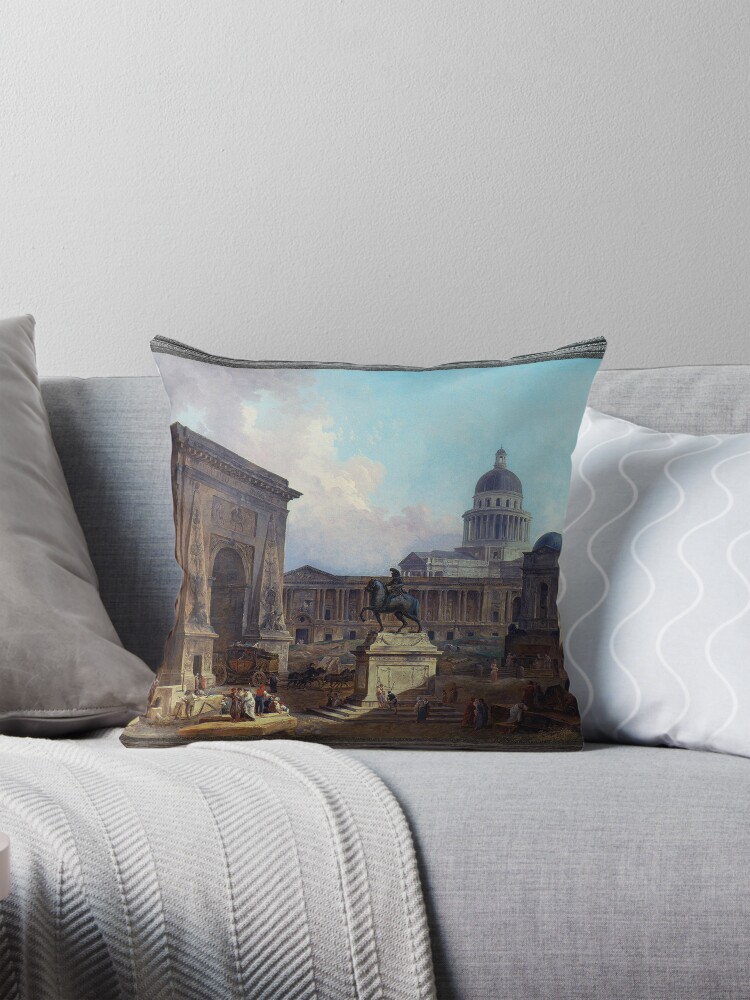
Os Monumentos de Paris (Os Monumentos de Paris) c1789
“Os Monumentos de Paris” (Os Monumentos de Paris), pintado em 1789 do artista francês Huberto Roberto (1733 – 1808), é um magnífico exemplo de pintura de paisagem clássica que mostra a beleza e a grandeza duradouras da arquitetura parisiense num momento congelado no tempo. Um pintor conhecido durante o período do Iluminismo francês, Robert foi celebrado por suas vistas históricas e pitorescas de ruínas reais e imaginárias., criando uma sensação de atemporalidade que evoca nostalgia de uma era perdida. Este trabalho é uma de suas muitas contribuições para o gênero de “caprichos,” um tipo de paisagem que muitas vezes combina elementos de edifícios reais com ruínas imaginativas, oferecendo uma visão contemplativa do que foi, o que poderia ter sido, e o que resta.
Índice
Assunto Principal e Composição
The central focus of the painting is an imposing Roman-style arch, reminiscent of the iconic triumphal arches of the Roman Empire. This monumental arch, which stands boldly in the foreground, is not only the primary subject of the artwork but also serves as a symbol of grandeur, história, and human achievement. The arch’s weathered stone surface, carved with intricate reliefs, suggests a narrative of past glory and civilization. It is strategically positioned in the center of the composition, anchoring the viewer’s eye and creating a sense of balance within the artwork.
To the left of the arch, we see a regal statue of a horse-mounted figure, perhaps a historical leader or emperor, adding further grandeur and historical weight to the scene. Esta figura, rendered in exquisite detail, contrasts with the surrounding crumbling ruins, heightening the sense of both imperial magnificence and the inevitable passage of time. The figure appears to watch over the decaying remnants of what once was, capturing the viewer’s imagination with the juxtaposition of human strength against nature’s inexorable erosion.
The background of the painting is dominated by the stately dome of a neoclassical building, which stands as a beacon of human achievement and architectural skill. The building’s grand dome is flanked by columns, and the entire structure seems to radiate a sense of permanence and majesty. It contrasts with the surrounding ruins, reinforcing the theme of lost grandeur. This building, possibly meant to represent the Pantheon or another significant structure in Paris, plays a crucial role in emphasizing the temporal nature of empires and architectural endeavors.
Terreno, Materiais, and Texture
The terrain depicted in “Os Monumentos de Paris” is one of uneven surfaces and scattered remnants. Large stones and broken columns are strewn across the foreground, as if the scene captures the aftermath of some historical event. These fallen fragments symbolize the decay of once-great civilizations, inviting reflection on the fragility of human accomplishments. The rocks, though broken, still retain their monumental forms, serving as a reminder that while physical structures may crumble, their historical and artistic legacies endure in the collective memory.
The artist’s use of materials is masterful, with delicate brushwork that gives texture and depth to the scene. The stones of the arch and the statue possess a tactile quality, almost inviting the viewer to reach out and touch their weathered surfaces. The soft light that bathes the scene enhances the sense of realism, casting long shadows that suggest the passing of time. The ruins themselves, bathed in the golden light of either dawn or dusk, seem to take on a melancholic beauty, further enhancing the mood of nostalgic reflection that permeates the painting.
À distância, we see a view of the city that seems both timeless and dreamlike. The buildings rise in the background, but the soft haze of the atmosphere gives them an ethereal quality, as if the city is at once real and imaginary. This blending of the tangible and the intangible further underscores the Romantic ideals of Robert’s time—ideas centered around emotion, nostalgia, and the sublime.
Estilo, Tema, e humor
The style of Hubert Robert’s “Os Monumentos de Paris” is firmly rooted in the neoclassical tradition, but it also hints at a romantic interpretation of the ruins and the passage of time. While the painting’s composition, perspective, and attention to architectural detail adhere to the principles of neoclassical art, Robert imbues the scene with an emotional depth that suggests a more romantic vision. The juxtaposition of monumental ruins with majestic, still-standing buildings elicits a sense of melancholy, as the viewer is reminded of the impermanence of human achievement. The mood is one of reflection and reverence for the past, combinado com um reconhecimento do declínio inevitável de todas as coisas.
O tema da decadência e renovação prevalece em toda a pintura, enfatizando a natureza transitória das civilizações. Ao posicionar o monumento num contexto ruinoso, Robert convida à contemplação sobre a natureza passageira do poder e as qualidades duradouras da arte e da arquitetura. O contraste entre o primeiro plano em ruínas e as estruturas arquitetônicas ainda existentes sugere a possibilidade de regeneração, sugerindo que mesmo em decadência, há beleza a ser encontrada.
A iluminação suave e a paleta de cores suaves, com tons quentes de ocre, marrom, e tons dourados, realça ainda mais o clima nostálgico e contemplativo da pintura. The carefully rendered details of the scene evoke a sense of reverence for both the past and the natural world, giving the viewer a chance to pause and reflect on the passing of time.
Esta é uma reprodução retocada de arte digital de antigos mestres de uma imagem de domínio público que está disponível como impressão em tela enrolada.
Biografia do artista
Abaixo informações derivadas de Wikipédia.org
Hubert Robert was born in Paris in 1733. His father, Nicolas Robert, was in the service of François-Joseph de Choiseul, marquis de Stainville a leading diplomat from Lorraine. Young Robert finished his studies with the Jesuits at the Collège de Navarre in 1751 and entered the atelier of the sculptor Michel-Ange Slodtz who taught him design and perspective but encouraged him to turn to painting. Em 1754 he left for Rome in the train of Étienne-François de Choiseul, son of his father’s employer, who had been named French ambassador and would become a Secretary of State for Foreign Affairs to Louis XV in 1758.
He spent fully eleven years in Rome, a remarkable length of time; after the young artist’s official residence at the French Academy in Rome ran out, ele se sustentou com obras que produziu para conhecedores visitantes como o abade de Saint-Non, que levou Robert para Nápoles em abril 1760 visitar as ruínas de Pompéia. O Marquês de Marigny, diretor dos Bâtiments du Roi manteve-se a par de seu desenvolvimento em correspondência com Natoire, diretor da Academia Francesa, que instou os pensionistas a esboçarem ao ar livre, da natureza: Robert não precisava de incentivo; desenhos de seus cadernos documentam suas viagens: Villa d'Este, Caprarola.
Vista do porto de Rippeta em Roma, c. 1766, mostrando o antigo Panteão Romano próximo a um porto imaginário
The contrast between the ruins of ancient Rome and the life of his time excited his keenest interest. He worked for a time in the studio of Pannini, whose influence can be seen in the Vue imaginaire de la galerie du Louvre en ruine (illustration). Robert spent his time in the company of young artists in the circle of Piranesi, whose capricci of romantically overgrown ruins influenced him so greatly that he gained the nickname Robert des ruines. The albums of sketches and drawings he assembled in Rome supplied him with motifs that he worked into paintings throughout his career.