

The Neapolitan Girl
The Neapolitan Girl c1876 by French Painter Hugues Merle (1823 – 1881); que se especializou em cenas de afeto materno, inocência infantil e consequência moral.
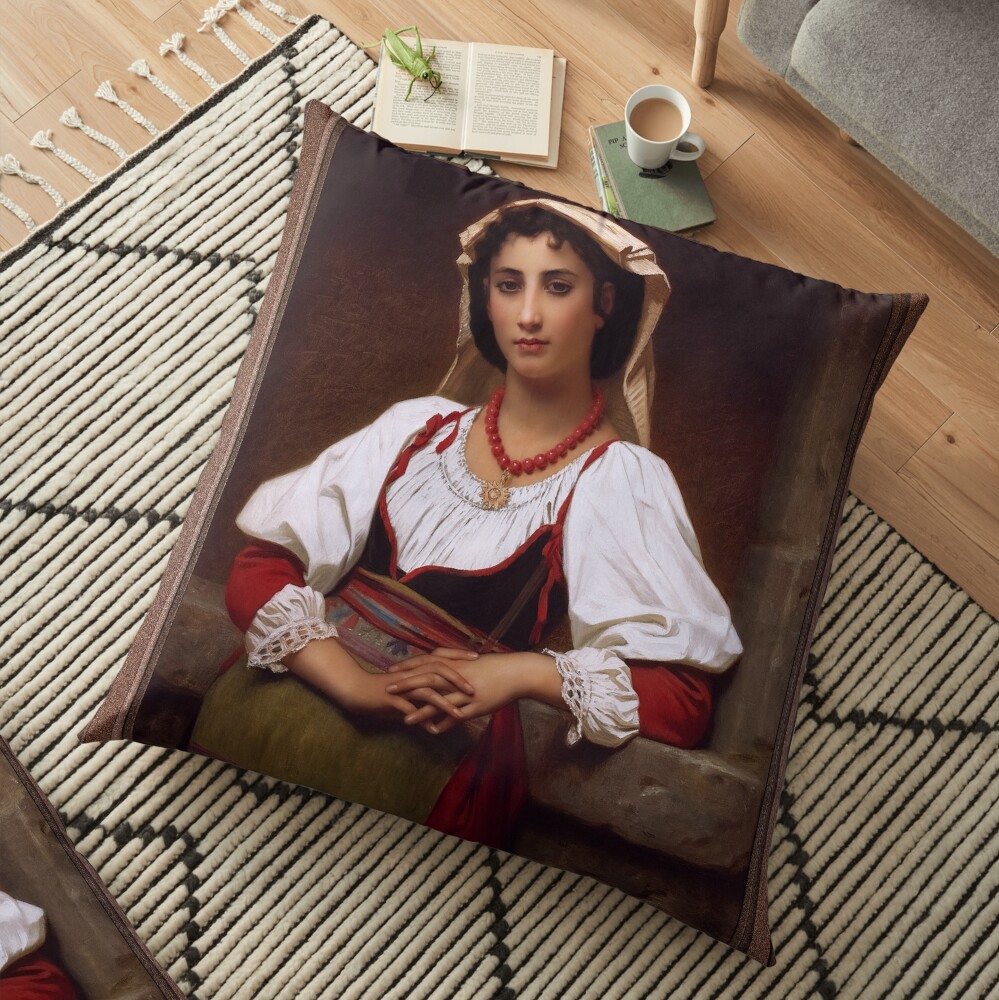
By an alcove on the side of a building stands an alluring brunette maiden of the late 19th century basking in the suns warm glow.
She is wearing a tan ruffled kerchief on the top of her head that nicely contrast the reddish-brown color of the alcove wall.
Along with the kerchief she is wearing a white long baggy sleeve blouse with partial red material from her forearm, up to her upper arm.
The blouse is complimented with the strap on dress she is wearing that is comprised of a black vest with red trim and a red long length bottom that matches the sleeves.
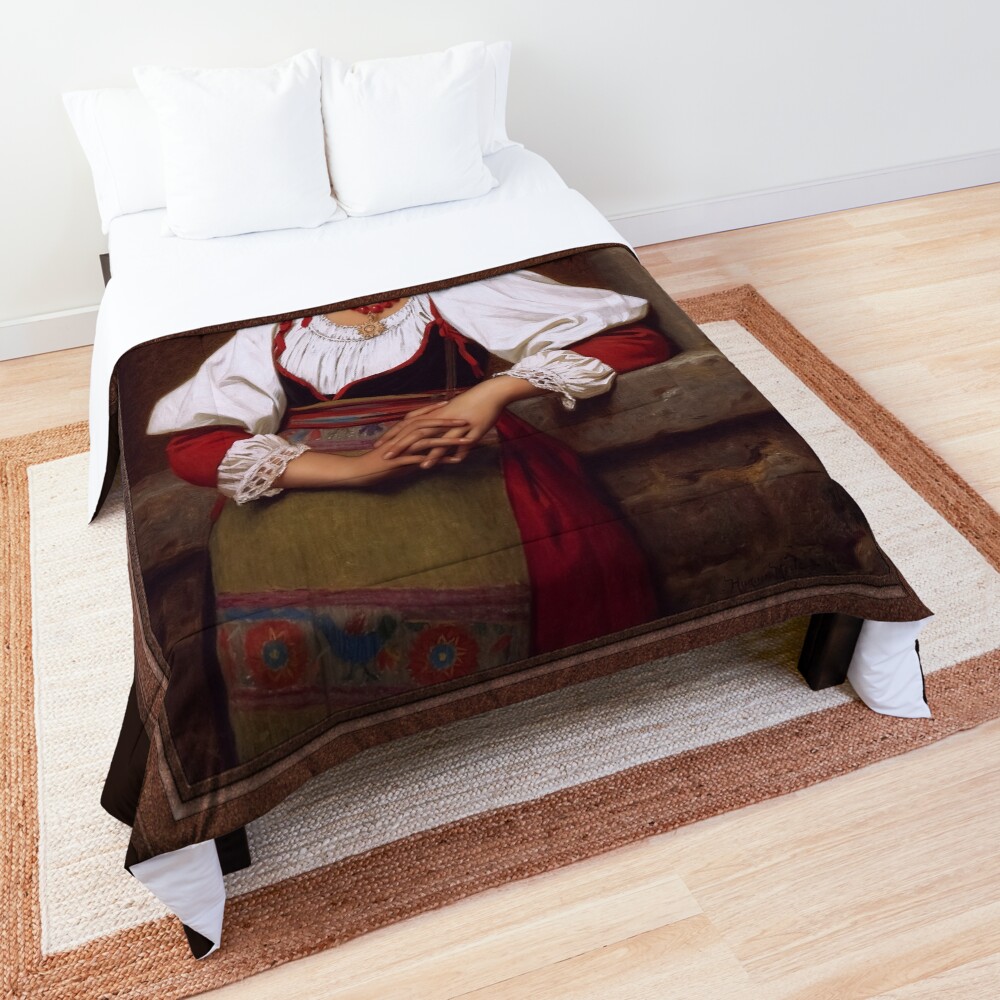
Then she has on the front a lime green apron with floral patterns on the top and a floral pattern on the bottom with a blue chicken; she is also wearing a large red beaded necklace with a gold star emblem hanging from the end.
This portrait of a young lady has her leaning on the stone ledge of the alcove that sits on a large brick wall of tan and light brown cut bricks.
Esta é uma reprodução remasterizada dos antigos mestres de arte digital de uma imagem de domínio público que está disponível como um impressão em tela.
As informações abaixo são derivadas de Wikipedia.org e Rehs.com
Hugues Merle nasceu em 1822 em La Sône, França e por volta da idade de 21 chegou em Paris, França onde estudou pintura com o pintor histórico e retratista francês Léon Cogniet (1794 – 1880).
Embora pouco se saiba sobre o início da vida de Hugues, presume-se que ele recebeu algum grau de educação artística antes de chegar a Paris em 1843; porque começou a expor no Salão de Paris em 1847 com sua peça Portrait de L'auteur e em 1848 expôs a peça Légende des Willis.
Com o passar do tempo, a reputação de Hugue como retratista cresceu substancialmente durante a década de 1850.; e como pintor proeminente e de sucesso, ele conseguiu atrair amantes da arte sérios que procuravam construir suas coleções de arte.
Um desses primeiros colecionadores de arte foi o 4º Marquês de Hertford, Richard Seymour-Conway (1800-1870); que comprou sua submissão de salão Lendo a Bíblia em 1859.
Durante a década de 1860, Enorme lista de clientes de colecionadores incluía não apenas indivíduos do continente europeu, mas também colecionadores americanos, como William Walters, de Baltimore, que encomendou The Scarlet Letter.