

The Nightmare c1781
“악몽,” 그린 1781 by Swiss artist Henry Fuseli (1741-1825), is one of the most iconic and unnerving works of the late 18th century, melding themes of the supernatural and psychological unease. This dramatic and haunting piece explores the realm of nightmares and the grotesque. Known for its bold use of contrast, its striking depiction of a woman in a state of deep sleep, and its symbolic elements, “악몽” stands as a testament to Fuseli’s unique approach to Romanticism, blending elements of the gothic with intense emotion and surrealism. Fuseli’s art often questioned the boundaries between reality and dreams, and this piece exemplifies his mastery in portraying the darkness of the human subconscious.
목차
주요 주제 및 구성
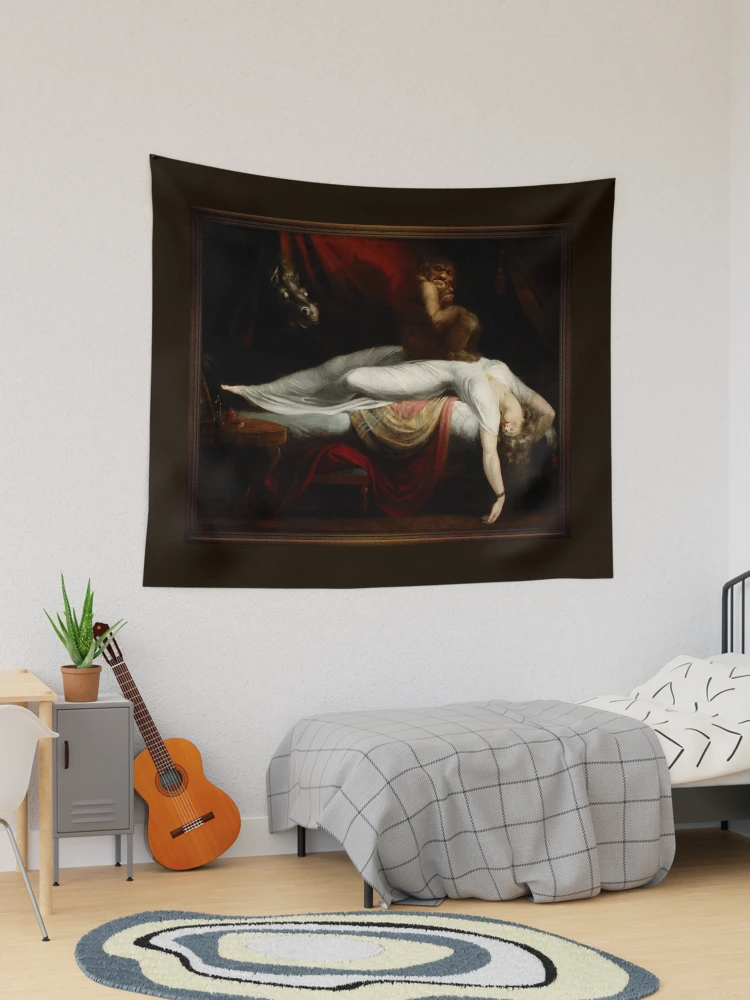
At the center of the mythological composition lies a woman, draped in a white gown, her head tilted back, her eyes shut, and her mouth slightly agape. She lies sprawled across a bed, her posture one of apparent vulnerability. The positioning of her body, her limp arms, and her slouched form suggest that she is not merely asleep, but entrapped in the grip of a terrible nightmare.
Her face is pale, accentuating the fear or distress she may be experiencing in her dream. The body language of the figure reveals both a sense of helplessness and submission, as though the woman is at the mercy of forces beyond her control. On top of her, partially crouched on her chest, is a grotesque, monstrous figure that resembles a demonic creature. This being, with its exaggerated features and intense expression, conveys a sense of malevolent power.
The creature’s posture, its crouched, almost primal stance, suggests a symbolic representation of a nightmare or night terror, which many during the period believed to be the work of supernatural forces. The sinister character appears to be pressing down on the woman, as if suffocating her, yet it exudes an aura of satisfaction and dominance, as if it derives pleasure from her torment.
In the background of the composition, a darkened, blurred silhouette of a horse’s head looms, eyes wide with a fearful expression. This spectral horse adds an additional layer of psychological intensity to the piece, as if the creature’s vision is skewed and tortured, suggesting the nightmare is shared between both the woman and the horse. Its presence only heightens the viewer’s sense of unease, as it represents the creeping nature of irrational fear, constantly lurking in the shadows of the dreamer’s mind.
객체와 세부 사항
The room surrounding the central figure is rich in dark tones, which evoke a sense of unease and confinement. 왼쪽으로, a small table holds objects like a candle and an overturned vase, adding to the atmosphere of disarray and disturbance.
The faint illumination from the candle casts dark shadows on the walls, heightening the sense of isolation and the unknown. The dimness of the interior suggests that the nightmare takes place in the dead of night, further emphasizing the vulnerability and helplessness of the woman in her vulnerable state.
The bed itself, draped with a deep red velvet curtain, plays a significant role in amplifying the atmosphere. 깊은, rich color of the bedding suggests both luxury and danger, implying that even in a space of comfort, horror can strike. This lavishness, often associated with the opulence of a safe and peaceful domestic life, is sharply contrasted by the horrific apparition that dominates the scene.
The interplay of light and shadow in this piece is significant. Fuseli’s use of chiaroscuro, the technique of using strong contrasts between light and dark, amplifies the drama of the composition. The light falling on the woman’s form illuminates her body in stark contrast to the surrounding darkness, focusing the viewer’s attention on her helpless state while casting her surroundings into an oppressive shadow. This creates a powerful sense of depth and dimensionality, evoking a tension between the reality of her physical form and the nightmare that haunts her.
분위기, 스타일, 및 테마
“악몽” evokes a mood of horror, anxiety, and suffocation. It is a powerful visual representation of the psychological terror associated with nightmares, the kind of fear that seems tangible yet is completely irrational. The artist blends elements of gothic horror with a romanticized exploration of the unknown. In the 18th century, people were particularly fascinated by the supernatural and the unknown realms of the mind, making the depiction of these elements a natural focus for Fuseli’s work.
Fuseli’s approach to painting often emphasized intense emotional experiences, 그리고 이 작품도 예외는 아니다. The tension in the scene is palpable, not just through the central figures but in the stark contrast between light and dark.
The theme of suppressed terror is explored through the supernatural, as both the woman and the viewer are drawn into a world that is both unsettling and bizarre. This dark exploration of the human psyche invites questions about the limits of consciousness, the fear of the unseen, and the potential for terror that resides within dreams.
The style of Fuseli’s work was influenced by his exposure to Neoclassicism, but he departed from its rationality and balance by incorporating exaggerated forms and dramatic, fantastical elements. The surreal nature of the creature that straddles the woman’s chest reflects his interest in psychological subjectivity and his rejection of realism in favor of emotional intensity.
결론
Henry Fuseli’s “악몽” is a provocative, chilling exploration of human fear, both real and imagined. The surreal quality of the painting, the disturbing imagery, and the unsettling use of light and shadow all contribute to the timeless power of this piece. Fuseli captured a universal experience, the sensation of being vulnerable and at the mercy of forces beyond understanding, in a way that continues to resonate with viewers today. The painting is a masterclass in both technique and emotional depth, exploring themes of vulnerability, terror, and the haunting nature of dreams.
Nightmare는 공개 도메인 이미지의 수정된 디지털 아트 옛 거장 재생산입니다..
아티스트 바이오 Wikipedia.org
Fuseli는 취리히에서 태어났습니다., 스위스, 두 번째 18 어린이들. 그의 아버지는 요한 카스파 퓌슬리였다., 초상화와 풍경의 화가, Helvetic Painters의 삶의 저자. 그는 교회를 위해 헨리를 의도했다, 그리고 그를 취리히의 캐롤라인 대학으로 보냈다., 뛰어난 고전 교육을 받은 곳. 그의 학교 친구 중 한 명이 Johann Kaspar Lavater였습니다., 그가 친한 친구가 된 사람.
에서 주문을 받은 후 1761, Fuseli는 Lavater가 부당한 치안 판사를 폭로하는 것을 도운 결과 강제로 출국했습니다., 강력한 가족이 복수를 하려던. 그는 독일을 여행했다., 그리고, 에 1765, 영국을 방문, 그는 한동안 잡다한 글을 쓰며 생계를 꾸려갔던 곳.
결국, 그는 알게 되었다 조슈아 레이놀즈 경, 그가 자신의 그림을 보여준 사람. 레이놀즈 따라하기’ 조언, 그는 전적으로 예술에 전념하기로 결정했습니다.. 에 1770 그는 이탈리아로 예술 순례를 떠났다., 그가 머물렀던 곳 1778, 그의 이름을 Füssli에서 더 이탈리아어로 들리는 Fuseli로 변경.
일찍 1779 그는 영국으로 돌아왔다, 취리히로 가는 길에. 런던에서 그는 Alderman Boydell로부터 그를 기다리고 있는 위원회를 찾았습니다., 당시 셰익스피어 갤러리를 설립한 사람.
Fuseli는 Boydell을 위해 많은 작품을 그렸습니다., Lavater의 physiognomy 연구 영문판 출판. 그는 또한 William Cowper에게 Homer 번역을 준비하는 데 귀중한 도움을 주었습니다..
에 1788 Fuseli는 Sophia Rawlins와 결혼했습니다. (원래 그의 모델 중 하나), 그리고 그는 곧 왕립 아카데미의 준회원이 되었습니다.. 초기 페미니스트 메리 울스턴크래프트, 그가 그린 초상화, 그와 함께 파리 여행을 계획했다, 그리고 그를 단호하게 쫓아갔다., 그러나 소피아의 개입 후 Fuselis’ 그녀의 문은 영원히 닫혀 있었다.
Fuseli는 나중에 말했다 “똑똑한 여자는 싫어. 그들은 귀찮을뿐입니다”. 에 1790 그는 완전한 학자가 되었다, 그의 졸업장 작품으로 Midgard Serpent를 구타하는 Thor를 제시합니다.. 에 1799 Fuseli는 아카데미의 회화 교수로 임명되었습니다.. 4년 후 그는 골키퍼로 선택되었습니다., 그리고 교수직을 사임, 그러나 그것을 재개했다 1810, 그가 죽을 때까지 두 직책을 계속 유지했습니다.[4] 키퍼로, 헨리 톰슨이 그의 뒤를 이었다..
에 1799 Fuseli는 John Milton의 작품이 제공한 주제의 일련의 그림을 전시했습니다., Boydell의 Shakespeare 갤러리에 필적하는 Milton 갤러리를 형성하기 위해.
있었다 47 밀턴 그림, 그들 중 많은 사람들이 매우 큽니다., 9년 간격으로 완료. 전시회는 상업적 실패로 판명되었고 1800. 에 1805 그는 Pilkington의 화가의 삶의 판을 가져 왔습니다., 그의 명성에 거의 기여하지 못한.
안토니오 카노바, 영국을 방문했을 때, Fuseli의 작품에 많은 관심을 받았습니다., 그리고 로마로 돌아올 때 1817 그를 세인트 루크 아카데미의 일등석 회원으로 선출했습니다..