

Tenplu Zaharra c1788
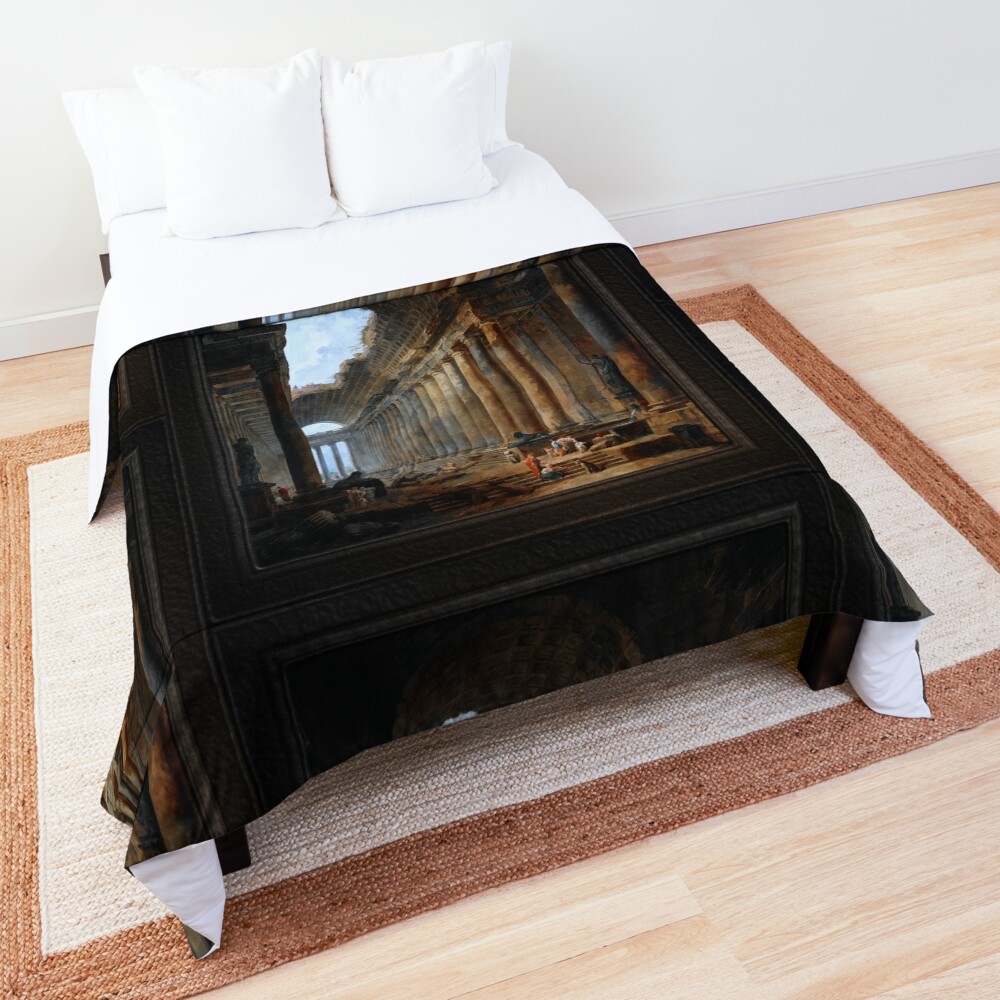
Hubert Robert's pintura Tenplu Zaharra, inguruan sortua 1788, antzinako hondakinen irudikapen deigarria jasotzen du, historia denboraren poderioz maisuki uztartuz. urtean jaioa 1733 eta bertan hiltzea 1808, Robert Rococo eta hasierako neoklasiko garaiko margolari frantses nabarmena izan zen, hondakinen eta irudimenezko paisaien irudikapen erromantikoengatik ezaguna.
In Tenplu Zaharra, artistak gainbeheraren gaia eta denboraren betiko joan-etorria aztertzen ditu, mende amaierako mugimendu intelektual eta artistikoetan funtsezkoa izan zen gaia. Antzinate klasikoarekiko eta sublimearekiko garaiko lilura islatzen du lanak, suntsipenaren kontzeptuarekin eta giza sorkuntzaren hauskortasunarekin uztartu ohi zena.

Edukien taula
Gaia eta Osaera
The central focus of the painting is a vast ruin of an ancient temple, its once grandiose architecture now weathered and eroded by centuries of neglect. The temple’s towering columns rise majestically, despite their crumbling state. Arkitektura, though in ruins, retains the classical order of the past, with tall, fluted Corinthian columns and an arching ceiling that hints at the grandeur of a lost civilization.
The viewer’s eye is drawn through the temple’s vast interior, where shafts of light pierce through the dilapidated roof, illuminating the remains of the stone floor. The scene is not devoid of life, hala ere; human figures occupy the foreground, some appearing to study the ruins, others engaging in idle conversation, perhaps contemplating the history of the structure they stand within.
Egituraren zabaltasuna areagotu egiten da artistaren ikuspegi zainduarekin, tenpluko zutabeen luzera erabiltzen duena ikuslearen begirada konposizioaren muturrean dagoen argiz betetako arkurantz bideratzeko.. Forma arkitektonikoak gehiegizkoak dira beren eskalan, beldurra eta begirune sentimendua sorraraziz.
Argia eta itzala nahita erabiltzeak ere margolanaren aldarte dramatikoa gehitzen du, non elementu naturalek eraikitako ingurunearekin elkarreragiten duten efektu malenkoniatsua baina ederra sortzeko. Lurrean sakabanatuta dauden hondakinek tenpluaren egoera hondagarria are gehiago azpimarratzen dute, denboraren joana eta gauza guztien gainbehera saihestezina gogorarazten duten harri zatiekin eta egitura eroriekin.
Paisaia eta Lurra
Tenpluaren barrualde handitik haratago, the landscape opens up into a wide vista. A faint blue sky, dotted with clouds, serves as a backdrop to the crumbled columns and statues. The contrast between the bright sky and the shadowed ruins highlights the passing of time, as nature continues its cycle, indifferent to the fall of civilizations. Some sparse vegetation, possibly moss or ivy, has begun to grow in the cracks of the stone, suggesting that nature is reclaiming its dominion over the human-made structure. The terrain is rocky and uneven, further suggesting the erosion caused by years of exposure to the elements.
The scene’s open expanse also gives a sense of isolation and abandonment. The figures are placed within the ruins, not as part of a vibrant society, but as passive observers of something long past its prime. Their small scale in relation to the monumental ruins evokes the transient nature of human life compared to the timelessness of the world itself. Honen bitartez, Robert poignantly suggests that while human creations may fall, the land and the forces of nature endure.
Materialak eta Teknikak
Hubert Robert’s meticulous use of oil paints is evident in the fine details and textures within the scene. The artist’s masterful handling of light and shadow enhances the three-dimensionality of the columns and figures, creating depth and a sense of realism. The surface of the stone columns is textured, with visible cracks and worn surfaces that add to the sense of decay. Argi jolasa, particularly as it filters through the broken roof, hain trebetasunarekin ematen da, non ia etereoa dirudien, itzal delikatuak jarriz eta arkitekturaren eta hondakinen xehetasun finak nabarmenduz.
Pintzelada, korapilatsua, berriz, lehen planoan, solteago eta arinago bihurtzen da atzealdera atzera egin ahala, batez ere zeruaren erreprodukzioan. Teknika honi esker, ikuslea lehen planoan zentratu daiteke begia horizonterantz eramaten duen bitartean. Argiaren eta itzalaren arteko trantsizio sotilak, elementu arkitektonikoen irudikapen zehatzarekin konbinatuta, erakutsi Robert-ek eszenaren giza eta alderdi naturalak orekatzeko duen gaitasuna, osotasun harmoniatsu batean nahastuz.
Estilo, Gai, eta umorea
Estilo aldetik, Robertena Tenplu Zaharra mende amaierako erromantizismoarekiko eta Sublimearekiko interesa islatzen du, askotan gainbeheraren gaiak jorratzen zituena, hondamena, and the ephemeral nature of human achievement. This movement emphasized the power of nature and the insignificance of mankind in the face of its vastness. The juxtaposition of human figures within the monumental ruins serves as a reminder of this contrast. While the figures seem to occupy the space, they are overwhelmed by the sheer size and decay of the temple, suggesting that even the greatest human endeavors are transient in the grand scope of history.
The mood of the painting is one of reflection and melancholy. The ruinous state of the temple and the solitary, almost contemplative poses of the figures invoke a sense of nostalgia for a bygone era. Aldi berean, there is a beauty in the decay, as the natural world begins to reclaim the space, illustrating the cyclical nature of life and death. The peacefulness of the scene, despite the temple’s destruction, suggests a sense of acceptance, as though the passage of time is a natural and inevitable process.
The Old Temple is a retouched digital art old masters reproduction of a public domain image that you can by as a ijetzitako mihise inprimatua.
Artistaren biografia
Beheko informazioa Wikipedia.org
Hubert Robert Parisen jaio zen 1733. Bere aita, Nicolas Robert, François-Joseph de Choiseulen zerbitzura zegoen, Stainville markesa Lorenako diplomatiko nagusi bat. Robert gazteak jesuitekin amaitu zituen bere ikasketak Nafarroako Unibertsitate Eskolan 1751 eta Michel-Ange Slodtz eskultorearen tailerrean sartu zen eta hark diseinua eta perspektiba irakatsi zion baina pinturara jotzera bultzatu zuen.. In 1754 Erromara abiatu zen Étienne-François de Choiseul-en trenean, bere aitaren enpresaburuaren semea, Frantziako enbaxadore izendatu zutena eta Luis XV.aren Kanpo Arazoetarako Estatu idazkari izango zena. 1758.
Hamaika urte eman zituen Erroman, denbora-tarte nabarmena; artista gazteak Erromako Frantziako Akademian zuen egoitza ofiziala agortu ondoren, Saint-Non abadea bezalako jakitun bisitarientzat ekoitzi zituen lanekin lagundu zuen bere burua, apirilean Robert Napolira eraman zuena 1760 Ponpeiako hondakinak bisitatzeko. Marigny markesa, Bâtiments du Roi-ko zuzendariak bere garapenaren berri izan zuen Natoirerekin izandako korrespondentzian, Frantziako Akademiako zuzendaria, pentsiodunei kanpoan zirriborratzeko eskatu zien, naturatik: Robertek ez zuen bultzadarik behar; bere zirriborroetako marrazkiek bere bidaiak dokumentatzen dituzte: Villa d'Este, Caprarola.
Antzinako Erromako hondakinen eta bere garaiko bizitzaren arteko kontrasteak piztu zion interesik handiena. Pannini estudioan lan egin zuen denbora batez, haren eragina Louvre Galeria hondatuaren Ikuspegi Irudigarrian ikus daiteke (ilustrazioa). Robertek Piranesiren zirkuluko artista gazteen konpainian igaro zuen, zeinaren erromantikoki hazitako hondakinen kapriccek hain eragin handia izan zuen, non Robert des ruines ezizena lortu zuen.[2] Erroman bildu zituen zirriborro eta marrazkien albumek bere ibilbidean margolanetan landutako motiboez hornitu zioten..