

The Pen c1899
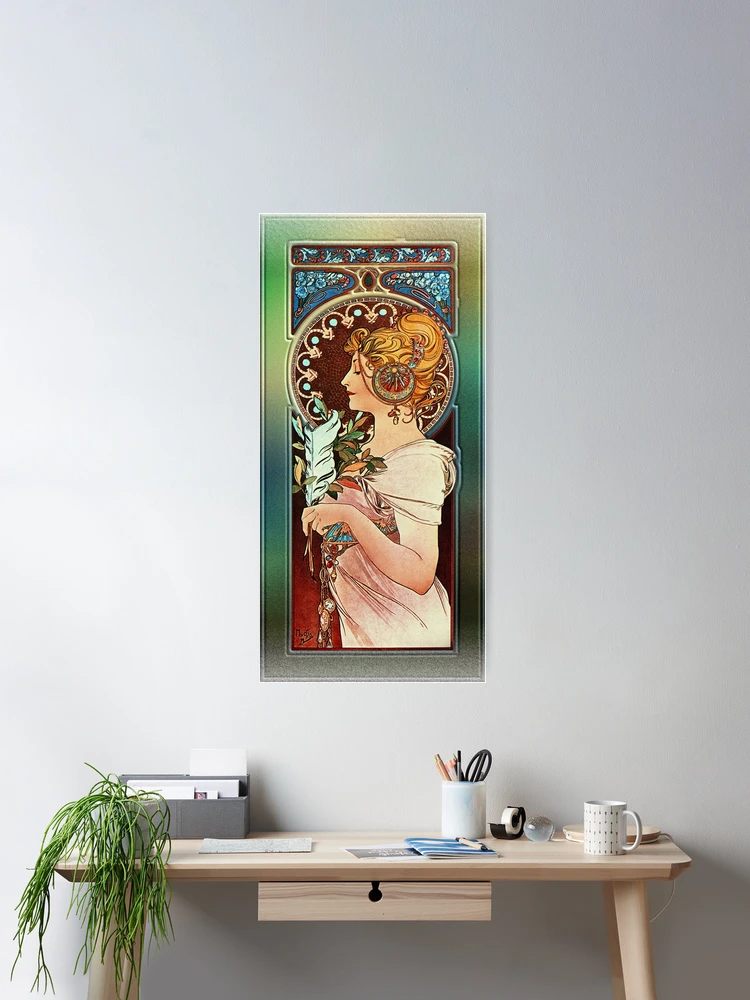
“The Pen” c1899 by Alphonse Mucha (1860 – 1939) is an iconic example of the Art Nouveau style, featuring the signature elements that made Mucha one of the most influential artists of his time. The painting depicts a young woman who is the central subject of the composition. Her graceful, poised figure exemplifies the beauty and elegance of the period, while the intricate patterns and organic shapes in the background draw attention to the artist’s mastery of decorative art. Created at the turn of the 20th century, this work captures the essence of the Art Nouveau movement, where fluid lines, 自然な形, and a sense of harmony between the figure and the surroundings were paramount.
目次
主な主題と構成
The main subject of the artwork is a 若い女性 whose profile is elegantly presented in a soft, flowing pose. She holds a quill pen delicately in her right hand, an object that symbolizes both the act of creation and intellect. The pen, an important tool of writing and artistic expression, could also be interpreted as an emblem of feminine creativity and empowerment. Her calm demeanor, combined with the focused gesture of grasping the pen, suggests a sense of thoughtfulness and quiet strength.
彼女の長い, flowing hair is styled in a loose, luxurious updo that complements her serene expression. The elaborate details of her hair—embellished with floral motifs—suggest a connection to nature, another hallmark of the Art Nouveau style. Her attire is also part of the composition’s elegance, with a flowing white gown that further enhances her ethereal presence. ガウンは柔らかいです, flowing lines are echoed in the circular forms of the background, creating a sense of unity and fluidity across the entire piece.
Background and Decorative Elements
The background of the painting is where Mucha’s artistic genius truly shines. It is filled with intricate floral patterns and delicate geometric shapes that wrap around the subject, creating a sense of rhythm and movement. The circular motif in the background, adorned with stylized flowers and symbols, frames the figure in a way that draws the viewer’s eye toward the subject’s face and pen. These elements combine to form a harmonious backdrop that both complements and contrasts with the central figure.
The intricate borders of the piece feature repeating floral and leaf patterns, which seem to emerge from the subject’s hair and clothing, enhancing the natural, almost otherworldly quality of the woman. The geometric lines, coupled with the organic forms, are typical of the Art Nouveau aesthetic, which sought to merge art with the natural world in a decorative, yet meaningful manner.
スタイルとテクニック
Mucha’s use of line is particularly evident in this piece. The flowing curves that define the woman’s hair, the intricate folds of her gown, and the floral elements all contribute to the piece’s characteristic sensuousness. Mucha’s linear style emphasizes organic shapes, with each curve seeming to flow into the next in a seamless progression. The lines do not simply depict form but also express the mood of the piece, creating a feeling of grace and fluidity.
The color palette used in the painting further contributes to the overall harmony of the composition. Rich reds and oranges in the background contrast with the soft, pastel tones of the woman’s skin and clothing. These colors help establish a sense of depth and dimension, with the warmer tones of the background drawing the viewer’s focus toward the figure. The use of these bold yet soothing colors creates a dynamic tension, ensuring that the viewer’s attention is both captured and guided around the painting.
気分とテーマ
の気分 “The Pen” is one of quiet contemplation and dignity. 女性, while positioned in profile, maintains a sense of elegance that suggests both inner strength and an unspoken connection to the world around her. The act of writing or creating with a pen brings forth the theme of intellect and creativity, characteristics often attributed to femininity during the period. Mucha’s portrayal of the subject is both respectful and empowering, portraying her as a figure of grace, 知恵, and authority. The peaceful, almost meditative quality of the painting is reinforced by the smooth flow of the lines and the gentle symmetry of the composition.
This sense of empowerment, combined with the association of the pen with the power of words and art, may also allude to the growing social and cultural influence of women at the time. In a broader sense, the painting embodies the era’s ideals of beauty, 知的主義, and the merging of art with daily life, which were central tenets of the Art Nouveau movement.
結論
“The Pen” by Alphonse Mucha is a masterpiece of the Art Nouveau movement, embodying its themes of elegance, 自然, and the intersection of art and daily life. アーティストの細部へのこだわり, his use of flowing lines, and his integration of natural motifs into both the figure and the background create a harmonious composition that draws the viewer into its world. The symbolic presence of the pen adds layers of meaning, suggesting both intellectual and creative power. この作品を通して, Mucha has created not just a portrait, but a vision of beauty and artistic expression that continues to resonate today.
アーティスト略歴
以下の情報から Wikipedia.org
アルフォンス・マリア・ミュシャ7月 24, 1860 – 7月 14, 1939), アルフォンス・ミュシャとして国際的に知られていました. 彼は著名なチェコの画家でした, イラストレーター兼グラフィックアーティスト, アールヌーボー時代にパリに住んでいた, そして彼のはっきりと様式化された装飾的な劇場のポスターで最もよく知られています, 特にサラ・ベルナールのもの.
イラスト制作, 広告, 装飾パネル, とデザイン, 当時の最も有名な画像の1つになりました.
彼のキャリアの後半では, 歳の時に 43, 彼はオーストリアのボヘミア-モラビア地方の故郷に戻り、スラヴ叙事詩として知られる一連の20の記念碑的な帆布を描くことに専念しました。, 世界のすべてのスラブ人の歴史を描いています, 彼はその間に描いた 1912 そして 1926.
に 1928, チェコスロバキア独立10周年, 彼はチェコ国民にシリーズを発表しました. 彼はそれを彼の最も重要な仕事だと考えました. 現在プラハで展示されています.