

The Penitent Magdalene c1635
“La Madeleine pénitente” is a masterpiece created in 1635 by the renowned Italian Baroque painter Guido Reni (1575 – 1642). This iconic painting depicts the biblical figure of Mary Magdalene, who is traditionally recognized as a sinner seeking redemption. Reni’s depiction captures the intense inner turmoil and spiritual transformation of the subject through a careful balance of grace, pathos, and dramatic light, typical of Baroque art. The painting not only conveys religious themes of penitence and remorse but also showcases Reni’s mastery in portraiture, the handling of light and shadow, and his ability to imbue emotion into his figures.
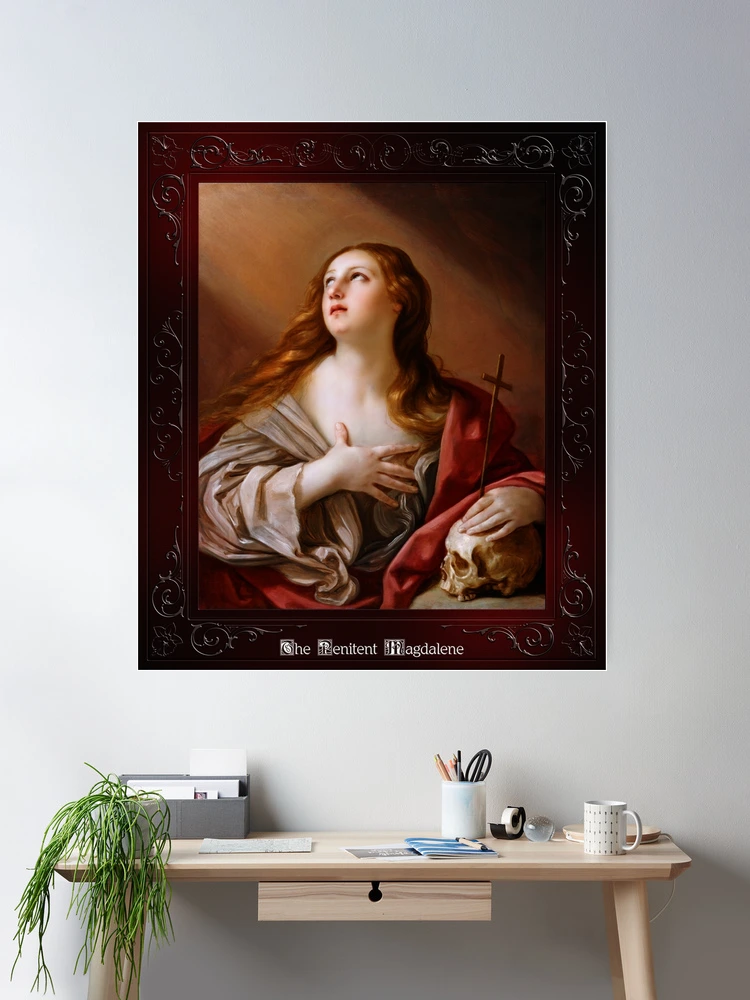
Table des matières
Sujet principal: Marie-Madeleine
Dans “La Madeleine pénitente,” the central figure is Marie-Madeleine, whose contemplative expression and gentle posture evoke a deep sense of sorrow and remorse. She is shown with a pale, luminous face, her gaze directed upward, seemingly contemplating divine grace or reflecting upon her past sins. The pose of her hand on her breast, just above her heart, suggests an emotional plea for redemption or a profound internal conflict. Her other hand rests gently on a small skull, an emblem of mortality and the transient nature of earthly life. The skull, often a symbol of death, reinforces the theme of spiritual redemption, signaling the inevitability of death and the need for repentance in the face of human frailty.
The soft flow of her long, flowing hair and her opulent robes contrast with the somberness of the subject matter, emphasizing her vulnerability as a woman caught between the earthly and the divine. The gentle curve of her neck, the subtle play of light across her skin, and the delicate rendering of her facial features all suggest Reni’s exquisite attention to detail and his ability to create an emotionally charged image through delicate brushwork.
Objets: Skull and Cross
Two significant objects in the composition deepen the narrative: the skull and the cross. The skull rests beside the figure, its stark contrast to the figure’s otherwise serene and peaceful demeanor drawing attention to its symbolic meaning. In Baroque art, such objects often remind the viewer of the transient nature of life and the importance of spiritual reflection. The presence of the skull connects directly to the Christian concept of mortality, encouraging the contemplation of death and the need for penance.
In contrast to the skull, a wooden cross is held upright in the background, subtly reinforcing the Christian theme of salvation. The cross, bien que ce ne soit pas le point central du tableau, serves as a silent testament to the religious undertones of the work. It is an object of immense spiritual significance, representing both suffering and redemption, which is central to the narrative of Mary Magdalene’s transformation.
Terrain et arrière-plan: Soft and Ethereal
The terrain and background in “La Madeleine pénitente” are minimalistic and ethereal, contributing to the overall mood of spiritual contemplation. The background is bathed in soft, warm tones of gold, rose, et brun, creating a celestial atmosphere that separates the figure from any earthly concerns. There are no specific or detailed elements of the landscape, which allows the viewer’s attention to remain focused on the emotional depth of the subject. L'utilisation de la lumière, especially the soft glow around Magdalene’s face, adds an almost divine aura to her figure, suggesting her purification and spiritual elevation.
This minimalist treatment of the background and the soft gradation of light are characteristic of Reni’s style and of Baroque art in general. The lighting directs the viewer’s focus entirely on the figure, reinforcing the central theme of internal reflection and penitence.
Style et technique: Baroque Mastery
Reni’s work exemplifies the best of the Baroque style, a period known for its emotional intensity, dramatic contrasts of light and shadow, and the merging of realism with spiritual symbolism. Dans ce tableau, the artist employs chiaroscuro—the technique of strong contrasts between light and dark—to create a heightened sense of drama and emotion. The light that bathes Mary Magdalene’s face and hands lends an ethereal, almost otherworldly quality to the image, enhancing the sense of divine presence.
Reni’s precise brushwork and attention to detail are evident in the rendering of fabrics, tons de peau, et les expressions du visage. His deft ability to capture the texture of the fabrics, especially the luxurious softness of Magdalene’s robe, further emphasizes the figure’s nobility and grace. The contrast between the delicately painted skin and the dark, almost mysterious shadows around the figure also showcases Reni’s technical skill in handling the human form.
Thème et humeur: Redemption and Spirituality
L'ambiance de “La Madeleine pénitente” is one of profound introspection and sorrow, yet it also conveys a sense of hope and redemption. Reni has captured Magdalene in a moment of penitence—her gaze upward suggests a yearning for divine forgiveness, while the skull at her side serves as a reminder of the frailty of human life and the need for salvation. There is a deep spiritual tension in the figure’s posture, which combines vulnerability with a sense of inner strength. It is a moment of grace, where the figure is on the verge of spiritual redemption through her penitence.
The overall theme is one of Christian redemption, a recurrent motif in Baroque religious art. Magdalene, traditionally portrayed as a fallen woman, is shown here as a figure of deep contemplation, expressing both the pain of her past and the hope of her eventual salvation. This combination of emotional vulnerability with the promise of spiritual renewal invites the viewer to engage with the painting on a deeply personal level.
Conclusion
Guido Reni’s “La Madeleine pénitente” is a poignant and powerful portrayal of the themes of sin, penitence, et la rédemption. The work exemplifies the Baroque tradition, blending technical virtuosity with deep emotional and spiritual insight. Grâce à son utilisation prudente de la lumière, ombre, et le symbolisme, Reni invites viewers into the intimate world of Mary Magdalene, where the tensions of sorrow and hope are vividly brought to life.
Les Monuments de Paris par Hubert Robert métal, toile, impression acrylique et bois.
J'ai également créé une version de bordure de cadre plus élaborée qui peut être vue à mon J'ai également créé une version de bordure de cadre plus élaborée qui peut être vue à mon utilisé dans le cadre de cette pièce; J'ai également créé une version de bordure de cadre plus élaborée qui peut être vue à mon 400 J'ai également créé une version de bordure de cadre plus élaborée qui peut être vue à mon.
Biographie de l'artiste dérivée de Wikipedia.org
Guido est né à Bologne, L'Italie aux musiciens Daniele Reni et Ginevra Pozzi; et à l'âge de neuf ans, il entre en apprentissage dans l'atelier bolonais du peintre flamand Denis Calvaert (1540 – 1619), qui vivait en Italie et qui était aussi connu sous le nom de Dionisio Fiammingo ou Il Fiammingo (Le Flamand).
Quand Guido était sur le point 20, lui et son collègue artiste au studio bolognais, Peintres baroques italiens Francesco Albani (1578 – 1660) et Domenico Zampieri (1581 – 1641), a déménagé dans le studio rival, Académie de marche (Académie de la “nouvellement embarqué”, ou progressistes), qui était dirigé par l'italien, peintre du début du baroque, graveur, et graveur Ludovico Carracci (1555 – 1619).
Le trio a ensuite formé le noyau d'une école réussie et prolifique de peintres bolonais qui ont suivi le cousin de Lodovico; Peintre italien Annibale Carracci (1560 – 1609).