

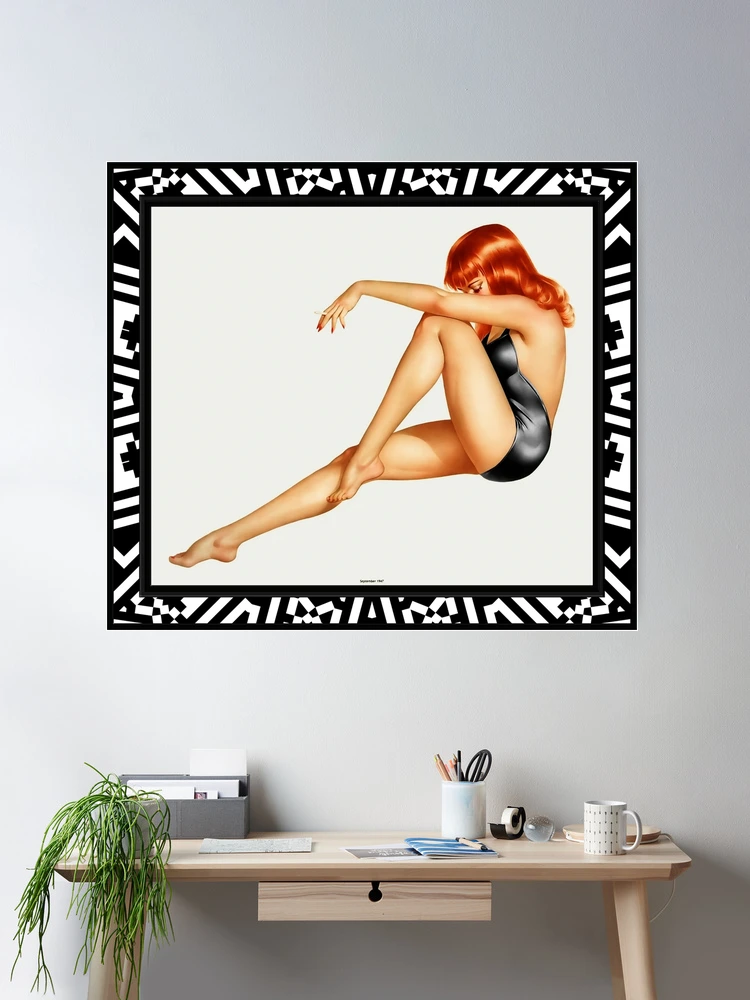
A' Chaileag Pinup c1947
Ìomhaigh neach-àite Alberto Vargas's An nighean Pinup, air a chruthachadh a-steach 1947, a’ seasamh mar eisimpleir iongantach de ealain pinup meadhan an 20mh linn. Rugadh e ann am Peru, Vargas (1896 – 1982) dh’fhàs e ainmeil airson a dhealbh sònraichte de bhoireannaich ciallach a ghlac mac-meanmna sluagh Ameireagaidh anns na 1940n agus 1950n.
Tha e air a chomharrachadh airson a chomas a bhith a 'measgachadh glamour, eireachdas, agus mothachadh air toileachas-inntinn anns na h-obraichean aige. Ann an An nighean Pinup, Tha Vargas a’ taisbeanadh modail aig a bheil suidheachadh, abairt, agus tha bòidhchead iomlan a’ nochdadh bòidhchead agus seun gun ùine a’ ghnè pinup. Tha an dealbh seo na fhìor shealladh den chruth boireann air leth freagarrach, agus tha e fhathast mar aon de na pìosan sònraichte de dhìleab Vargas.
Clàr-innse
Am prìomh chuspair agus suidheachadh
Aig cridhe na An nighean Pinup is the female figure, a captivating model whose body is positioned in a seated pose, gracefully folded into herself. The subject’s figure is sculptural, with every curve emphasized to suggest a heightened sense of femininity. The woman’s posture is delicate yet confident; her legs are drawn up beneath her, with one arm raised to rest gently on her knee, while the other hand rests on her thigh.
Her head is slightly turned downward, with her auburn hair falling in soft waves that frame her face, highlighting her profile. Her facial expression is one of soft contemplation, adding a layer of mystery to her beauty. There is a perfect balance between the sensuality of the pose and the restraint suggested by her serene demeanor.
Aodach agus mion-fhiosrachadh
The model in An nighean Pinup is dressed in a classic one-piece swimsuit, a tha a 'ceangal a corp, a’ cur cuideam air a sliasaid caol agus a lùban. Tha an deise snàmh dubh, a’ cruthachadh eadar-dhealachadh iongantach an aghaidh a craiceann bàn, agus tha e air a dhealbhadh le amhach tumaidh a chuireas ri faireachdainneachd an t-suidheachaidh.
Tha sìmplidheachd an èideadh aice a’ bruidhinn ri sòghalachd fasan na linne, Luchdaich a-nuas an geama an dèidh a ' chogaidh. Tha am mion-fhiosrachadh san deise aice air a pheantadh gu h-eòlach, le filleadh bog agus lùban a tha a’ nochdadh inneach an aodaich. Tha na h-ìnean aice air am peantadh gu soilleir dearg, aire gu mion-fhiosrachadh a tha a’ cur faireachdainn grinn ris an obair-ealain. A casan rùisgte, a' gabhail fois gu gràsmhor air an làr, ath-neartaich eireachdas an t-suidheachaidh agus cuir ri nàdar mothachaidh na h-ìomhaigh.
Cleachdadh dath agus solas
Vargas a’ cleachdadh dath ann an An nighean Pinup tha an dà chuid a dh'aona ghnothach agus sòlaimte. The warm tones of the woman’s auburn hair complement the coolness of the black swimsuit, creating a harmonious balance between the elements. Her skin is rendered with delicate shades of peach and ivory, giving her an almost ethereal glow.
The background of the painting is soft and neutral, devoid of any elaborate details, which serves to keep the viewer’s focus squarely on the model. This restrained backdrop enhances the figure’s prominence and allows the sensuality of the subject to shine through. Light plays a crucial role in accentuating the curves of the figure, with soft highlights tracing the contours of her body, a' toirt beatha dha, almost sculptural quality.
Sgrìobhadh agus cumadh
Tha co-dhèanamh na An nighean Pinup is strikingly simple yet dynamic. The model is framed in a way that her body occupies the central space, with her face and posture drawing the viewer’s eye. Her legs are positioned in such a way that they form a natural triangle, guiding the viewer’s gaze upward toward her serene expression. This creates a sense of balance and symmetry in the piece.
The framing of the artwork itself, with its strong geometric borders, helps to highlight the model and further isolates her in a space that feels both intimate and otherworldly. This minimalistic approach allows the viewer to focus entirely on the woman and the subtle details of her figure and attire.
Mood agus cuspair
Faireachdainn de An nighean Pinup can be described as one of quiet allure, with a touch of mystery. The model’s introspective expression and poised demeanor suggest a sense of grace and elegance, while the sensuality of her pose imbues the piece with an undeniable charm. There is an air of confidence that permeates the composition, yet it remains soft and inviting.
The painting evokes the idealized femininity of the post-war era, when pinup art was often used as a form of escapism, offering a vision of beauty and sensuality that was both wholesome and enticing. The theme of the painting centers on the celebration of the female form, rendered in a way that is both graceful and seductive, yet restrained enough to maintain a sense of refinement.
Dìleab agus Buaidh
Alberto Vargas’s influence on the art world is immense, particularly within the realm of pinup art. His ability to portray the female form with such elegance and sensuality revolutionized the genre, and his works have become iconic symbols of 20th-century American culture. An nighean Pinup is a perfect example of Vargas’s skill in balancing the glamorous and the sensual, creating images that remain timeless in their appeal.
His paintings, which often appeared in popular magazines like Esquire, captured the imagination of millions and became a staple of mid-century modern visual culture. An nighean Pinup seasamh mar aon de na h-obraichean as cliùitiche aige, encapsulating the spirit of an era while continuing to resonate with viewers today.
Co-dhùnadh
An nighean Pinup le Alberto Vargas (1896 – 1982) is an artwork that transcends time, offering a glimpse into the glamour and sensuality of the 1940s. The painting’s careful composition, the elegant portrayal of the female figure, and the meticulous use of color and light all contribute to its enduring appeal. This piece exemplifies Vargas’s mastery of the pinup genre, a’ cothlamadh eireachdas, aoibhneas, and mystery in a way that remains iconic to this day.
The Pinup Girl is a retouched digital art old masters reproduction of a public domain image.
Neach-ealain Bio
Fiosrachadh gu h-ìosal bho Wikipedia.org
Rugadh e ann an Arequipa, Peru, bha e na mhac leis an dealbhadair ainmeil Peruach Max T.. Vargas. Ghluais Alberto Vargas dha na Stàitean Aonaichte a-steach 1916 às deidh dha sgrùdadh a dhèanamh air ealain san Roinn Eòrpa, Zurich, agus Geneva ron Chiad Chogadh.
Fhad ‘s a bha e san Roinn Eòrpa thàinig e air an iris Frangach La Vie Parisienne, le còmhdach le Raphael Kirchner, a thuirt e a thug buaidh mhòr air an obair aige.
Bha a dhreuchd tràth ann an New York a ’toirt a-steach obair mar neach-ealain airson na Ziegfeld Follies agus airson mòran stiùidio Hollywood. Chroch Ziegfeld an dealbh aige de Olive Thomas aig an taigh-cluiche, agus bhathas den bheachd gur i aon de na caileagan Vargas as tràithe.
Vargas’ bha am pìos film as ainmeil airson postair an 1933 film The Sin of Nora Moran, a tha a ’sealltainn Zita Johann a tha cha mhòr lomnochd ann an suidheachadh dòrainn. Tha am postair air ainmeachadh gu tric mar aon de na postairean film as motha a chaidh a dhèanamh a-riamh.
Bha e ainmeil fad is farsaing anns na 1940an mar neach-cruthachaidh ìomhaighean ainmeil àm an Dàrna Cogaidh airson an iris Esquire ris an canar “Nigheanan Vargas.” Eadar 1940 agus 1946 Vargas air a thoirt a-mach 180 dealbhan airson an iris.
Chaidh ealain sròin mòran de phlèanaichean Ameireagaidh agus an Dàrna Cogadh a bhrosnachadh agus atharrachadh bho na h-iomairtean prìne Esquire sin, a bharrachd air an fheadhainn aig Seòras Petty, agus luchd-ealain eile.