

The Poppy Fairy (La Femme Papillon): A Study in Symbolism and Aesthetic Delight
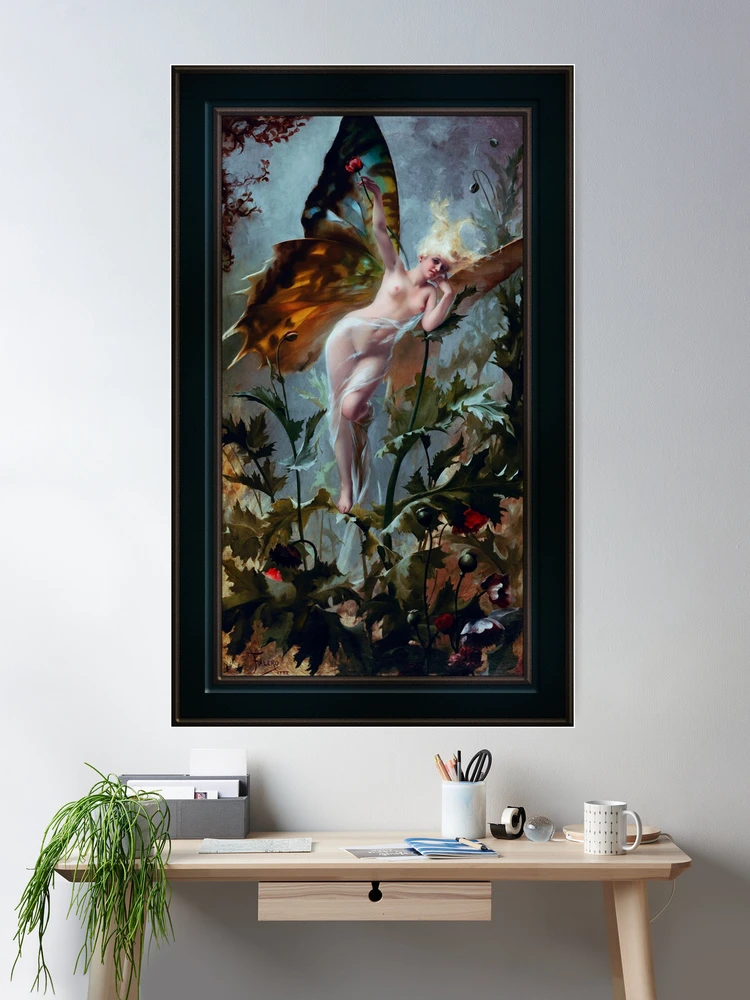
The Poppy Fairy by Luis Ricardo Falero’s La Femme Papillon, inguruan margotuta 1888, is a captivating example of late 19th-century Spanish art that blends allegorical themes with meticulous realism. This vertical canvas presents a scene steeped in fantasy, where the human form intertwines seamlessly with the natural world, creating an atmosphere of ethereal beauty and quiet contemplation. Falero, nahiz eta ez bere garaikide batzuek bezain ospetsua, demonstrates a remarkable technical skill and a keen eye for detail within this work, showcasing a unique vision that draws upon Symbolist aesthetics while retaining elements of academic training.
Edukien taula
Konposizio Harmonia & Natural Abundance
The composition is dominated by the central figure – a young woman embodying the spirit of a butterfly, or “papillon” in French—suspended amidst an opulent tangle of foliage and poppies. Falero’s arrangement isn’t haphazard; baizik, it demonstrates a carefully considered balance between density and openness. The lower portion of the canvas is densely populated with dark green leaves, vibrant red poppy blossoms, and other unidentified plants, creating a rich textural foundation for the figure above.
This dense undergrowth serves to both ground the scene in reality and to visually isolate the fairy-like woman from the viewer, enhancing her otherworldly quality. The verticality of the composition is emphasized by the upward thrust of the central stem supporting the butterfly’s wing, drawing the eye upwards towards the figure’s face.
Irudia: A Study in Delicate Form & Adierazpena
The young woman herself is rendered with a remarkable degree of anatomical accuracy, characteristic of Falero’s academic training. Her pose is graceful and relaxed; she appears to float effortlessly within her verdant surroundings. She wears a sheer, flowing garment that clings loosely to her form, revealing the contours of her body while maintaining an air of modesty.
The fabric’s translucence further contributes to the ethereal quality of the scene, haragiaren eta draperien arteko muga lausotuz. Bere aurpegia apur bat ikuslerantz zuzenduta dago, espresio leuna erakutsiz —irribarre sotil bat jotzen du ezpainetan, poztasun edo poztasun lasaia iradokiz. Ilea, soltean errendatua, kizkur jarioak, bere buruaren inguruan jauzi egiten du halo bat bezala, bere beste munduko itxura areagotuz. Mitxoleta lore bakar bat eusten du goran, ikusten ez den presentziari eskainiz bezala.
The Butterfly Wing: A Symbol of Transformation & Flight
Margolanaren elementurik deigarriena, dudarik gabe, mihisearen goiko zatian nagusi den tximeleta hegal izugarria da.. Hegal hau, urre kolore aberatsetan errendatuta, marroia, eta beltza, ia objektu zizelkatu baten moduan agertzen da, forma natural baten ordez. Bere tamainak figura txikiagotzen du, naturaren zabaltasunaren barruan bere hauskortasuna eta zaurgarritasuna azpimarratuz.
The intricate patterns on the wing’s surface are meticulously detailed, showcasing Falero’s technical prowess. The butterfly itself is a potent symbol of transformation, birjaiotza, and the fleeting beauty of life—themes that resonate throughout the painting. It suggests a connection between the human spirit and the natural world, hinting at a deeper understanding of existence beyond the purely material realm.
Kolore Paleta & Argiztapena: Creating an Atmosphere of Enchantment

Falero’s use of color is masterful, creating a rich and evocative atmosphere. The dominant colors are earthy greens and browns, contrasted by the vibrant reds of the poppies and the shimmering gold of the butterfly wing. Margolanaren argia leuna eta hedatua da, casting gentle shadows that accentuate the figure’s form and create a sense of depth.
There’s an overall muted quality to the palette, which contributes to the painting’s dreamlike atmosphere. Argia eszena barrutik irten omen da, rather than from any external source, further enhancing its otherworldly feel.
Eragin artistikoak & Testuinguruko garrantzia
La Femme Papillon reflects several artistic trends prevalent in late 19th-century Europe. The Symbolist movement’s emphasis on allegory and subjective experience is evident in the painting’s use of symbolic imagery and its focus on evoking a particular mood or feeling rather than simply depicting reality. The influence of academic realism can be seen in Falero’s meticulous attention to detail and his skillful rendering of the human form. The work also shares affinities with the Aesthetic movement, which championed art for art’s sake and emphasized beauty as an end in itself. Falero’s painting stands as a testament to the enduring power of fantasy and imagination within the realm of fine art.
Artistaren bio eratorria Wikipedia.org
Falero Granadan jaio zen eta jatorriz Espainiako Armadan egin zuen karrera, baina gurasoen etsipenari utzi zion; Parisera bidaiatzea erabaki baitzuen, non artea ikasi zuen, kimika eta ingeniaritza mekanikoa.
Kimika eta ingeniaritza mekanikoko ikasketak egiten ditu; arriskutsuegitzat jo zituen berak egin behar zituen esperimentuak, horrela, arreta pinturan bakarrik zentratzera eraman zuen.
Ondorioz, Gabriel-Joseph-Marie-Augustin Ferrier frantses erretratu-margolari eta orientalistaren ikasle bihurtu zen. (1847 – 1914). Parisen ondoren, Londresera joan zen bizitzera, bertan jarraitu zituen ikasketak, eta azkenean finkatu.
Falerok astronomiarekiko interes berezia zuen eta zeruko konstelazioa sartu zuen bere lan askotan, esaterako “Kometa baten ezkontza” eta “Izar bikiak”. Astronomiarekiko interesak eta ezagutzak Camille Flammarionen lanak ilustratzera ere eraman zuten.
In 1896, bere heriotzaren urtea, Maud Harveyk aitatasunagatik auzitara eraman zuen Falero. Trajeak Falerok Harvey liluratu zuela esaten zuen hura zegoenean 17, lehenik bere etxeko neskame gisa, eta gero bere eredua. Haurdun zegoela jakin zuenean, baztertu egin zuen.
Kasua irabazi zuen eta astean bost txelin ematen zizkioten haien seme-alaben alde. Falero University College ospitalean hil zen, Londres, urterekin 45.
This is a retouched digital art old masters reproduction of a public domain image that is available as ijetzitako mihise inprimatua sarean.