

An Sìthiche Poppy (Boireannach an Dealain-dè): Sgrùdadh ann an Symbolism agus Aesthetic Delight
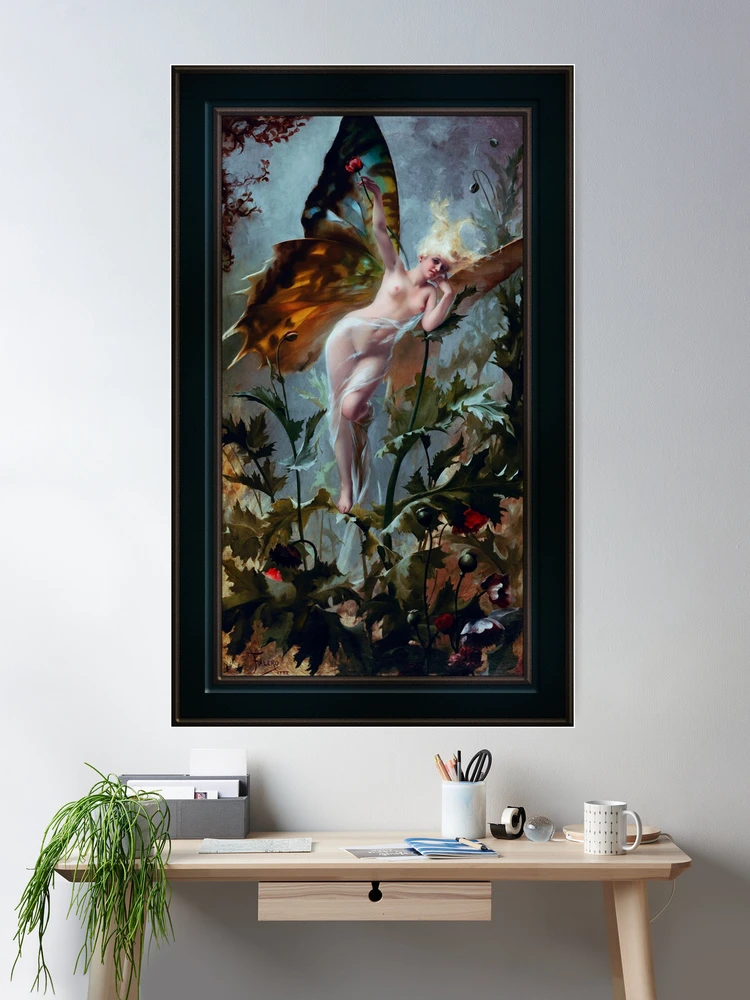
The Poppy Fairy by Luis Ricardo Falero's Boireannach an Dealain-dè, air a pheantadh mun cuairt 1888, na eisimpleir tarraingeach de dh’ ealain Spàinnteach deireadh na 19mh linn a tha a’ measgachadh cuspairean alegorical le fìor-eòlas mionaideach. Tha an canabhas dìreach seo a’ taisbeanadh sealladh làn de dh’ fhasanachd, far a bheil an cruth daonna a’ ceangal gu dlùth ris an t-saoghal nàdarra, a’ cruthachadh faireachdainn de bhòidhchead ethereal agus cnuasachadh sàmhach. Falero, ged nach eil e cho ainmeil ri cuid de a cho-aoisean, a’ nochdadh sgil theicnigeach iongantach agus sùil gheur airson mion-fhiosrachadh san obair seo, a’ taisbeanadh sealladh gun samhail a bhios a’ tarraing air bòidhchead Symbolist agus aig an aon àm a’ cumail eileamaidean de thrèanadh acadaimigeach.
Clàr-innse
Co-sheirm co-sheòrsach & Meud Nàdarra
The composition is dominated by the central figure – a young woman embodying the spirit of a butterfly, or “papillon” in French—suspended amidst an opulent tangle of foliage and poppies. Falero’s arrangement isn’t haphazard; An àite sin, it demonstrates a carefully considered balance between density and openness. The lower portion of the canvas is densely populated with dark green leaves, vibrant red poppy blossoms, and other unidentified plants, creating a rich textural foundation for the figure above.
This dense undergrowth serves to both ground the scene in reality and to visually isolate the fairy-like woman from the viewer, enhancing her otherworldly quality. The verticality of the composition is emphasized by the upward thrust of the central stem supporting the butterfly’s wing, drawing the eye upwards towards the figure’s face.
Am figear: Sgrùdadh ann an cruth grinn & Briseadh
The young woman herself is rendered with a remarkable degree of anatomical accuracy, characteristic of Falero’s academic training. Her pose is graceful and relaxed; she appears to float effortlessly within her verdant surroundings. She wears a sheer, flowing garment that clings loosely to her form, revealing the contours of her body while maintaining an air of modesty.
The fabric’s translucence further contributes to the ethereal quality of the scene, blurring the line between flesh and drapery. Her face is turned slightly towards the viewer, exhibiting a gentle expression—a subtle smile plays on her lips, suggesting a sense of quiet joy or contentment. A falt, rendered in loose, flowing curls, cascades around her head like a halo, further enhancing her otherworldly appearance. She holds a single poppy blossom aloft, as if offering it to an unseen presence.
An Sgiath Dhealain-dè: A Symbol of Transformation & Flight
The most striking element of the painting is undoubtedly the enormous butterfly wing that dominates the upper portion of the canvas. This wing, rendered in rich hues of gold, donn, agus dubh, appears almost like a sculpted object rather than a natural form. Its size dwarfs the figure, emphasizing her fragility and vulnerability within the vastness of nature.
The intricate patterns on the wing’s surface are meticulously detailed, showcasing Falero’s technical prowess. The butterfly itself is a potent symbol of transformation, ath-bhreith, and the fleeting beauty of life—themes that resonate throughout the painting. It suggests a connection between the human spirit and the natural world, hinting at a deeper understanding of existence beyond the purely material realm.
Palet dath & Solais: Creating an Atmosphere of Enchantment

Tha cleachdadh dath Falero sàr-mhath, creating a rich and evocative atmosphere. The dominant colors are earthy greens and browns, contrasted by the vibrant reds of the poppies and the shimmering gold of the butterfly wing. Tha an solas anns an dealbh bog agus sgaoilte, casting gentle shadows that accentuate the figure’s form and create a sense of depth.
There’s an overall muted quality to the palette, which contributes to the painting’s dreamlike atmosphere. The light seems to emanate from within the scene itself, rather than from any external source, further enhancing its otherworldly feel.
Buaidh ealain & Contextual Significance
Boireannach an Dealain-dè reflects several artistic trends prevalent in late 19th-century Europe. The Symbolist movement’s emphasis on allegory and subjective experience is evident in the painting’s use of symbolic imagery and its focus on evoking a particular mood or feeling rather than simply depicting reality. The influence of academic realism can be seen in Falero’s meticulous attention to detail and his skillful rendering of the human form. The work also shares affinities with the Aesthetic movement, which championed art for art’s sake and emphasized beauty as an end in itself. Falero’s painting stands as a testament to the enduring power of fantasy and imagination within the realm of fine art.
Neach-ealain Bio Derived Wikipedia.org
Rugadh Falero ann an Granada agus an toiseach lean e dreuchd ann an Cabhlach na Spàinne, ach thug e briseadh dùil dha phàrantan; oir chuir e roimhe siubhal gu Paris, far an do rinn e sgrùdadh air ealain, ceimigeachd agus innleadaireachd meacanaigeach.
Rè tha sgrùdaidhean ann an ceimigeachd agus innleadaireachd meacanaigeach; bha e den bheachd gu robh na deuchainnean a dh ’fheumadh e a dhèanamh ro chunnartach, mar sin a ’toirt air aire a chuimseachadh air peantadh leis fhèin.
Mar thoradh air an sin thàinig e gu bhith na oileanach aig Peantair Portrait Frangach agus Orientalist Gabriel-Joseph-Marie-Augustin Ferrier (1847 – 1914). Às deidh Paris, ghluais e a Lunnainn, far an do lean e air le fhoghlam, agus mu dheireadh shocraich e.
Bha ùidh shònraichte aig Falero ann an speuradaireachd agus chuir e a-steach constella celestial ann am mòran de na h-obraichean aige, mar eisimpleir “Pòsadh Comet” agus “Twin Stars”. Mar thoradh air an ùidh agus an eòlas aige air reul-eòlas, sheall e cuideachd obair Camille Flammarion.
Ann an 1896, bliadhna a bhàis, Dhiùlt Maud Harvey Falero airson athair. Bha an deise ag agairt gun do mheall Falero Harvey nuair a bha i 17, an toiseach a ’frithealadh mar mhaighdeann-taighe aige, agus an uairsin a mhodail. Nuair a fhuair e a-mach gu robh i trom, chuir e às dhi.
Bhuannaich i a ’chùis agus fhuair i còig tasdain san t-seachdain mar thaic don leanabh aca. Bhàsaich Falero aig Ospadal Colaiste an Oilthigh, Lunnainn, aig aois 45.
Is e seo ath-riochdachadh seann mhaighstirean ealain didseatach de ìomhaigh raon poblach a tha ri fhaighinn mar clò-bhualadh canabhas rollaichte air-loidhne.