

Makowa Wróżka (Kobieta Motyl): A Study in Symbolism and Aesthetic Delight
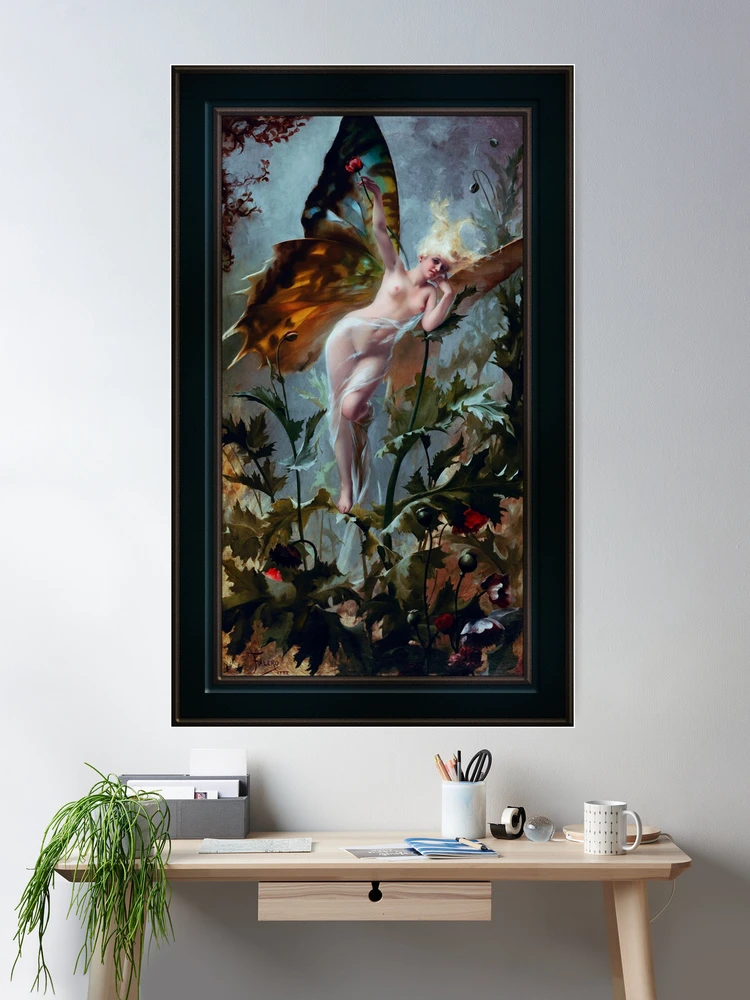
The Poppy Fairy by Luis Ricardo Falero'S Kobieta Motyl, pomalowane dookoła 1888, is a captivating example of late 19th-century Spanish art that blends allegorical themes with meticulous realism. This vertical canvas presents a scene steeped in fantasy, where the human form intertwines seamlessly with the natural world, creating an atmosphere of ethereal beauty and quiet contemplation. Opóźnienie, though not as widely celebrated as some of his contemporaries, demonstrates a remarkable technical skill and a keen eye for detail within this work, showcasing a unique vision that draws upon Symbolist aesthetics while retaining elements of academic training.
Spis treści
Harmonia kompozycyjna & Natural Abundance
The composition is dominated by the central figure – a young woman embodying the spirit of a butterfly, or “papillon” in French—suspended amidst an opulent tangle of foliage and poppies. Falero’s arrangement isn’t haphazard; raczej, it demonstrates a carefully considered balance between density and openness. The lower portion of the canvas is densely populated with dark green leaves, vibrant red poppy blossoms, and other unidentified plants, creating a rich textural foundation for the figure above.
This dense undergrowth serves to both ground the scene in reality and to visually isolate the fairy-like woman from the viewer, enhancing her otherworldly quality. The verticality of the composition is emphasized by the upward thrust of the central stem supporting the butterfly’s wing, drawing the eye upwards towards the figure’s face.
The Figure: A Study in Delicate Form & Wyrażenie
The young woman herself is rendered with a remarkable degree of anatomical accuracy, characteristic of Falero’s academic training. Her pose is graceful and relaxed; she appears to float effortlessly within her verdant surroundings. She wears a sheer, flowing garment that clings loosely to her form, revealing the contours of her body while maintaining an air of modesty.
The fabric’s translucence further contributes to the ethereal quality of the scene, blurring the line between flesh and drapery. Her face is turned slightly towards the viewer, exhibiting a gentle expression—a subtle smile plays on her lips, suggesting a sense of quiet joy or contentment. Jej włosy, rendered in loose, flowing curls, cascades around her head like a halo, further enhancing her otherworldly appearance. She holds a single poppy blossom aloft, as if offering it to an unseen presence.
The Butterfly Wing: A Symbol of Transformation & Flight
The most striking element of the painting is undoubtedly the enormous butterfly wing that dominates the upper portion of the canvas. This wing, rendered in rich hues of gold, brązowy, and black, appears almost like a sculpted object rather than a natural form. Its size dwarfs the figure, emphasizing her fragility and vulnerability within the vastness of nature.
The intricate patterns on the wing’s surface are meticulously detailed, showcasing Falero’s technical prowess. The butterfly itself is a potent symbol of transformation, rebirth, and the fleeting beauty of life—themes that resonate throughout the painting. It suggests a connection between the human spirit and the natural world, hinting at a deeper understanding of existence beyond the purely material realm.
Paleta kolorów & Oświetlenie: Creating an Atmosphere of Enchantment
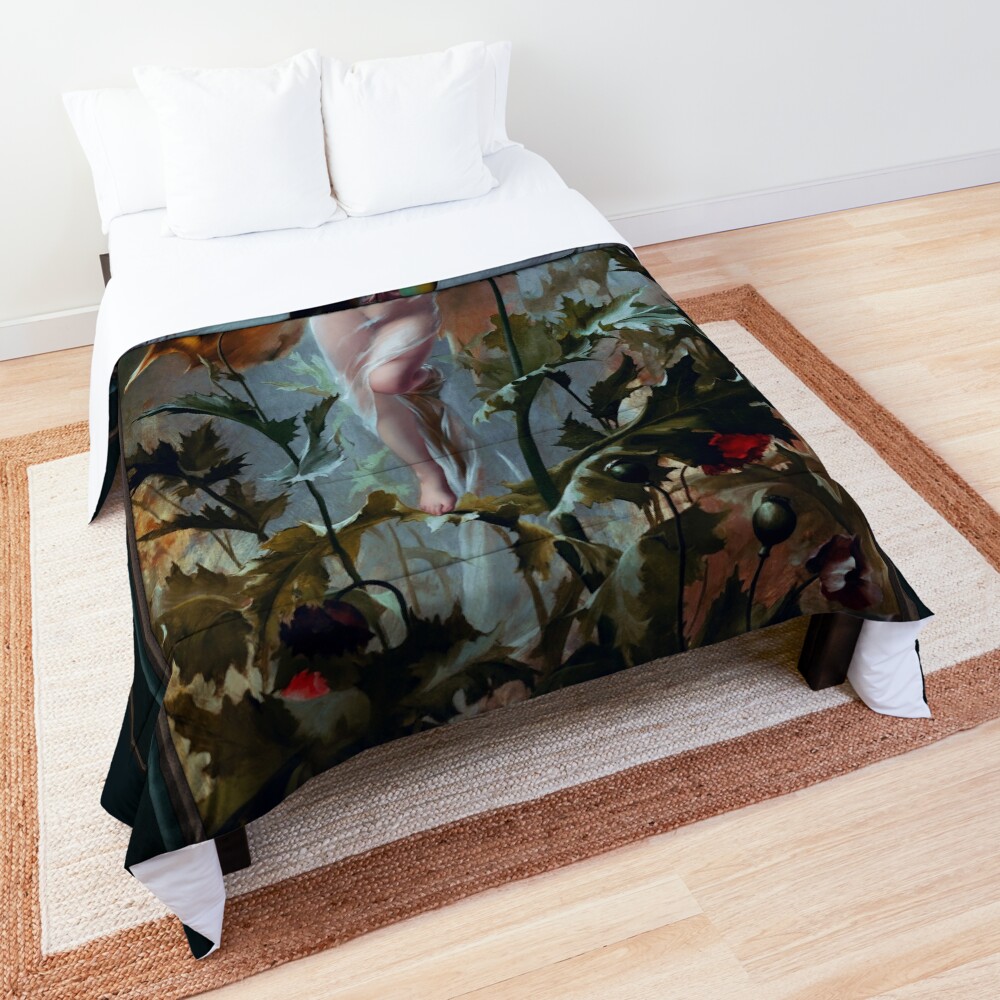
Falero’s use of color is masterful, creating a rich and evocative atmosphere. The dominant colors are earthy greens and browns, contrasted by the vibrant reds of the poppies and the shimmering gold of the butterfly wing. The lighting in the painting is soft and diffused, casting gentle shadows that accentuate the figure’s form and create a sense of depth.
There’s an overall muted quality to the palette, which contributes to the painting’s dreamlike atmosphere. The light seems to emanate from within the scene itself, rather than from any external source, further enhancing its otherworldly feel.
Wpływ artystyczny & Contextual Significance
Kobieta Motyl reflects several artistic trends prevalent in late 19th-century Europe. The Symbolist movement’s emphasis on allegory and subjective experience is evident in the painting’s use of symbolic imagery and its focus on evoking a particular mood or feeling rather than simply depicting reality. The influence of academic realism can be seen in Falero’s meticulous attention to detail and his skillful rendering of the human form. The work also shares affinities with the Aesthetic movement, which championed art for art’s sake and emphasized beauty as an end in itself. Falero’s painting stands as a testament to the enduring power of fantasy and imagination within the realm of fine art.
Artysta Bio pochodna Wikipedia.org
Falero urodził się w Granadzie i początkowo pracował w hiszpańskiej marynarce wojennej, ale zrezygnował z rozczarowania rodziców; jak postanowił pojechać do Paryża, gdzie studiował sztukę, chemia i inżynieria mechaniczna.
W trakcie studiów z chemii i budowy maszyn; uważał eksperymenty, które musiał przeprowadzić, za zbyt niebezpieczne, co doprowadziło go do skupienia uwagi na samym malowaniu.
W rezultacie został uczniem francuskiego portrecisty i orientalisty Gabriela-Josepha-Marie-Augustina Ferriera (1847 – 1914). Po Paryżu, przeprowadził się do Londynu, gdzie kontynuował studia, i ostatecznie się osiedlili.
Falero szczególnie interesował się astronomią i włączał konstelacje niebieskie do wielu swoich prac, Jak na przykład “Małżeństwo komety” i “Bliźniacze gwiazdy”. Jego zainteresowanie i znajomość astronomii skłoniły go również do zilustrowania prac Camille Flammarion.
W 1896, rok jego śmierci, Maud Harvey pozwała Falero o ojcostwo. Pozew twierdził, że Falero uwiodła Harvey, kiedy była 17, pierwszy służący jako pokojówka, a potem jego model. Kiedy odkrył, że jest w ciąży, on ją zwolnił.
Wygrała sprawę i otrzymywała pięć szylingów tygodniowo na wsparcie swojego dziecka. Falero zmarł w University College Hospital, Londyn, w wieku 45.
Jest to retuszowana reprodukcja starych mistrzów sztuki cyfrowej obrazu należącego do domeny publicznej, która jest dostępna jako zrolowany obraz na płótnie online.