

A fada papoula (A mulher borboleta): A Study in Symbolism and Aesthetic Delight
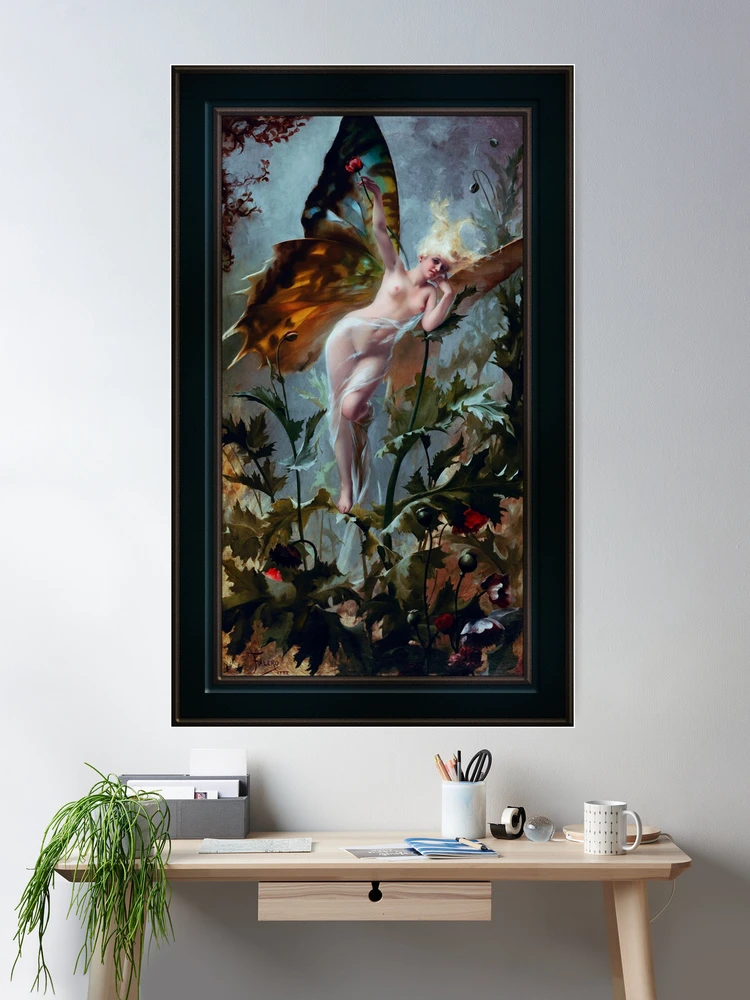
The Poppy Fairy by Luis Ricardo Faleroé A mulher borboleta, pintado ao redor 1888, is a captivating example of late 19th-century Spanish art that blends allegorical themes with meticulous realism. This vertical canvas presents a scene steeped in fantasy, where the human form intertwines seamlessly with the natural world, creating an atmosphere of ethereal beauty and quiet contemplation. Falero, embora não tão amplamente celebrado como alguns de seus contemporâneos, demonstrates a remarkable technical skill and a keen eye for detail within this work, showcasing a unique vision that draws upon Symbolist aesthetics while retaining elements of academic training.
Índice
Compositional Harmony & Natural Abundance
The composition is dominated by the central figure – a young woman embodying the spirit of a butterfly, or “papillon” in French—suspended amidst an opulent tangle of foliage and poppies. Falero’s arrangement isn’t haphazard; em vez de, it demonstrates a carefully considered balance between density and openness. The lower portion of the canvas is densely populated with dark green leaves, vibrant red poppy blossoms, and other unidentified plants, creating a rich textural foundation for the figure above.
This dense undergrowth serves to both ground the scene in reality and to visually isolate the fairy-like woman from the viewer, enhancing her otherworldly quality. The verticality of the composition is emphasized by the upward thrust of the central stem supporting the butterfly’s wing, drawing the eye upwards towards the figure’s face.
The Figure: A Study in Delicate Form & Expression
The young woman herself is rendered with a remarkable degree of anatomical accuracy, characteristic of Falero’s academic training. Her pose is graceful and relaxed; she appears to float effortlessly within her verdant surroundings. She wears a sheer, flowing garment that clings loosely to her form, revealing the contours of her body while maintaining an air of modesty.
The fabric’s translucence further contributes to the ethereal quality of the scene, blurring the line between flesh and drapery. Her face is turned slightly towards the viewer, exhibiting a gentle expression—a subtle smile plays on her lips, suggesting a sense of quiet joy or contentment. O cabelo dela, rendered in loose, flowing curls, cascades around her head like a halo, further enhancing her otherworldly appearance. She holds a single poppy blossom aloft, as if offering it to an unseen presence.
The Butterfly Wing: A Symbol of Transformation & Flight
The most striking element of the painting is undoubtedly the enormous butterfly wing that dominates the upper portion of the canvas. This wing, rendered in rich hues of gold, marrom, and black, appears almost like a sculpted object rather than a natural form. Its size dwarfs the figure, emphasizing her fragility and vulnerability within the vastness of nature.
The intricate patterns on the wing’s surface are meticulously detailed, showcasing Falero’s technical prowess. The butterfly itself is a potent symbol of transformation, Renascimento, and the fleeting beauty of life—themes that resonate throughout the painting. It suggests a connection between the human spirit and the natural world, hinting at a deeper understanding of existence beyond the purely material realm.
Paleta de cores & Iluminação: Creating an Atmosphere of Enchantment

Falero’s use of color is masterful, creating a rich and evocative atmosphere. The dominant colors are earthy greens and browns, contrasted by the vibrant reds of the poppies and the shimmering gold of the butterfly wing. The lighting in the painting is soft and diffused, casting gentle shadows that accentuate the figure’s form and create a sense of depth.
There’s an overall muted quality to the palette, which contributes to the painting’s dreamlike atmosphere. The light seems to emanate from within the scene itself, rather than from any external source, further enhancing its otherworldly feel.
Influências artísticas & Significância Contextual
A mulher borboleta reflects several artistic trends prevalent in late 19th-century Europe. The Symbolist movement’s emphasis on allegory and subjective experience is evident in the painting’s use of symbolic imagery and its focus on evoking a particular mood or feeling rather than simply depicting reality. The influence of academic realism can be seen in Falero’s meticulous attention to detail and his skillful rendering of the human form. The work also shares affinities with the Aesthetic movement, which championed art for art’s sake and emphasized beauty as an end in itself. Falero’s painting stands as a testament to the enduring power of fantasy and imagination within the realm of fine art.
Artist Bio Derived Wikipedia.org
Falero nasceu em Granada e originalmente seguiu carreira na Marinha Espanhola, mas desistiu para a decepção de seus pais; como ele decidiu viajar para Paris, onde ele estudou arte, química e engenharia mecânica.
Durante seus estudos em química e engenharia mecânica; ele considerou os experimentos que ele teve que conduzir muito perigosos, levando-o a concentrar sua atenção apenas na pintura.
Como resultado, ele se tornou um aluno do pintor de retratos e orientalista francês Gabriel-Joseph-Marie-Augustin Ferrier (1847 – 1914). Depois de paris, ele se mudou para Londres, onde ele continuou seus estudos, e eventualmente resolvido.
Falero tinha um interesse particular em astronomia e incorporou constelações celestes em muitas de suas obras, tal como “O casamento de um cometa” e “Estrelas gêmeas”. Seu interesse e conhecimento de astronomia também o levaram a ilustrar as obras de Camille Flammarion.
Dentro 1896, o ano de sua morte, Maud Harvey processou Falero por paternidade. O processo alegou que Falero seduziu Harvey quando ela era 17, primeiro servindo como sua empregada, e então seu modelo. Quando ele descobriu que ela estava grávida, ele a dispensou.
Ela ganhou o caso e recebeu cinco xelins por semana em apoio ao filho. Falero morreu no University College Hospital, Londres, na idade de 45.
Esta é uma reprodução de antigos mestres de arte digital retocada de uma imagem de domínio público que está disponível como impressão em tela enrolada on-line.