

The Potters Daughter
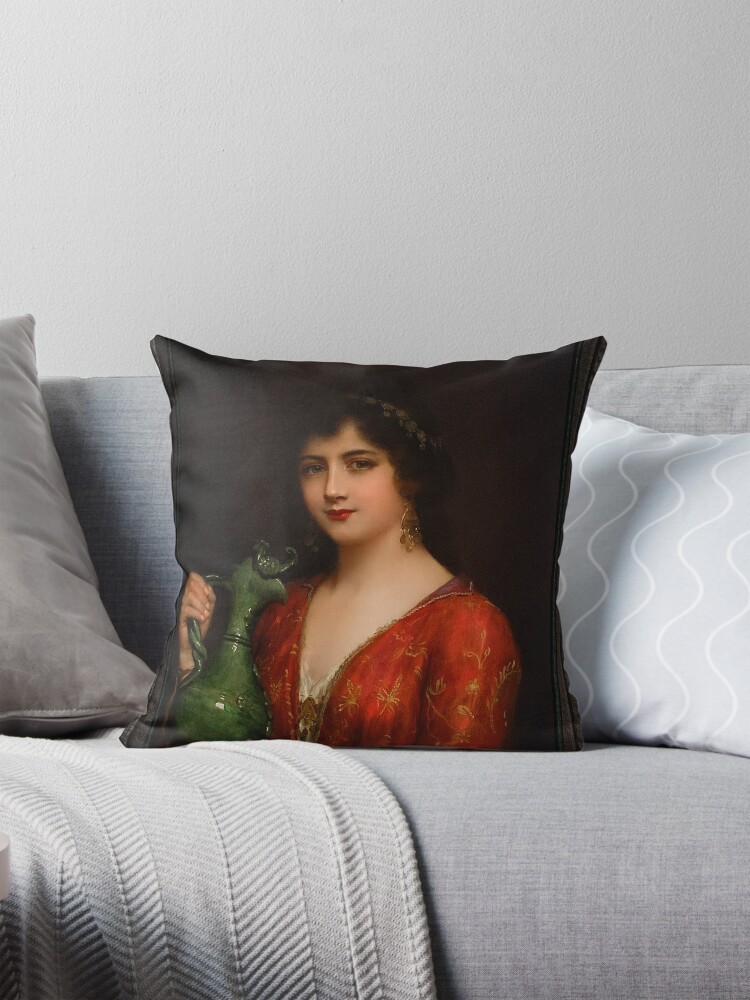
“The Potters Daughter”, created by the British artist Abbey Abraham Altson (1866 – 1949), is a captivating piece from the late 19th to early 20th century, reflecting the stylistic influences of the time. Altson, known for his refined portraiture and use of light and shadow, captured a timeless moment in the life of a young woman, blending realism with a touch of romanticism. Lan hau, rendered in oil on canvas, depicts a woman holding a pottery jug, draped in rich, warm tones. The scene resonates with the aesthetic of the Victorian era, while subtly pushing towards the 20th-century exploration of naturalism and emotion.
Edukien taula
Subject and Mood
At the heart of the painting is the erretratu ederra emakume gazte baten figura lasai eta duin batena, tradizionalki deitzen zaio “Buztingintzaren alaba.” Zuzenean begiratzen dio ikusleari adierazpen leun baina seguru batekin, bere jarrera dotorea eta orekatua, gogoeta-une batean harrapatuta bezala. Gaiaren gaztetasuna eta edertasuna nabariak dira, baina indar lasaiko airea ere bada bere inguruan, zeramikazko pitxerra eusten duenean —iraganarekin lotzen duen objektu sinbolikoa—, bere ondarea, eta, beharbada, landa edo artisau-esparruko emakumeentzat ohikoa izango zen eguneroko lanari.
Emakumearen adierazpena, lasaia baina enigmatiko samarra, narrazio pertsonal batera gonbidatzen du ikuslea, dramatikoegia ez garbi neutroa ez dena. Bere ezpainen goranzko kurba sotilak barruko konfiantza iradokitzen du, a knowledge of her place in the world. This element of tranquility, almost untouched by time, is a central theme in Altson’s depiction, and it evokes a sense of nostalgia for a simpler, pre-industrial era. Her dark hair is elegantly styled, bere ezaugarri delikatuak markatuz, and her jewelry, handia, zintzilik dauden belarritakoak, adds an air of modest elegance.
The Objects and Their Significance
The pottery jug held by the woman is the most significant object in the composition, both as a symbol and as an element of the narrative. Pottery, often associated with both artistry and utility, signifies the balance between domestic work and creative craft. The vessel is a carefully crafted piece of art itself, rendered with intricate detailing, showing Altson’s careful attention to the textures and shapes of everyday items. Artistak pitxera erretratuan sartzeko aukeratzeak, ziurrenik, eskulanak emakume honen bizitzan duen garrantzia iradokitzen du., beharbada ontzigileen belaunaldietan zehar transmititutako ondare edo ondare bati erreferentzia egitea.
Horrez gain, emakumearen soineko gorri sakona nabarmentzen da iluntasunaren aurka, atzeko plano isilduta. Ehunaren ehundura eta kolore aberatsak berotasuna eta luxua dakartza, iradokiz, agian ez dela langile hutsa baizik eta artisau familia batekoa, beharbada, aitaren zeramikak aintzatespen batzuk lortu dituena ere. Emakumearen eta bere aitaren arteko lotura hori funtsezkoa da margolanaren azpiko narrazioa ulertzeko: ez da alaba bat bakarrik, leinu baten ordezkaria baizik, bere arbasoen tradizioak aurrera eramateko prest.
Landscape and Background
Margolanaren atzealdea iluna da, almost enveloping the subject, creating a striking contrast that focuses the viewer’s attention entirely on the woman and her object. There is no obvious landscape or bustling environment; horren ordez, the focus remains inward, on the subject herself. The neutral, deep tones of the background enhance the vividness of the subject, giving her a timeless, almost otherworldly presence. This technique is characteristic of Altson’s portrait style, where the lack of distracting elements elevates the individual and their relationship with the viewer.
This stark contrast between the woman and her environment also suggests an intentional detachment from the world around her. The simplicity of the background can be interpreted as symbolic of the quietude of rural life or artisanal existence, non subjektuaren barne mundua nagusi bihurtzen den. Paisaia edo ingurune esanguratsurik ez egoteak ere esan dezake subjektuaren identitatea bere inguruak definitzen ez duela., baina bere barne-munduagatik eta berekin daraman duintasun lasaiagatik.
Estiloa eta Teknika
Altsonen estilo artistikoa “Buztingintzaren alaba” errealismoaren elementuak nahasten ditu apur bat erromantizatutako erretratu batekin. Artistak biguna erabiltzea, Argiztapen ia etereoak gaiaren inguruko fintasun eta grazia sentsazioa areagotzen du.
Sfumatoaren teknika, koloreak eta tonuak nahastuz leun bat sortzeko, koloreen arteko trantsizio ketsua, emakumearen aurpegiari kalitate bizia ematen dio, bere jantziaren eta zeramikazko pitxerraren ehundura aberatsek artistaren pintzel zehatza baloratzeko gonbidatzen dute ikuslea.. The blending of warm and dark tones, contrasted with the intricate details of the subject’s attire and the pottery, is characteristic of Altson’s ability to balance form and texture, bringing out the tactile qualities of both the human figure and the objects she interacts with.
Bukaera
“Buztingintzaren alaba” by Abbey Abraham Altson is an exemplary piece of late 19th-century portraiture that captures both the elegance and quiet strength of its subject. Xehetasun arretaz arretaz, ehundura, and light, Altson transforms a simple moment, holding a pottery jug, into a reflection on heritage, identitatea, and the role of women in a pre-industrial society.
The muted background, the symbolism of the pottery, and the serene expression of the young woman all work in harmony to create an artwork that speaks not only of personal grace but also of an era that valued craftsmanship and familial legacies. Altson’s masterful rendering of this intimate, timeless scene remains a testament to his ability to capture the essence of both the human spirit and the world it inhabits.
Hau domeinu publikoko irudi baten erreprodukzioa da arte digitaleko maisu zaharren erreprodukzioa, sarean erosteko moduan dagoena ijetzitako mihise inprimatua.
Artistaren biografia
Informazioa Behean Deribatua Wikipedia.org
Abbey Abraham Altson was born in Middlesbororough-on-Tees, Yorkshire in the year 1864. In September of 1883 he and his brother Barnett Hayman Altson went to Australia ; and beginning in 1885 Abraham began to study drawing two nights a week at the National Gallery School of Design, located in Melbourne.
I 1886 he then enrolled as a full time student in the School of Painting; studying with other well known artist, such as Fred McCubbin, John Longstaff, Emmanuel Phillips Fox, David Davies, Tudor St. George Tucker and Fred Williams.
Abraham won prizes each year he was at the school, and critics herald him as a most promising pupil of the future.