

The Red Cape: A Timeless Elegance Of Mid-Century Glamour
Réamhrá don Saothar Ealaíne
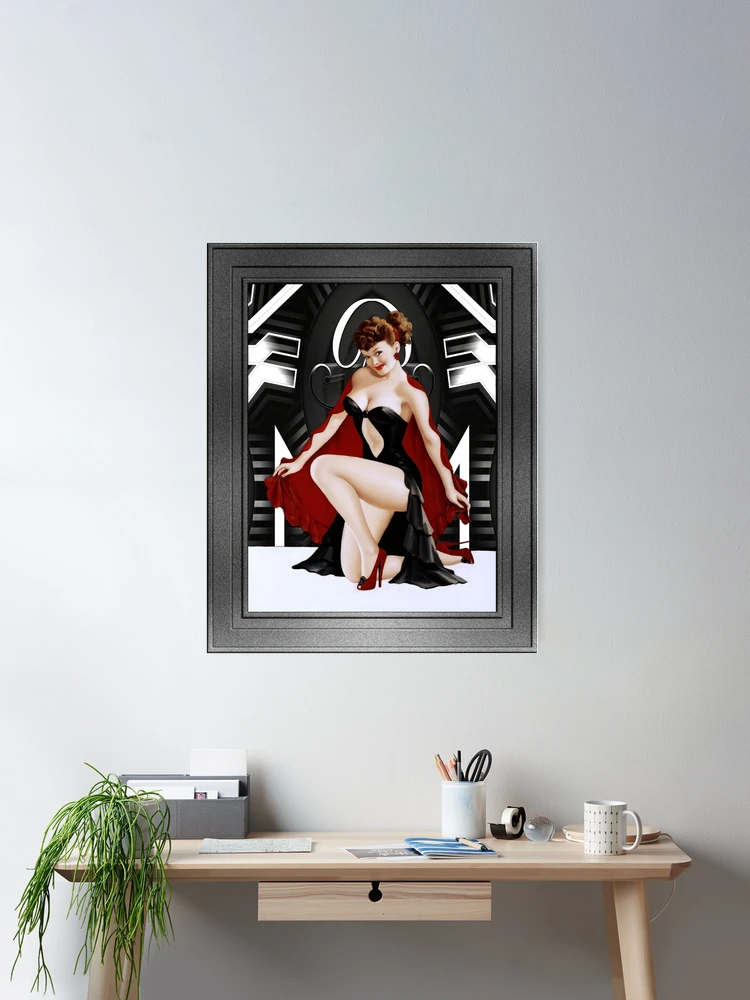
“The Red Cape” is a quintessential work by the American artist Peter Driben, a celebrated figure known for his pin-up art in the mid-20th century. Driben’s mastery in creating seductive and lively compositions is well represented in this piece. The artwork captures the essence of glamour, allure, and sophisticated femininity, themes that resonate throughout his body of work. “The Red Cape” is a vivid portrayal of a woman embodying confidence and charm, set against a striking, almost cinematic backdrop.
Clár na nÁbhar
An príomh -ábhar: A Seductive Femme Fatale
The central figure in “The Red Cape” is a young woman in an arresting pose, exuding an irresistible charm. Her posture is confident, sitting on the ground with one knee raised, her body slightly turned to the side. She gazes directly at the viewer with a playful yet enticing expression, her lips slightly parted in a smile. Her hairstyle is carefully styled into soft curls that frame her face, adding to the sophistication of her appearance. The woman’s strikingly seductive look is enhanced by the rich color contrasts in her attire and surroundings.
She wears a fitted black dress with a daring plunging neckline, the silhouette of which accentuates her curves. The black dress, a classic emblem of elegance, is complemented by a flowing red cape that drapes behind her, extending across her shoulders and fluttering like a vivid extension of her powerful femininity. The red cape contrasts dramatically against the dark tones of the background and the black dress, drawing the eye directly to the central figure. Her bold red lipstick and matching earrings mirror the deep hue of the cape, underscoring her glamorous allure.
The Background and Mood
Cúlra na “The Red Cape” further enhances the sense of grandeur and stylized sophistication. The background is composed of striking geometric elements, with sharp, angular lines creating a dynamic contrast with the soft, curvaceous lines of the model’s figure. The black and white tones in the background, along with the radial design, evoke a sense of art deco elegance and modernity. These elements work in tandem with the central figure, accentuating the timeless quality of the image while also grounding it in the mid-century aesthetic that Driben is known for.
The overall mood of the artwork is one of glamour and power. The woman in the piece is not merely a passive subject but an active, confident figure, fully aware of her beauty and the impact it has on those around her. The red cape, go háirithe, acts as a symbol of strength and boldness, much like the heroic personas in the stories of classic cinema. The color red, both sensual and commanding, highlights her dominance in the composition, turning her into an almost mythical figure—a heroine wrapped in the elegance of vintage Hollywood.
Symbolism and Thematic Elements
“The Red Cape” is a portrayal of more than just a fashionable woman; it conveys a deeper narrative of empowerment, allure, and independence. The woman is portrayed as a figure of control, unapologetically seductive yet regal. The flowing red cape could symbolize both a cloak of protection and a dramatic visual extension of her persona. The cape, in its voluminous fluidity, brings a sense of movement to an otherwise static scene, suggesting that the woman is not only a passive subject in the image but also an active force in her environment.
The composition itself echoes the optimism and post-war exuberance of the 1940s and 1950s. This period in American history saw a cultural explosion of confidence and self-expression, much of which was embodied in the burgeoning pin-up culture. Driben’s work encapsulates the sense of freedom and charm that characterized this era, an era where art and fashion collided to elevate everyday femininity to the level of art. The subject’s confident posture and seductive smile reflect the desire for attention and admiration that was often captured in pin-up art of the time.

The Medium and Artistic Style
Peter Driben’s work is rooted in the commercial and illustration art tradition, which is evident in “The Red Cape.” His style, influenced by the pin-up art movement and commercial illustration of the 1940s and 1950s, is both vivid and approachable. While it is clear that Driben’s work was intended for mass consumption—often for advertisements, póstaeir, and magazine covers—he elevated the genre through his attention to detail, dath, agus comhdhéanamh.
I “The Red Cape,” Cuireann úsáid Driben ar chodarsnachtaí géara idir solas agus dorcha le pointe fócasach na híomhá. Tá aghaidh agus corp an tsamhail soilsithe go geal i gcoinne scáthanna domhain an chúlra, cáilíocht thríthoiseach a chruthú a tharraingíonn súil an lucht féachana. Tá codarsnacht idir línte mín an gúna agus an cape leis na línte geoiméadracha sa chúlra, ag moladh cothromaíocht idir bog agus neart.
Tá úsáid beoga dathanna sa saothar ealaíne ríthábhachtach dá mhealltacht iomlán. An meascán de reds domhain, dubh, agus cuireann bánna le físdhráma an radhairc, agus cuireann na línte troma sa chúlra le mothú ar ghluaiseacht nua-aoiseach. Léiríonn bailchríoch snasta agus comhrianta glan an phéinteáil roghanna aeistéitiúla an ama, ag léiriú meascán de réalachas leis an áilleacht stílithe agus idéalach na healaíne pin-up.
Conclúid: A Timeless Icon of Mid-Century Beauty
“The Red Cape” le Peter Driben mar shampla clasaiceach d’ealaín bioráin na meánaoise a mheallann an lucht féachana i gcónaí lena meascán gan teorainn den glamour., allure, and sophisticated femininity. Figiúr na mná, lena radharc cumhachtach agus a staidiúir réidh, léiríonn sé an mhuinín agus an neamhspleáchas a bhí ag éirí níos forleithne i gcultúr Mheiriceá sna blianta i ndiaidh an chogaidh. An úsáid a bhaineann Driben as dath, comhdhéanamh, agus cruthaíonn giúmar drámatúil píosa a sháraíonn a bhunús tráchtála, é a ardú go stádas na mínealaíne.
Ní léiriú amhairc amháin atá sa saothar ealaíne seo ar bhean álainn ach ráiteas cumhachta, muinín, agus elegance timeless, a rinneadh sa chothromaíocht foirfe idir stíl agus substaint. Tríd “The Red Cape,” Driben’s ability to capture the essence of his era—its optimism, áilleacht, and emerging social dynamics—remains as relevant and arresting as ever.
Faoin Saothar Ealaíne
The Red Cape by American Painter Peadar Driben (1903 – 1968); péintéir, maisitheoir agus duine de na healaíontóirí bioráin is bisiúla sna 1940idí agus 1950idí.
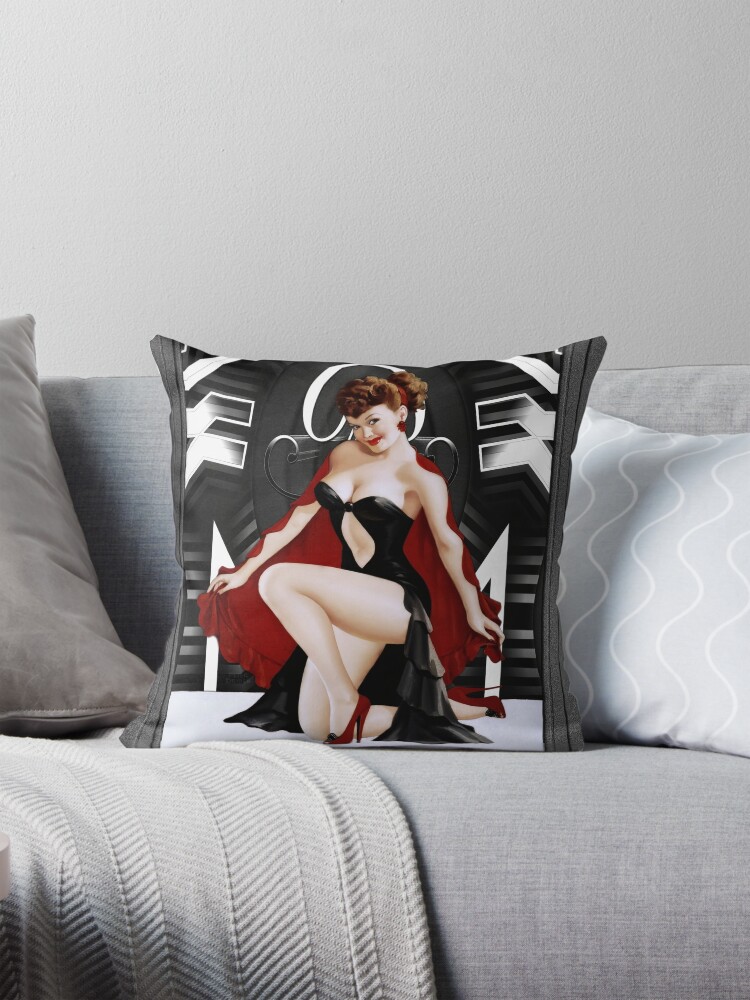
A hot and sexy beautiful young brunette with a red ribbon in her hair and red earrings that is a wearing a large red cape over a black revealing evening dress and red high heel shoes with high a black polka-dot ribbons on top.
I decided to replace the black background with a digital art background to create a more dynamic look.
Seo atáirgeadh seanmháistrí ealaíne digiteach athmháistrithe d’íomhá fearainn phoiblí atá ar fáil mar a priontáil chanbhás ar líne.
Faoin Ealaíontóir
Eolas Thíos Ó Wikipedia.org
Rugadh Peter Driben i mBostún, agus rinne sé staidéar ag Scoil Ealaíne Vesper George sular bhog sé go Páras i 1925. Agus muid ag tógáil ranganna ag an Sorbonne i 1925, chuir sé tús le sraith de líníochtaí peann-agus-dúch a bhfuil an-tóir orthu de chailíní seó na cathrach.
I mí an Mhárta de 1934 Chruthaigh Driben a chéad biorán aitheanta a bhí mar chlúdach do La Paree Stories; agus ag 1935, bhí clúdaigh á dtáirgeadh aige do Snappy, Peip, Oícheanta Nua Eabhrac, Saol oíche na Fraince agus Caprice.
De réir mar a tháinig méadú ar an éileamh a bhí ar Driben sna tríochaidí déanacha chruthaigh sé tuilleadh clúdaigh do thréimhseacháin eile lena n-áirítear Silk Stocking Stories., Scannán Merry-Go-Round agus Real Screen Fun.
Mhéadaigh gairm Driben isteach i bhfógraíocht nuair a bhog sé go Nua-Eabhrac go déanach 1936. Anseo chruthaigh sé taispeántais fuinneoige tríthoiseach bunaidh gearrtha dísle do Philco Radios, Tuáillí Folctha Cannon, agus an Weber Baking Company.
B’fhéidir gurb é an saothar ba cháiliúla a bhí aige ná na bunphóstaeir agus saothar ealaíne poiblíochta do The Maltese Falcon. Bhí Peter Driben ina dhlúthchara leis an bhfoilsitheoir Robert Harrison freisin, agus i 1941 tugadh conradh dó clúdaigh a tháirgeadh don irisleabhar nua Harrison Beauty Parade.
As sin chuaigh Peter ar aghaidh ag péinteáil na céadta clúdach don fhoilseachán sin agus do na seacht dteideal eile a bhí Harrison le seoladh – flirt, Cogar, Ag faire, Wink, Súil, Giggles, agus Joker.
Is minic a bheadh oiread agus sé nó seacht gclúdach dá chuid á bhfoilsiú gach mí ag Driben. Bhunaigh saothar Driben do Harrison é mar dhuine de na healaíontóirí bioráin agus glamour is aitheanta agus is rathúla i Meiriceá.. Díreach sular thosaigh sé ag obair do Harrison, Phós Driben an t-ealaíontóir, aisteoir agus file, Louise Kirby.
I 1944 tairgeadh an deis neamhghnách dó, le haghaidh ealaíontóir pin-up; a bhí le bheith ina stiúrthóir ealaíne ar an New York Sun, post a choinnigh sé go dtí 1946. Le linn an chogaidh, spreag a phéinteáil mhóréilimh de shaighdiúirí Meiriceánacha ag ardú na brataí ag Iwo Jima go leor aird na meán cumarsáide.
I 1956, Bhog Driben agus Louise go Miami Beach, áit ar chaith sé blianta ar scor ag péinteáil portráidí (lena n-áirítear ceann de Dwight D. Eisenhower) agus saothair mhínealaíne eile, a d’eagraigh a bhean chéile ina dtaispeántais rathúla. Fuair Driben bás i 1968, Louise isteach 1984.